
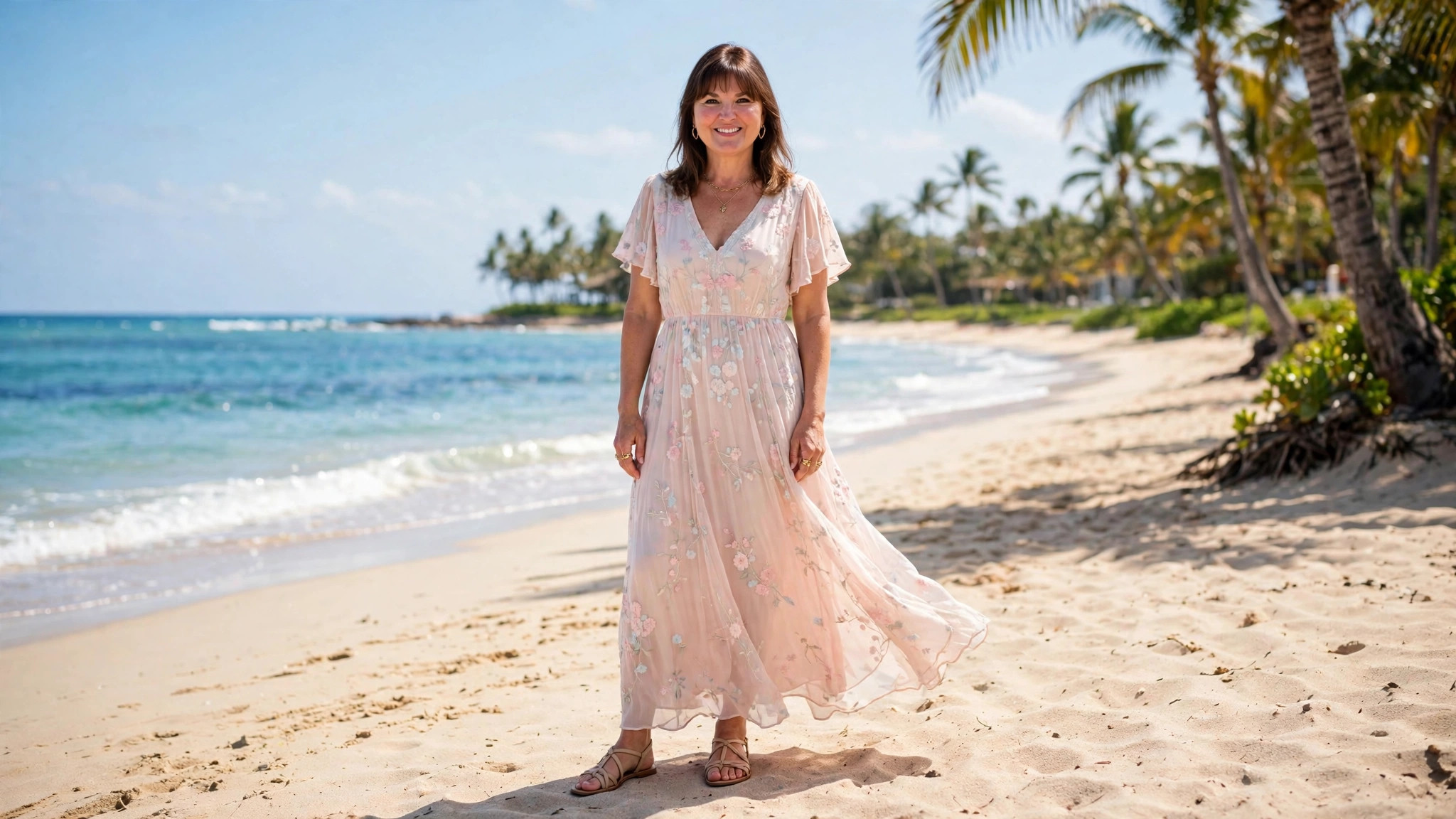
Beach wedding guest outfits are occasion dressing engineered for sand, wind, and salt air. A beach wedding outfit that looks perfect on the invitation can fail completely on actual sand: stilettos sink, light hemlines fly, and fabrics that breathe poorly turn a ceremony into a struggle. The formula is simple: read the dress code first, then plan for the three beach variables, the ground under your feet, the wind at the ceremony, and the temperature drop after sunset. Get those right and a beach wedding is one of the most enjoyable dress codes to nail. For general advice on reading wedding dress codes, see The Knot’s beach wedding attire tips.
This guide covers beach wedding guest outfits by setting and formality, from barefoot casual ceremonies to upscale resort weddings, with the sand-specific shoe plan, wind-proof styling, salt-air fabric logic, and colors that photograph well at golden hour. For the dress-code decoding behind every wedding outfit, the wedding guest outfits for women hub breaks down every code from black tie to casual, and for the heat logic that applies to all summer ceremonies, see summer wedding guest dresses.
Key Takeaways
- Read the dress code first, then adjust for the beach: the code sets the formality, the sand sets the shoe and hemline plan.
- Shoes are the single most beach-specific decision: wedges, low block heels, or dressy flats on sand; stilettos sink and are never practical.
- Wind is the second variable: choose hemlines with enough weight to behave, secure hairstyles, and accessories that will not fly away.
- Breathable fabrics are non-negotiable: linen, cotton, chiffon, and light crepe handle salt air and humidity; heavy synthetics do not.
- Bring a light layer for after sunset: beach temperatures can drop once the sun goes down, even after a hot day.
Beach Wedding Guest Outfit Decoder
Use the setting and formality to find your row, then read the matching section.
| Setting and Formality | Dress Direction | Shoe Plan | Wind Plan |
|---|---|---|---|
| Barefoot casual ceremony on the sand | Flowy midi or maxi in a light fabric | Dressy flat sandals or barefoot if the couple invites it | Weighted hemline, secured hair, minimal accessories |
| Semi-formal beach wedding | Tea-length or midi dress, prints welcome | Wedges or low block heels that will not sink | Half-lined skirt or heavier fabric, wrap for the evening |
| Beach formal (stated on the invitation) | Long elegant gown in a luxe lightweight fabric | Dressy wedges or low block heels; second pair for the reception | Heavier fabric like lined chiffon, updo or secured style |
| Upscale resort wedding, ceremony off the sand | Cocktail or formal dress per the dress code | Heels work if the ceremony is on a solid surface | Normal planning, one light layer for the terrace |
| Sunset ceremony | Warm colors that glow in golden light | Match to the ground, sand or solid | Wind usually picks up at sunset, secure everything |
| Reception on a deck, lawn, or indoors | Same dress, freshened with accessories | Swap to dressier shoes if you carried a second pair | Light shawl or wrap for the temperature drop |
What Makes a Beach Wedding Different
A beach wedding is a wedding plus three environmental variables that do not exist at an indoor venue: sand underfoot, wind at the ceremony, and salt air with humidity all day. A beach wedding guest outfit is simply occasion dressing planned around those three. Sand changes shoes completely, wind changes hemlines and hair, and humidity changes fabric choices and grooming.
The other difference is the formality range. Beach weddings span from genuinely barefoot casual ceremonies to upscale resort weddings that are formal in everything but the ground. The invitation is the guide: “beach formal” and “tropical chic” are real dress codes couples use, and they mean different things. When the invitation names a beach-specific code, follow it, then apply the sand and wind planning below.
The Beach Formality Spectrum
Beach wedding formality runs wider than any other venue, so place your wedding on the spectrum before choosing anything.
Barefoot casual is the most relaxed: the couple may explicitly invite guests to go shoeless for the ceremony. The outfit is a flowy midi or maxi in a breathable fabric, styled up with good accessories. Casual here still means wedding-appropriate, not beach-day casual: no shorts, no swimwear-as-outfit, nothing you would wear to run errands.
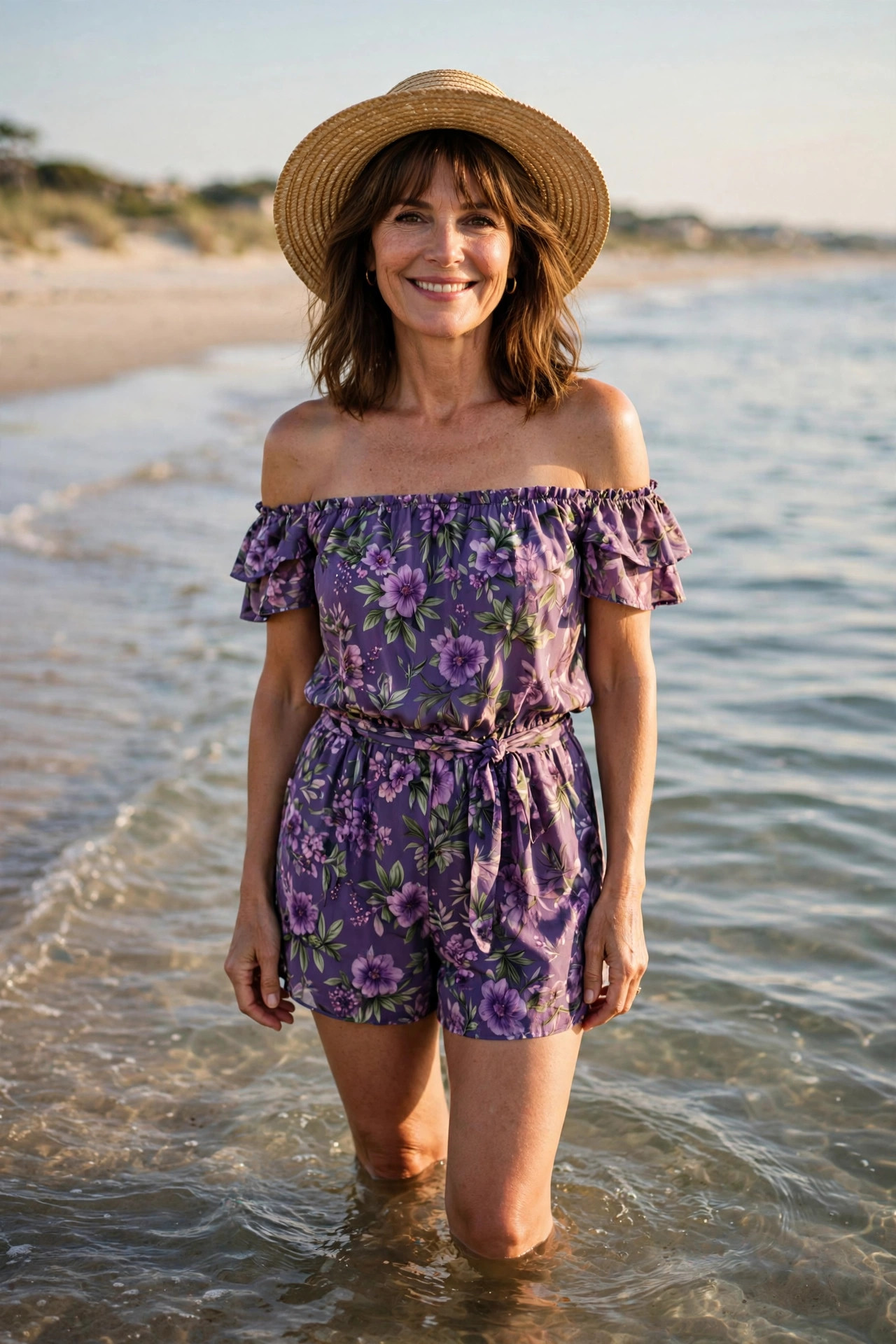
Semi-formal beach is the most common. The outfit is a tea-length or midi dress, a polished jumpsuit in a light fabric, or elegant separates, with wedges or low block heels. Prints and color are welcome, and the look should transition to the reception, which may be on a deck, a lawn, or indoors.
Beach formal means the couple wants elegance on the sand: a long gown in a luxurious but lightweight fabric, dressy wedges, and polished accessories. This is not black tie, but it is the beach’s version of formal. Keep the fabric light and the silhouette manageable in wind.
Upscale resort weddings often hold the ceremony off the sand entirely, on a terrace, in a garden, or under a pavilion. Here the dress code applies almost normally, and the beach is the backdrop rather than the ground. This is the one beach setting where real heels can work, but confirm the ceremony surface before committing.
When unsure where your wedding sits, ask someone in the wedding party or check the couple’s wedding website. Erring slightly formal is safe at every point on this spectrum.
Dresses That Work on Sand
The right beach wedding dress balances formality with physics. The silhouette needs to look like the occasion and survive the setting.
Length: tea-length and midi are the sweet spots for semi-formal beach weddings, long enough to read as occasion dressing, short enough to avoid dragging through sand. Maxis work when the hemline is manageable and the fabric is not too precious; a long gown with a train is a sand magnet and belongs off the beach. For barefoot casual, a flowy midi or maxi in a light fabric is the classic choice.
Weight and lining: this is the detail most guests miss. A very light, unlined skirt flies in beach wind and can expose more than intended. A half-lining, a slightly heavier fabric, or a skirt with some structure keeps the hemline behaving. Chiffon with a lining, lined crepe, and cotton with some body all handle wind better than tissue-thin unlined fabrics.
Silhouette: A-line, fit-and-flare, and flowing maxi shapes move with the breeze instead of fighting it. Body-conscious cuts in thin fabric show every gust; if the dress is fitted, the fabric should have enough weight to stay put. Wrap dresses are a beach natural: adjustable, flattering, and the tie detail reads as occasion dressing.
What to skip: trains and very long hemlines that will drag, delicate fabrics that sand will destroy, and anything so structured it cannot handle a breeze. The beach rewards ease, and the best-dressed guests look like the setting was part of the plan.
Shoes: The Sand Plan
Shoes are the single most beach-specific decision in wedding guest dressing, and the rule is absolute: plan for the actual ground. Stilettos and thin heels sink into sand, full stop. The shoes that work on sand all share one trait, a wide base that distributes weight.
Wedges are the beach wedding workhorse: stable on sand, dressy enough for semi-formal and beach formal codes, and available in everything from espadrille to polished finishes. A mid-height wedge is the safest single choice for a beach wedding.
Low block heels (under two inches) work when the look needs more polish than a wedge. The wide heel does not sink the way a stiletto does, and the lower height stays comfortable on uneven ground.
Dressy flat sandals are the right call for barefoot casual through semi-formal beach weddings. Embellished, metallic, or well-made leather flats look intentional, not underdressed. For the most casual barefoot ceremonies, elegant flat sandals that come off easily are perfect.
Barefoot moments: some couples explicitly invite guests to go shoeless for the ceremony on the sand. If the invitation says so, go with it, and bring sandals for the walk to and from the ceremony and for the reception. Do not go barefoot uninvited; it reads as underdressed when the couple expected shoes.
The second pair: if the reception moves to a solid surface, a deck, a lawn, or indoors, a second pair of dressier shoes in the bag is a smart move. Wear the sand shoes for the ceremony, change for the reception. A clutch or bag big enough to hold a folded flat sandal has saved many beach wedding nights.
Break them in: whatever you choose, wear the shoes before the day. Sand plus new shoes plus hours of standing is a combination that punishes the unprepared.

Wind: Hemlines, Fabrics, and Hair That Behave
Wind is the variable guests plan for least and notice most. A beach ceremony with a steady breeze will test every light hemline, loose hairstyle, and unsecured accessory.
Hemlines: as covered above, weight is the answer. A lined skirt, a heavier fabric, or a longer midi that has some drape will move gracefully instead of flying. If the dress is light and unlined, consider whether the wind exposure is real: an open beach ceremony is different from a sheltered resort courtyard.
Hair: secured styles outlast loose hair in beach wind every time. Updos, braids, and half-up styles pinned well survive a ceremony; long loose hair blows across the face in photos and needs constant management. This is practical, not a style rule: the goal is to enjoy the ceremony, not to fight your hair through it.
Accessories: wide-brim hats are lovely for sun protection at daytime beach weddings, but check the ceremony sightlines, a large hat can block the view for guests behind you. Statement earrings should be secure; very long dangling earrings catch wind and become uncomfortable. A small clutch or crossbody beats a large bag that the wind can tug.
The gust test: before leaving, stand in front of a fan or step outside on a breezy day in the full outfit. What flies, slips, or needs holding will do the same at the ceremony, and it is easier to fix at home.
Fabrics for Salt Air and Humidity
Beach air is humid and salty, and fabrics respond to it. The fabrics that work share traits: natural fibers or open weaves, light weight, and the ability to handle moisture without clinging or showing it.
Linen and linen blends are the beach classic: breathable, textured, and naturally relaxed. A linen blend with some structure reads more polished than pure linen for semi-formal codes.
Cotton, cotton voile, and cotton lawn are light, crisp, and breathable, with a fresh feel that suits daytime beach weddings. Voile’s slight sheerness needs a lining or slip.
Chiffon is the formal-beach fabric: floaty, elegant, and light enough for wind and heat, as long as it is lined or has enough body.
Light crepe and soft jersey work for structure without weight; jersey in particular resists wrinkling, which matters when the outfit travels to a destination wedding.
Fabrics to avoid: heavy polyester satin, which traps heat and shows sweat; velvet, brocade, and wool, which read as the wrong season entirely; and anything so delicate that sand, salt, or a gust will ruin it. When choosing between two fabrics, the lighter and more breathable one is almost always the right beach call. For the full heat-proof fabric ranking, the summer wedding guest dresses guide covers sweat and breathability in depth.
Colors That Photograph Well at Golden Hour
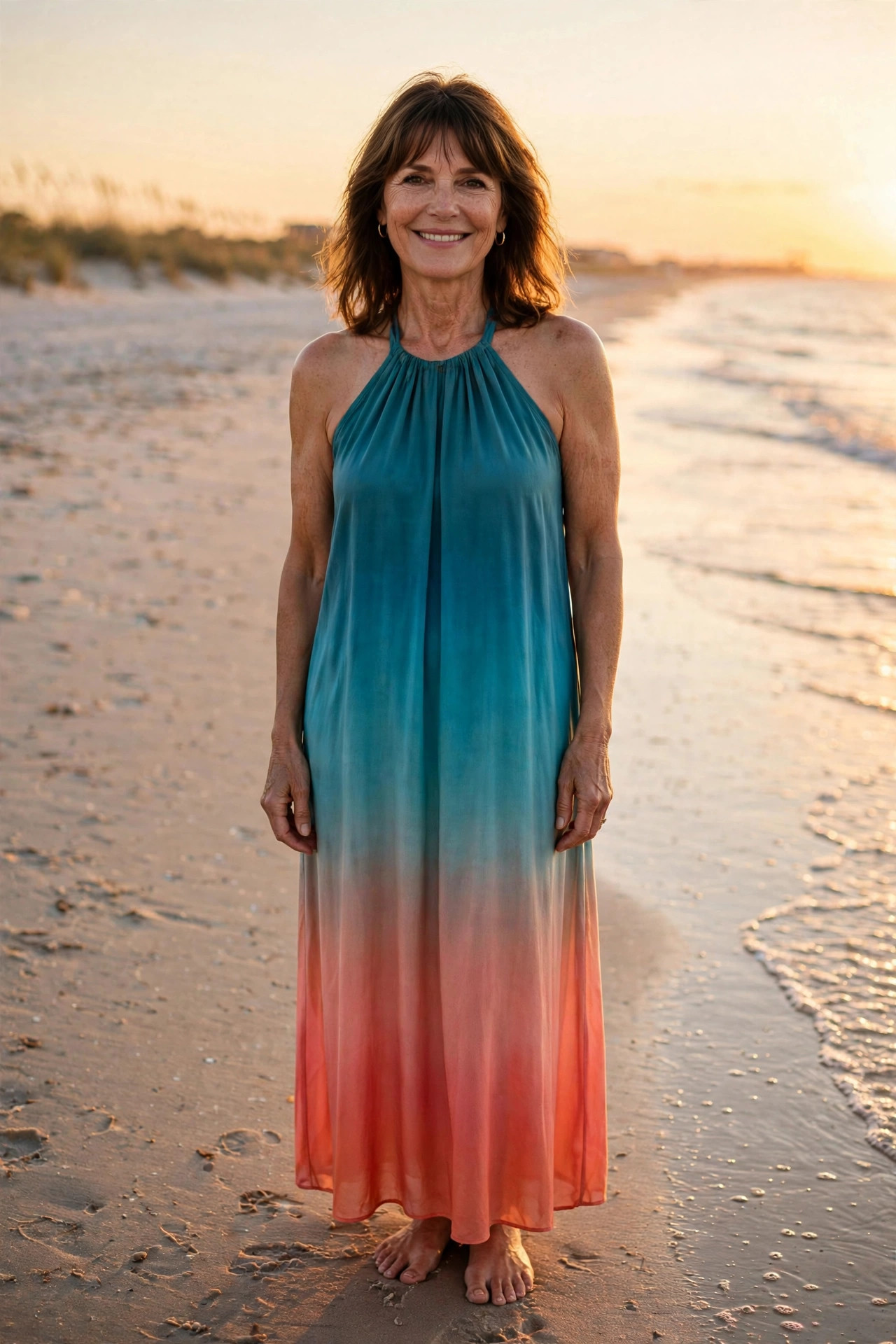
Many beach ceremonies happen at sunset, and golden-hour light is famously flattering, but it changes how colors read. Warm, saturated colors glow in sunset light: coral, turquoise, sunset orange, warm pink, and gold all photograph beautifully against sand and water. Cool pastels can wash out in the bright light before sunset, and very pale colors risk reading close to white in strong sun.
The white rule needs extra care at the beach. Strong sunlight makes pale colors photograph even paler, so a white-based print or a very light pastel can read as bridal from a distance. When a color is close to white, choose a print with strong color contrast or a deeper shade. The rule from the wedding guest outfits for women hub applies in every setting: when in doubt, pick a color that cannot be mistaken.
One more beach-specific color note: if you know the wedding party’s colors, avoid matching them too closely. At an outdoor wedding with a small visual field, a guest in the bridesmaids’ exact shade is more noticeable than at an indoor venue, and it is polite not to blend into the wedding party photos.

Layers for Sunset and the Reception
Beach weather changes fast. A day that starts hot and sunny can turn cool once the sun drops, and the evening breeze that was pleasant at 4 pm can feel cold by 8 pm. A light layer is not optional at a beach wedding, it is part of the outfit.
The right layer works with the dress, not against it: a linen wrap, a light pashmina-style shawl, a chiffon scarf, or a cropped linen jacket. Choose something in a color that complements the dress, since it will be in the evening photos. What to avoid: a bulky jacket or a heavy cardigan that covers the outfit you planned, and anything in a clashing color grabbed last-minute.
For daytime sun, the layering equivalent is sun protection: sunscreen applied before dressing and allowed to absorb, sunglasses for the ceremony at casual outdoor weddings, and a hat that does not block anyone’s view. Sun protection is comfort and photo insurance in one.
Fit and Budget Notes
A beach wedding day involves walking on uneven ground, sitting on unfamiliar seating, wind, and hours outdoors, so check every outfit in motion before leaving. Walk, sit, and stand in a breeze if you can. Waistbands, necklines, and hemlines all behave differently outside a fitting room, and sand plus wind expose fit issues faster than any indoor venue.
For plus-size guests, the same beach logic applies, and the most reliable silhouettes are the ones with structure where it counts: wrap dresses, fit-and-flare shapes, and empire waists define the waist without clinging, and breathable fabrics matter even more in humidity. Detailed fit-first guidance for formal dressing at every size is in the plus size dinner outfits for ladies guide, and the seated-comfort principles apply directly to a long wedding day.
Budget-wise, beach wedding guest outfits are strong rewear candidates. A coral linen midi, a floral chiffon maxi, or a turquoise wrap dress all work for vacations, dinners, and parties beyond the wedding. The strategy from why you always have nothing to wear applies directly: one versatile base in a beach-friendly color, reworn across weddings with different accessories and shoes, beats a closet of single-wear dresses. And because many beach weddings are destination weddings, packability matters: wrinkle-resistant fabrics that travel well are worth prioritizing, with the full destination breakdown coming in the destination wedding guest outfits guide.
FAQ
What should I wear to a beach wedding as a guest?
Match the dress code first, then plan for sand, wind, and sun. For casual beach weddings, a flowy midi or maxi in a breathable fabric with dressy flat sandals. For semi-formal, a tea-length or midi dress with wedges or low block heels. For beach formal, a long gown in a lightweight luxe fabric with dressy wedges. Avoid stilettos, which sink into sand, and skip white, ivory, or anything that could read as bridal.
What shoes are appropriate for a beach wedding?
Choose shoes for the actual ground. On sand, wedges, low block heels under two inches, or dressy flat sandals all work because their wide base does not sink. Stilettos and thin heels sink into sand and are never practical. If the ceremony is on the sand and the reception is on a solid surface, bring a second, dressier pair to change into. For explicitly barefoot ceremonies, wear sandals you can slip off easily.
What fabrics are best for a beach wedding guest outfit?
The best beach wedding fabrics are lightweight and breathable: linen and linen blends, cotton and cotton voile, chiffon, and light crepe. These handle heat, humidity, and salt air without clinging. Soft jersey is a good wrinkle-resistant option when the outfit needs to travel. Avoid heavy polyester satin, which traps heat and shows sweat, and leave velvet, brocade, and wool for colder seasons.
What colors can you wear to a beach wedding?
Like any wedding, white and its close relatives (ivory, cream, champagne) are off limits unless the couple asked for them. Beyond that, beach weddings welcome color: coral, turquoise, warm pink, sunset orange, and gold all glow in golden-hour light, and bright florals suit the setting. Be cautious with very pale pastels in strong sun, since they can photograph close to white. Avoid matching the wedding party’s colors too closely.
Conclusion
Beach wedding guest outfits come down to four decisions in order: the dress code, the ground, the wind, and the light. Read the invitation for formality, choose shoes with a wide base for sand, pick a hemline and hairstyle with enough weight to behave in the breeze, and favor colors that glow at golden hour. Add a light layer for the temperature drop after sunset, and the beach becomes the most enjoyable wedding setting to dress for. For the travel-packing side of seaside celebrations, the destination wedding guest outfits guide takes it from here.

Rameen Awan is the founder and editor of Outfit Algorithm, where she breaks down outfit formulas, dress codes, and styling systems for real life. Her guides focus on practical details other sites skip: fabric behavior, fit for different body types, and what actually works when you are getting dressed in a hurry.