
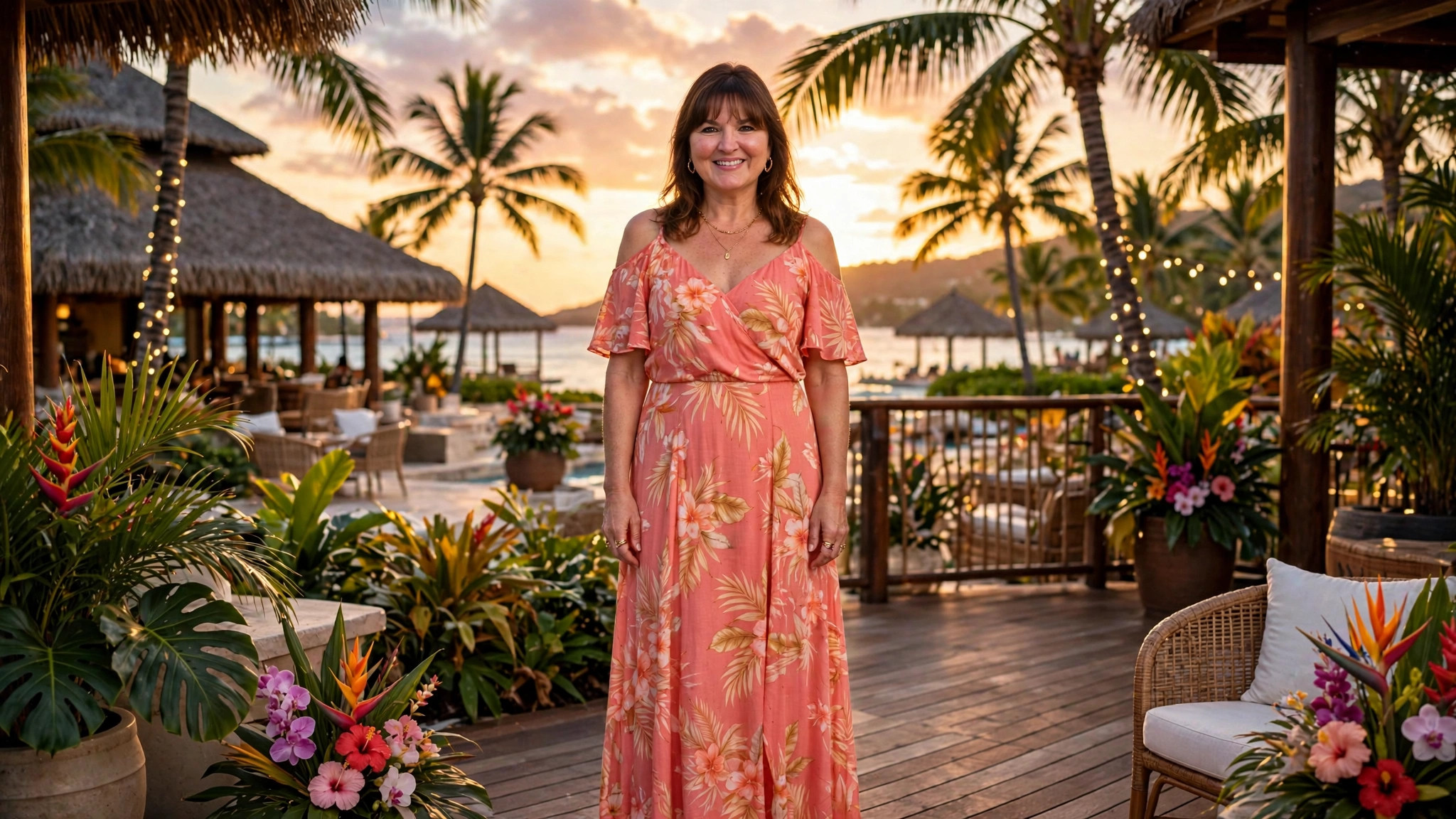
Destination wedding guest outfits are a packing problem before they are a styling problem. The dress code still rules, but now it has to survive a suitcase, fit a multi-day wedding weekend, and work in a climate you may not know. This guide solves the travel side: what to pack, how to plan for several events in one trip, and how to adjust for tropical beaches, European villas, deserts, mountains, and cities. For more on what the dress code actually asks of you, see The Knot’s destination wedding attire guide.
A destination wedding is any wedding that requires guests to travel and usually stay overnight, often across several days of events. For the guest, that means packing for a welcome party, the ceremony, the reception, and often a farewell brunch, not just one outfit.
Key Takeaways
- Pack for the whole wedding weekend, not just the ceremony: welcome party, rehearsal dinner, ceremony, and farewell brunch usually need separate looks.
- Choose wrinkle-resistant fabrics and pack with the roll method so outfits arrive wearable.
- The destination sets the formality range: a tropical beach and a European villa are different weddings, even with the same dress code.
- Research the venue and the local climate before you pack, and check the forecast the week of travel.
- Renting a formal outfit can beat buying one when you are flying to a single event.
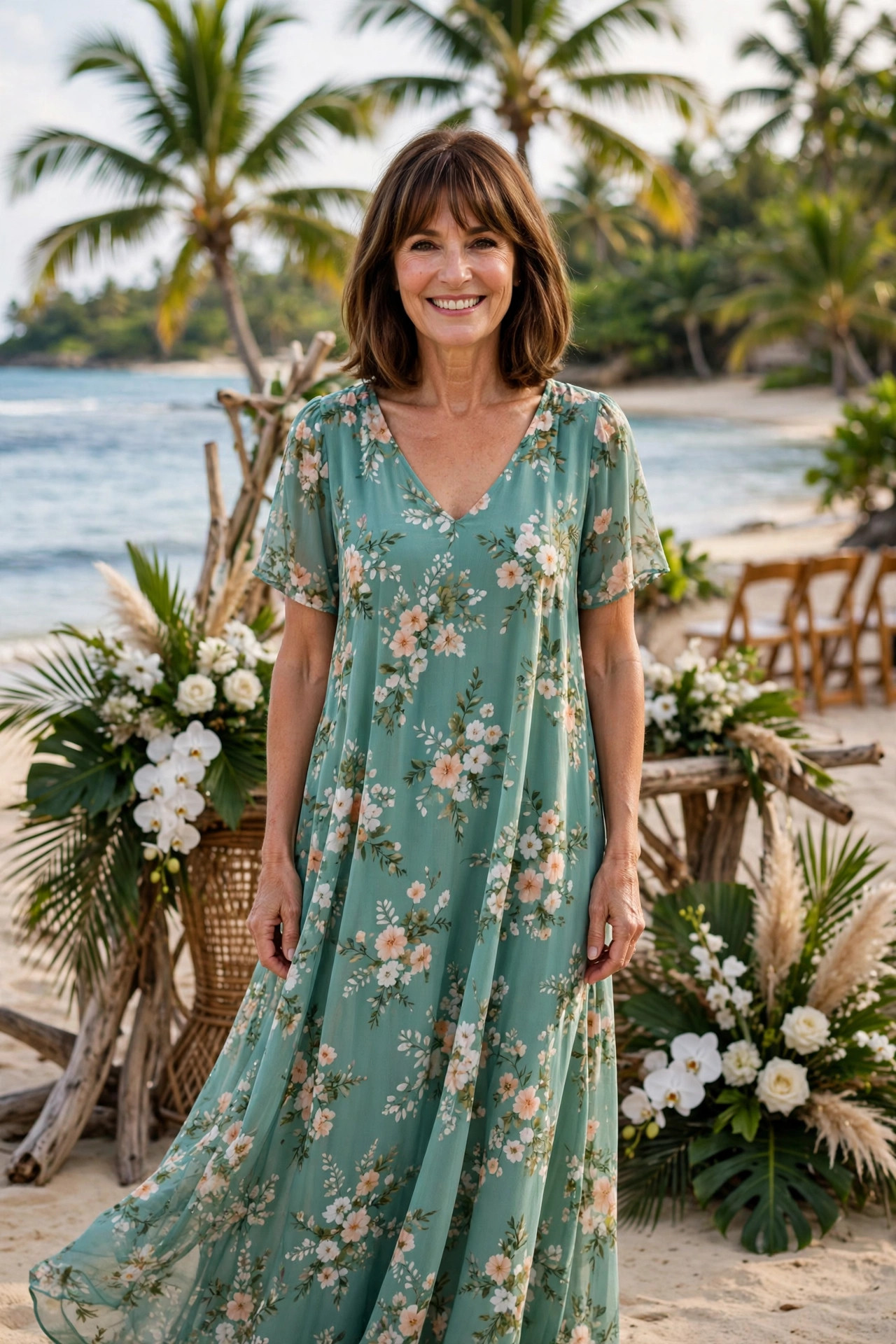
Destination Wedding Guest Outfit Decoder
Find your destination type, then plan the weekend around it.
| Destination Type | Weekend Events | Packing Direction | Shoe Plan |
|---|---|---|---|
| Tropical beach (Mexico, Caribbean, Hawaii) | Welcome party, ceremony on sand, reception, brunch | Flowy maxi or midi dresses in breathable fabrics, tropical prints, one light wrap | Wedges, block heels, or dressy flat sandals; nothing that sinks in sand |
| European villa or countryside (Italy, France, Greece) | Welcome dinner, ceremony, reception, brunch | Polished midi or maxi dresses, linen sets, elegant jumpsuit; richer fabrics for evening | Block heels or dressy sandals for cobblestones and gravel |
| Desert or Southwest (Arizona, Morocco) | Sunset ceremony, outdoor reception | Earth tones, flowy silhouettes, light layers for the temperature drop after sunset | Neutral wedges or block heels; closed-toe options for dusty ground |
| Mountain or alpine lodge | Ceremony with a view, indoor reception | Heavier fabrics, long sleeves, a real coat plan, closed-toe shoes | Closed-toe block heels or dressy boots; grip matters on stone and snow |
| City (New York, London, Paris) | Rehearsal dinner, ceremony, reception, brunch | Cocktail dresses, sleek separates, one formal option; standard dress-code logic applies | Your usual event heels; pack comfortable walking shoes for between events |
| Vineyard or countryside estate | Outdoor ceremony, barn or tent reception | Midi dresses in romantic prints, a layer for the evening, earthy or jewel tones | Block heels or wedges for grass and gravel; never stilettos on lawn |
What Makes a Destination Wedding Different
At a hometown wedding, you choose one outfit and drive home. At a destination wedding, you are dressing for three or four events across several days, in a place whose weather you cannot predict from your closet. That changes the decisions: wrinkle resistance matters as much as color, versatility matters as much as formality, and every item should earn its place in the suitcase.
The good news is that the core rules do not change. The dress code on the invitation still decides formality, and the etiquette basics from the complete wedding guest guide still apply: avoid white and anything bridal, keep black tasteful, and never outshine the couple. What changes is the logistics around those rules.
The Multi-Event Weekend: One Trip, Four Looks
Most destination weddings run on a weekend rhythm: a welcome party, sometimes a rehearsal dinner, the ceremony and reception, and a farewell brunch. Packing four unrelated outfits is heavy and expensive, so plan them as a system.
Start with the ceremony outfit, since it has the strictest requirements, then build the other looks around shared pieces. A wrap that works over the ceremony dress can become the evening layer for the welcome party. The same clutch and jewelry can carry through two events. Shoes are the heaviest items, so choose two pairs that cover everything: one ceremony-appropriate pair and one comfortable pair for daytime events.
For the welcome party, aim one step below the ceremony in formality: a polished sundress, a linen set, or a jumpsuit. The farewell brunch is the most relaxed, but it is still a wedding event, so keep it neat: a simple midi dress or tailored separates. The rehearsal dinner, if guests are invited, usually sits between the welcome party and the ceremony in formality.

Fabrics That Survive a Suitcase
Wrinkle resistance is the single most important fabric quality for a destination wedding. Crepe, jersey, scuba-style knits, and matte satin pack well and shake out with minimal creasing. Linen looks beautiful but wrinkles fast, so save it for events where a relaxed texture fits, or accept the creases as part of the look.
Avoid fabrics that show every fold: stiff taffeta, thin silk charmeuse, and anything with a crisp press will arrive looking tired. If you love a wrinkle-prone fabric, plan to steam it on arrival rather than hoping for the best.
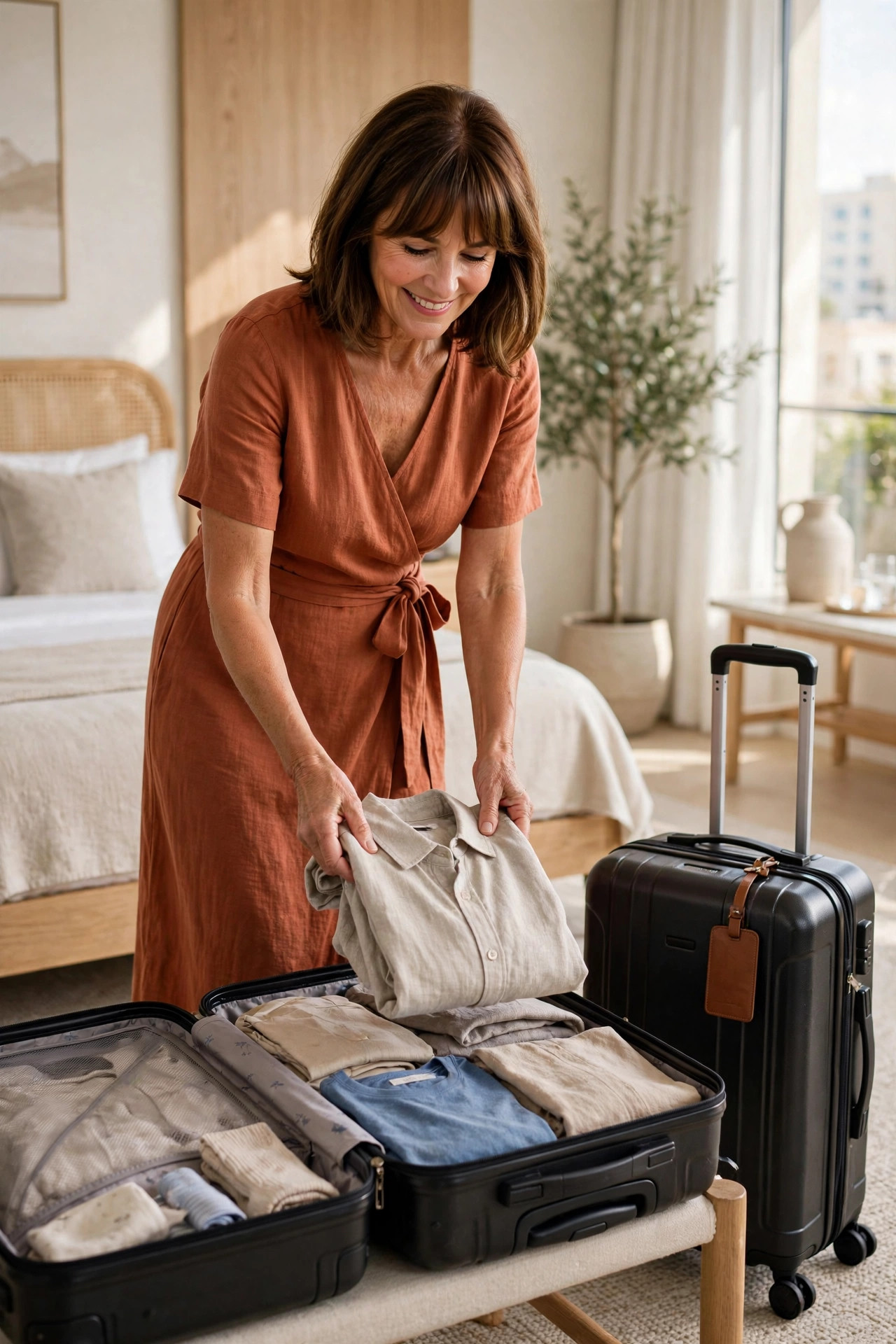
The roll method works better than folding for most wedding guest fabrics: roll garments tightly instead of folding them, which reduces hard crease lines and saves space. Packing cubes keep rolled pieces from shifting in transit. A small travel steamer is worth its weight for formal fabrics, and most hotels will provide an iron on request if you ask ahead.
Packing It: A Carry-On Strategy
If your ceremony outfit fits in a carry-on, keep it there. Lost luggage is rare, but a wedding weekend is the worst time to discover it, and a carry-on keeps your most important outfit under your control. Shoes go in first along the edges, rolled dresses fill the middle, and accessories tuck into the gaps.
Pack a small emergency kit: a stain remover pen, fashion tape, a mini sewing kit, blister patches, and safety pins. These weigh almost nothing and solve the problems that actually happen at weddings, from a loose hem to new-shoe blisters.
For the return trip, bring one empty packing cube or a laundry bag so worn outfits stay separate from clean ones. It sounds minor, but it keeps the last day of the trip from turning into a wrinkled jumble.
The Destination Formality Spectrum
Destination weddings span the full formality range, and the destination alone does not set it. A beach wedding can be barefoot casual or black tie; a European villa wedding can be cocktail or formal. The invitation’s dress code is still the authority, decoded in the wedding guest dress code guide.
What the destination does is narrow the practical options within that dress code. At a tropical beach wedding, even formal means breathable fabrics and sand-friendly shoes, which the beach wedding guest guide covers in depth. At a mountain lodge, even cocktail means closed-toe shoes and a real coat. Read the dress code first, then let the destination edit the details.
Planning for an Unknown Climate
The biggest packing mistake at destination weddings is dressing for the season at home instead of the climate at the venue. A December wedding in the Caribbean is summer dressing; a July wedding in the mountains can mean a chilly evening. Check the destination’s typical weather for the wedding month, then check the forecast again the week you travel.
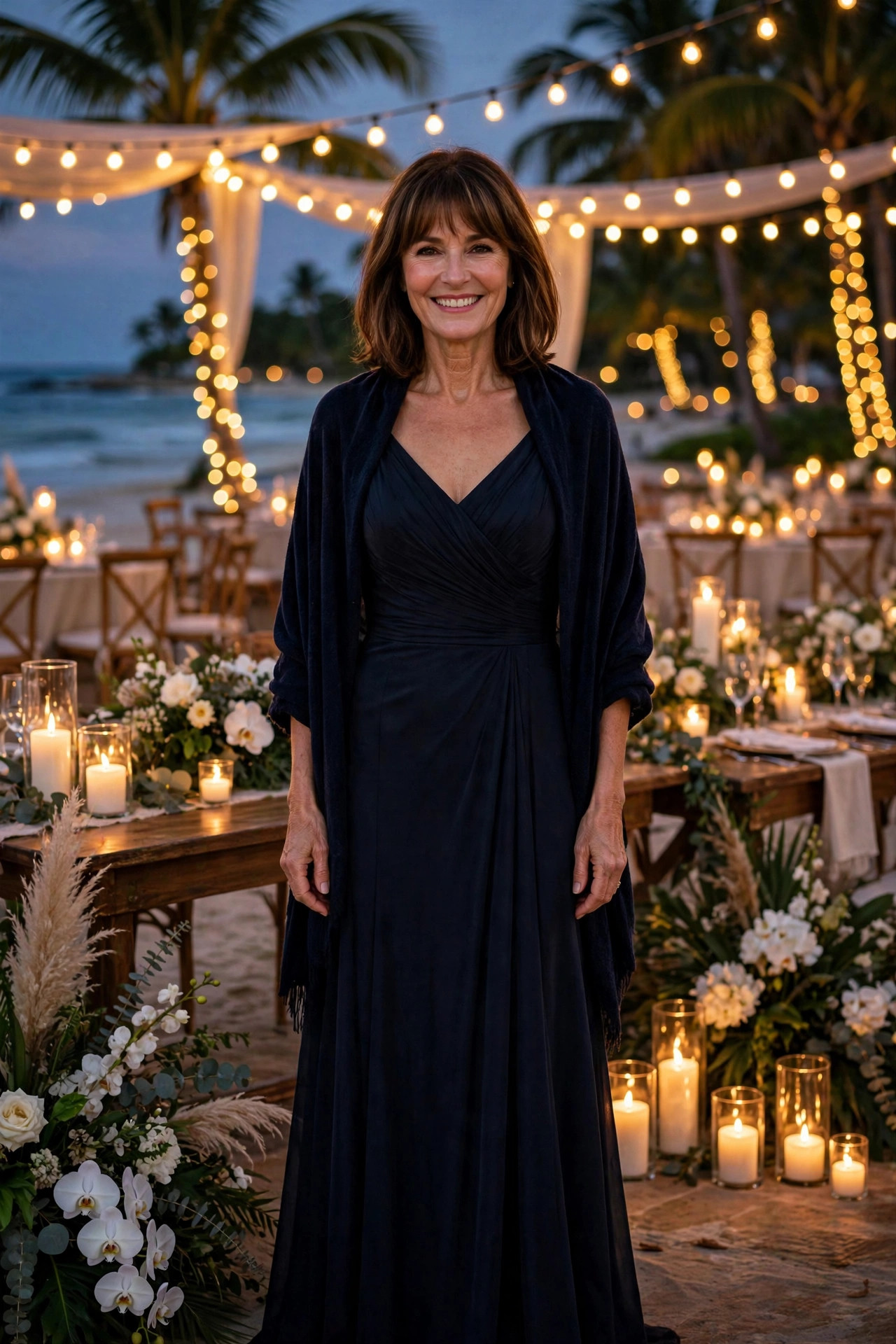
Research the venue itself, not just the city. An outdoor ceremony at sunset cools fast, even in warm climates, so a light wrap earns its place. A venue at altitude runs cooler than the same latitude at sea level. If the couple has a wedding website, read it carefully: couples who chose a tricky venue often spell out the practical guidance there.
When the forecast is genuinely uncertain, pack one layer that works with everything and shoes that handle two surfaces. One adaptable outfit beats two perfect ones when the weather refuses to commit.
Cultural Considerations
Some destinations come with dress norms worth respecting. If the wedding includes a ceremony at a religious site, a temple, or a conservative venue, plan for covered shoulders and longer hemlines, and bring a scarf or wrap even if you do not need it for warmth. This is about respect for the setting, not about your personal style.
For international destinations, a quick check of local customs around dress is worth the effort. What reads as festive in one place can read as underdressed or overexposed in another. When in doubt, the slightly more covered and slightly more formal option is the safe one.
Fit and Budget Notes
Travel adds fit constraints: long flights, humidity, and days of events mean comfort is not optional. Try the full outfit, with the intended shoes and undergarments, before you pack it. Seams that irritate for an hour at home will be miserable by hour six of a wedding day. More on fit-first thinking in the plus size dinner outfits guide, whose fit logic applies well beyond dinner.
For budget, a destination wedding is already expensive for the guest, so the outfit does not need to be. Renting a formal dress or gown for a single trip often costs less than buying, and it solves the storage problem afterward. If you buy, choose pieces you will wear again: a midi dress in a versatile color earns its keep far better than a single-wear gown. The rewear strategy in the closet guide applies perfectly to wedding weekends.
FAQ
What should a female guest wear to a destination wedding?
A flowing maxi dress, printed midi dress, or elegant jumpsuit in a breathable, wrinkle-resistant fabric, matched to the invitation’s dress code. Beach destinations call for sand-friendly shoes and light layers, while European or city venues follow standard formal logic.
What types of fabrics are best for destination wedding guest outfits?
Lightweight, breathable, wrinkle-resistant fabrics: crepe, jersey, matte satin, and cotton voile travel best. Linen works for relaxed settings but wrinkles fast, so reserve it for events where that texture fits. Avoid stiff or crisp fabrics that crease in a suitcase.
How can I avoid wrinkles in my destination wedding outfits?
Choose wrinkle-resistant fabrics, roll garments instead of folding them, and use packing cubes to keep everything in place. Bring a travel steamer or ask the hotel for an iron on arrival for formal pieces.
What accessories should I pack for a destination wedding?
Versatile pieces that work across several events: a light wrap or shawl, simple jewelry that suits every outfit, one clutch, and comfortable backup shoes. Sun protection like sunglasses and sunscreen belongs in the bag for outdoor destinations.
Conclusion
Destination wedding guest outfits reward planning more than shopping. Pack for the whole weekend, choose fabrics that survive travel, match the dress code to the destination’s practical realities, and keep one adaptable layer in reserve. Do that, and you arrive ready for every event, not just the ceremony.

Rameen Awan is the founder and editor of Outfit Algorithm, where she breaks down outfit formulas, dress codes, and styling systems for real life. Her guides focus on practical details other sites skip: fabric behavior, fit for different body types, and what actually works when you are getting dressed in a hurry.