

Standing in front of a closet, dress in hand, shoes lined up on the floor: this is where most outfits stall. Learning how to choose shoes with dresses does not require a stylist’s eye, just a simple system. Match the shoe to the hem length first, then to the occasion’s formality, and finally filter everything through comfort. In that order, every time.
For shoe pairing advice, browse Who What Wear’s shoe guide.
This guide gives you that three-step system, plus a decoder table you can save, seasonal swaps for re-wearing your favorites, and comfort rules that keep you on your feet all day. It works for mini dresses, midi dresses, maxi dresses, and everything between, on any budget.
Key Takeaways
- Step 1, hem length: shorter hems show more shoe, so the shoe carries more visual weight; longer hems hide most of the shoe, so comfort and proportion matter more.
- Step 2, formality: rank the occasion on a four-tier ladder (casual, smart casual, cocktail, black-tie) and pick shoes from the same tier as the dress.
- Step 3, comfort: count the hours on your feet, break shoes in before the event, and match the heel to the venue floor.
- Color shortcut: neutral shoes (nude, black, white, metallic) work with almost any dress; patterned dresses pair best with simple, solid shoes.
- Seasonal secret: one dress can work year-round if you swap the shoe, from sandals in summer to boots in winter.
What Is the Shoe-Dress Matching System?
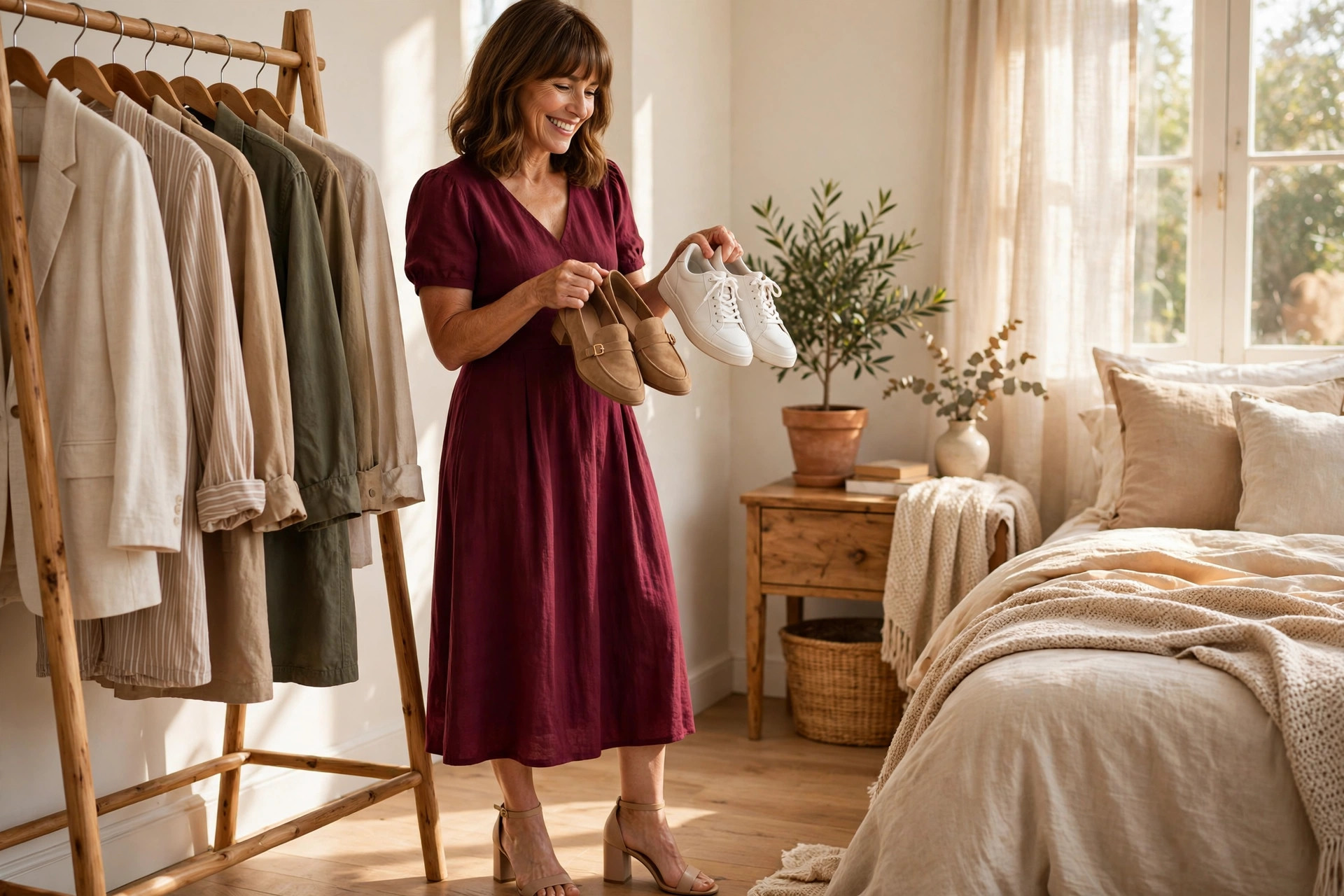
Shoe-dress matching is a three-step decision method: you compare the dress’s hem length against shoe shapes, the occasion against a formality ladder, and the plan for the day against your comfort limits. It replaces guesswork with a short checklist, so the same logic works whether you are dressing for brunch, the office, or a wedding reception.
Why does it work? Shoes and dresses talk to each other through proportion, formality, and color. Get those three conversations right and the outfit looks intentional. Get one wrong, like pairing chunky hiking-style sneakers with a silk slip dress, and the outfit looks accidental. The system below walks through each conversation in order of impact, starting with the one that matters most: proportion.
How Does Hem Length Change Which Shoes Work Best?
Hem length decides how much of your shoe is visible, and visibility decides how hard the shoe has to work. A mini dress puts shoes on full display, so they become a co-star of the outfit. A floor-grazing maxi hides almost everything, so the shoe’s job is mainly proportion and comfort. Start here, because this single decision narrows your options more than anything else.
Short and Mini Dresses
With hems well above the knee, legs take center stage and shoes get maximum visibility. This is where you can make a statement: strappy sandals, heeled mules, ankle boots, or clean sneakers all read clearly. Two cautions. First, avoid shoes that cut the leg at an awkward point; mid-calf boots can shorten the leg visually, while ankle boots or knee-high boots usually flatter more. Second, keep balance in mind: a very short dress plus a very high stiletto can look top-heavy in reverse, so a block heel or a wedge often gives a steadier, more grounded line.
Fit flexibility note: if you prefer more coverage or support, opaque tights with ankle boots give the same leg-lengthening effect as bare legs with sandals, and they work across body types.
Knee-Length and Midi Dresses
Knee-length and midi hems are the most versatile zone, which is also why they confuse people. Almost any shoe style works here, so let the occasion and the shoe’s visual weight decide. Pointed flats and slingbacks read polished for work; block heels and wedges handle outdoor venues and long days; ankle boots bridge the gap into fall.
The one proportion rule that matters at midi length: match the shoe’s weight to the dress’s weight. A floaty, voluminous midi can swallow a delicate flat and look bottom-heavy, so give full skirts a shoe with some presence, like a block heel or a structured boot. A slim, fitted midi pairs beautifully with something lighter, like a pointed flat or a slim sandal. If you only remember one pairing principle from this guide, make it this one.
Maxi and Floor-Length Dresses
Maxi dresses hide most of the shoe, so this is where comfort can win without a style penalty. Wedges, flat sandals, block heels, and even clean minimal sneakers work, because only the toe of the shoe peeks out as you walk. The critical check is hem clearance: try the dress on with the exact shoes you plan to wear, since heel height changes where the hem falls. A maxi that grazes the floor in flats will drag in sneakers with a thick sole, and one hemmed for heels will look awkwardly short in flats.
For formal floor-length gowns, keep the shoe refined even though it hides: a satin sandal or a sleek pump keeps the look coherent when you sit, climb stairs, or catch a gust of wind. Nobody sees the whole shoe, but everyone sees enough.
The Hem-Length Decoder Table
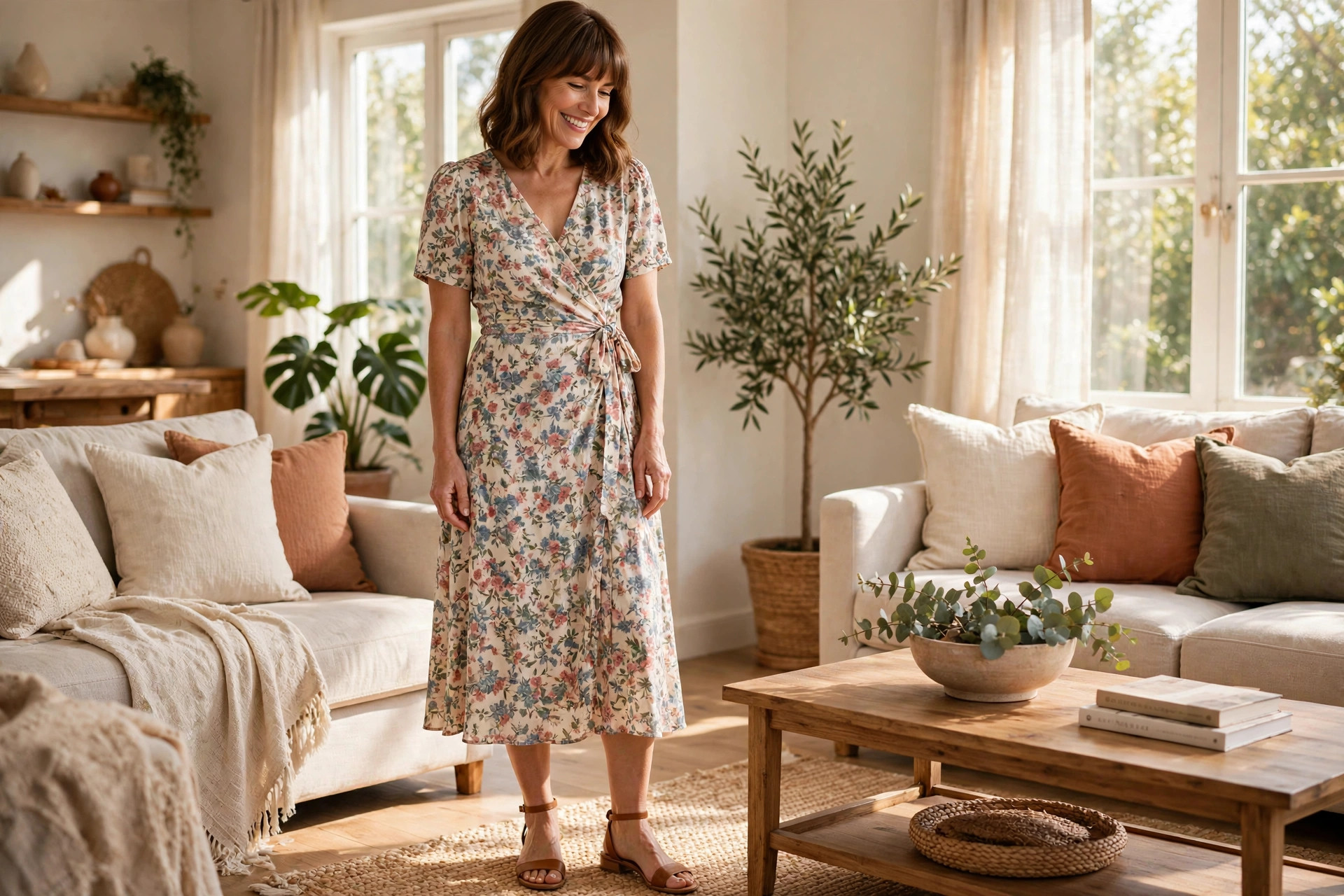
Save this table. Find your hem, read across, and you have your starting shortlist.
| Hem length | Best shoe shapes | Heel guidance | Watch out for |
|---|---|---|---|
| Mini (mid-thigh) | Strappy sandals, heeled mules, ankle boots, clean sneakers | Block or wedge heels for balance; stilettos only if you walk in them easily | Mid-calf boots that cut the leg line; overly chunky soles that unbalance a short hem |
| Above the knee | Ankle boots, pointed flats, low block heels, loafers | Low to mid heels (1–2 inches) for everyday; higher for evenings | Shoes with heavy hardware that fight a simple dress |
| Knee-length | Pumps, slingbacks, ballet flats, kitten heels | Match the day: kitten or block for long days, higher for short evenings | Ultra-delicate flats under a very full skirt (looks bottom-heavy) |
| Midi (mid-calf) | Block heels, wedges, ankle boots, pointed flats | Mid heels balance the longer hem; ankle straps add security | Boots that end exactly at the hemline, creating a visual traffic jam |
| Tea-length (below calf) | Slingbacks, heeled sandals, dressy flats, low boots | Low to mid heels keep the vintage-leaning length modern | Very high stilettos, which can make this classic length feel costume-like |
| Maxi / floor-length | Wedges, flat sandals, block heels, sleek pumps for formal | Settle heel height first, then check hem clearance | Hem dragging or floating because the shoe was chosen after the fitting |
How Do You Match Shoe Formality to the Occasion?
After hem length, formality is the second filter. Think of both the dress and the shoe as sitting on the same four-rung ladder. When both sit on the same rung, the outfit looks right even before anyone analyzes why.
Tier 1, casual: sneakers, flat sandals, espadrilles, casual loafers. This is the tier for errands, casual brunches, and relaxed daytime plans. A cotton sundress with flat sandals lives here; check out these sundress styling ideas for warm-weather inspiration.
Tier 2, smart casual: heeled mules, wedge sandals, ankle boots, polished flats. Dinners out, date nights, and most office settings sit here. A midi dress with block heels is the classic smart-casual uniform, and our dinner outfit ideas show how this tier dresses up without going formal.
Tier 3, cocktail and semi-formal: strappy heeled sandals, dressy pumps, embellished flats, sleek heeled boots. Holiday parties, wedding receptions, and dressy evening events belong here. If you need holiday dressing inspiration, notice how the shoes step up a tier while the dresses do the same.
Tier 4, black-tie formal: satin or embellished heels, elegant strappy sandals, refined pointed pumps. Floor-length gowns and the most formal invitations require this tier, and the shoe should look deliberate even though a long hem hides most of it.
The most common mistake is a tier mismatch in either direction: sneakers dragging down a cocktail dress, or stilettos overdressing a casual sundress. When in doubt, split the difference by one tier rather than two; a dressy flat can rescue a borderline outfit in both directions.
What Are the Comfort-First Rules for Dress Shoes?
Comfort is the third filter, and it is the one that decides whether you enjoy the event or endure it. A lower heel you can walk in confidently always looks better than a higher heel that changes how you move. Run every shoe-dress pairing through these five rules before you commit.
The hours-on-feet rule. Count the total time, including travel, standing, and walking between venues, not just the event itself. Two hours at a dinner means different shoes than eight hours at an all-day wedding. For long days, favor block heels, wedges, or dressy flats; reserve slim stilettos for short evenings.
The break-in rule. Never debut new shoes at an important event. Wear them around the house for a few evenings first, with the socks or tights you plan to wear. Stiff straps soften, soles flex, and you discover pressure points while you can still change plans.
The venue-surface rule. Thin heels sink into grass, get trapped between cobblestones, and slip on polished marble. Outdoor weddings and garden parties call for wedges, block heels, or flats. If the invitation mentions a lawn or a historic venue, treat the ground as part of the dress code.
The strap-and-support rule. Ankle straps, T-straps, and secure closures keep the foot from sliding forward, which is the real cause of most heel pain. If you love a backless mule, save it for occasions with minimal walking. Cushioned insoles and a wider heel base also distribute pressure more evenly, which matters more than the heel’s exact height.
The two-shoe plan. For events with a formal arrival and a long night, bring a backup pair: ceremony heels plus dance-floor flats, or polished boots plus comfortable spares in the car. This is not overpacking; it is the oldest trick in event dressing, and it lets you choose the prettier shoe for photos without suffering later.
How Do You Swap Shoes with the Same Dress by Season?

One of the best budget moves in any wardrobe is re-wearing the same dress across seasons by changing only the shoes (and maybe a layer). Here is how each season shifts the shoe choice for a typical midi or knee-length dress.
Spring calls for transitional shoes: ballet flats, low block heels, or ankle boots on cooler days. Skip heavy winter boots; the season’s lighter light makes them look out of place even if the temperature disagrees.
Summer belongs to sandals, espadrilles, and breathable flats. Strappy sandals dress up a simple cotton dress for evenings, while flat leather sandals keep daytime looks easy. This is also the season where a pedicure becomes part of the outfit plan, since open shoes show the foot.
Fall is boot season, and it is the most forgiving. Ankle boots, knee-high boots, and loafers with tights all pair naturally with dresses, and our fall dinner looks show how boots ground autumn outfits. Suede and leather textures echo the season’s fabrics, and a midi dress with knee-high boots is one of the most reliable cold-weather formulas there is.
Winter demands coverage and grip: knee-high or over-the-knee boots, heeled booties with tights, and weather-ready soles. A dress that felt summery in sandals becomes a winter outfit with boots, tights, and a coat, as these winter dressing ideas demonstrate. Darker shoe colors also feel seasonally right, though black boots are a choice, not a rule.
The underlying principle: match the shoe’s visual temperature to the season. Light, open shoes read warm-weather; covered, textured shoes read cold-weather. When the shoe and the season agree, the whole outfit looks current.
How Do You Match Shoe Color to Your Dress?
Color is the third conversation between shoe and dress, after proportion and formality. It matters less than the first two, which is good news: color is the easiest part to get right.
Start with neutrals. Nude, black, white, and metallics (gold, silver, bronze) pair with nearly every dress color. Nude shoes close to your skin tone visually extend the leg line, which flatters shorter hems. Black shoes anchor bold or dark dresses. Metallics act as neutrals for evening and festive occasions.
Repeat an accent. If your dress has a pattern with two or three colors, pick shoes in one of the secondary colors. A floral dress with touches of green looks pulled-together with deep green flats, even if green is not the dress’s main color. This trick makes patterned dresses feel styled rather than busy.
Build a tonal column. Shoes in the same color family as the dress, even a few shades darker or lighter, create one long visual line. A navy dress with navy or deep blue shoes looks elegant and elongating. You do not need an exact match; close is better than exact, because identical shades can look like a failed attempt at matching.
Keep it simple with busy dresses. The busier the dress (bold prints, sequins, heavy embellishment), the simpler the shoe should be. A solid, unadorned shoe lets a statement dress stay the star. Conversely, a plain dress in a solid color is the perfect canvas for a shoe with texture, pattern, or an interesting color.
What Mistakes Should You Avoid When Pairing Shoes with Dresses?
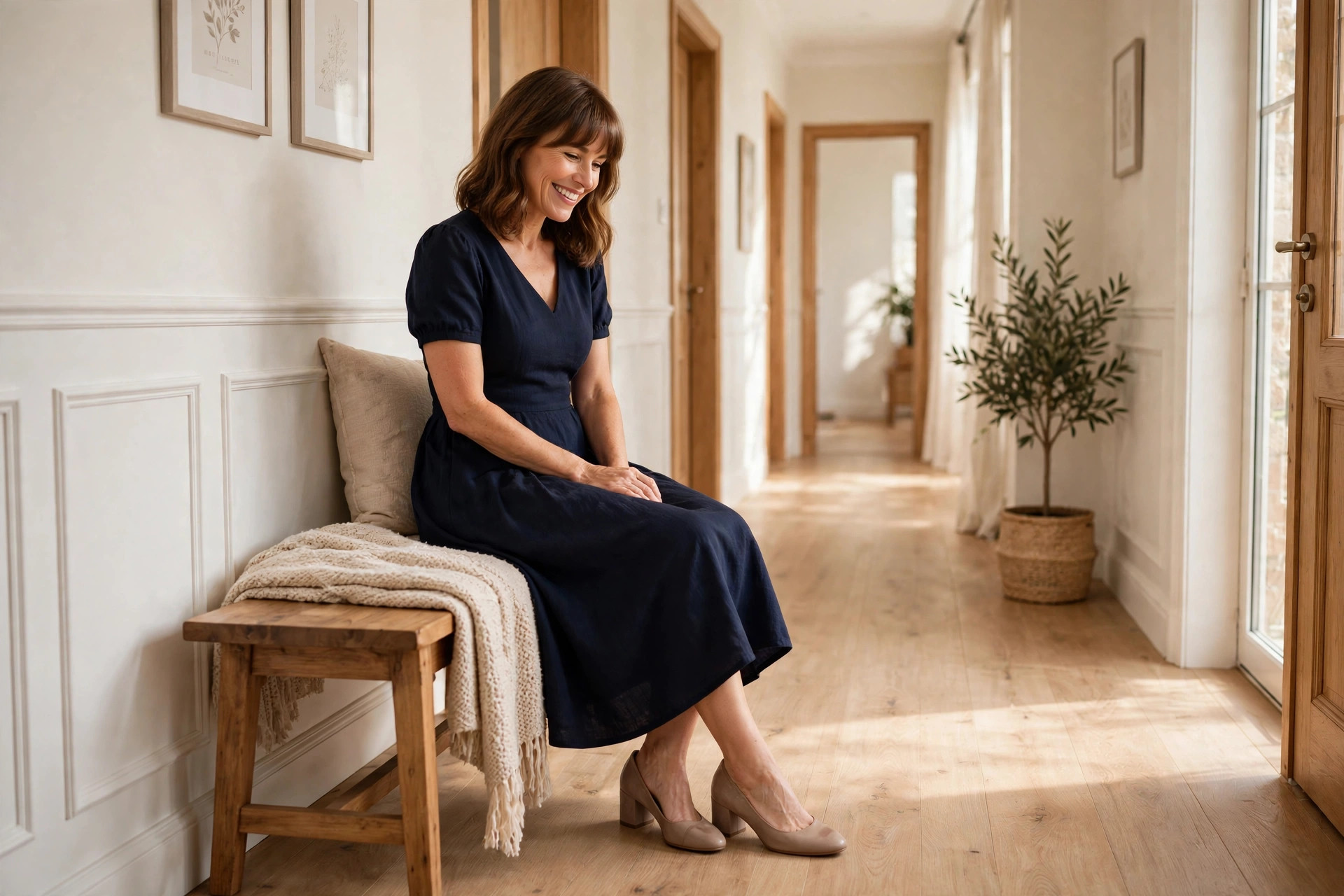
Most shoe-dress mistakes come from skipping one of the three steps above. Watch for these repeat offenders: choosing the heel before checking the hem (and discovering the maxi drags), matching formality tiers badly (stilettos with a casual sundress, or sneakers with a cocktail dress), and buying the shoe for the store mirror instead of the venue floor. A shoe that looks perfect under boutique lighting can fail on grass, cobblestones, or a long walk from the parking lot.
Another quiet mistake is ignoring the dress’s fabric weight. Heavy fabrics like velvet, brocade, or thick sweater knits need shoes with visual substance: boots, block heels, or structured loafers. Light fabrics like chiffon, linen, or silk pair naturally with delicate sandals and slim flats. When the shoe and the fabric feel like they belong to the same season and the same story, the outfit clicks. And if choosing still feels overwhelming, that stuck feeling usually is not about shoes at all; see what to do when you feel like you have nothing to wear for a reset on the whole decision process.
Frequently Asked Questions
How do I choose the right heel height for my dress?
Think about three things: the hem length, the hours you will be on your feet, and the venue surface. Longer dresses generally pair well with a bit of heel for proportion, while shorter dresses give you more freedom. For all-day events, a block heel or wedge in the 1-2 inch range usually outlasts a slim stiletto, and outdoor venues rule out thin heels entirely. The right height is the tallest one you can walk in without changing your natural stride.
What type of shoes should I wear with a maxi dress?
Wedges, flat sandals, block heels, and low heeled boots all work well with maxi dresses, because the long hem hides most of the shoe. Prioritize comfort and check the hem clearance with the exact pair you plan to wear, since heel height changes where the hem falls. For formal maxis and gowns, choose a refined sandal or pump so the visible toe of the shoe matches the occasion.
How can I make my shoes more comfortable when wearing them with dresses?
Start with shoes that fit well and break them in at home before the event. Look for cushioned insoles, good arch support, and secure straps or closures that stop the foot sliding forward. Block heels and wedges distribute weight better than slim stilettos, and a backup pair of flats for later in the day is a practical safety net for long events.
Should shoes match dress color?
They do not need to match exactly, and a close-but-not-identical shade often looks more polished than a perfect match. Neutral shoes in nude, black, white, or metallic tones work with almost any dress. With patterned dresses, pick a solid shoe in one of the pattern’s secondary colors to tie the outfit together without competing with the print.
Conclusion
Choosing shoes with dresses gets easy once it becomes a system instead of a guess: hem length first, formality second, comfort third, and color as the finishing touch. Keep the decoder table handy, run new pairings through the comfort rules, and re-wear your favorite dresses across seasons with a simple shoe swap. The best shoe for any dress is the one that looks intentional at the start of the day and still feels good at the end of it.

Rameen Awan is the founder and editor of Outfit Algorithm, where she breaks down outfit formulas, dress codes, and styling systems for real life. Her guides focus on practical details other sites skip: fabric behavior, fit for different body types, and what actually works when you are getting dressed in a hurry.