

Learning how to style wide leg pants is simpler than it looks. The whole thing comes down to three rules: balance the volume of your top against the width of the leg, match your hem length to your shoes, and pick a fabric that drapes the way the occasion calls for. Get those three right and the same pair of pants can carry you from the office to dinner without a second thought.
For wide-leg pant inspiration, see InStyle’s wide leg pants looks.
Wide leg pants are trousers that fall from a fitted waist into a leg opening that stays wide through the full length. That width is the whole point: comfort, movement, and a long, clean line. It is also the thing that goes wrong when the rest of the outfit ignores it. This guide treats styling wide leg pants as a system, not a list of outfit photos. You will learn the volume balance rule, the hem-to-shoe math, a fabric drape decoder, and exact adaptations for petite and tall frames.
Key Takeaways
- Volume rule: if the pants are wide, keep the top defined. Tuck it, crop it, or choose a fitted cut, so the waist stays visible.
- Hem-to-shoe math: full-length hems need sleek shoes and a clean break; cropped hems need a visible ankle and shoes that do not chop the line.
- Fabric drives the occasion: fluid drape reads dressy, crisp structure reads professional, soft knits read casual.
- Petite and tall are not exceptions: both frames can wear wide leg pants. Petite styling needs a high waist, a clean hem, and defined shoes; tall styling needs length and heavier fabrics for balance.
- One good pair, three outfit formulas (office, casual, evening), and you are set for the week.
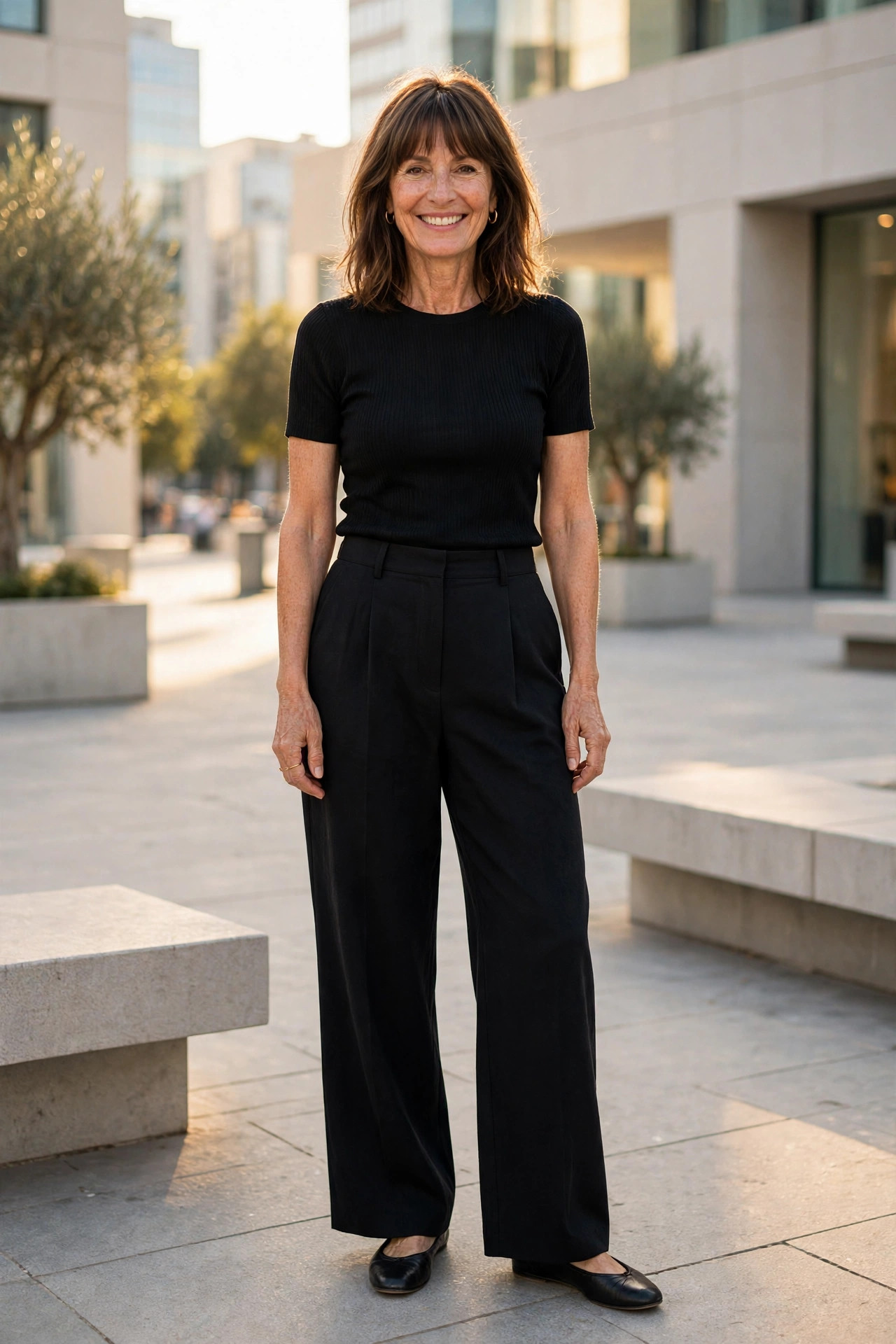
Rule 1: Balance the Volume (The 1:1 Principle)
The most important idea in this article: wide on the bottom needs definition on the top. The wide leg creates visual volume from the hip down. If your top adds equal or greater volume, the eye cannot find your waist and the outfit reads shapeless. If the top is fitted, tucked, or cropped, the waist becomes the anchor point and the wide leg looks intentional and long.
This is the 1:1 principle. One voluminous piece, one defined piece. It explains almost every good wide leg outfit and almost every bad one.
Tops that do the job
- Tucked-in button-down or blouse. The tuck marks the waist exactly. A front tuck works when the fabric is thin; a full tuck works when the fabric is structured enough not to bunch.
- Cropped tops and sweaters. A top that ends at or just above the waistband shows the waist without any tucking effort. Fine-gauge knits work best because they lie flat.
- Fitted knits and bodysuits. A bodysuit is the zero-fuss option: it creates one smooth line from shoulder to waist with nothing to bunch or readjust.
- Slim turtlenecks and mock necks. Fine-knit necklines add polish while keeping the upper body sleek, which is why they appear in so many winter wide leg outfits.
Tops that break the system
Long, boxy, untucked tops that end at mid-thigh or lower bury the waistband. Oversized sweaters can work only if you tuck the front or add a belt that re-establishes the waist. When in doubt, ask: can I see where my waist is? If the answer is no, change the top, not the pants.
The structured top layer trick
A blazer, cropped jacket, or structured cardigan over a tucked-in top is the fastest way to make wide leg pants look deliberate. The structured shoulder balances the wide leg, and the open front frames the tucked top underneath. This is the formula behind most office-ready wide leg looks, and it is the easiest upgrade if the outfit feels too casual.
Rule 2: The Hem-to-Shoe Math
Shoes and hems are one decision, not two. The hem length determines which shoes work, and the shoes determine how much hem you need. There are three standard hem lengths for wide leg pants, and each one pairs with specific shoes.
Full length (grazing the floor or shoe top)
The hem skims the top of the shoe or hovers just above the floor. This is the most dramatic and most lengthening option, and it is the trickiest because any puddling ruins it.
- Best shoes: pointed-toe flats, pointed mules, sleek loafers, block heels, heeled ankle boots with the shaft fully under the hem.
- Toe rule: pointed or almond toes extend the leg line better than round, chunky toes. Sleek wins over heavy.
- Avoid: bulky sneakers, thick round-toe flats, anything that disappears under the fabric or piles fabric around the ankle.
Cropped / ankle length (hem above the ankle bone)
The ankle shows. This is the most forgiving length and the easiest entry point if you are new to wide leg pants.
- Best shoes: sandals, low-profile sneakers, ballet flats, loafers, kitten heels.
- Why it works: the visible ankle breaks up the width and gives the shoe its own moment, so the shoe choice matters less.
- Watch the gap: with ankle boots, make sure the boot shaft goes fully under the hem. A gap of skin plus a wide hem can chop the leg line.
Culotte length (below the knee, above the mid-calf)
- Best shoes: strappy sandals, pointed flats, sleek sneakers. The wider the hem opening, the sleeker the shoe should be.
- Avoid: ankle straps that cut across the widest visible point of the calf; knee-high boots that fight the hem for attention.
The color-lengthening shortcut
Shoes in the same color family as the pants make the leg read as one continuous line, which is the simplest way to look taller without a heel. Nude-for-you tones work with light pants; black shoes with black pants is the classic version.

Rule 3: Pick the Fabric Drape for the Occasion
Fabric is what turns the same silhouette into three different outfits. A wide leg cut in fluid satin reads evening; the same cut in wool crepe reads boardroom; in linen it reads weekend. The decoder below is the quickest way to match fabric to occasion.
| Fabric | Drape | Best for | Pairs well with | Watch out for | Occasion rating |
|---|---|---|---|---|---|
| Fluid satin or silk | Liquid, clings and moves | Evening, dinners | Draped cami, slim knit, strappy heels | Wrinkling on seats; needs steaming | ★★★★★ dressy |
| Wool crepe or suiting | Crisp, holds its line | Office, formal events | Tucked blouse, cropped blazer, loafers | Heavier; dry clean recommended, or gentle cold hand wash, check the care label | ★★★★★ professional |
| Linen or linen blend | Airy, relaxed | Weekend, warm weather | Tank, boxy tee, sandals | Wrinkles fast; size up for ease | ★★★★★ casual |
| Ponte or double knit | Structured stretch | Work, travel days | Fitted tee, turtleneck, block heels | Can look too casual with sneakers | ★★★★ versatile |
| Denim | Sturdy, structured | Casual, creative workplaces | Front-tucked tee, denim jacket, sneakers | Stiff at first; avoid faded washes for dressier settings | ★★★★ casual |
| Cotton twill or chino | Clean, mid-weight | Smart casual, errands | Button-down, cropped sweater, loafers | Shows wrinkles at the seat | ★★★ versatile |
Two fabric rules that hold for every wide leg pant:
- Match fabric weight top and bottom. A heavy wool pant with a tissue-thin top looks unbalanced; a fluid satin pant with a chunky knit looks confused. Keep the weights in the same family.
- Drape beats stretch for dressiness. The more the fabric moves when you walk, the dressier the outfit reads. Crisp structure reads professional. Soft knits read relaxed.
Petite vs Tall: Adaptations That Actually Work
The question is not whether your height suits wide leg pants. It is whether the proportions are set for your height. Here is exactly what changes.
If you are petite (under 5’4″)
The three levers are waist, hem, and shoe.
- Choose high-waisted. A waistband at the natural waist makes the legs start higher, which is the single most lengthening thing in the whole outfit. Low-rise wide legs are the origin of the “petites can’t wear these” myth.
- Control the hem. The most common petite mistake is fabric piling at the ankle. Aim for a cropped hem above the ankle bone with flats, or a hem that just grazes the top of the shoe with a heel. Many tailors can hem wide legs cheaply, and some retailers carry petite inseams around 25 to 26 inches.
- Keep shoes sleek. Pointed or almond toes, low-profile sneakers, and nude-for-you tones all extend the leg line. Avoid chunky soles that add visual weight at both ends of the outfit.
- Consider a narrower wide leg. On a petite frame, a straight-leg cut can read as wide leg while overwhelming the silhouette less. It is the same modern vibe with less fabric to manage.
If you are tall (5’9″ and above)
- Buy for length first. Full-length hems are your natural advantage; the grazing hem that petites have to tailor is your off-the-rack length. If a pair reads “cropped” on you, size up in length, not width.
- Let the fabric carry weight. Lightweight fabrics can look skimpy on a long leg. Mid-weight crepe, wool blends, and structured denim give the width presence instead of letting it hang limp.
- You can carry more volume up top. A slightly relaxed blouse or a half-tucked shirt that would swamp a petite frame balances naturally against a tall wide leg. The 1:1 rule still applies, but your “defined” can be a little softer.
- Mind the rise. High-waisted is still best, but check that the rise is actually long enough. A rise that is too short pulls at the waist and shortens the torso visually.
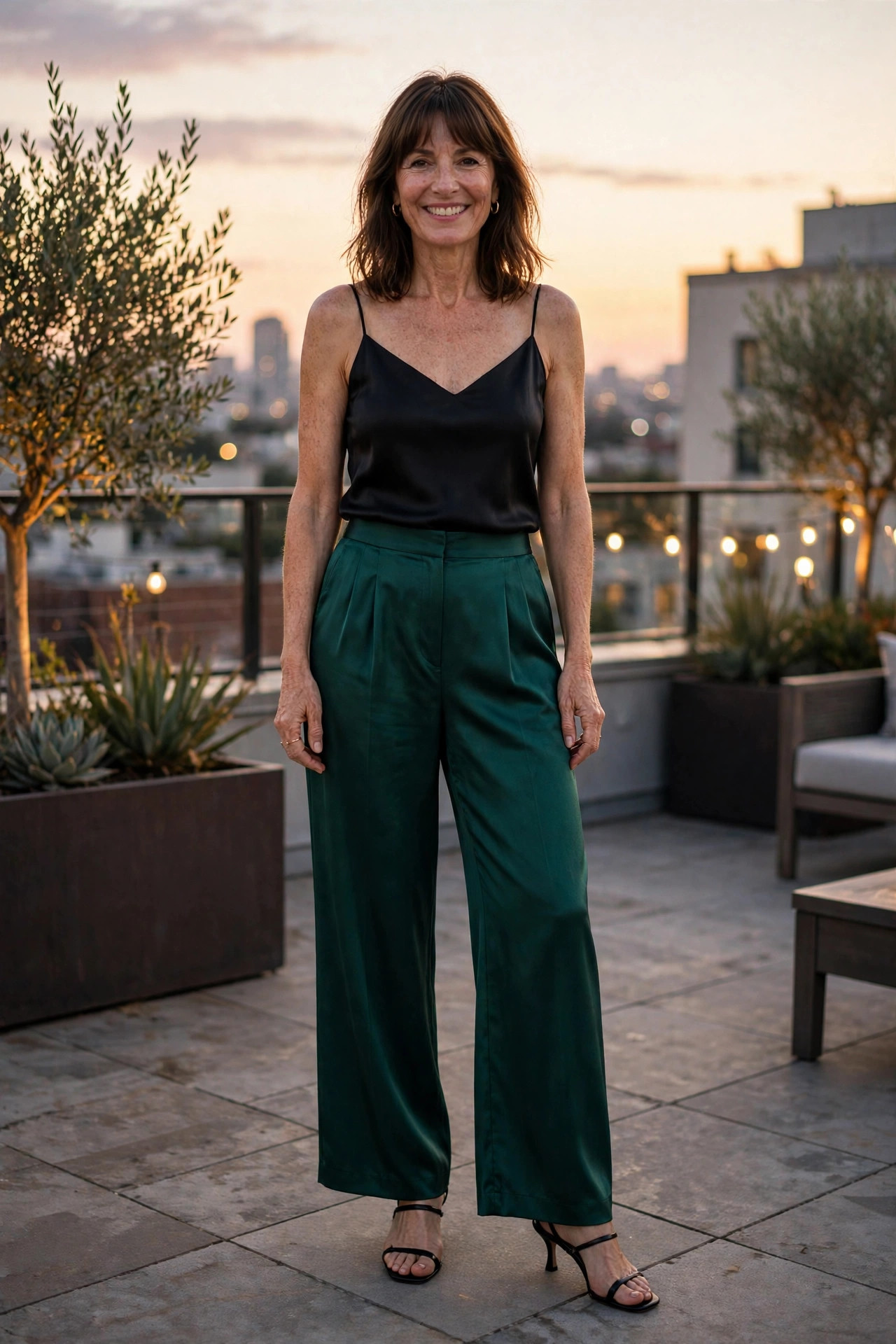
Outfit Formulas by Occasion
Office
Start with wide leg trousers in ponte, wool crepe, or suiting fabric in black, navy, charcoal, or camel. Add a tucked-in blouse or a fine-knit top, then a cropped blazer. Finish with loafers or pointed flats for a full-length hem, or block heels if the hem grazes the floor. Keep jewelry minimal and the bag structured. This is one of the most comfortable professional uniforms because the pants move while the blazer keeps the whole thing sharp. For more warm-weather work ideas, see these summer office outfits.
Casual weekend
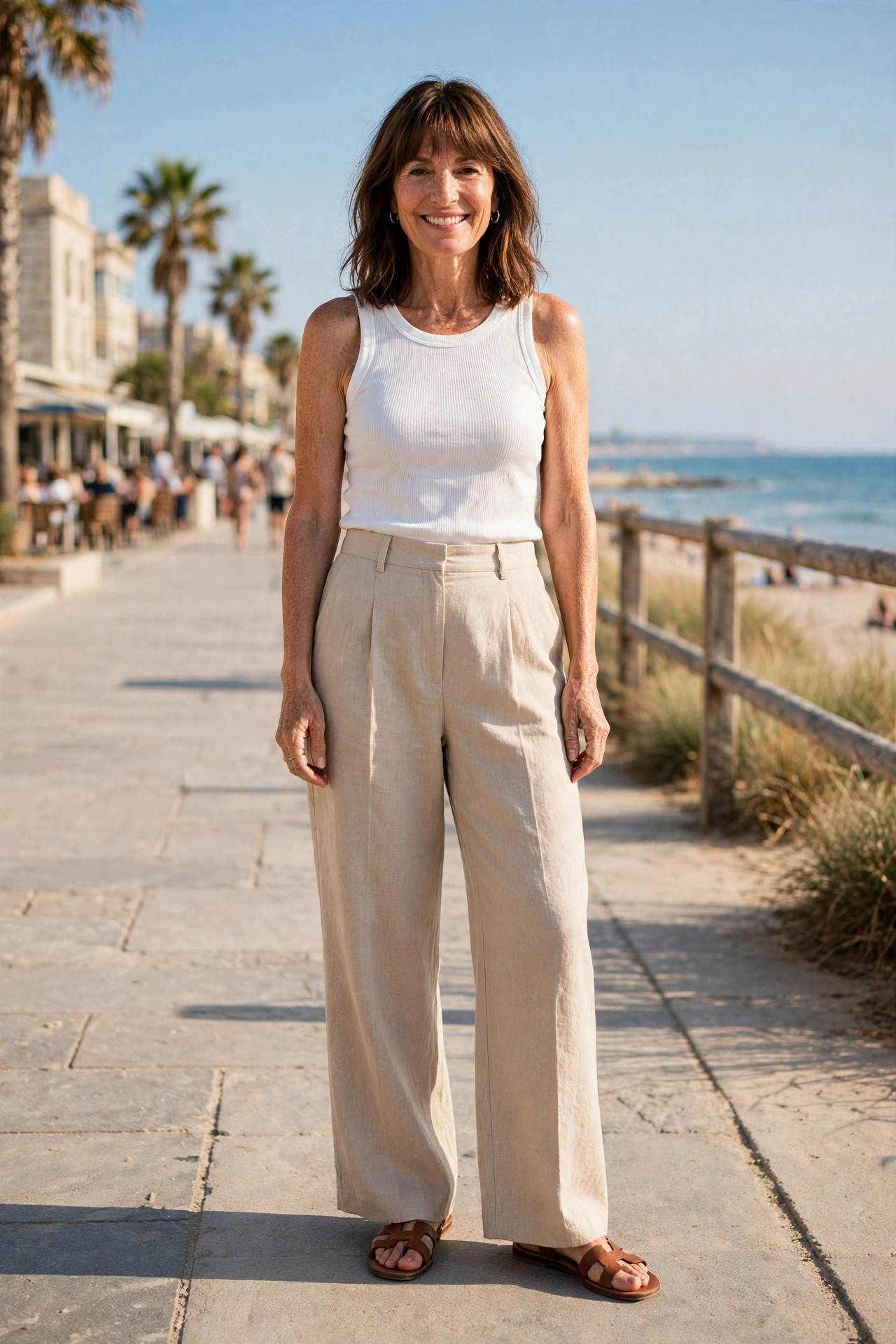
Linen or cotton wide leg pants, a simple tank or boxy tee with a front tuck, and low-profile sneakers or flat sandals. Add a crossbody bag and sunglasses and you are done. The key detail: keep the tee’s fabric in the same weight family as the pants so nothing looks accidental. This formula also travels well because linen packs light and the wide leg hides wrinkles better than slim cuts.
Evening and dinner
Fluid satin or silk wide legs in black or deep navy, a draped cami or slim knit top tucked in, and strappy heels or pointed mules. Add one statement element, such as earrings or a clutch, and stop there. The movement of the fabric does the work. For a full evening plan, browse these dinner outfit ideas, or the plus-size dinner outfit guide if you want an evening look with fit-first guidance.
Cool weather layers
Black or charcoal wide leg wool trousers, a tucked-in fine-gauge turtleneck, and a long coat that falls to mid-calf. The vertical line of the coat against the wide pant is one of the most lengthening combinations in cold weather dressing. Add heeled ankle boots with the shaft under the hem, plus gloves and a scarf in the same color family.
Common Mistakes and Quick Fixes
- Mistake: volume on top and bottom. Fix: tuck the top, switch to a cropped cut, or add a belt that marks the waist.
- Mistake: hem puddling at the ankle. Fix: get them hemmed to one of the three lengths above, or cuff once for a casual look.
- Mistake: heavy round-toe shoes with a full-length hem. Fix: swap to a pointed or almond toe, which extends the leg line instantly.
- Mistake: fabric weights clashing. Fix: pair fluid with fluid, crisp with crisp, soft with soft.
- Mistake: wearing them once and giving up. Wide leg pants have a learning curve of about three wears. If an outfit feels off, run the three-rule check (volume, hem, fabric) before deciding the pants are the problem. And if you ever feel like nothing in your closet works together, read what to do when nothing feels right to wear before buying anything new.
Frequently Asked Questions
Can petite women wear wide leg pants?
Yes. Height is not the issue; proportion is. Choose high-waisted pants with the waistband at your natural waist, control the hem so it does not pile at the ankle (cropped above the ankle bone with flats, or grazing the shoe top with a heel), and keep shoes sleek with a pointed or almond toe. A tucked-in or cropped top marks the waist and makes the legs look longer.
What tops look best with wide leg pants?
The best tops are fitted, tucked, or cropped: tucked-in button-downs and blouses, cropped sweaters, fitted knits, bodysuits, and fine-knit turtlenecks. The rule is wide on the bottom, defined on top, so the waist stays visible. Avoid long, boxy, untucked tops that end at mid-thigh, because they bury the waistband and make the whole outfit read shapeless.
What shoes should I wear with wide leg pants?
Match the shoe to the hem. Full-length hems pair with pointed-toe flats, pointed mules, sleek loafers, block heels, and heeled ankle boots with the shaft under the hem. Cropped hems are the most forgiving and work with sandals, low-profile sneakers, loafers, and kitten heels. In both cases, a pointed or almond toe extends the leg line better than a round, chunky toe.
How long should wide leg pants be?
Pick one of three lengths. Full length grazes the top of the shoe or hovers just above the floor for the most dramatic, lengthening look. Cropped sits above the ankle bone, shows the ankle, and is the most forgiving option. Culotte length falls below the knee and above mid-calf and needs sleek shoes. Whichever you choose, the hem should never pile in folds at the ankle.
Conclusion
Styling wide leg pants is a system with three moving parts: define the top so the waist shows, match the hem to the shoe, and choose a fabric whose drape fits the occasion. Petite frames get there with a high waist, a clean hem, and sleek shoes; tall frames get there with real length and mid-weight fabric. Start with one pair worn three ways, office, casual, evening, and the rules will feel automatic by the third wear.

Rameen Awan is the founder and editor of Outfit Algorithm, where she breaks down outfit formulas, dress codes, and styling systems for real life. Her guides focus on practical details other sites skip: fabric behavior, fit for different body types, and what actually works when you are getting dressed in a hurry.