

A midi skirt is any skirt that falls between the knee and mid-calf, and styling it well comes down to three decisions: where the waistband sits, how the top meets the skirt, and which shoes balance the hemline. Get those three right and the same skirt works for the office, dinner, and weekend without changing anything else. This guide breaks down how to style a midi skirt as a repeatable system: proportion rules, tucking techniques, shoe pairings by skirt shape (pleated, satin, denim, knit), and seasonal adaptations.
For more skirt styling ideas, browse Who What Wear’s midi skirt guide.
Key Takeaways
- Waist definition is the whole game. A visible waistline keeps the midi hem from swallowing your frame, whether you tuck, crop, or belt.
- Match shoe weight to skirt fabric. Delicate satin wants a light shoe; sturdy denim holds up to boots and sneakers.
- One skirt, four formulas. Pleated, satin, denim, and knit skirts each have a reliable top-and-shoe pairing you can repeat with confidence.
- Layer by season, not by guesswork. Tights plus boots in winter, sandals plus lighter tops in summer, structured third layers in between.
What Counts as a Midi Skirt
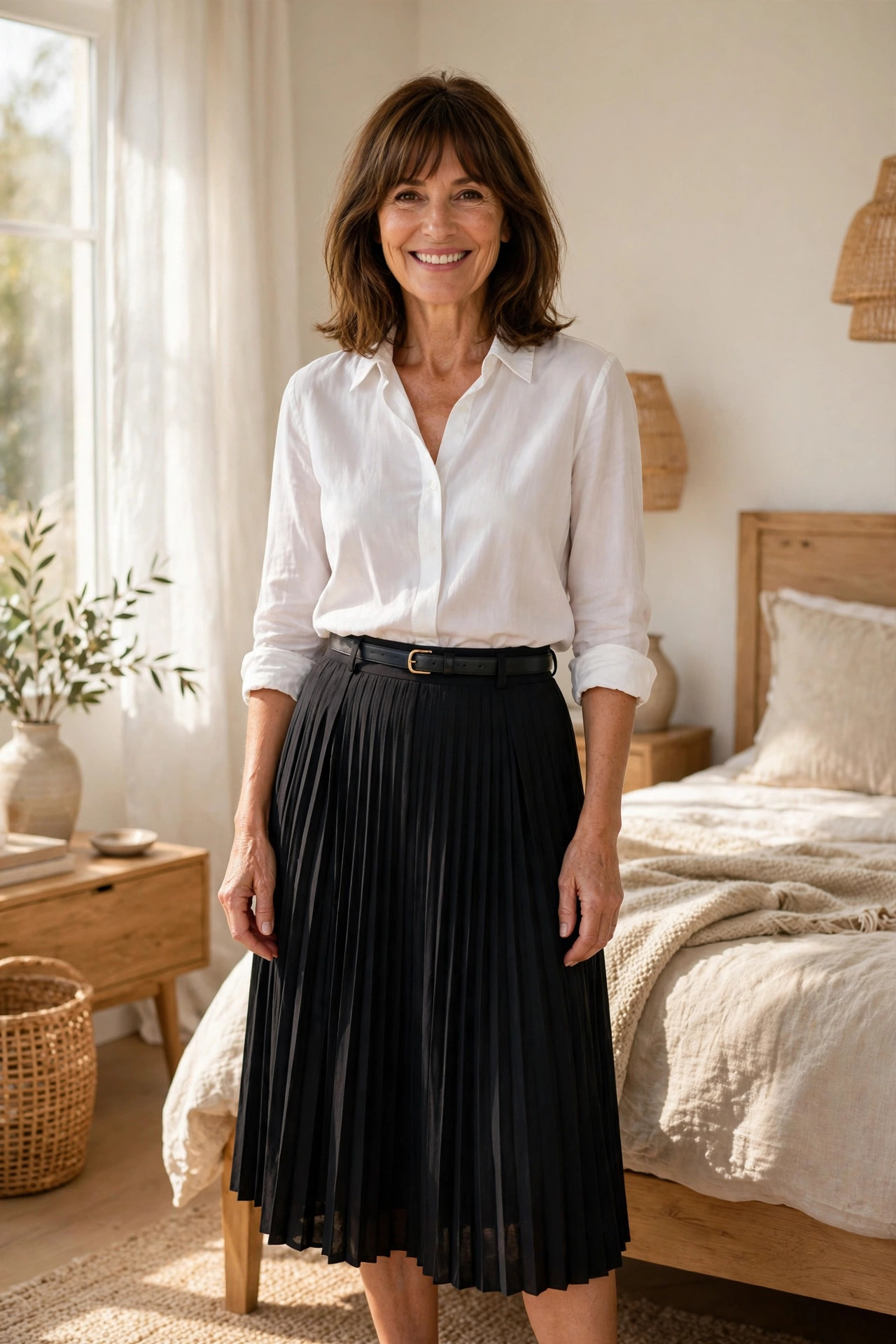
A midi skirt is any skirt whose hem falls between the knee and mid-calf. Anything shorter reads as a mini, anything longer reads as a maxi. The midi is the most forgiving of the three because it shows enough leg to avoid a heavy silhouette while staying polished enough for professional settings.
The tricky part is that mid-calf is the widest part of many lower legs, so the hemline placement matters more than the fabric or print. Aim for the hem to hit just above or just below that widest point rather than exactly on it. A hem that grazes the widest point can visually widen the calf, while a hem that skims above or below it keeps the leg looking long. This is the single most useful proportion rule in this guide.
The Three Proportion Rules
Every successful midi skirt outfit follows the same three rules. Memorize them once and you will never feel stuck in front of the closet again.
Rule 1: Anchor the waistband at your natural waist
The natural waist is the narrowest point of your torso, usually about two inches above the navel. When a midi skirt sits there, the eye reads a clear top-to-bottom structure: fitted top, defined middle, flowing skirt. When the waistband slides lower, the proportions blur and the outfit loses its shape.
If a skirt sits too low on your hips, a belt solves it. A slim belt through the waistband creates a waistline the skirt did not provide on its own. For high-waisted skirts, the waistband already does the work; no belt needed unless you want it as an accessory.
Rule 2: Tuck, crop, or cover, but never let the top dangle
An untucked top that ends at the widest part of the hips breaks the outfit in half and hides the waist you just anchored. Pick one of three approaches:
- The full tuck. Best for shirts and blouses in lightweight fabrics. Tuck all the way around and smooth the fabric so it lies flat at the waistband.
- The French tuck (front tuck). Tuck only the front center of the top. This works for sweaters and tees where a full tuck would add bulk at the waist.
- The cropped or short top. A top that ends at or just above the waistband shows the waistline without any tucking at all.
A half-tucked shirt where only one side is tucked reads as accidental rather than styled, so commit to one of the three options above.
Rule 3: Balance shoe weight against skirt weight
Light, fluid fabrics (satin, silk-like blends, thin knits) pair best with lighter shoes: pointed flats, low sandals, slim heels. Heavier fabrics (denim, twill, thick ponte) handle chunkier footwear: ankle boots, sneakers, knee-high boots. Mismatching the two, say a chunky boot under a whisper-thin satin skirt, makes the shoe fight the skirt for attention.
Shoe Pairings by Skirt Shape
Shoes set the tone of the outfit more than any other piece. The table below is the fastest way to answer what to wear with each midi skirt shape.
| Skirt shape | Top formula | Shoe formula | Best for |
|---|---|---|---|
| Pleated midi | Tucked blouse or fitted knit; belt to define waist | Pointed flats, ankle boots, or low heels | Office, evening events |
| Satin midi | Fitted tee, tank, or camisole; structured third layer | Slim sandals, pointed flats, or low heels | Date night, parties, weddings |
| Denim midi | Boxy tee, sweater, or button-down shirt | White sneakers, ankle boots, or knee-high boots | Weekend, errands, casual outings |
| Knit midi | Cropped top, fitted ribbed tee, or layered tank | Sneakers, flat sandals, or ballet flats | Travel, lounging, everyday comfort |
| A-line or swing midi | Fitted top or bodysuit; tuck for definition | Ballet flats, block heels, or ankle boots | Brunch, daytime events |
| Pencil or straight midi | Blouse or blazer; front tuck on chunky knits | Pointed pumps, mules, or knee-high boots | Work, formal dinners |
How to Style a Pleated Midi Skirt

The pleated midi is the most versatile shape because the pleats themselves supply texture and movement. The skirt does the visual work, so the top can stay simple. A tucked-in solid blouse or fitted knit keeps the outfit from getting busy. Metallic pleats skew dressy, so wear them after dark or with a casual top to tone them down for daytime.
Because pleats add volume from the waist down, the top should be fitted or tucked, never oversized and untucked. An oversized top over a pleated midi buries the waistline, which breaks Rule 2 and adds bulk where none exists. A slim belt over the waistband draws the eye back to the narrowest point and keeps the pleats anchored. For evening versions, see how structured tops pair with pleated skirts in dinner looks, like the ideas in this dinner outfits for women guide.
How to Style a Satin Midi Skirt
Satin has a natural sheen, which means it catches light and reads as dressed up on its own. The winning move is contrast: pair the shine with a matte, relaxed top. A fitted crew-neck tee or simple tank with a satin midi looks intentional, while a satin-on-satin combination can read as too much.
Satin wrinkles and shows creases, so fit matters. The skirt should skim rather than cling at the hips; clinging satin catches light on every crease. Structured third layers, a cropped blazer or tailored jacket, add polish for events and keep the look from drifting into lingerie territory. Heels or pointed flats elongate the leg under the sheen. Satin is also one of the strongest picks for evening events.
How to Style a Denim Midi Skirt
Denim is the casual workhorse. It holds structure, which means it pairs with relaxed tops that would overwhelm softer skirts. An oversized tee, chunky sweater, or unbuttoned flannel over a fitted top all work because the stiff denim keeps its own shape.
Denim midi skirts age well with footwear experiments. White sneakers keep it weekend-easy, ankle boots add a bit of edge, and knee-high boots carry it into colder months. A slit or front button detail makes denim easier to walk in, so check that feature if the skirt feels restrictive. Denim also takes a tuck beautifully because the stiff waistband holds the tucked fabric in place.
How to Style a Knit Midi Skirt
Knit skirts are the comfort pick, but knits cling, which changes the rules. Where pleated and satin skirts forgive, knit shows every line underneath. Smooth, seamless undergarments and a skirt with enough structure to hold its shape make the difference between polished and sloppy.
Keep the top proportional: a cropped top or fitted ribbed tee that ends at the waistband works best. Long, loose tops over a knit skirt create one continuous column with no shape. A knot or wrap detail at the waist adds definition without a belt. Knit midi skirts are excellent travel skirts because they pack flat and resist wrinkles, and their relaxed shape suits the comfort-first approach many women want for casual days out.
Seasonal Adaptations

The same midi skirt can work year-round with different layers. Here is how each season changes the formula.
Spring: Swap boots for ballet flats or loafers, add a light cardigan or cropped jacket. Pastel or floral prints wake up darker skirts you wore all winter.
Summer: Go for sandals and sleeveless or short-sleeve tops. Satin and knit skirts shine in warm weather because they breathe. A wide-brim hat and sunglasses complete a daytime look. If your workplace dress code runs formal in summer, a blazer over a sleeveless top with a pencil midi still meets the bar.
Fall: This is peak midi skirt season. Knee-high boots under a midi hem create a clean, unbroken line, and chunky knits on top add cozy contrast. A front-tucked sweater over a satin or pleated midi is one of the most reliable fall formulas. Layering ideas and boot pairings from this season also carry over to the polished looks in fall dinner outfits for women.
Winter: Opaque tights close the gap between hemline and boots, which keeps the outfit warm and keeps the leg line clean. Knee-high or over-the-knee boots eliminate the cold-leg problem entirely. Wool or thick knit skirts hold up best in freezing weather; thin satin gets cold fast and loses its drape. Long coats over a midi skirt look elegant because the coat and skirt move together. For cold-weather styling systems that keep the same polish, the layering logic in winter dinner outfits applies directly.
Color and Print Pairing
Solid skirts are the easiest to style because they accept any print on top. Printed skirts need the reverse: a solid, tucked top that picks up one color from the print. The simplest reliable formula is to match the top to the background color of the print, which guarantees coordination without matching too exactly.
For colors that always work, neutral tops (white, black, cream, navy, gray) pair with any skirt. If you want more interest, pair complementary tones: a rust skirt with a cream top, a forest-green skirt with black, a navy skirt with white. Monochrome dressing, the same color family head to toe, is the fastest way to look tall and pulled together, and it works especially well on petites.
Stripes and polka dots count as neutrals in practice. A striped top with a solid midi skirt is a classic combination that works across ages and settings. Avoid pairing two loud prints unless one is clearly subordinate in scale; equal-scale print mixing is an advanced move that easily overwhelms.
Fit and Body-Type Flexibility
Midi skirts suit every body type because the length is adjustable and the waistline is definable. A few adjustments cover the most common fit concerns.
Petite frames benefit from higher hemlines within the midi range (closer to the knee) and visible leg: a slit, ankle-strap shoes, or pointed flats that extend the foot line all elongate. Curvy and plus-size figures look best with a clearly defined waist and A-line or pleated cuts that skim from the narrowest point; avoid thin knit skirts that cling if clinging bothers you. For tailored, fit-first advice in this area, the principles in plus size dinner outfits for ladies overlap with everything covered here.
Tall women can wear the true mid-calf length with no adjustment, and the extra length balances longer legs. If you carry weight at the waist, skip tight waistbands and use the front-tuck method with a slightly longer top that skims rather than defines.
Budget flexibility matters too. Every formula in this guide works with thrifted or secondhand skirts, because the system is about proportion, not price. Fit matters more than labels: a ten-dollar skirt at the right length beats an expensive one at the wrong length.
Common Mistakes to Avoid

Letting the top cover the waistband. This is the number one midi skirt mistake. If you cannot see where the skirt begins, the outfit has no structure. Tuck, crop, or belt, but show the waist.
Hemline at the widest part of the calf. Nudge the hem up or down a few inches. If you love the skirt but the length is wrong, a tailor can shorten it for a small fee.
Wrong shoe weight. Chunky sneakers with a delicate satin skirt, or strappy heels with a heavy denim skirt, create visual imbalance. Check the table above when in doubt.
Skipping layers in between seasons. A midi skirt with a bare top in October looks seasonally confused. A blazer, cardigan, or jacket finishes the outfit and extends the skirt’s season.
Ignoring undergarments with knit. Visible panty lines defeat the smooth line a knit skirt needs. Seamless options and skirts with built-in linings solve this.
If your closet feels like it has plenty but nothing to wear, the problem is often missing formulas rather than missing clothes. A reliable styling system like this one turns pieces you already own into outfits, which is the same wardrobe logic explored in why nothing to wear.
FAQs
What shoes go with a midi skirt?
Pointed flats, ankle boots, low heels, and sneakers all work, depending on the occasion and the skirt fabric. For dressier looks, choose pointed-toe flats or slim heels that elongate the leg under the hem. For casual days, white sneakers or ankle boots balance denim, knit, and pleated skirts. Match the shoe weight to the skirt: delicate satin pairs with lighter shoes, while sturdy denim and thick knits hold up to chunkier boots and sneakers.
Can you wear a midi skirt to work?
Yes, a midi skirt is one of the most office-friendly silhouettes available. Choose a solid or subtle print in a structured fabric, pair it with a tucked-in blouse or blazer, and finish with closed-toe flats or low heels. Pencil and pleated midi skirts read as the most professional. Avoid casual fabrics like distressed denim or very thin knits for formal offices, and check that the hemline sits at or below the knee for conservative dress codes. See the workwear formulas in summer office outfits like wonder woman for office-ready pairings.
Should you tuck your top into a midi skirt?
In most cases, yes. Tucking defines the waistline, which is what keeps a midi skirt from looking shapeless. A full tuck works for lightweight shirts and blouses, a front tuck works for sweaters and tees, and a cropped top that ends at the waistband skips tucking entirely. The one exception is a deliberately oversized, structured top, like a boxy blazer or cropped jacket, which is worn open over a tucked layer rather than tucked itself.
Can you wear a belt with a midi skirt?
Yes, a belt is one of the easiest ways to define your waist with a midi skirt. A slim belt through the waistband works with pleated, denim, and A-line skirts, while a wider belt makes more of a statement with plain fabrics. Match the belt to your shoes or bag for a cohesive look, or choose a contrasting color to create a focal point. Belts are especially useful on skirts with low or loose waistbands, where the belt creates the waistline the skirt did not provide.
Conclusion
Styling a midi skirt is not about owning the right one. It is about three decisions, waist placement, top meeting, and shoe balance, applied to whatever skirt you already own. Pleated, satin, denim, and knit each have a reliable formula, and the seasonal layers in this guide keep those formulas working all year. Pick one skirt this week, run it through the three rules, and you will have a repeatable system instead of a daily guessing game.

Rameen Awan is the founder and editor of Outfit Algorithm, where she breaks down outfit formulas, dress codes, and styling systems for real life. Her guides focus on practical details other sites skip: fabric behavior, fit for different body types, and what actually works when you are getting dressed in a hurry.