
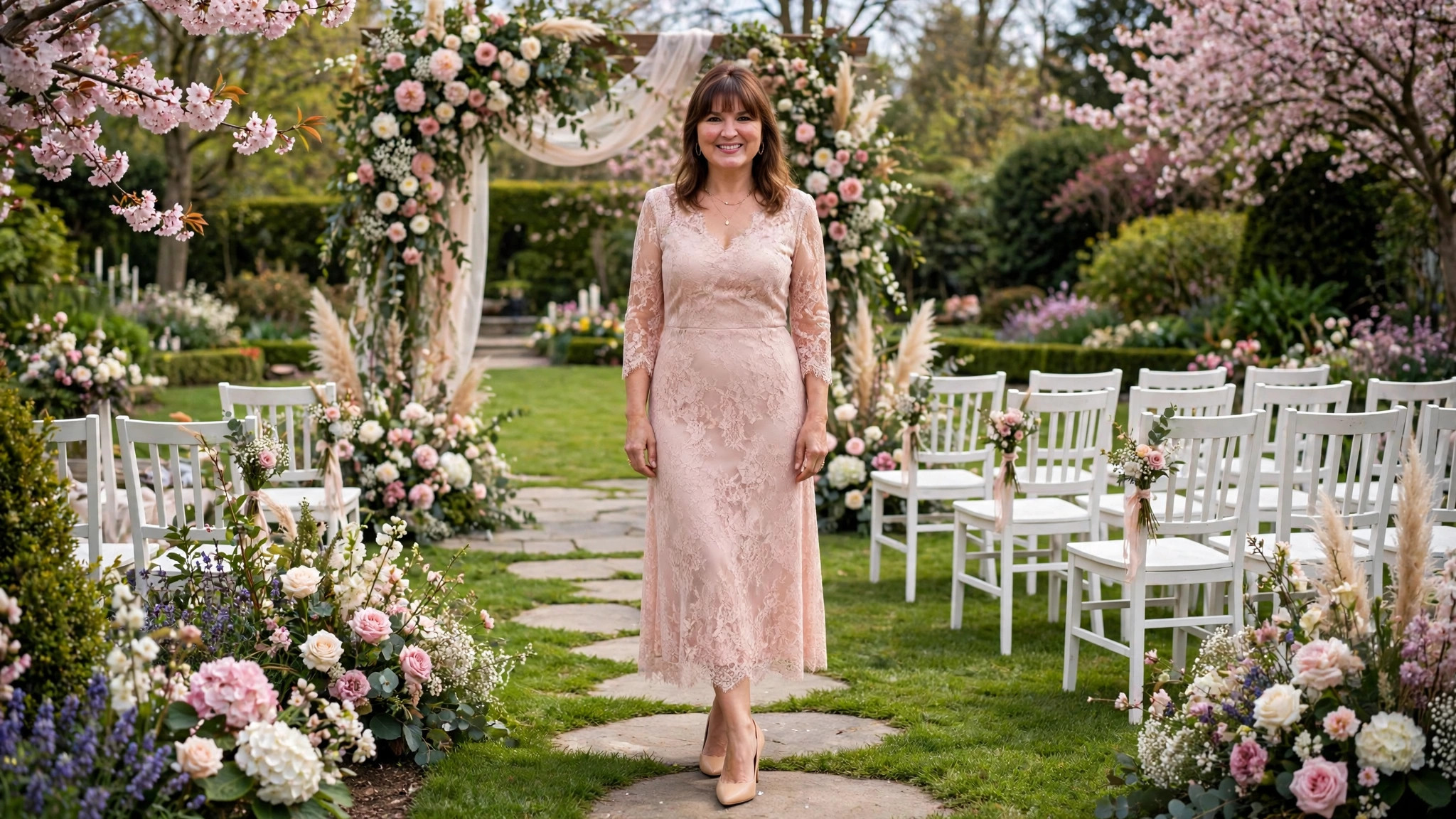
Spring wedding guest outfits solve a specific puzzle: wedding formality plus the most unpredictable weather of the year. A spring wedding guest outfit is occasion dressing built for March through May, fresh color, lightweight fabric, and a real plan for rain, wind, and a temperature swing between a sunny afternoon ceremony and a chilly evening reception. The formula is simple: match the dress code first, then dress it for spring with seasonal color, breathable fabric, a light layer, and shoes that respect damp ground. For a second opinion on dress-code decoding, see The Knot’s cocktail attire guide, which covers the rules in detail.
This guide covers spring wedding guest outfits by month, March through May, with the spring color palette, fabric progression, layering for unpredictable weather, and footwear for grass that may be wet. For the dress-code decoding behind every wedding outfit, the wedding guest outfits for women hub breaks down every code from black tie to casual.
Key Takeaways
- Read the dress code first, then apply spring: the dress code sets the length and formality, the season sets the color, fabric, and layer.
- The spring palette is pastels and fresh tones: blush, lavender, sage, butter yellow, sky blue, soft peach, plus florals in every color. Skip white, ivory, and anything that photographs as bridal.
- Fabric lightens as spring deepens: heavier crepe and long sleeves in March, light crepe and chiffon in April, chiffon, organza, and linen blends in May.
- The layer is the spring essential: a pashmina, cropped jacket, or trench for wind and evening chill, chosen to match the dress code.
- Outdoor spring ceremonies need a ground plan: block heels or wedges for damp grass, and a backup plan for rain that does not ruin the outfit.
Spring Wedding Guest Outfit Decoder
Use the month and weather to find your row, then read the matching section.
| Month and Weather | Fabric | Layer | Footwear |
|---|---|---|---|
| March, cool and unpredictable | Heavier crepe, mid-weight satin, long sleeves | Trench coat or cropped jacket for arrival, pashmina for evening | Closed-toe block heels or dressy boots |
| April, mild with rain risk | Light crepe, chiffon, satin, three-quarter sleeves | Cropped jacket or light pashmina | Block heels or wedges |
| May, warm and sunny | Chiffon, organza, linen blends, sleeveless with a wrap option | Light wrap or silk pashmina for evening only | Strappy block heels, wedges, or dressy flats |
| Any month, outdoor garden ceremony | Chiffon or crepe in a spring print | Pashmina for wind and evening | Wedges or block heels for grass |
| Any month, formal or black tie evening | Satin or silk gown in a spring tone | Elegant wrap or cropped jacket | Closed-toe heels |
| Any month, church ceremony | Midi with sleeves or a neckline that covers, soft solid or subtle floral | Jacket or wrap that stays on through the service | Match to formality, closed-toe preferred |
What Makes a Spring Wedding Different
Three variables define spring wedding dressing: unpredictability, the light, and the calendar. Unpredictability is the core challenge. Spring weather can shift twenty degrees in a day, rain can arrive with no warning, and outdoor ceremonies happen on grass that is damp from the night before. The outfit has to work in sunshine and in a sudden chill, which makes the layer and the shoe plan the two most important decisions.
The light is the good news. Spring daylight is bright and fresh, which is why pastels and lighter colors photograph so well at this time of year. Soft tones that would wash out in harsh summer sun glow in spring light.
The calendar matters because March is not May. Early spring still carries winter’s chill, and late spring leans toward summer. March weddings need real layers and closed-toe shoes; May weddings can be sleeveless and strappy. This spoke covers all three months in order, with a fabric and layer progression to match. Weddings in February sit on the winter boundary; for those, the winter wedding guest outfits guide covers cold-weather rules that carry into early spring.
The Spring Wedding Color Palette
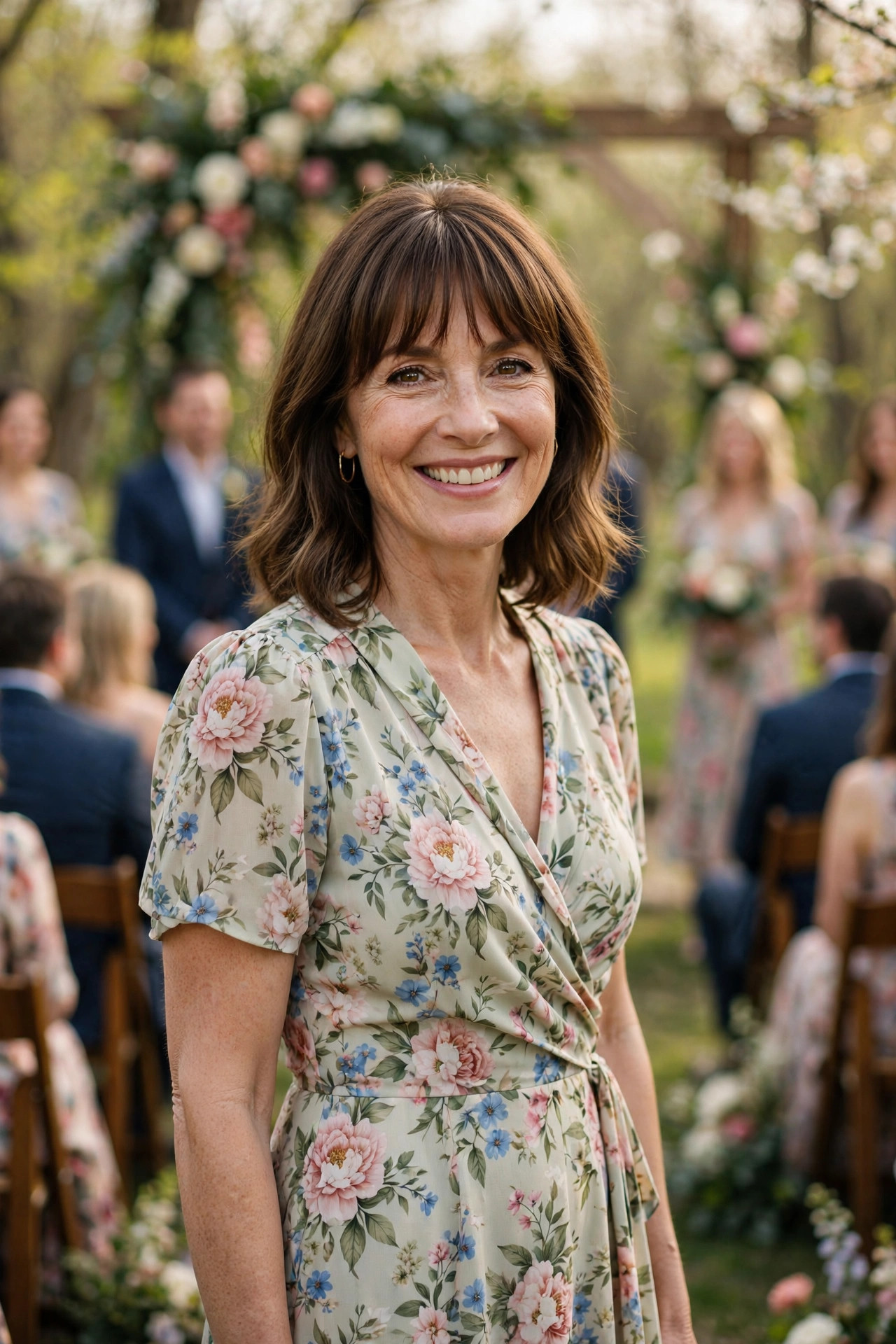
Spring gives wedding guests the freshest palette of the year. The core shades: blush pink, lavender, sage green, butter yellow, sky blue, soft peach, mint, and lilac. Floral prints in any of these colors are the quintessential spring wedding choice, and they suit outdoor venues, garden ceremonies, and daytime celebrations naturally.
A few judgment calls. First, the white rule needs extra care in spring because pale pastels can photograph like white. A blush, ivory-toned, or champagne-colored dress can read as bridal in bright spring light, so when a pastel is close to white, choose a different shade or a print with enough color contrast. The rule from the wedding guest outfits for women hub applies in every season: when in doubt, pick a color that cannot be mistaken.
Second, leave the jewel tones of fall and the deep neutrals of winter in the closet. Burgundy, forest green, and navy read as out of season against spring flowers. And leave the neon brights for summer; spring’s strength is softness and freshness.
Black in spring is a judgment call. It works for formal evening weddings with the right styling, but for daytime and outdoor spring ceremonies, lighter colors suit the mood better.
Spring Fabrics, Month by Month
Fabric is how a spring wedding guest outfit earns its season, and the right weight shifts as spring warms.
March is still transitional, so fabrics carry some weight: heavier crepe, mid-weight satin, and dresses with real structure. Long sleeves are both practical and polished in March. This is the month where a satin midi with sleeves or a crepe wrap dress handles a cool ceremony without looking wintry.
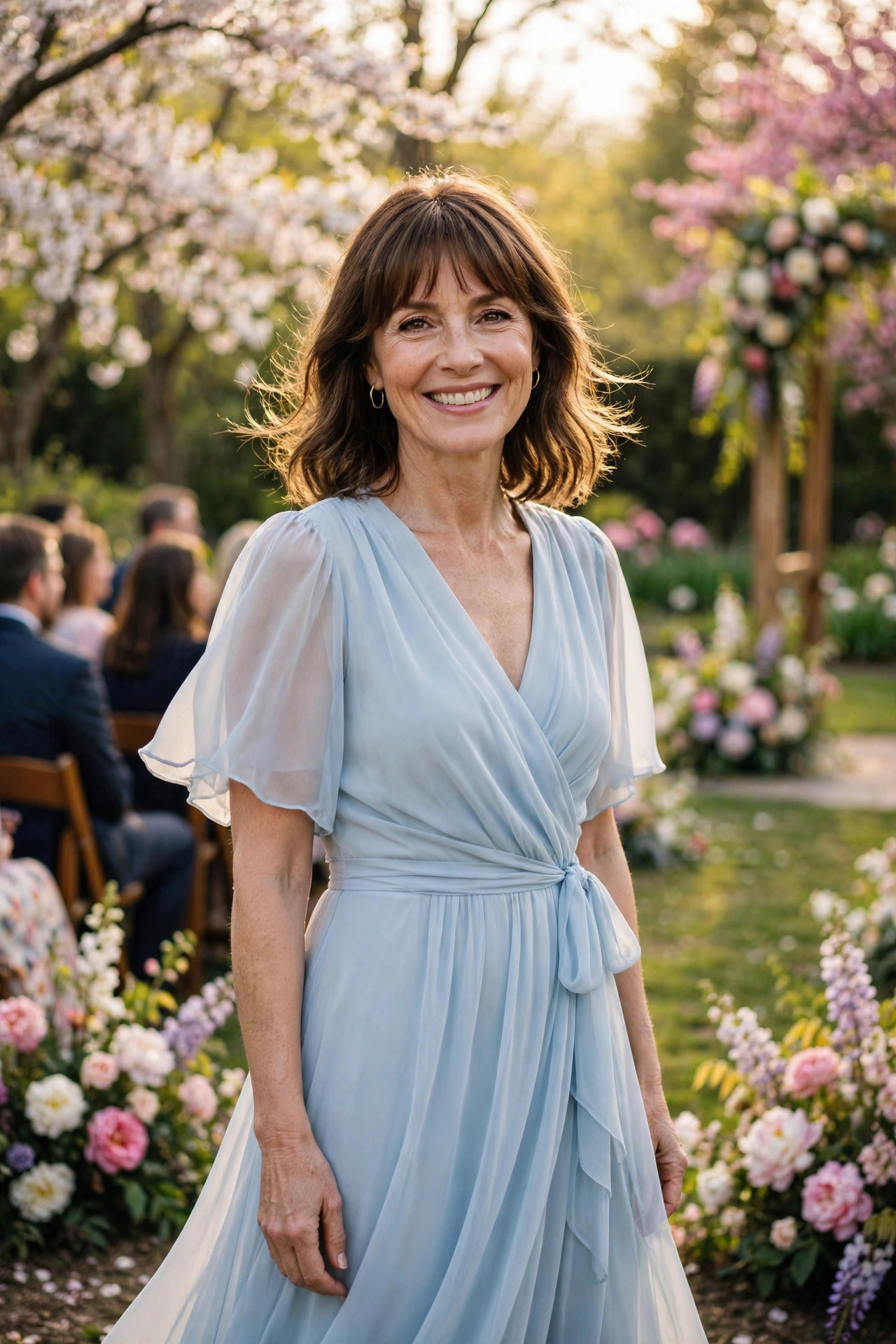
April is the heart of spring wedding season, and fabrics lighten: light crepe, chiffon, and fluid satin. Three-quarter sleeves hit the April sweet spot, seasonal and covered. A chiffon midi in a floral print is the quintessential April wedding guest look.
May leans toward summer: chiffon, organza, and linen blends in sleeveless or short-sleeve cuts. This is the month for the floatiest fabrics, but keep one thing in check, the dress code still decides the formality. A linen-blend dress works for casual and semi-formal May weddings, not for black tie.
One fabric note that crosses all three months: avoid anything too wintry. Velvet, brocade, and heavy jacquard read as the wrong season no matter the color. When the fabric breathes, the outfit reads as spring.
Dress Codes, Spring Edition
The dress code on the invitation decides the length and formality, and the hub’s decoder covers every code in detail, so this is the short spring-specific version. Black tie and formal mean floor-length in spring fabrics: satin, silk, or chiffon in a pastel or soft neutral. Cocktail and semi-formal, the most common spring wedding codes, mean a midi or knee-length dress in light crepe, chiffon, or satin, or a polished jumpsuit in a spring color.
For the full dress-code breakdown, start with the wedding guest outfits for women hub, then come back here for the seasonal execution. The code sets the ceiling; spring sets the color, fabric, and layer.
Light Layers for Unpredictable Spring Weather
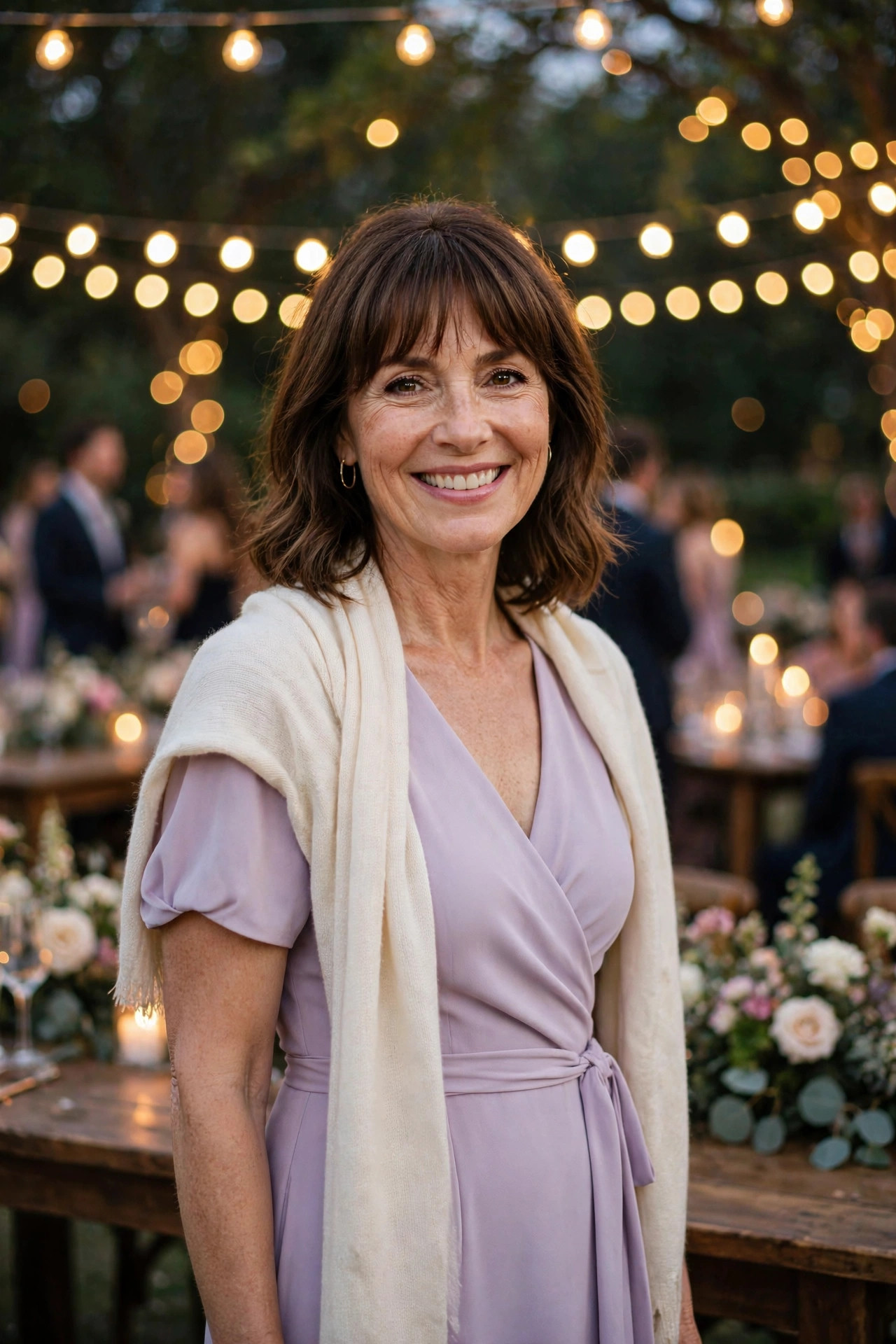
The layer is the most under-planned part of a spring wedding outfit and the most practical. Spring layers have to handle wind, evening chill, and the occasional cold ceremony without adding the bulk of winter outerwear. The options, ranked by formality:
- Silk or cashmere pashmina: the most versatile choice, works from semi-formal down, drapes over any neckline, and looks intentional in photos.
- Cropped jacket: the polished daytime option, especially good over a sleeveless midi for a garden or outdoor wedding. Keep the tone matched to the dress.
- Tailored blazer: the structured option for semi-formal and cocktail, adds polish and real wind protection.
- Trench coat: the March necessity and the rain plan, worn for arrival and outdoor portions. A trench in a neutral tone works over spring dresses without reading as winter outerwear.
- Light knit cardigan: the relaxed option for casual and backyard dress codes.
The rule: the layer should look like it belongs to the outfit, not like an afterthought. Match its tone to the dress, and try the full combination on before the day. Check the forecast the morning of and keep a backup in the car: a pashmina, an umbrella, or a second shoe option has saved many spring wedding days.
Spring Wedding Footwear: The Ground Plan
Spring footwear is about the ground. Outdoor ceremonies happen on grass that may be damp, garden paths that are uneven, and church steps that are fine for anything. Shoes get chosen for the ground first and the outfit second.
- Block heels and wedges: the outdoor defaults. A block heel or wedge sinks less on grass and handles uneven paths, and both come dressy enough for cocktail and semi-formal codes.
- Strappy block-heel sandals: the May and warm-April choice for outdoor and semi-formal weddings, stable and seasonal.
- Closed-toe pumps: the March choice and the formal choice. For black tie and formal spring weddings, closed-toe heels are correct regardless of month.
- Dressy flats: the backup and the dancing shoes. A pair in the bag saves the evening when the ground or the hours get to be too much.
Two practical notes. Suede is lovely in spring but suffers in rain and wet grass, so check the forecast before choosing suede shoes. And whatever the choice, break shoes in before the day, a wedding with hours of standing, photos, and dancing is the worst debut for new footwear.
Outdoor Spring Ceremonies: Wind, Grass, and Rain
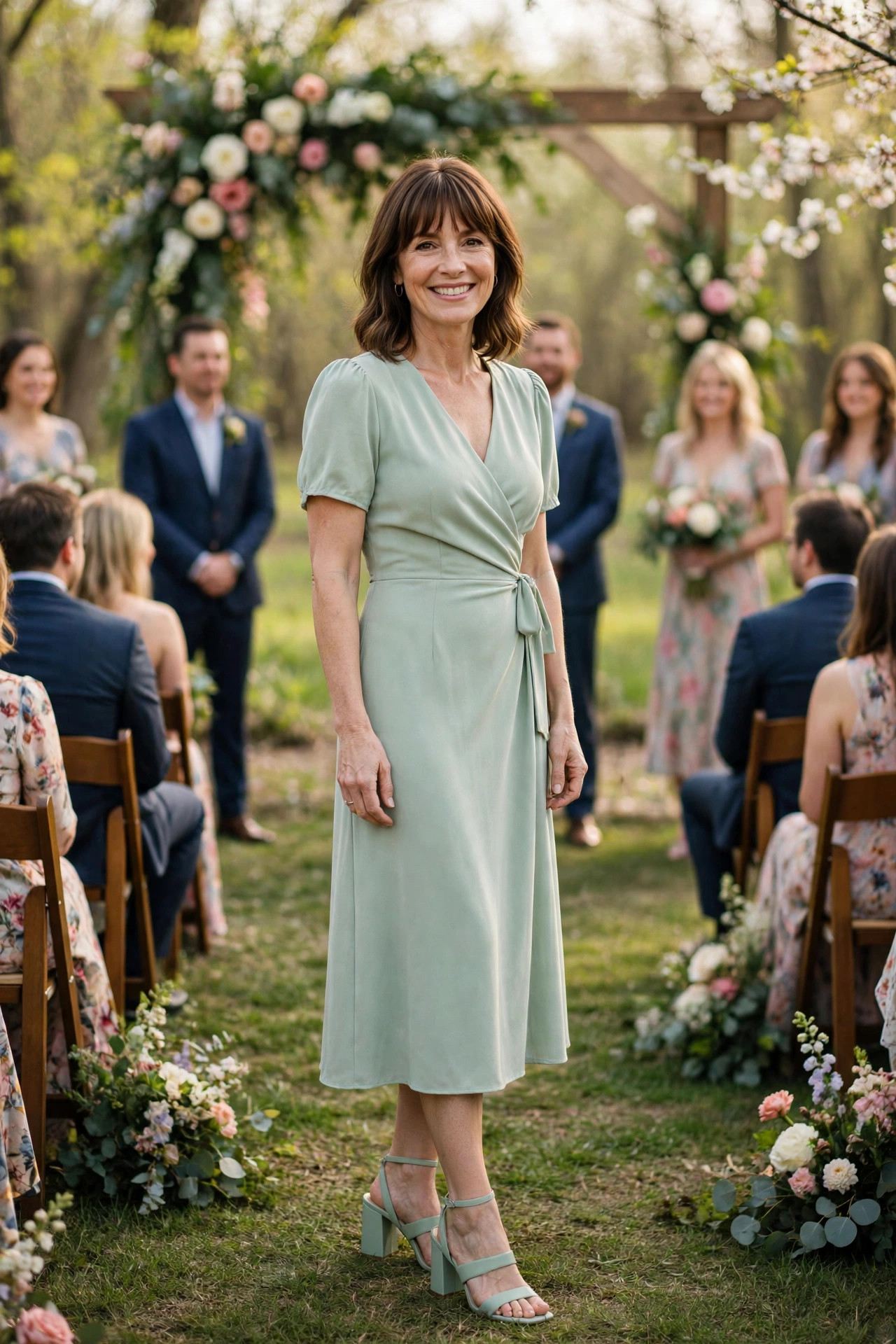
Outdoor spring ceremonies are beautiful and the most common setting for this season’s weddings, so they deserve their own plan.
Wind: spring wind is real. Hemlines that fly need a plan: a midi with some weight, a dress with a fitted bodice, or a slip underneath for peace of mind. Lightweight chiffon maxis are the most wind-vulnerable; if the ceremony is exposed, choose a crepe or a heavier chiffon, or bring a wrap that adds a little weight at the shoulders.
Grass: damp grass is the spring default. This is the wedge and block heel argument in full: stilettos sink, wedges do not. If the ceremony is on a lawn, match the heel to the ground, not just the dress.
Rain: have a rain plan that is not a panic. A compact umbrella, a trench for arrival, and shoes that survive wet ground. Satin spots in rain more visibly than crepe, so if the forecast is wet, crepe is the safer fabric choice.
Fit and Budget Notes
A wedding day is long in any season, and spring adds weather logistics to the timeline: arrival, outdoor photos, the ceremony, and a reception that may move indoors or stay out. Check every spring wedding guest outfit seated before leaving, since waistbands, necklines, and hemlines behave differently sitting down, and a layer changes the fit. For plus-size guests, the reliable silhouettes carry over: wrap dresses, fit-and-flare shapes, and empire waists define the waist without clinging, and supportive undergarments are worth planning as part of the outfit. Detailed fit-first guidance is in the plus size dinner outfits for ladies guide.
Budget-wise, spring wedding guest dresses are strong rewear candidates. A sage crepe midi, a floral chiffon dress, or a blush satin dress all work for dinners, parties, and other spring occasions beyond the wedding. The strategy from why you always have nothing to wear applies directly: one versatile base in a spring color, reworn across weddings with different accessories, shoes, and layers, beats a closet of single-wear dresses. Nobody tracks a dress across different guest lists.
FAQ
What should I wear to a spring wedding as a guest?
Match the dress code first, then dress it for spring. For formal or black tie, a floor-length gown in satin, silk, or chiffon in a pastel or soft neutral. For semi-formal, a midi or knee-length dress in light crepe, chiffon, or satin, often in a floral print. For casual outdoor weddings, a flowy midi with wedges or block heels. Bring a light layer for the evening, since spring weather can shift fast.
What colors are appropriate for a spring wedding?
Pastels and fresh tones: blush, lavender, sage, butter yellow, sky blue, soft peach, and floral prints in any seasonal color. These suit spring light and outdoor venues. Skip white, ivory, and champagne, and be careful with very pale pastels that can photograph as white. Leave jewel tones and deep neutrals for fall and winter.
Are floral dresses appropriate for spring weddings?
Yes. Floral dresses are the most popular and fitting choice for spring weddings, and they suit outdoor ceremonies, garden venues, and daytime celebrations naturally. Just make sure the style and length match the dress code, and that the print has enough color contrast to not read as white from a distance.
What shoes should I wear to a spring wedding?
Choose shoes for the ground first. For outdoor ceremonies on grass, wedges or block heels that will not sink. For formal and black tie, closed-toe heels regardless of month. For warm May weddings, strappy block-heel sandals work for semi-formal and casual codes. Keep a pair of dressy flats as backup for the dance floor, and break all shoes in before the day.
Conclusion
Spring wedding guest outfits come down to three decisions in order: the dress code, the month, and the weather plan. Read the invitation for formality, pick fabric and color for March, April, or May, and plan a layer and shoes that handle whatever spring throws at the day. March needs weight, April needs flexibility, May needs lightness, and every spring wedding needs a backup for rain. Get those right and a spring ceremony is one of the most joyful dress codes of the year to nail.

Rameen Awan is the founder and editor of Outfit Algorithm, where she breaks down outfit formulas, dress codes, and styling systems for real life. Her guides focus on practical details other sites skip: fabric behavior, fit for different body types, and what actually works when you are getting dressed in a hurry.