
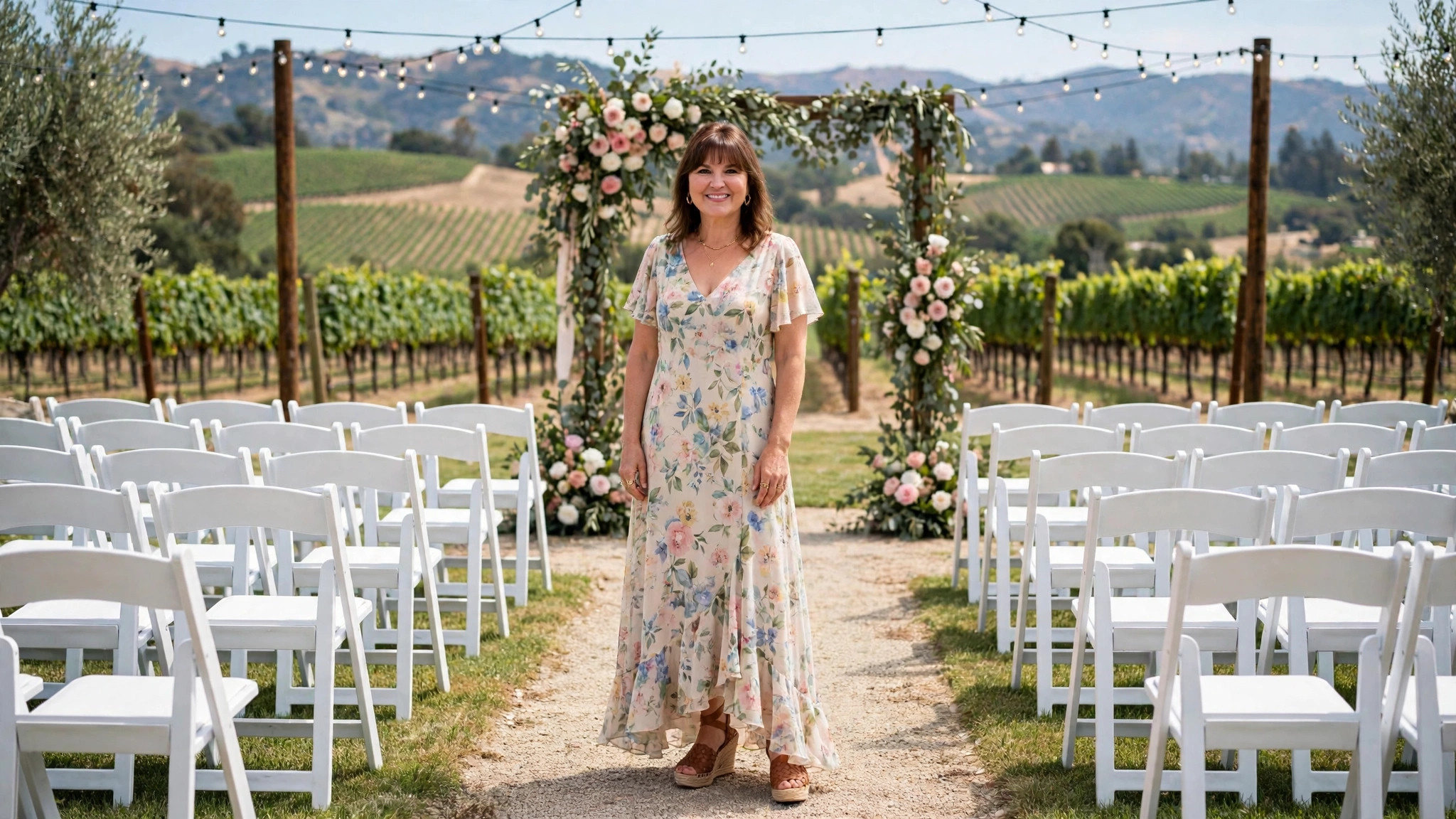
Summer wedding guest dresses have one job before anything else: keep you comfortable in the heat while looking like you belong at a wedding. A summer wedding guest outfit is occasion dressing engineered for June through August, breathable fabric, sweat-smart styling, and color that thrives in bright sunlight. The formula is simple: match the dress code first, then dress it for summer with lightweight fabric, heat-friendly color, and shoes that handle outdoor ground. The Knot’s semi-formal attire guide is a useful refresher on where that dress code begins and ends.
This guide covers summer wedding guest outfits by setting and heat, June through August, with the fabrics that breathe, the color palette that works in strong light, sweat-proof styling, and footwear for grass and heat. For the dress-code decoding behind every wedding outfit, the wedding guest outfits for women hub breaks down every code from black tie to casual.
Key Takeaways
- Read the dress code first, then apply summer: the dress code sets the length and formality, the season sets the fabric, color, and shoe plan.
- Breathability is a decision, not a hope: linen blends, cotton voile, eyelet, seersucker, and light chiffon handle heat; heavy synthetics do not.
- The summer palette splits by light: fresh pastels and bright florals for daytime, rich saturated color for evening. Skip white, ivory, and anything that photographs as bridal in strong sun.
- Sweat-proofing is styling: the right undergarments, dark or printed fabrics where it counts, and hair and makeup choices that survive the heat.
- Outdoor summer ceremonies need a ground and sun plan: block heels or wedges for grass, and sun protection that does not fight the outfit.
Summer Wedding Guest Dress Decoder
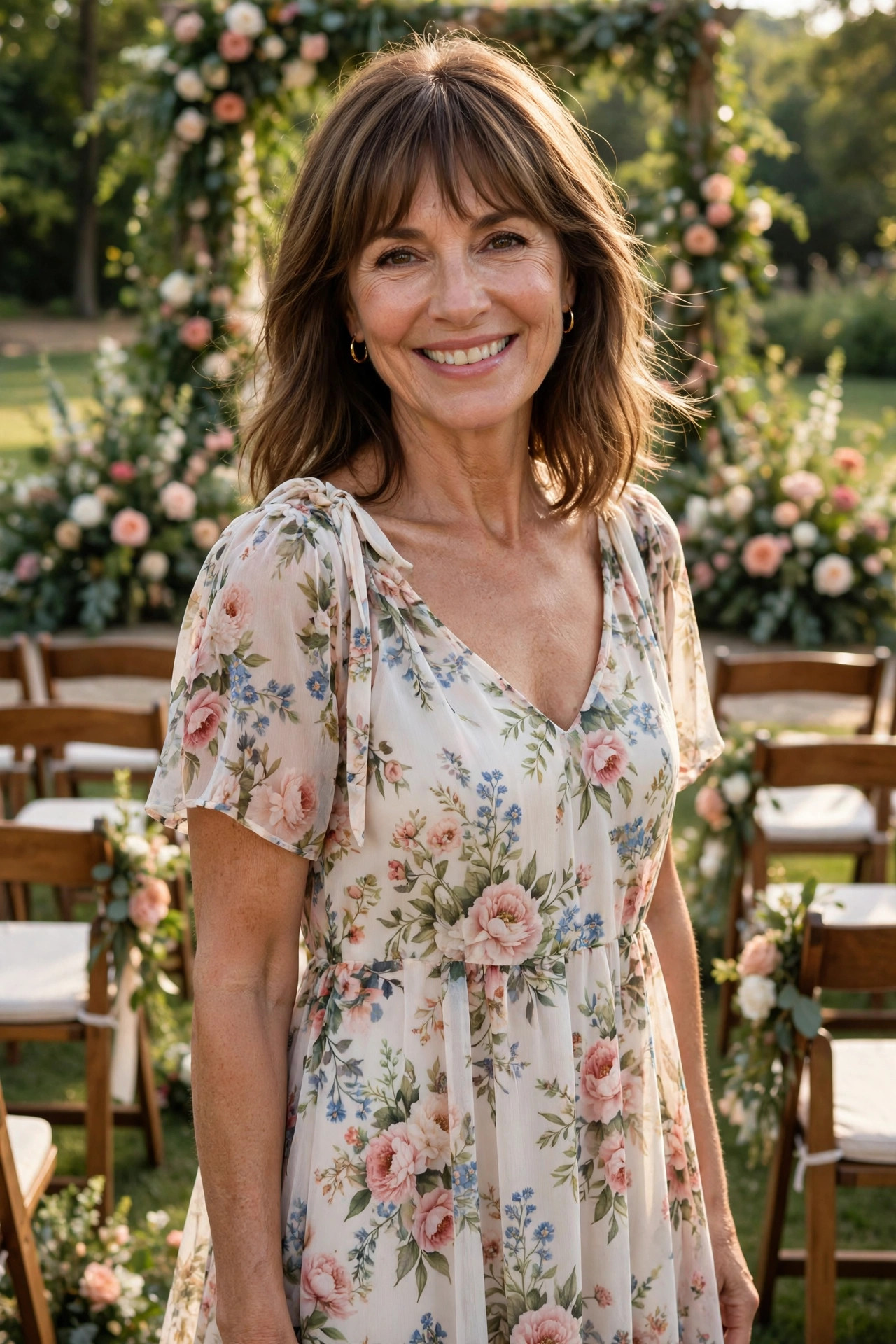
Use the setting and heat to find your row, then read the matching section.
| Setting and Heat | Fabric | Color | Footwear |
|---|---|---|---|
| June, warm and mild | Light crepe, chiffon, linen blends | Pastels, soft florals, butter yellow | Block heels, wedges, dressy flats |
| July and August, peak heat | Linen, cotton voile, eyelet, seersucker | Bright florals, citrus, saturated color | Strappy block heels, wedges, dressy sandals |
| Outdoor garden or vineyard ceremony | Chiffon, linen, eyelet in a print | Florals or color that pops against greenery | Wedges or block heels for grass |
| Evening reception or black tie | Satin, silk, or chiffon gown | Rich color: cobalt, emerald, fuchsia | Closed-toe heels or dressy heeled sandals |
| Beach-adjacent or destination heat | Lightweight maxi in breathable fabric | Bright prints, warm color | Dressy flat sandals |
| Any setting, church ceremony | Midi with sleeves or a neckline that covers | Soft solid or subtle floral | Match to formality, closed-toe preferred |
What Makes a Summer Wedding Different
Heat is the core variable of summer wedding dressing, and it changes everything. A July ceremony can mean ninety degrees in direct sun, an outdoor cocktail hour with no shade, and a dance floor that gets warmer as the night goes on. The outfit has to look polished at hour one and still look composed at hour six, in conditions that test fabric, fit, and grooming.
Sunlight is the second variable, and it is mostly good news. Bright summer light makes color sing, which is why saturated brights and vivid florals photograph so well at summer weddings. The flip side: pale pastels can wash out or read close to white in harsh midday sun, so the white rule needs extra care in summer, covered below.
The calendar matters because June is not August. Early summer is warm and pleasant, with real evening cool-downs in some regions. Late summer is peak heat, where breathability is non-negotiable and even the evening stays warm. June weddings allow slightly more structure and layering; August weddings demand the lightest fabrics and the most heat-proof plan. Weddings in May sit on the spring boundary; for those, the spring wedding guest outfits guide covers the seasonal transition.
Summer Fabrics That Breathe
Fabric is the single most important summer wedding decision. The fabrics that handle heat share traits: natural fibers or open weaves, light weight, and the ability to move air.
- Linen and linen blends: the heat champion. Breathable, textured, and naturally relaxed. Works best for casual through semi-formal codes; a linen blend with some structure reads more polished than pure linen.
- Cotton voile and cotton lawn: light, crisp, and breathable, with a fresh feel that suits daytime weddings. Voile’s slight sheerness needs a lining or slip, which is fine.
- Eyelet: cotton with embroidered cutwork that literally lets air through. Festive, feminine, and built for summer. The texture reads as occasion dressing on its own.
- Seersucker: puckered cotton that sits off the skin, so it breathes. More casual by nature, best for daytime and outdoor dress codes.
- Light chiffon: the formal-summer fabric. Floaty and elegant, breathable when it is real chiffon rather than heavy polyester pretending to be chiffon.
- Light crepe: the polished option with some structure, good for cocktail and semi-formal when the weave is light.
Fabrics to avoid in peak heat: heavy polyester satin, which traps heat and shows sweat; thick scuba or neoprene-style knits; velvet and brocade, which read as the wrong season entirely. When choosing between two fabrics, the lighter, more breathable one is almost always the right summer call.
The Summer Wedding Color Palette
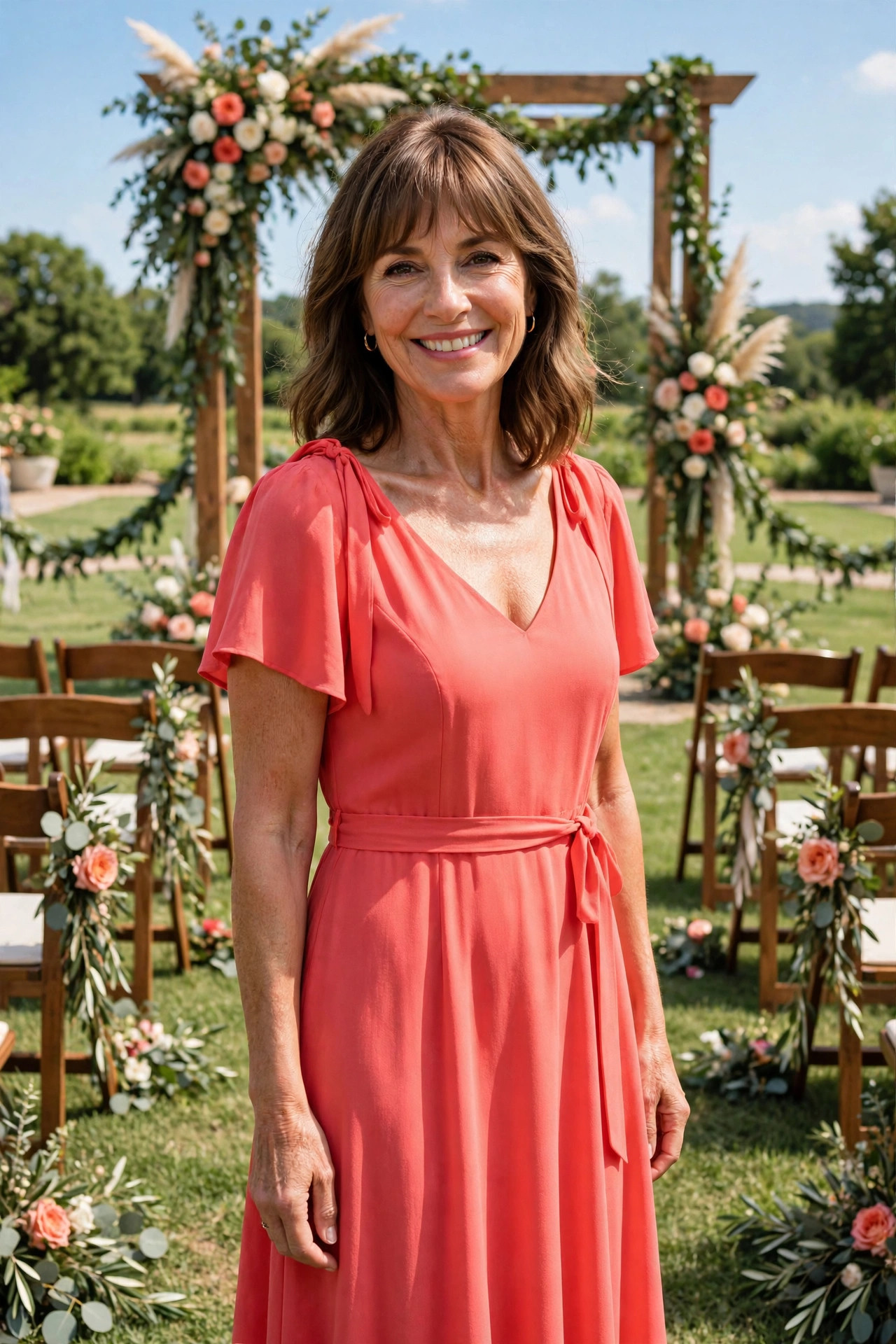
Summer gives wedding guests the boldest palette of the year, and it splits by light.
Daytime is for fresh and bright: butter yellow, blush, sky blue, mint, coral, and floral prints in vivid color. These shades thrive in daylight and suit outdoor venues, garden ceremonies, and afternoon celebrations.
Evening is for saturated and rich: cobalt blue, emerald, fuchsia, and deep jewel tones. These colors look intentional and striking under reception lighting, and they photograph beautifully after sunset.
Two judgment calls. First, the white rule is stricter in summer because strong sunlight makes pale colors photograph even paler. A white-based floral print can read as bridal from a distance, and very light pastels can wash out to near-white in midday photos. When a color is close to white, choose a print with strong color contrast or a deeper shade. The rule from the wedding guest outfits for women hub applies in every season: when in doubt, pick a color that cannot be mistaken.
Second, black in summer is a styling question, not a ban. It works for formal evening weddings in lightweight fabric with soft styling. For daytime and outdoor summer ceremonies, lighter and brighter colors suit the mood better.
Dress Codes, Summer Edition
The dress code on the invitation decides the length and formality, and the hub’s decoder covers every code in detail, so this is the short summer-specific version. Black tie and formal mean floor-length in summer fabrics: silk, satin, or chiffon gowns in rich color. Cocktail and semi-formal, the most common summer wedding codes, mean a midi or knee-length dress in breathable fabric, or a polished jumpsuit in a summer color.
For the full dress-code breakdown, start with the wedding guest outfits for women hub, then come back here for the seasonal execution. The code sets the ceiling; summer sets the fabric, color, and shoe plan.
Sweat-Proof Styling
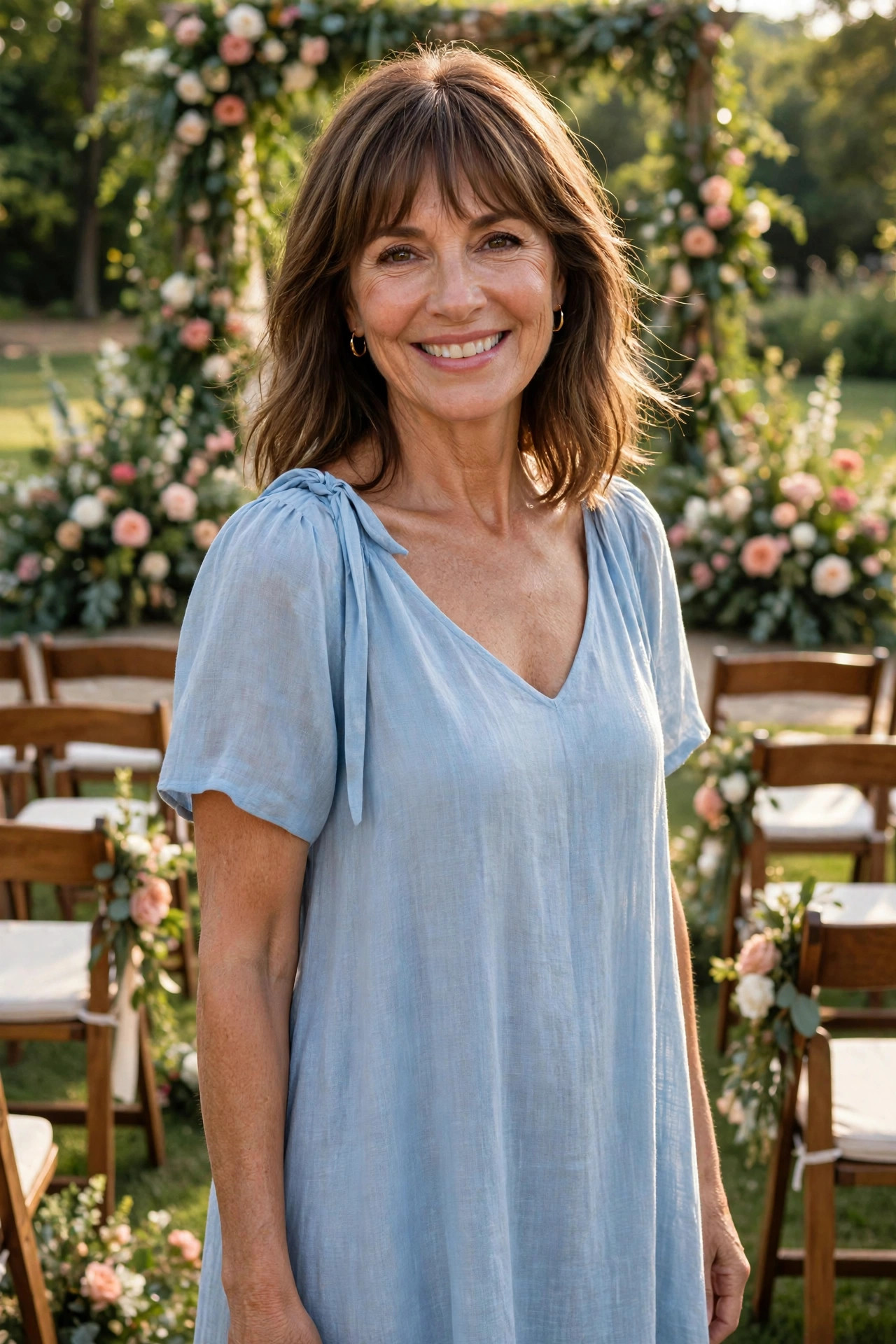
Summer weddings test an outfit the way no other season does, and a few quiet choices make the difference between comfortable and miserable.
Undergarments first. Sweat-wicking, seamless undergarments in a skin tone prevent visible lines and handle moisture better than cotton. This is the foundation the whole outfit sits on, and it is worth planning as deliberately as the dress.
Fabric placement matters. Sweat shows most on solid light colors and silk-like fabrics. Prints, textured fabrics like eyelet and seersucker, and mid-tone colors hide it far better. If the dress is a solid pale color, a print or a textured fabric is the safer choice.
Fit with airflow. A dress that skims rather than clings stays cooler and shows less. A-line, fit-and-flare, and flowing maxi silhouettes move air; body-conscious cuts in non-breathable fabric do the opposite.
Hair and makeup durability. Heat and humidity undo elaborate styling fast. Updos and secured styles last longer than loose hair in humidity, and long-lasting makeup bases with blotting papers in the clutch handle a full day. This is grooming, not vanity: photos run all day.
The emergency kit. A small clutch kit, blotting papers, a mini deodorant, a stain pen, and a spare pair of flat shoes, covers the most common summer wedding mishaps. It weighs almost nothing and gets used almost every time.
Outdoor Summer Ceremonies: Sun, Grass, and Heat
Outdoor summer ceremonies are the season’s signature setting, and they need a plan for three things.
Sun: ceremonies in direct sun mean real UV exposure for the length of the service. A wide-brim hat works for daytime outdoor dress codes and doubles as sun protection, and sunscreen applied before dressing protects shoulders and necklines. Sunglasses are fine for the ceremony itself at casual outdoor weddings; for formal ones, they come off for photos.
Grass: the wedge and block heel argument, in full. Stilettos sink into lawns; wedges and block heels do not. Vineyard and garden venues often mean gravel paths too, which punish thin heels. Match the heel to the ground, not just the dress.
Heat timing: the hottest part of the day is mid-afternoon, which is exactly when many summer ceremonies happen. If the invitation lists an outdoor ceremony at 3 or 4 pm, plan for peak heat: the lightest fabric, the most breathable cut, and water before it starts. Evening ceremonies are kinder, and the temperature usually drops enough after sunset for the reception to feel comfortable.
Summer Wedding Footwear: The Heat Plan
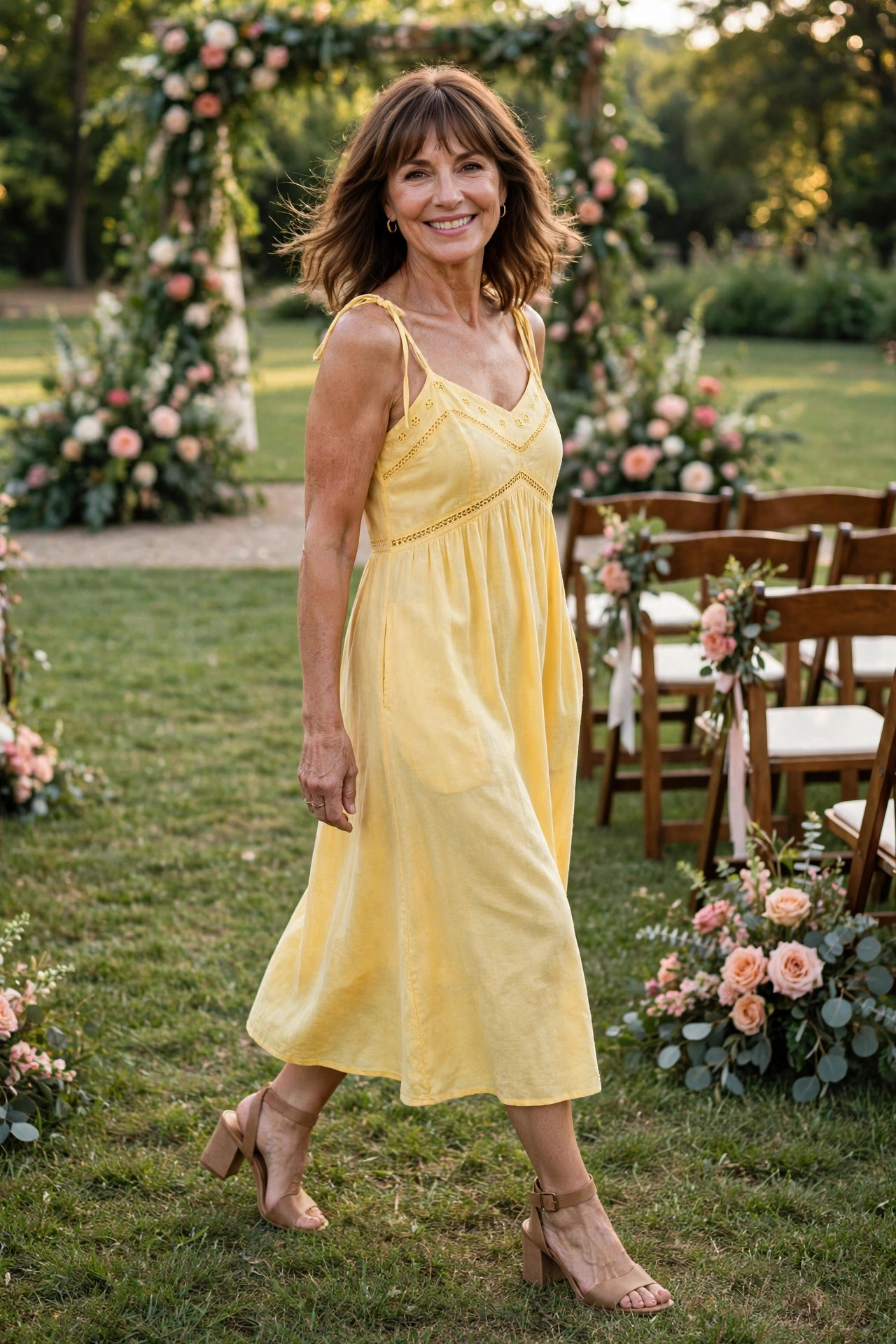
Summer footwear answers to heat first and formality second.
- Strappy block-heel sandals: the summer default for semi-formal and cocktail. Stable, breathable, and dressy enough for most codes.
- Wedges: the outdoor default. Espadrille wedges suit daytime and garden weddings; dressier wedges handle cocktail codes on grass.
- Dressy flat sandals: the heat-wave answer and the beach-adjacent choice. Embellished or metallic flats look intentional, not underdressed, at casual through semi-formal weddings.
- Closed-toe heels: the formal and black-tie requirement, and the church ceremony preference. Even in summer, formal codes call for closed toes.
Two practical notes. Feet swell in heat, so shoes that fit snugly in the morning can feel tight by evening; a slightly roomier fit or adjustable straps help. And break shoes in before the day, a wedding with hours of standing on hot pavement is the worst debut for new footwear.
Fit and Budget Notes
A summer wedding day is long and hot, so check every outfit seated and in motion before leaving. Waistbands, necklines, and hemlines behave differently sitting down, and heat makes everything cling more. For plus-size guests, the reliable silhouettes carry over: wrap dresses, fit-and-flare shapes, and empire waists define the waist without clinging, and breathable fabrics matter even more. Detailed fit-first guidance is in the plus size dinner outfits for ladies guide.
Budget-wise, summer wedding guest dresses are excellent rewear candidates. A coral linen midi, a floral chiffon dress, or a cobalt satin dress all work for dinners, parties, and vacations beyond the wedding. The strategy from why you always have nothing to wear applies directly: one versatile base in a summer color, reworn across weddings with different accessories and shoes, beats a closet of single-wear dresses. Nobody tracks a dress across different guest lists.
FAQ
What should I wear to a summer wedding as a guest?
Match the dress code first, then dress it for summer. For formal or black tie, a floor-length gown in silk, satin, or chiffon in a rich color. For semi-formal and cocktail, a midi or knee-length dress in a breathable fabric like linen, cotton voile, eyelet, or light chiffon. For casual outdoor weddings, a flowy midi or maxi with wedges or dressy flat sandals. Choose fabrics that breathe and colors that thrive in bright light.
Can I wear black to a summer wedding?
It depends on the setting. Black works for formal and evening summer weddings in a lightweight fabric with soft styling, so it does not read heavy or somber. For daytime, garden, and outdoor ceremonies, lighter and brighter colors suit the mood better. When in doubt, check the dress code and the venue: evening ballroom, yes; afternoon garden, choose color.
What shoes should I wear to an outdoor summer wedding?
Choose shoes for the ground first. For grass, wedges or block heels that will not sink; stilettos sink into lawns. For beach-adjacent or very hot settings, dressy flat sandals are appropriate for casual through semi-formal codes. For formal and black-tie outdoor weddings, closed-toe heels or dressy heeled sandals. Remember feet swell in heat, so a slightly roomier fit or adjustable straps help by evening.
What is the best fabric for a summer wedding guest dress?
The best summer wedding fabrics are breathable and light: linen and linen blends, cotton voile, eyelet, seersucker, light chiffon, and lightweight crepe. These keep you comfortable through warm outdoor ceremonies and crowded dance floors. Avoid heavy polyester satin, which traps heat and shows sweat, and leave velvet and brocade for colder seasons.
Conclusion
Summer wedding guest dresses come down to three decisions in order: the dress code, the heat, and the ground. Read the invitation for formality, choose the most breathable fabric the code allows, and plan shoes and sun protection for the actual setting. June allows a little more structure, August demands the lightest everything, and every summer wedding rewards sweat-proof planning. Get those right and a summer ceremony is the most joyful dress code of the year to nail.

Rameen Awan is the founder and editor of Outfit Algorithm, where she breaks down outfit formulas, dress codes, and styling systems for real life. Her guides focus on practical details other sites skip: fabric behavior, fit for different body types, and what actually works when you are getting dressed in a hurry.