
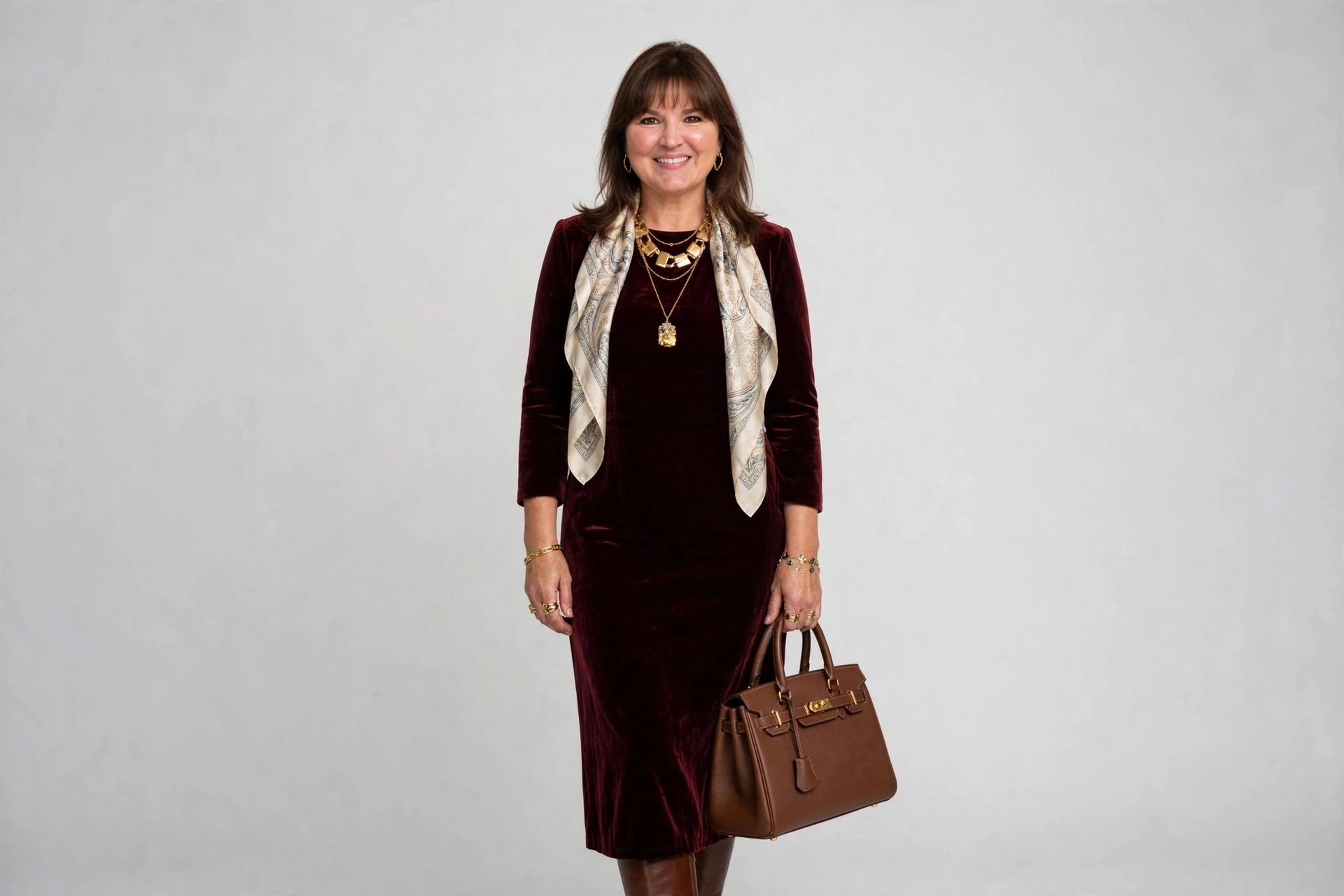
Learning how to accessorize a simple outfit is the fastest way to make the clothes you already own look intentional. A plain white tee, a black shift dress, or a sweater and jeans does not need replacing. It needs the right finishing pieces.
For accessory inspiration, browse Vogue’s accessorizing guide.
The accessory elevation system is a repeatable styling method built on three moves: choose one statement piece, add supporting accessories that stay quieter, and stop before the look gets crowded. That is the entire system, and it works for every body type and budget because it uses pieces you can mix, swap, and reuse across your whole wardrobe.
This guide turns the system into practical formulas for jewelry, scarves, belts, and bags. You will also get a decoder table that matches each accessory to the outfit problem it fixes, and a clear rule for knowing when to stop.
Key Takeaways
- Pick one statement piece per outfit and let everything else support it.
- Match necklaces to the neckline, not to the other jewelry.
- A single scarf, belt, or structured bag can each carry a simple outfit on its own.
- Repeating one color or metal keeps mixed accessories looking cohesive.
- The stop rule: take one piece off before you leave. If the outfit looks better, it was too much.
What Is the Accessory Elevation System?

The accessory elevation system is a repeatable method for styling simple clothes, where one statement accessory leads and every other accessory plays a supporting role. Instead of adding pieces at random and hoping the outfit works, you build the look around a single focal point.
Simple outfits are the ideal canvas for this system. Clean lines and solid colors give accessories room to shine, because nothing on the clothing competes for attention. A white tee and jeans can look completely different with a silk scarf versus layered necklaces, even though the clothes never change.
The system is also budget friendly. A small capsule of versatile accessories, a good belt, one patterned scarf, a structured bag, and a few jewelry pieces in your preferred metal, costs far less than replacing clothes, and each piece works across dozens of outfits. Proportions matter more than size here, so the formulas below work whether you are petite, tall, curvy, or straight framed. Fit the accessory to the outfit and the occasion, not to a body ideal.
The One-Statement Rule
The one-statement rule is the foundation of the whole system: choose a single hero accessory per outfit and keep everything else simpler. The eye needs one place to land first. When two or three bold pieces compete, the outfit looks busy instead of polished.
Here is how the rule works in practice. If you wear bold earrings, skip the necklace and choose simple rings. If you wear a statement necklace, keep the earrings to studs or small hoops. If your scarf is patterned and colorful, carry a plain bag. If your belt is embellished or metallic, keep the jewelry quiet. One piece talks, the rest listen.
Start by deciding what you want noticed. To draw attention to your face, make earrings or a necklace the hero. To define your shape, make the belt the hero. To change the whole mood of the outfit, make the scarf or bag the hero. This decision takes ten seconds and prevents most accessorizing mistakes.
If you love a bolder style, you can still layer. The trick is that layers from the same family count as one statement zone. Three delicate necklaces at different lengths read as one necklace moment. A stack of thin bracelets on one wrist reads as one wrist moment. What breaks the rule is a bold necklace plus bold earrings plus a bold cuff all fighting at once, which is exactly the look to avoid for occasion dressing like Christmas outfits for women, where one sparkling piece does more than five competing ones.
Jewelry Formulas That Work With Simple Clothes
Jewelry is the highest impact accessory category for simple outfits, because it sits close to your face and catches light. Before choosing pieces, notice which metal flatters you most. Warm gold tones glow against warm undertones, while silver and cool metals suit cooler undertones, but these are starting points, not laws. The formulas below work in any metal.
Let Earrings Frame Your Face
Earrings shape how people see your face, so they deserve the first decision. When your hair is up or pulled back, you have room for bolder earrings, since nothing hides them. With hair down, choose earrings with enough size or shine to peek through.
The core formula is simple: statement earrings mean a bare neckline, and a statement necklace means quiet earrings. Hoops, chandeliers, and sculptural drops all count as statement earrings. When earrings lead, keep the neck free of necklaces and let rings or a bracelet play the supporting role. When you prefer studs or small hoops, the neckline is open for a necklace to take the lead.
Match the Necklace to the Neckline
A necklace should follow the shape of your neckline, not fight it. With a crew neck, wear a shorter necklace that sits above the collar or a pendant that falls clearly below it, never one that lands exactly on the fabric edge. With a V-neck, choose a pendant that echoes the V shape. With a high neckline or turtleneck, skip the necklace entirely and put the interest in your earrings instead.
For layered necklaces, vary the lengths by about two inches so each chain has its own space, and keep the pendants graduated from small to larger. Stick to one metal family for the layers, or choose one dominant metal with a single accent piece in another, which keeps the stack cohesive instead of random.
Wrists and Hands Finish the Look
Wrists and hands are the supporting cast of jewelry, and they work best with restraint. If your earrings or necklace are bold, keep one wrist decorated and the other bare. A slim bracelet stack on one wrist balances a statement earring beautifully without competing with it.
For rings, one per hand is a reliable default. Minimal bands can go further, two or three slim rings across both hands still read as quiet. Remember that a watch counts as an accessory. A chunky watch can be the wrist statement on its own, while a slim watch disappears into a bracelet stack.
The Scarf Formula
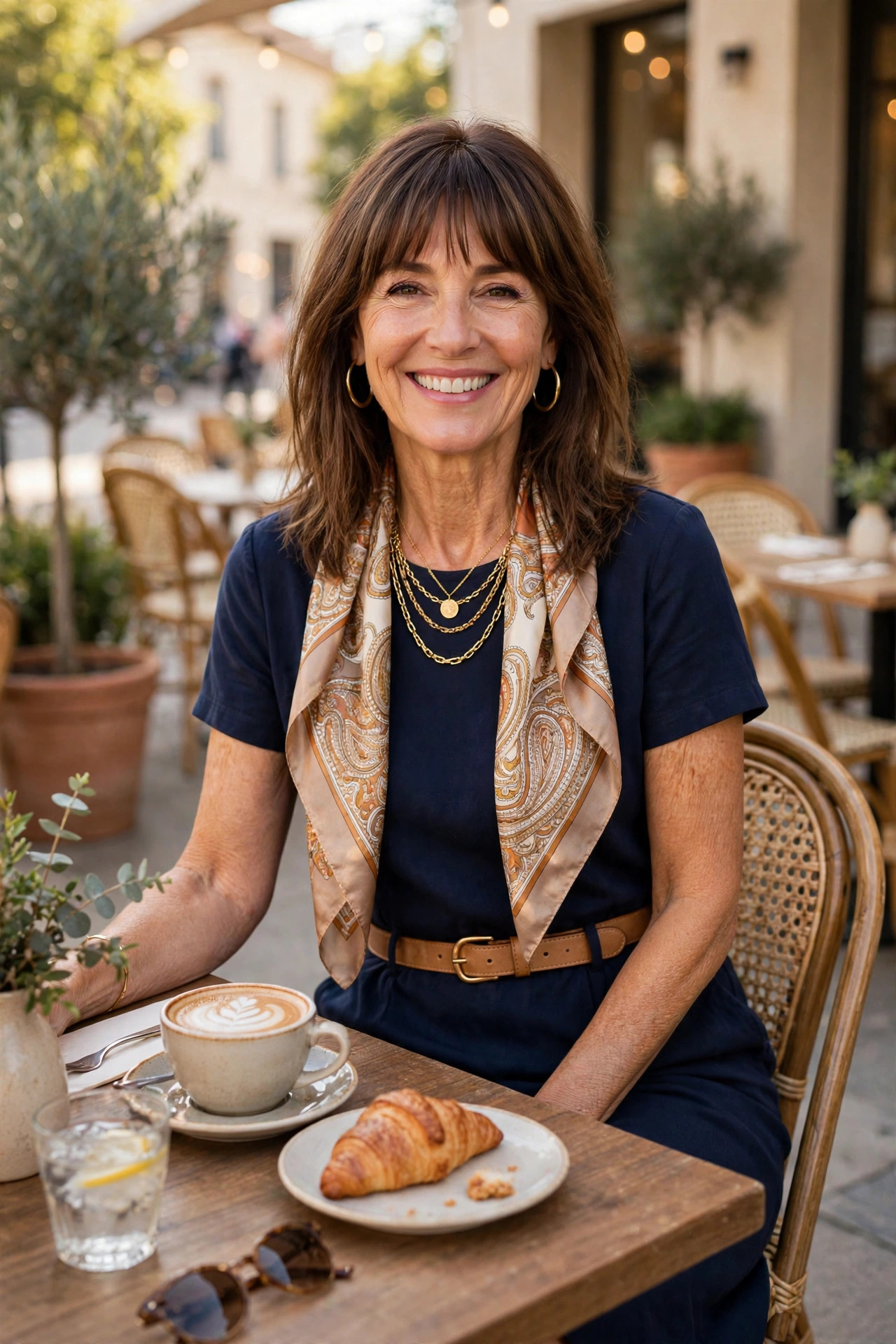
One scarf can do at least five jobs: a neck knot, a bag tie, a headband or hair tie, a belt looped through jeans, and a wrist wrap. That versatility makes the scarf the hardest working accessory in a simple wardrobe, especially for travel, since it weighs almost nothing.
The formula is about contrast. If your outfit is plain, choose a patterned or colorful scarf to supply the interest. If your outfit already has print or texture, choose a solid scarf in a complementary tone. Fabric sets the mood: silk and satin read polished, cotton and linen read casual, and wool works for cold months. Size matters too. A large square scarf gives you the most styling options, while a slim rectangular scarf works best as a neck tie or bag accent.
Scarves also bridge seasons beautifully. A lightweight printed scarf keeps fall dinner outfits for women feeling seasonal without a coat, and tied as a headband or hair accessory it adds polish to warm weather sundress outfits when jewelry alone feels like too little.
The Belt Formula
A belt is the fastest way to give a shapeless outfit structure. Shift dresses, oversized shirts, and open cardigans all transform the moment a belt defines the waist. The formula has two parts: placement and contrast.
Place the belt at your natural waist, the narrowest point of your torso, for the most defining effect. Worn lower on the hips, a belt reads casual and relaxed. Width is a proportion choice: slim belts suit delicate fabrics and smaller frames, while wider belts add structure and balance longer torsos. Neither is a rule about body type, just about visual balance with the garment.
Contrast is what makes a belt a statement. A tan leather belt on a black dress, a woven belt on a linen jumpsuit, or a slim metallic belt on a sweater dress each create a focal point from a single piece. For fit guidance across sizes, the same waist-defining trick appears in plus-size dinner outfits for ladies, and it is equally effective for elevating simple dinner outfits for women from daytime plain to evening polished.
The Bag Formula

Your bag is the largest accessory you carry, so it shapes the whole silhouette. The formula is about structure and scale. A structured bag sharpens a soft outfit, which is why a boxy handbag elevates a knit dress instantly. A slouchy bag softens a tailored outfit, which is why a relaxed tote pairs well with a blazer and trousers.
Color is the bag’s superpower on a neutral outfit. When your clothes are black, white, beige, or denim, one colorful bag becomes the statement piece with zero effort. Keep the rest of the accessories quiet and let the bag lead. Scale matters as well: a tiny bag suits evenings and dresses, a medium crossbody works for daytime errands, and an oversized tote fits workdays. As a finishing touch, echo your jewelry metal in the bag’s hardware, gold hardware with gold jewelry, silver with silver, for a cohesive look that feels deliberate.
Accessory Decoder: Which Accessory Fixes What
Use this decoder when an outfit feels almost right but you cannot name what is missing. Find the problem, reach for the fix.
| Outfit problem | Reach for | Example | Why it works |
|---|---|---|---|
| The outfit looks flat | Texture | Woven bag or knit scarf | Texture contrasts with smooth fabrics and adds depth without color |
| The outfit looks boring | One color | Bold bag or patterned scarf | A single color draws the eye first and gives the look a focal point |
| The dress has no shape | Waist definition | Belt at the natural waist | Creates proportion and turns a shapeless piece into a styled one |
| The neckline looks empty | Neckline jewelry | Necklace matched to the neckline | Fills the visual gap and completes the top half of the outfit |
| The look feels too casual | Polish | Structured bag plus simple metal jewelry | Structure and shine read as intentional, which elevates everything |
| Everything matches too perfectly | Contrast | Mixed metals or an unexpected texture | A small break in the pattern keeps the look modern, not stiff |
When to Stop: How to Tell You Have Added Enough
You have added enough accessories when removing any single piece would make the outfit feel unfinished. That is the test. If you can take something off and the look improves, that piece was competing, not contributing.
Watch for these five signs of too much. First, you keep fidgeting with the pieces, which usually means they are fighting each other. Second, two accessories occupy the same zone, like a necklace and a scarf both crowded at the neck, or a cuff and a watch stacked on the same wrist. Third, the metals and finishes clash, such as chunky gold, delicate silver, and beaded color all at once with no dominant thread. Fourth, the outfit feels visually heavy even though each piece looked fine alone. Fifth, you cannot name the statement piece, which means there isn’t one, just noise.
The classic fix still works: take one piece off before you leave the house. Stand back and look at the full outfit in a mirror, not just the jewelry close up. If the look feels calmer and more pulled together, the removed piece was the problem.
Sometimes removing a piece does not help, and the outfit still feels wrong. That usually means the base outfit is the issue, not the accessories, which is the deeper problem covered in the guide on why you feel like you have nothing to wear. Accessories elevate good basics, but they cannot rescue clothes that do not fit or suit the occasion.
Three No-Fail Formulas to Try This Week

These formulas apply the whole system to common simple outfits. Each has exactly one statement piece.
1. The tee and jeans upgrade. Start with a white tee and straight-leg jeans. Make layered necklaces the statement zone, keeping earrings to small hoops. Add a structured tote and simple loafers. The necklaces do the talking, everything else supports.
2. The plain dress, evening ready. Start with a black shift dress. Make the belt the statement, a slim metallic one at the natural waist. Add chandelier or drop earrings as the face frame, skip the necklace, and carry a small clutch. Two focal points at most, each in its own zone.
3. The cozy polish. Start with a cream sweater and dark jeans. Make a patterned scarf the statement, knotted once at the neck. Keep jewelry to studs and one slim bracelet, and carry a medium crossbody. The scarf supplies color and texture, the rest stays quiet.
Try one formula exactly as written, then swap a single variable next time, a different scarf, a different belt, to learn how each piece changes the result. That is how the system becomes instinct.
Frequently Asked Questions
How many accessories should you wear at once?
There is no fixed number, but a reliable guide is one statement piece plus two or three supporting pieces. A simple base outfit can handle more accessories than a busy printed one, since plain clothes give each piece room to breathe. Let the occasion set the ceiling: workdays and daytime errands suit fewer pieces, while evenings and events allow bolder combinations.
How do you accessorize a plain dress?
Start with the occasion, then choose one hero piece. Add a belt at the natural waist if the dress needs shape, match a necklace to the neckline, and let the bag supply polish or color. Keep the remaining accessories simple so the hero piece stands out. A plain dress is the easiest garment to accessorize because every choice shows.
Can you mix gold and silver jewelry in one outfit?
Yes, mixed metals look modern when done with intent. Choose one metal to dominate and use the other as an accent, for example mostly gold jewelry with one silver ring. Keep the styles consistent, delicate with delicate or bold with bold, so the contrast looks deliberate. A piece that already combines both metals, like a two-tone watch, also bridges the mix naturally.
Do your bag and shoes have to match?
No, matching your bag to your shoes is optional, and contrast often looks more current. Instead of exact matching, echo one element: pick up a color from the outfit in the bag, or match the bag’s hardware to your jewelry metal. A neutral shoe with a colorful bag, or a colorful shoe with a neutral bag, both create balance without looking overly coordinated.
Conclusion
Accessorizing a simple outfit is a skill, not a talent, and the accessory elevation system makes it repeatable. Choose one statement piece, support it with quieter accessories, and stop when removing anything would make the outfit feel unfinished. With the jewelry, scarf, belt, and bag formulas above, the plainest pieces in your closet can look deliberate every single day.

Rameen Awan is the founder and editor of Outfit Algorithm, where she breaks down outfit formulas, dress codes, and styling systems for real life. Her guides focus on practical details other sites skip: fabric behavior, fit for different body types, and what actually works when you are getting dressed in a hurry.