
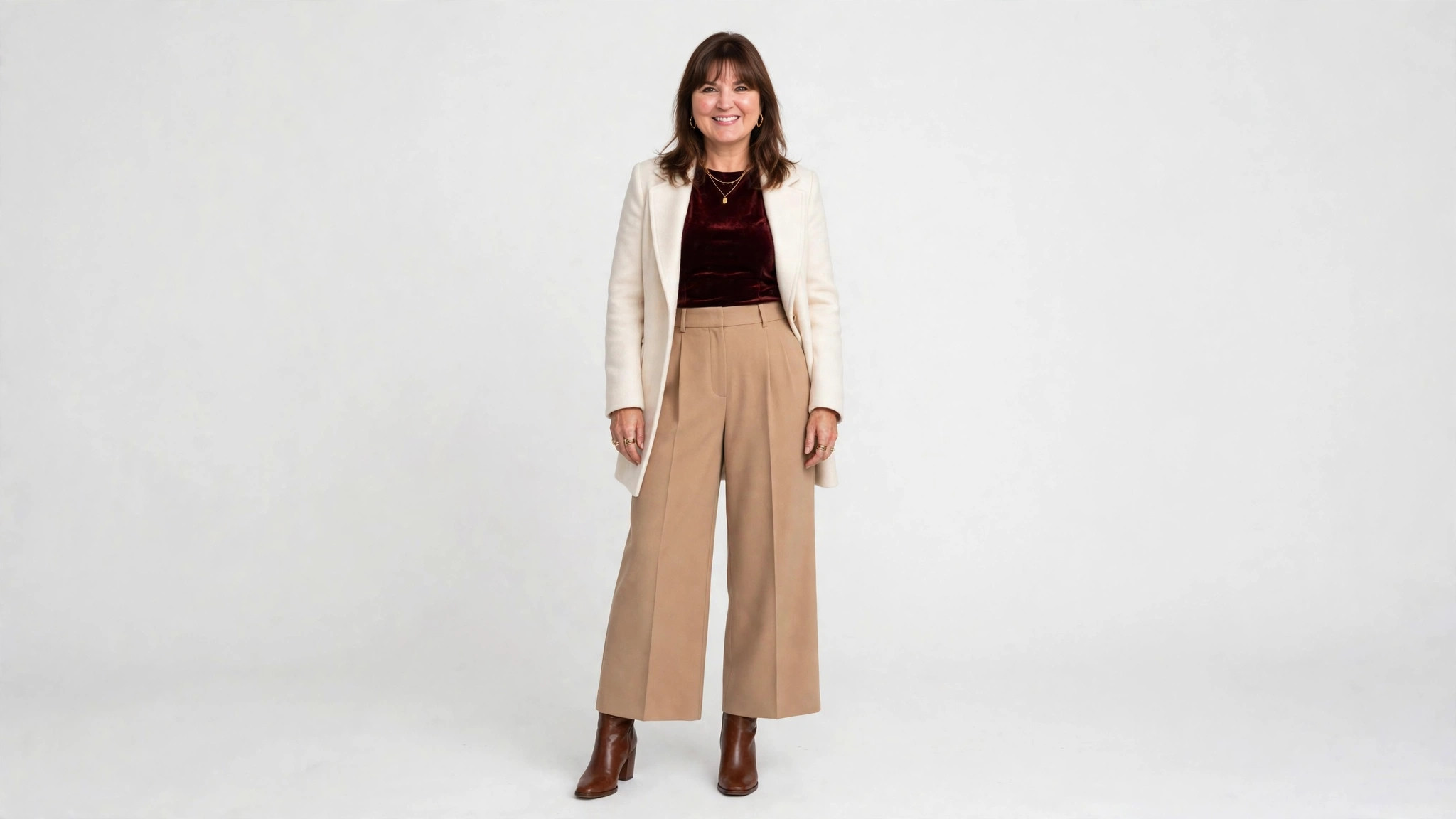
Learning how to balance proportions in outfits is the fastest way to look polished without buying anything new. The idea is simple: control where volume sits, where your clothes divide your body, and where the eye travels. When one piece is loose and the rest follows your lines, and your outfit splits into thirds instead of halves, the whole look reads as intentional.
For proportion styling rules, read InStyle’s body type guide.
Balanced proportions are not about hiding your body or chasing a single ideal shape. They are about using fit, length, and visual breaks on purpose, so every piece earns its place. The rules below work for petite, tall, and plus-size frames, for tight budgets and full closets alike, because they rely on placement and pairing rather than new purchases.
Key Takeaways
- Follow the one-volume rule: pair one relaxed or oversized piece with at least one fitted piece so the outfit has contrast and shape.
- Split your silhouette into thirds, not halves. Aim for roughly one-third on top and two-thirds on the bottom (or the reverse) to create a longer, more pleasing line.
- Tucking, belts, and high-rise bottoms move your visual waistline, which resets how long your legs look.
- Hemlines and shoes should end at narrower points of the body, not at the widest point, so the eye keeps moving.
- Petite, tall, and plus-size frames all use the same rules, with small adjustments to hem length, volume placement, and vertical lines.
What does it mean to balance proportions in an outfit?
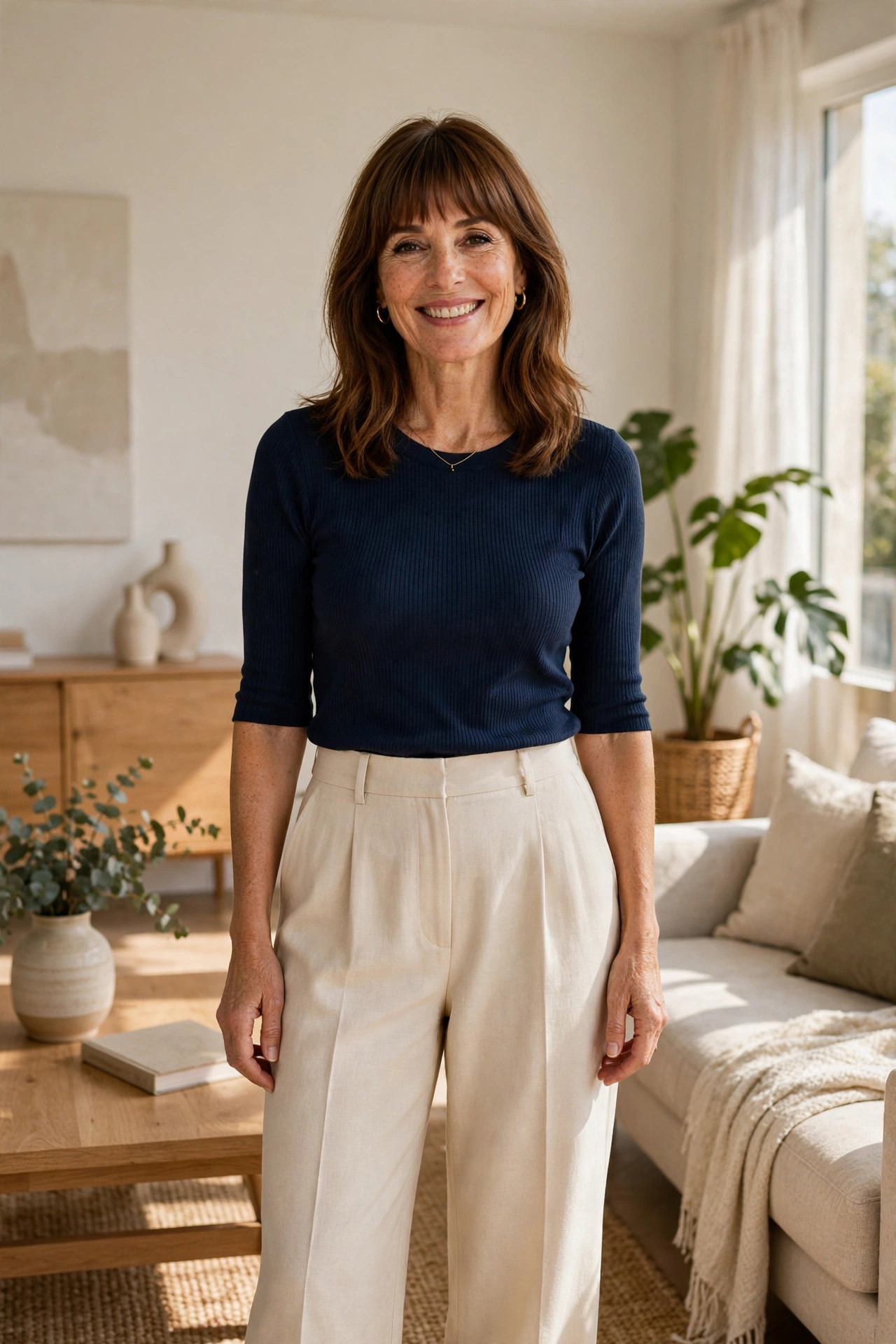
Balancing proportions is the practice of distributing visual volume and length across your outfit so no single piece overwhelms the rest. Every garment adds either volume (width, drape, fullness) or length (long lines, tall columns) to your silhouette. When the amounts are lopsided, the outfit feels “off” even when each piece is lovely on its own.
Most days when an outfit disappoints in the mirror, the problem is not your body and not your taste. It is a proportion problem: two loose pieces fighting each other, a top and bottom splitting you exactly in half, or a hemline stopping at the widest part of your leg. Each of these has a simple fix, and once you can spot them, getting dressed gets noticeably easier.
The one-volume rule: the fastest fix for any outfit
The one-volume rule says: let one piece be the star of the show. If your top is oversized, keep your bottom fitted or tapered. If your pants are wide or your skirt is full, keep your top close to the body. This single habit prevents most styling mistakes, because volume needs contrast to look intentional.
Think of it as a conversation between your pieces. An oversized sweater over slim straight-leg jeans says relaxed on purpose. The same sweater over wide palazzo pants says lost in fabric, because nothing defines where you begin and the clothes end. The fix is rarely to throw out the oversized piece. It is to give it a fitted partner.
There is one controlled exception: two relaxed pieces can work when the waistline is clearly defined. A tucked-in blouse under wide-leg trousers, or a belted tunic over a flowing skirt, still follows the spirit of the rule. The tuck or belt creates the fitted anchor, so the eye reads shape even though the fabric is generous. Without that anchor, head-to-toe looseness reads as unfinished rather than effortless.
This rule also keeps layered winter dinner outfits looking sleek instead of bulky. A chunky knit over a fitted turtleneck and slim trousers gives you warmth with structure, because only the outer knit carries the volume.
Outfit formulas: fitted meets voluminous in practice
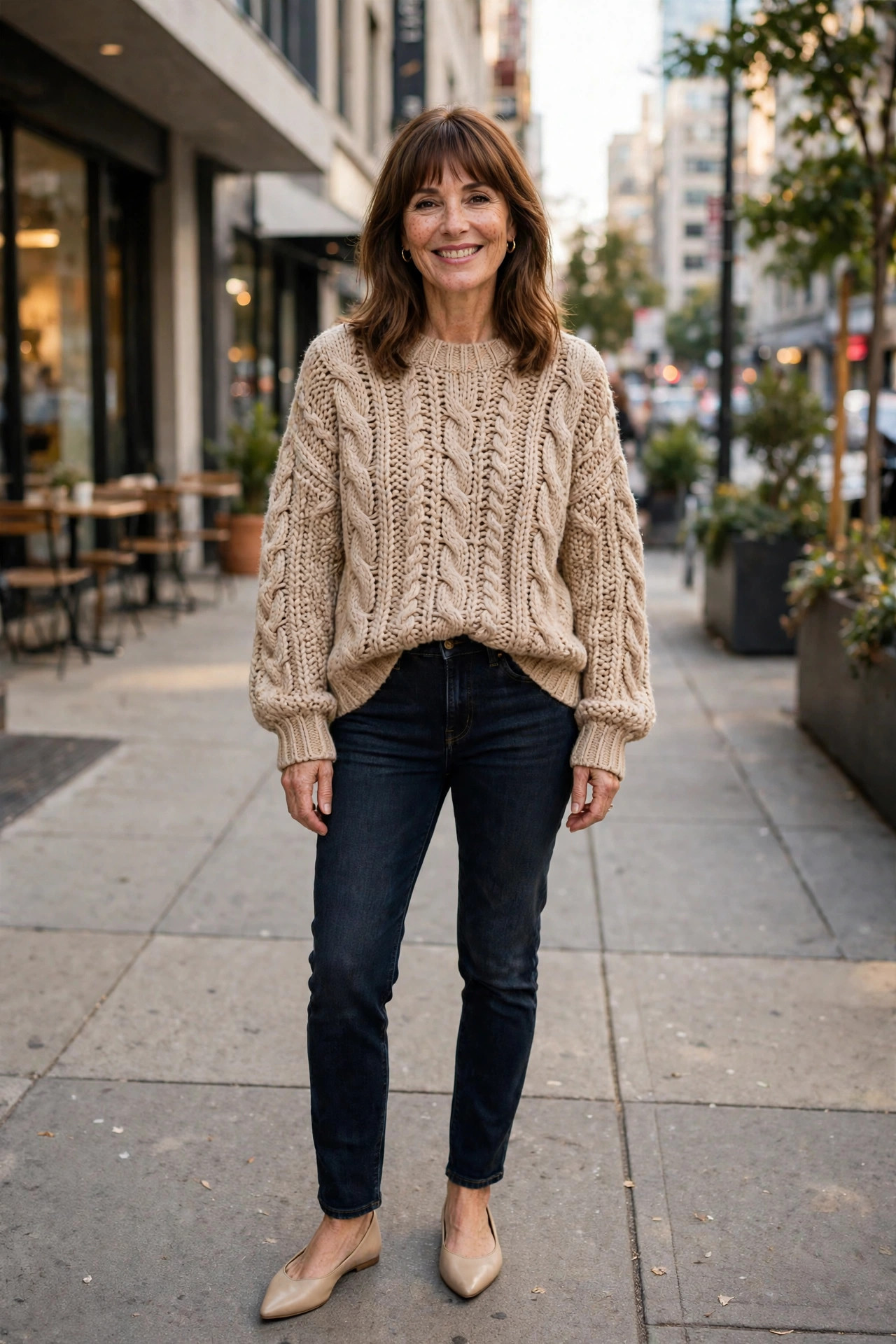
Once the one-volume rule clicks, these ready-made pairings make it automatic. Each one keeps a single volume zone and lets the other half stay close to the body.
- Oversized sweater + slim straight jeans. Add a small front tuck so the waistline shows, and push the sleeves to reveal your wrists. The knit brings the cozy volume, the jeans keep the lower line clean. This is the backbone of relaxed fall dinner outfit ideas.
- Wide-leg trousers + fitted ribbed top. Tuck the top fully into high-rise trousers. The trousers give dramatic lower-half volume while the fitted top and defined waist keep the silhouette readable.
- A-line midi skirt + tucked-in blouse. The skirt flares from a defined waist, the blouse stays smooth. This classic pairing is why midi skirts look elegant at dinner: volume below, polish above.
- Relaxed blazer + fitted top + tapered trousers. The blazer adds shoulder and torso volume, the fitted top and tapered trousers underneath keep everything sharp. A structured take that works beautifully for tailored office outfits.
- Flowy maxi skirt + cropped jacket. Here the thirds flip: the long skirt takes two-thirds, the short jacket takes one-third. The cropped jacket stops the top half from disappearing into the skirt’s volume.
- Slim sheath dress + longline open cardigan. The dress keeps the base fitted while the open cardigan adds vertical lines and gentle movement without widening the silhouette.
Notice the pattern in every formula: the eye always finds one defined point, usually the waist, the shoulder line, or the ankle. That anchor is what separates a styled outfit from a pile of clothes.
How do proportions make you look taller?
Proportions make you look taller by creating one long vertical line and placing your visual waistline higher. Height in an outfit is an illusion built from unbroken lines, and every horizontal break, tuck, or hemline either helps or hurts that illusion.
Tuck to raise the waistline. A full or French tuck into high-rise bottoms is the quickest proportion trick in existence. It instantly divides the outfit into one-third on top and two-thirds on the bottom, so the legs appear to start higher. Even a loose half-tuck shifts the visual waist upward and breaks a boxy 50/50 split.
Dress in a column. Wearing one color, or very close tones, from top to bottom removes the visual breaks that chop you into sections. A monochrome outfit in navy, charcoal, or camel creates an uninterrupted line from shoulder to ankle. You do not need exact matches; close tones read as one continuous column.
End hemlines at narrow points. Where a garment stops is where the eye stops. Skirts and shorts look best ending just above or below the knee rather than mid-thigh at its fullest point, and trousers look longest when they skim the top of the shoe instead of bunching at the ankle. The golden habit: never let a hem stop exactly at the widest part of your hips, thighs, or calves.
Keep the shoe line continuous. Shoes that blend with your skin tone or your trousers extend the leg line, while ankle straps and strong color contrasts cut it short. A pointed or low-vamp shoe shows more of the foot and adds a little extra length, which is why nude-toned flats and heels are such reliable lengtheners.
Open up the neckline. V-necks, scoop necks, and open collars create a vertical line through the upper body, which lengthens the torso and neck. High, closed necklines can shorten the neck visually, so when an outfit feels top-heavy, opening the neckline is often the fix.
Mind your layers. A jacket that ends at the high hip creates an automatic one-third top block over long bottoms, while a long open cardigan or duster adds vertical lines that reinforce the tall column. If you love cropped pants, pair them with shoes close to your skin or trouser tone so the leg line stays continuous.
How do you adapt these rules for petite, tall, and plus-size frames?
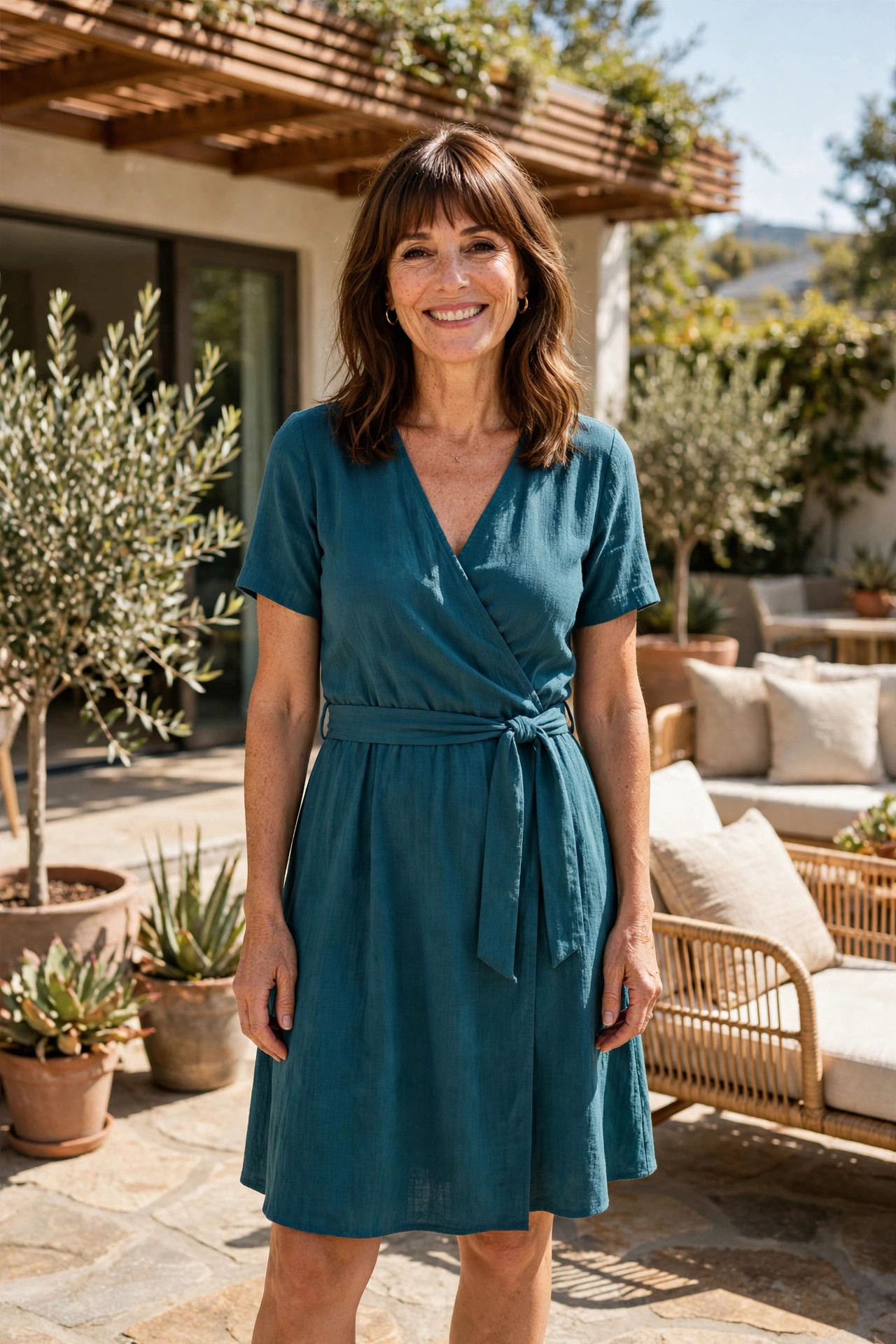
The proportion rules are universal, but the settings change slightly with your frame. Think of these as dial adjustments, not different rulebooks.
Petite frames
Scale the volume down. A cropped oversized sweater usually flatters a petite frame better than a long, heavy one, because the shorter length keeps the one-third top ratio intact. Show your wrists and ankles: pushing up sleeves and choosing ankle-skimming hems reveals your slimmest points and stops fabric from swallowing you. Watch the shoulder seam, since a seam sitting far past your natural shoulder reads as “borrowed” rather than “oversized on purpose.” High-rise bottoms and a consistent tuck are a petite frame’s best friends, because they maximize the two-thirds lower section.
Tall frames
Volume is easier to carry on a tall frame, so oversized pieces and wide-leg trousers rarely overwhelm. Longer hemlines that would swamp a petite frame, like full-length dusters and maxi skirts, keep their elegance here. Tall frames can also wear the reversed thirds confidently: a tunic or longline top over slim bottoms creates a graceful two-thirds top, one-third bottom split. Horizontal breaks and color blocking are less risky, because the overall vertical line is already generous.
Plus-size frames
Place volume deliberately rather than avoiding it. Keep fitted or structured pieces where you want definition, usually the waist, shoulders, or lower leg, and let fabric drape (not cling) everywhere else. A belt over a tunic, a tucked blouse under a full skirt, or a structured blazer over a soft dress all create the fitted anchor the one-volume rule requires. Choose hemlines that pass the widest point instead of stopping on it, and favor V-necks and open collars to keep the upper body long. For occasion dressing, the same logic shapes flattering plus-size dinner outfits, where defined waists and flowing skirts do the heavy lifting.
Common proportion mistakes and how to fix them
Most “this outfit is not working” moments come from a short list of repeat offenders. Scan the table, find your culprit, and apply the fix.
| Mistake | What your eye sees | Quick fix |
|---|---|---|
| Two loose pieces head to toe | No shape, the body disappears under fabric | Make one piece fitted, or add a front tuck or belt to define the waist |
| Everything tight and fitted | Restricted look that highlights every asymmetry | Swap one piece for a relaxed cut, such as wide-leg trousers or a boxy overshirt |
| Top and bottom split the body 50/50 | Body cut in half, legs look shorter than they are | Tuck into high-rise bottoms to create a one-third top, two-thirds bottom split |
| Hem ends at the widest point | The eye parks on the fullest part of the hip, thigh, or calf | Shift the hemline to a narrower point, just above or below the widest area |
| Cropped pants with ankle straps | The leg line is chopped into short segments | Match shoes to skin tone or trouser color, or show the ankle with low-vamp shoes |
| Oversized layers cover wrists and neck | Swallowed by fabric, the outfit looks heavy | Push up sleeves, choose an open neckline, and reveal wrists or ankles |
Your 60-second proportion check
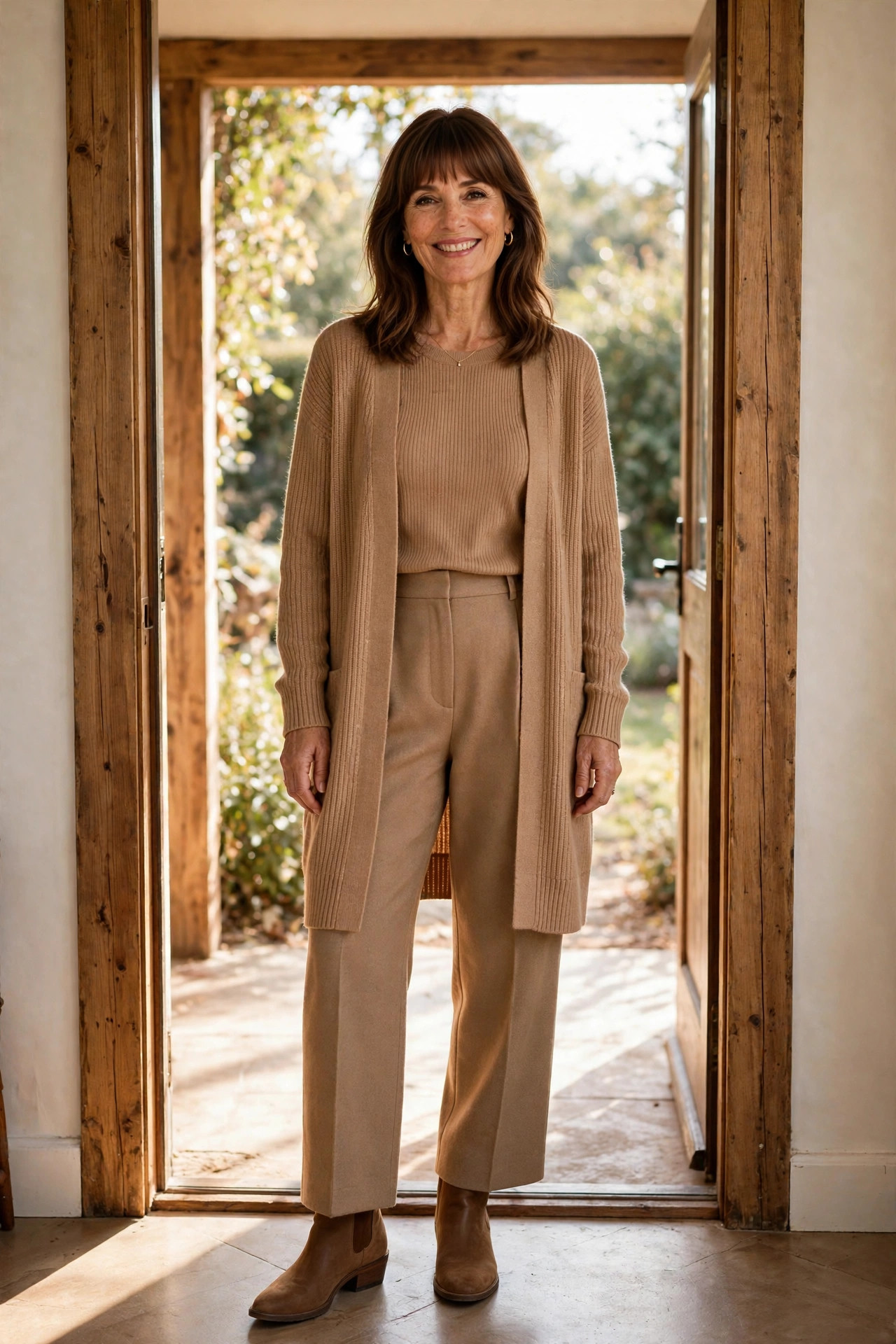
Run through this checklist in front of a full-length mirror before you head out. It takes a minute and catches nearly every proportion slip.
- Count the volume zones. Is exactly one piece relaxed or oversized? If two are, tuck or belt one of them.
- Find the thirds. Does the outfit split roughly one-third to two-thirds rather than half and half? If not, adjust the tuck or waistline.
- Locate the waist. Can you see where your waist is? A tuck, belt, seam, or color break should mark it.
- Check the hemlines. Is any hem stopping at the widest part of your hips, thighs, or calves? Nudge it to a narrower point.
- Follow the shoe line. Do your shoes continue the leg line or cut it off? Swap or adjust if they chop the line.
- Step back. Look at the full silhouette from a few steps away, since proportion reads at a distance, not up close.
On mornings when the closet feels like nothing works, this check pairs well with a calmer approach to choosing in the first place, like the one in why nothing in your closet feels right.
Frequently Asked Questions
What is the rule of thirds in fashion?
The rule of thirds is a simple visual guideline: divide your outfit into three vertical sections instead of two halves. The most flattering split is usually one-third on top and two-thirds on the bottom, created with a tuck, a belt, or high-rise bottoms. You can also reverse it, with a long top over slim bottoms. Avoiding the exact 50/50 split keeps the silhouette from looking blocky and makes legs appear longer.
How can I look taller using outfit proportions?
Create one long vertical line and raise your visual waistline. Tuck tops into high-rise bottoms, dress in a single color column, and choose hemlines that end at narrow points rather than wide ones. Shoes close to your skin tone or trouser color extend the leg line, and V-necks or open collars lengthen the upper body. Small, consistent vertical lines beat any single “tall” garment.
Can petite women wear oversized clothes without looking overwhelmed?
Yes, with scaled volume and visible anchors. Choose cropped or mid-length oversized pieces rather than very long ones, and always pair them with something fitted, like slim jeans or a tucked-in silhouette. Push up the sleeves to show your wrists, keep shoulder seams close to your natural shoulder, and show your ankles. These small reveals keep the volume looking deliberate instead of swallowing your frame.
How do I balance wide hips with the rest of my outfit?
Add gentle visual weight up top and keep the lower half streamlined. Structured shoulders, boat necklines, or a statement neckline draw the eye upward, while A-line skirts and straight-leg trousers skim rather than cling. Avoid tops that end exactly at the widest part of the hip; let them stop just above or below it. A defined waist ties the two halves together and keeps the overall silhouette balanced.
Conclusion
Balancing proportions is a skill, not a body type, and it runs on a handful of repeatable moves: one volume zone at a time, thirds instead of halves, a visible waistline, and hemlines that respect the body’s narrow points. Practice the 60-second check for a week and it becomes instinct. Your closet already holds everything you need; proportion is simply the art of arranging it on purpose.

Rameen Awan is the founder and editor of Outfit Algorithm, where she breaks down outfit formulas, dress codes, and styling systems for real life. Her guides focus on practical details other sites skip: fabric behavior, fit for different body types, and what actually works when you are getting dressed in a hurry.