

Learning how to layer clothes for fall comes down to one simple system: a thin fitted base layer, an insulating mid layer, and a structured outer layer. Once that order is in place, everything else is refinement. Fall weather is famously indecisive, chilly at sunrise, warm by lunch, and cold again by dinner, so the point of layering is not to wear everything you own at once. The point is to build a outfit you can adjust as the day changes, staying warm and polished without looking bulky.
For fall layering tips, see InStyle’s fall layering guide.
If your closet ever feels full of clothes and empty of outfits, you are not alone. A few good layering formulas can unlock pieces you already own, which is exactly the problem our guide on what to wear when you feel like you have nothing to wear helps you solve too.
Key Takeaways
- Fall layering is a 3-layer system: base layer (thin and fitted), mid layer (insulation), outer layer (structure and weather protection).
- Thin fabrics go closest to the body, heavier ones go on top. Each layer should be slightly roomier than the one beneath it.
- To avoid bulk, balance one oversized piece with one fitted piece, and let a belt, a tuck, or an open front show your shape.
- Mix textures, not just colors. A matte knit next to smooth leather or soft denim reads as intentional.
- Plan for temperature swings: choose a layer you can remove and carry, so heated rooms and cold streets are both handled.
What Is the Fall 3-Layer Formula?
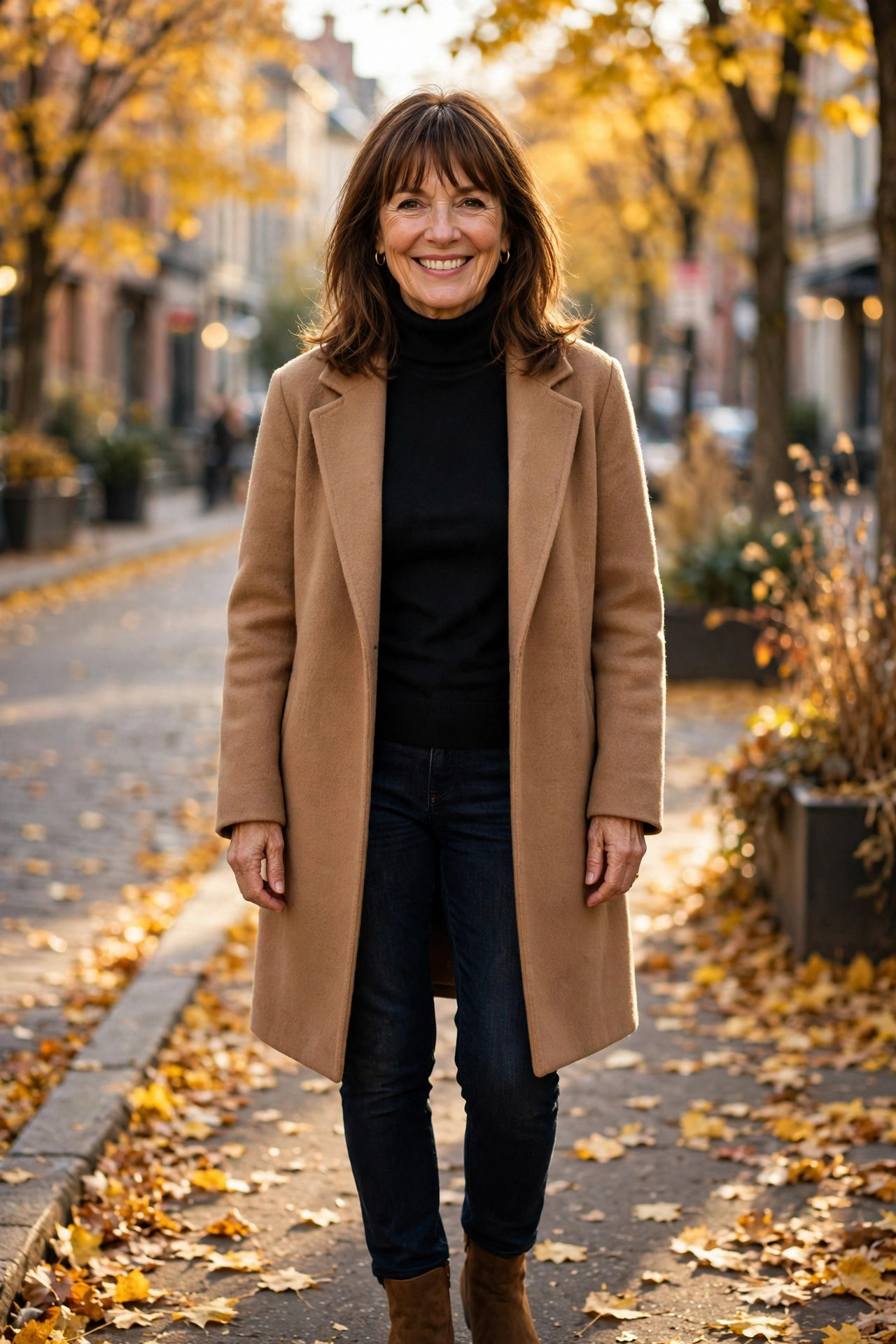
The 3-layer formula is a simple order for building any fall outfit: base layer + mid layer + outer layer. The base sits close to your skin and manages comfort, the middle adds warmth, and the outer shapes the look and shields you from wind and cold. You can think of it as the answer to “what goes under what,” a question every fall dresser asks.
The system works because each layer has a single job. When one piece tries to do everything, warmth plus shape plus weather protection, it usually does none of them well and adds bulk. Give each layer its job and the outfit stays slim, comfortable, and easy to adjust.
Layer 1: The Base Layer, Thin and Close to the Body
Start with the thinnest thing you will wear all day. Good base layers are fitted, not tight: long-sleeve tees, lightweight turtlenecks, thin ribbed knits, bodysuits, or camisoles under a shirt. The fabric should feel smooth against the skin and lie flat under everything else. Anything that bunches at the waist or balloons at the sleeve here will fight every layer you add later.
A fitted base does quiet, essential work. It keeps your outline visible under bulkier pieces, stops drafts where layers meet, and lets mid layers glide instead of snagging. On mild days the base layer is also your finished look for indoors, since you will probably take the outer layers off when you step inside a heated room.
Keep base layers in neutral colors, black, white, gray, cream, or navy, so they blend with whatever goes on top. Save brighter colors and prints for layers people will actually see.
What to skip: thick waffle knits, heavy flannels, and loose boxy shirts as a base. They add volume at the foundation, and every layer after them only multiplies it.
Layer 2: The Mid Layer, Warmth Without Weight
The mid layer is your insulation, and this is where fall layering goes right or wrong. The goal is warmth without weight: fine-gauge sweaters, slim cardigans, fitted blazers, button-down shirts worn over the base, denim shirts, or a quilted vest. Each of these adds real warmth while keeping a clean line.
Fit matters more here than anywhere. A mid layer should be just slightly roomier than your base, enough to sit smoothly over it with no pulling at the shoulders and no bunching at the hem. If the mid layer is too loose, it will crumple under your coat and add bulk you did not ask for. If it is too tight, it will strain and crease over the base.
The mid layer is also where texture starts to show. A soft cashmere crewneck, a crisp button-down, or a ribbed turtleneck gives the eye something to look at between the smooth base and the structured coat. For evenings, a fitted turtleneck under a blazer is one of the most reliable formulas there is, and it appears throughout our fall dinner outfits guide for exactly that reason.
The bulk rule for mid layers: wear the chunkier knits here only if everything else is slim. One chunky piece per outfit is the safe limit.
Layer 3: The Outer Layer, Structure and Weather
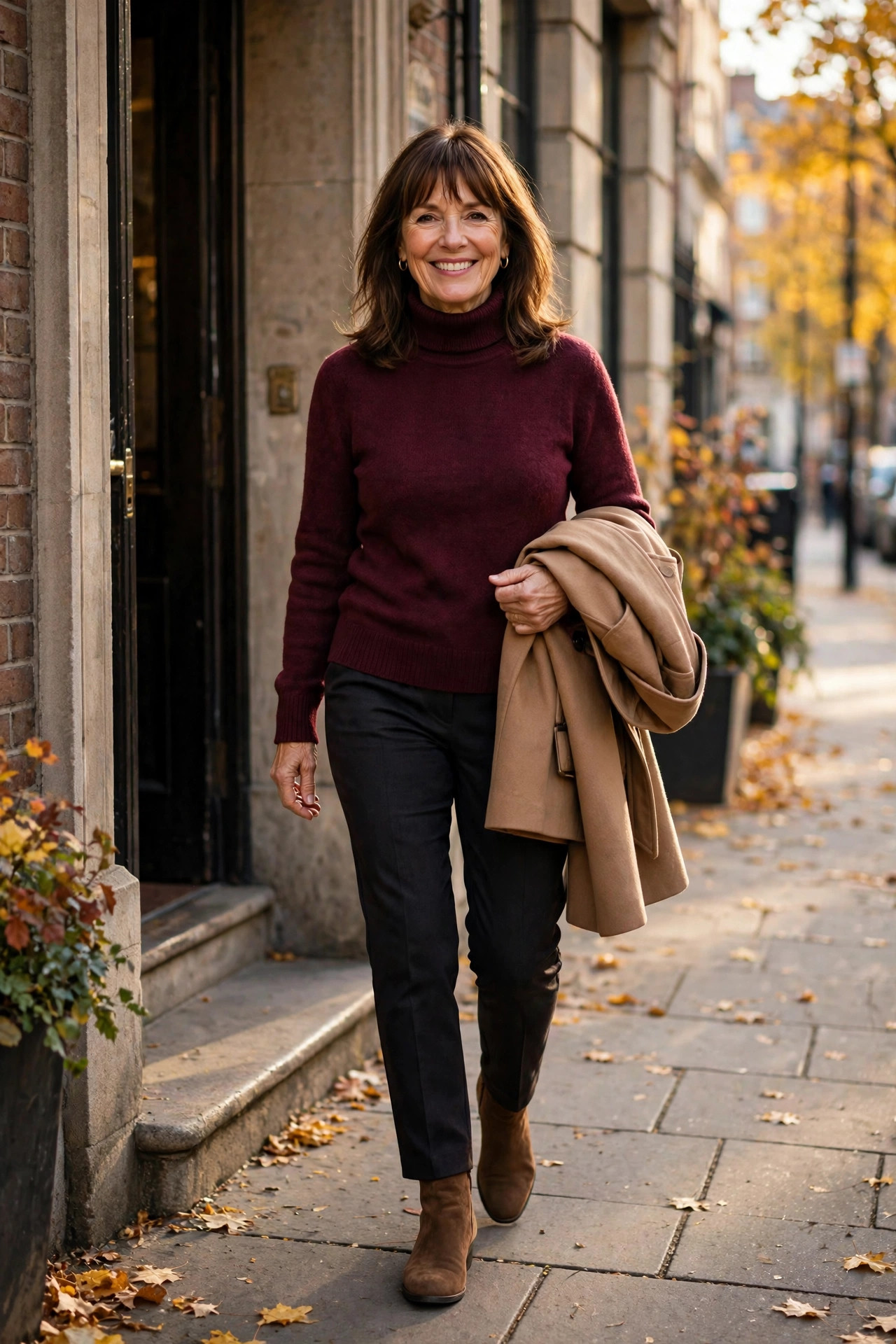
The outer layer sets the silhouette and handles the weather. Tailored wool coats, trench coats, leather jackets, cropped suede jackets, quilted shirt jackets, and clean-lined puffers all work. The key question for this layer is simple: does it have enough room to close comfortably over the layers beneath, and does its shape say something?
Structure is what keeps three layers from reading as one big blob. A blazer or wool coat gives shoulders and lines, even when what is underneath is soft. If your mid layer is already structured, you can go softer on top, a relaxed barn jacket or an oversized shirt jacket. If everything underneath is soft and fitted, bring structure with the coat. One of the two should hold the shape.
Check the length too. Coats that hit mid-thigh balance slim pants beautifully, while cropped jackets pair best with high-waisted trousers and tucked-in tops. A coat that cuts across the widest part of your hip can visually widen it, so when in doubt, choose a length that ends at the knee or just below the hip.
Room test: if you cannot raise your arms or button the coat without strain, the outer layer is too small for layering, no matter how good it looks on its own.
How to Layer Clothes for Fall Without Looking Bulky
This is the question behind the whole topic, and the answer is a set of small decisions that stack up.
Go from fitted to looser, never the reverse. The layer closest to your skin is the most fitted, and each layer outward gets slightly roomier. A fitted sweater over a billowy blouse underneath is one of the most common layering mistakes, and it always looks dated and bulky.
Balance one oversized piece with one fitted piece. An oversized sweater needs slim jeans or leggings. Wide-leg trousers need a fitted top under the coat. Never pair oversized with oversized on both halves, or the body disappears and the clothes wear you.
Show one slim area. You do not need to show skin, but let the eye find structure somewhere: a wrist at a pushed sleeve, an ankle above a boot, a waist implied by a tuck or a belt, or a visible collarbone. That one signal of shape keeps the whole stack from reading as shapeless.
Limit visible layers to three. Beyond the base, two more visible layers is the sweet spot for fall. A fourth layer usually needs to be an accessory, a scarf, not another garment, or the look starts to feel heavy.
Let a belt or tuck define the middle. A half-tuck on a shirt, a full tuck into high-waisted trousers, or a belt over a cardigan creates a waistline that three layers can blur. This trick works across body types, and our plus size layering looks for special evenings lean on the same waist-defining logic.
How to Mix Textures When You Layer
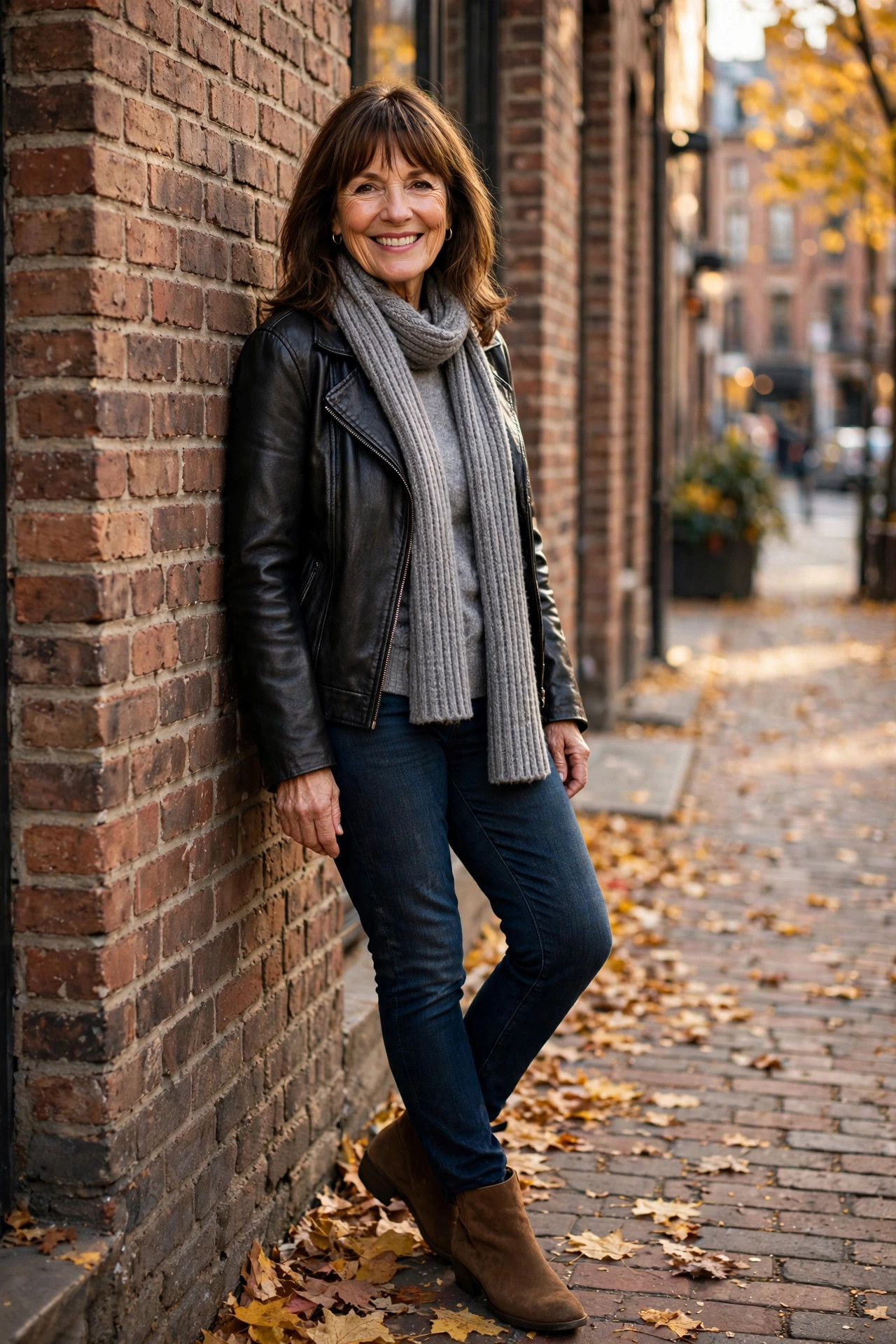
Texture is what makes layered outfits look rich instead of flat. Two pieces in the same color family can look completely different when one is nubby, one is smooth, and one has a soft nap. The rule is simple: vary the surfaces, keep the colors related.
Some pairings that always work:
- Smooth leather with soft knit: a leather jacket over a fine-knit turtleneck. The shine of the leather against the matte knit is the contrast that makes it work.
- Crisp denim with cozy fleece or wool: a denim shirt or jacket over a soft mid layer. The structure of denim keeps wool from looking sleepy.
- Sleek silk or satin with cashmere: a silk blouse under a cashmere crewneck. This is the quiet luxury pairing, warm but never bulky, perfect for dinners and offices.
- Suede with ribbed knit: a suede jacket over a ribbed turtleneck softens sharp fall outfits.
- Chunky knit with tailored wool: one chunky cardigan under a smooth wool coat, letting the coat’s structure contain the knit’s volume.
Keep it to two, at most three, different textures in one outfit. More than that and the eye has nowhere to rest. And anchor the textures with a cohesive color palette: camel, cream, chocolate, and black let leather, wool, and denim all play together without clashing.
Layering for Indoor and Outdoor Temperature Swings
Fall’s hardest trick is the heated room. You leave the house at 45 degrees, walk into an office or restaurant at 72, and sit there for hours. A layering system that cannot shed a layer is a system that fails by noon.
Build for the transition:
- Make the outer layer easy to remove. Coats, jackets, and open cardigans shed in seconds. Pullovers you have to wrestle over your head do not. If your outfit only works with every piece on, rethink it.
- Plan the “indoors outfit” first. Whatever remains when the coat comes off should be a complete, presentable look on its own. The base plus mid layer is your real outfit; the coat is weather equipment.
- Carry one removable layer. On unpredictable days, bring a layer you can add or drop: a scarf, a vest, a light jacket tied around the waist or folded into a tote. This is cheaper than guessing the weather wrong.
- Tights and socks as hidden layers. Thermal tights under dresses, thin socks under boots, and a camisole under a blouse add real warmth with zero visual bulk, because nobody sees them.
- Watch the sleeve. Sleeves that bunch at the wrist under a coat add surprising visual bulk. Push them neatly, or choose a base with slim sleeves that sits flat.
Holiday season makes this skill even more useful: warm rooms, cold walks between venues, and photos in both. The same transition logic applies to festive dressing, which is why our Christmas dinner outfits and winter dinner outfits guides build every look around a removable outer layer.
Your Fall Layering Checklist
Run through this in front of the mirror before you leave:
- Base check: Is the innermost layer thin and fitted, lying flat at the waist and sleeves?
- One chunky piece max: If one layer is oversized or heavily textured, are the others slim?
- Waist signal: Is there a tuck, belt, or open front showing where your waist is?
- Texture count: Two or three different textures, colors kept in one family?
- Indoors test: If the coat comes off, is the remaining outfit complete?
- Sleeve test: Do the sleeves sit smoothly, with wrists visible or neatly cuffed?
- Shoe grounding: Do the pants meet the boots cleanly, with no bunching at the ankle?
If you answer yes seven times, you are dressed.
The Fall Layering Decoder: What Each Layer Does

| Layer slot | Job it does | Best picks | Fit rule |
|---|---|---|---|
| 1. Base layer | Comfort and a smooth foundation | Fitted long-sleeve tee, thin turtleneck, bodysuit, camisole | Most fitted layer; lies flat, never bunches |
| 2. Mid layer | Warmth and insulation | Fine-knit sweater, slim cardigan, button-down, quilted vest | Slightly roomier than the base; no strain, no sagging |
| 3. Outer layer | Shape and weather protection | Wool coat, trench, leather jacket, cropped suede jacket | Room to close over both layers; holds the silhouette |
| 4. The waist signal | Shows your shape under the stack | Half-tuck, full tuck, belt over a cardigan, open front | One signal is enough; more looks fussy |
| 5. The texture pairing | Visual richness without extra bulk | Leather over knit, denim over wool, silk under cashmere | Two to three textures max; keep colors in one family |
| 6. The transition piece | Adapts the outfit to temperature swings | Scarf, vest, light jacket, thermal tights | Easy to add or remove; carries well in a tote |
Frequently Asked Questions
How do I layer clothes for fall without looking bulky?
Build from thin to thick: a fitted base, a slim mid layer, and a structured outer layer, with each layer slightly roomier than the one beneath. Balance one oversized piece with one fitted piece, and let a tuck, belt, or open front show your waist. Limit visible layers to three, keep one slim area visible (wrists, ankles, waist), and save heavy textures for a single focal piece.
What is the 3-layer formula for fall outfits?
The 3-layer formula is base layer plus mid layer plus outer layer. The base (a thin fitted tee, turtleneck, or camisole) sits close to the skin. The mid layer (a sweater, cardigan, or button-down) adds insulation. The outer layer (a coat, blazer, or jacket) gives the outfit its shape and protects against weather. Each layer has one job, which keeps the outfit slim and easy to adjust.
How do you dress for fall when the temperature changes during the day?
Plan the “indoors outfit” first: whatever remains when the coat comes off should be a complete look. Choose an outer layer you can remove easily, and carry one extra layer, like a scarf or vest, for the cold parts of the day. Hidden layers such as thermal tights or a camisole add warmth without visual bulk, since nobody sees them.
How do you mix textures when layering for fall?
Vary the surfaces while keeping colors in the same family. Pair smooth with matte: leather over a fine knit, denim over soft wool, silk under cashmere. Limit yourself to two or three different textures per outfit so the eye has somewhere to rest. One textured statement piece, like a chunky cardigan or a suede jacket, is usually enough.
Conclusion
How to layer clothes for fall is really a question about order, not quantity. Put a thin fitted base closest to the body, add one insulating mid layer, finish with a structured outer layer, and let texture and a waist signal do the visual work. Build the outfit so the coat can come off indoors, and you will be ready for every version of a fall day.
Your summer pieces do not have to retire in September, either. A slip dress under a jacket or a tee under a cardigan can stretch your wardrobe weeks into the season, a trick we explore in our sundress outfit ideas as well. Start with the formula, adjust for the weather, and the bulk takes care of itself.

Rameen Awan is the founder and editor of Outfit Algorithm, where she breaks down outfit formulas, dress codes, and styling systems for real life. Her guides focus on practical details other sites skip: fabric behavior, fit for different body types, and what actually works when you are getting dressed in a hurry.