

You can learn how to look stylish on a budget by building a simple system around cost-per-wear thinking, smart secondhand shopping, great fit, and careful clothing care. Style is not a price tag. It is a set of repeatable decisions: buy fewer pieces that mix and match, choose fit over labels, keep everything you own in excellent condition, and stop buying anything that cannot earn its place in your closet. This guide gives you the full system, step by step.
For budget fashion tips, check Good Housekeeping’s budget style guide.
Key Takeaways
- Cost-per-wear is the real price of clothing: an inexpensive piece you wear fifty times beats a cheap bargain you wear twice.
- Fit and garment care make inexpensive clothes look premium. Wrinkle-free, lint-free, well-kept clothing reads as expensive.
- Thrift and secondhand shopping works best as a strategy: inspect fabric, seams, and closures before you buy.
- Build a core wardrobe of interchangeable pieces in coordinating colors before adding anything trendy.
- Small shopping rules, like the 48-hour wait and the three-outfit test, stop impulse buys and keep spending low.
What Does It Actually Take to Look Stylish on a Budget?

Budget style is a decision system, not a discount hunt. That single definition changes everything. Looking polished and put-together comes from how pieces fit your body, how well they coordinate with each other, and what condition they are in, not from how much they cost or which labels are sewn inside them.
The biggest mistake people make is treating budget dressing as a shopping problem. They hunt for the cheapest version of everything and end up with a closet full of clothes that do not go together. A better approach is to treat it as a wardrobe problem first and a shopping problem second. When you know exactly what your wardrobe is missing, every dollar you spend works harder.
This system has four pillars: cost-per-wear thinking that reframes what things really cost, smart shopping that finds quality for less, fit and tailoring that make any price point look intentional, and a care routine that keeps inexpensive pieces looking premium. You do not need all four to be perfect to see results. Start with whichever pillar sounds easiest, and add the rest over time.
The Cost-Per-Wear Rule: Your New Budget Compass
Cost-per-wear is the most useful idea in budget dressing. It means the real price of a piece of clothing is what you paid for it divided by how many times you will actually wear it. A moderately priced blazer worn twice a week for years costs less per wear than a rock-bottom bargain top worn twice and forgotten. Once you think this way, shopping gets much simpler, because the question stops being “is this cheap” and becomes “will I wear this enough to earn its place.”
Here is how to apply cost-per-wear without doing math in the store. Before buying anything, picture three specific outfits it creates with things you already own. If you can name the shoes, the bottom, and the layer for each one, it passes. If you cannot, it fails, no matter how good the price is. This three-outfit test quietly kills most impulse purchases, and the ones that survive tend to become wardrobe favorites.
Cost-per-wear also explains why classics beat trends on a budget. A simple crewneck sweater, straight-leg jeans, or a tailored blazer can be worn for years and restyled endlessly, so their cost per wear drops toward almost nothing. A hyper-trendy piece might get five wears before it feels dated. That does not mean you can never buy a trend, it just means trends should be the smallest slice of your wardrobe, not the foundation of it.
Build Your Core Wardrobe First
A budget wardrobe works when most pieces can be mixed and matched. This is the capsule idea: a set of coordinating basics that create many outfits from a small number of items. You do not need a strict number or a formal capsule plan. You just need most of what you own to speak the same visual language.
Start with neutral and near-neutral colors that combine easily: black, white, cream, navy, gray, olive, camel, and denim blue. These are not boring. They are the background that lets one or two interesting pieces per outfit shine. If your closet is currently a rainbow of unrelated colors, do not panic. Just steer future purchases toward shades that already appear in your wardrobe, and over time the coordination builds itself.
The most useful core pieces for most lifestyles are simple: well-fitting jeans or trousers, a couple of knit tops or blouses, one tailored blazer or structured jacket, a versatile dress that can be dressed up or down, and one coat suited to your climate. Everything after that is a supporting player. When each new purchase must earn its place by working with the core, your wardrobe grows in outfits, not in stray pieces.
If your closet feels full but you still feel stuck each morning, the problem is usually coordination, not quantity. Read our guide on why your closet feels full but you have nothing to wear for a step-by-step reset. That reset pairs perfectly with the system in this article, because once your wardrobe is coordinated, budget shopping stops feeling like guessing.
Thrift and Secondhand Like a Strategist
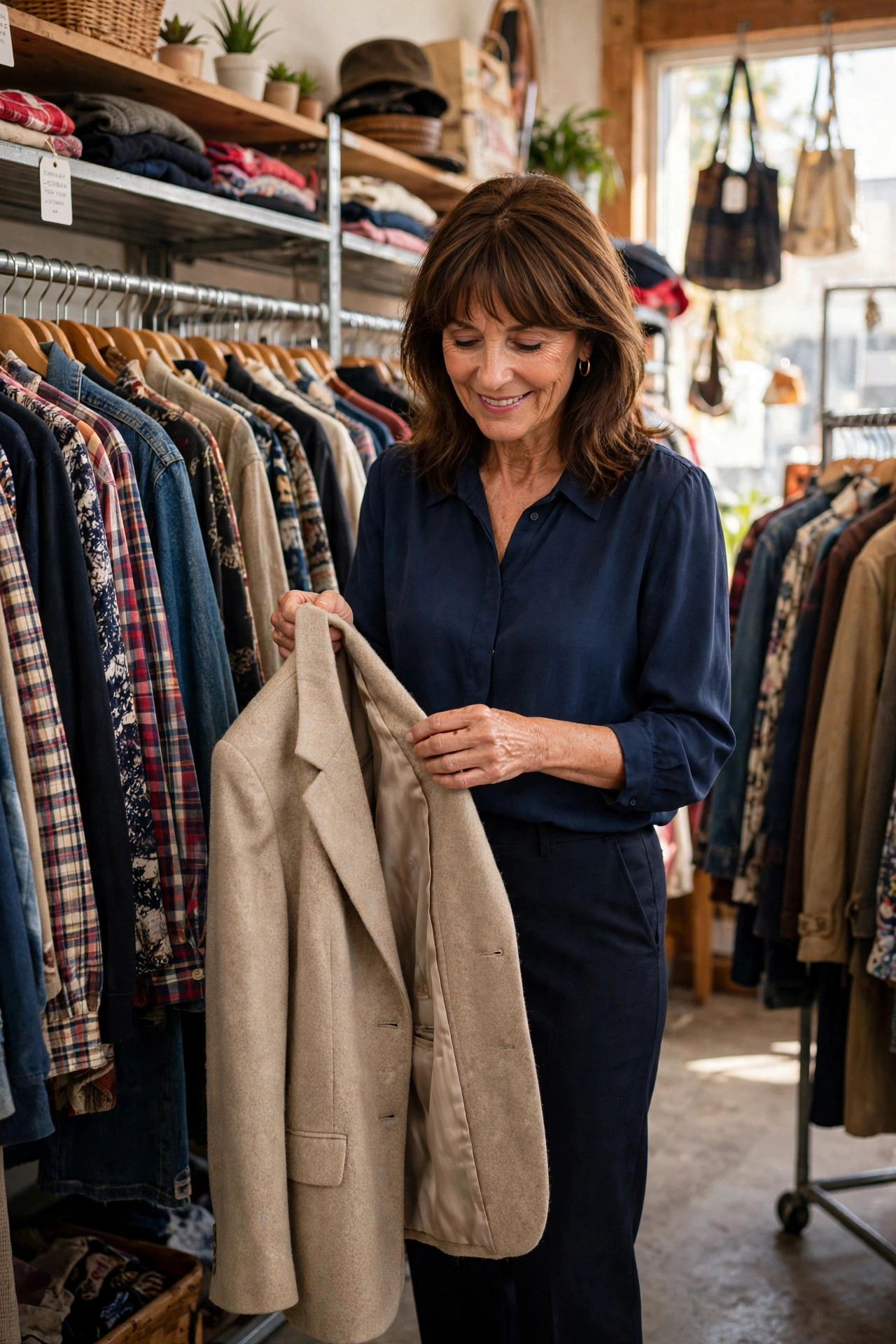
Thrift stores, consignment shops, and resale marketplaces are some of the best places to look stylish on a budget, but only if you shop them with a strategy. Random browsing leads to random purchases. Go in with a short list of what your wardrobe actually needs, and you will walk out with pieces that matter.
Learn to inspect garments the way a tailor would. This is the skill that separates a great thrift haul from a pile of regrets:
- Fabric first. Natural fibers like cotton, wool, silk, and linen, and sturdy blends, usually age better than flimsy synthetics. Hold the fabric up to the light. If it looks thin enough to see through or pills heavily under your thumb, put it back.
- Check the seams. Turn the garment inside out. Seams should be straight, tight, and finished. Loose threads and wavy seams are signs of poor construction that will not survive many wears.
- Test the closures. Work every zipper, snap, and button before you buy. A stuck zipper or a missing button on a secondhand piece is a repair project, not a bargain.
- Scan high-wear zones. Check underarms, collars, cuffs, elbows, and the seat of trousers for stains, thinning, or holes. Minor flaws you can fix are fine. Deep-set stains and worn-through fabric are not worth it at any price.
- Try it on. Sizing varies wildly across brands and decades, so the number on the tag means almost nothing. Bring pieces you own to test combinations, or at least hold items against your body in the mirror.
Shop at off-peak times when you can. Weekday mornings often mean freshly stocked racks and calmer aisles. And check sections you would normally skip. Because vintage sizing differs from modern sizing, and because good pieces hide everywhere, a quick scan of the menswear or other sections sometimes turns up a perfect overshirt, sweater, or blazer. Just be sure it fits your body and your style, not someone else’s.
Fit and Tailoring: The Secret Weapon of Budget Style
Fit is the single biggest difference between an outfit that looks inexpensive and one that looks premium. A well-fitting simple dress reads as elegant. The same dress in the wrong size reads as careless. This is wonderful news for budget dressing, because fit is mostly about attention, not money.
When trying anything on, focus on the shoulders, the waist, and the hem. Shoulders of a jacket or blouse should sit at your natural shoulder line, not droop past it. Tops should skim without pulling or billowing. Trousers and skirts should sit comfortably at the waist you want them to sit at. Hems matter more than people think: a slightly cropped trouser or a skirt hitting at the most flattering point on your leg changes the whole look.
Do not let the size on the label boss you around. Sizes are not standardized, and they vary across brands, countries, and decades. What matters is how the garment sits on your body. If something almost fits, size up or down and compare. Sometimes a size up drapes better, and sometimes a size down looks sharper. The mirror and your comfort are the real judges.
Tailoring is the quiet superpower of budget style. Simple alterations like hemming trousers, taking in a waist, or shortening sleeves are affordable, and they can make an inexpensive or thrifted piece fit like it was made for you. Many local tailors charge modest amounts for basic alterations. Before you write off a nearly perfect thrift find or sale piece, ask what a tailor could do with it. A small alteration can turn a good-enough garment into a favorite.
For structured guidance on getting proportions right, especially on occasion pieces, see our plus-size dinner outfit guide, which walks through fit-first styling that works at every size. The principles there, fit your actual body, dress your proportions, alter what is almost right, apply to budget dressing across the board.
The Care Routine That Makes Everything Look Premium
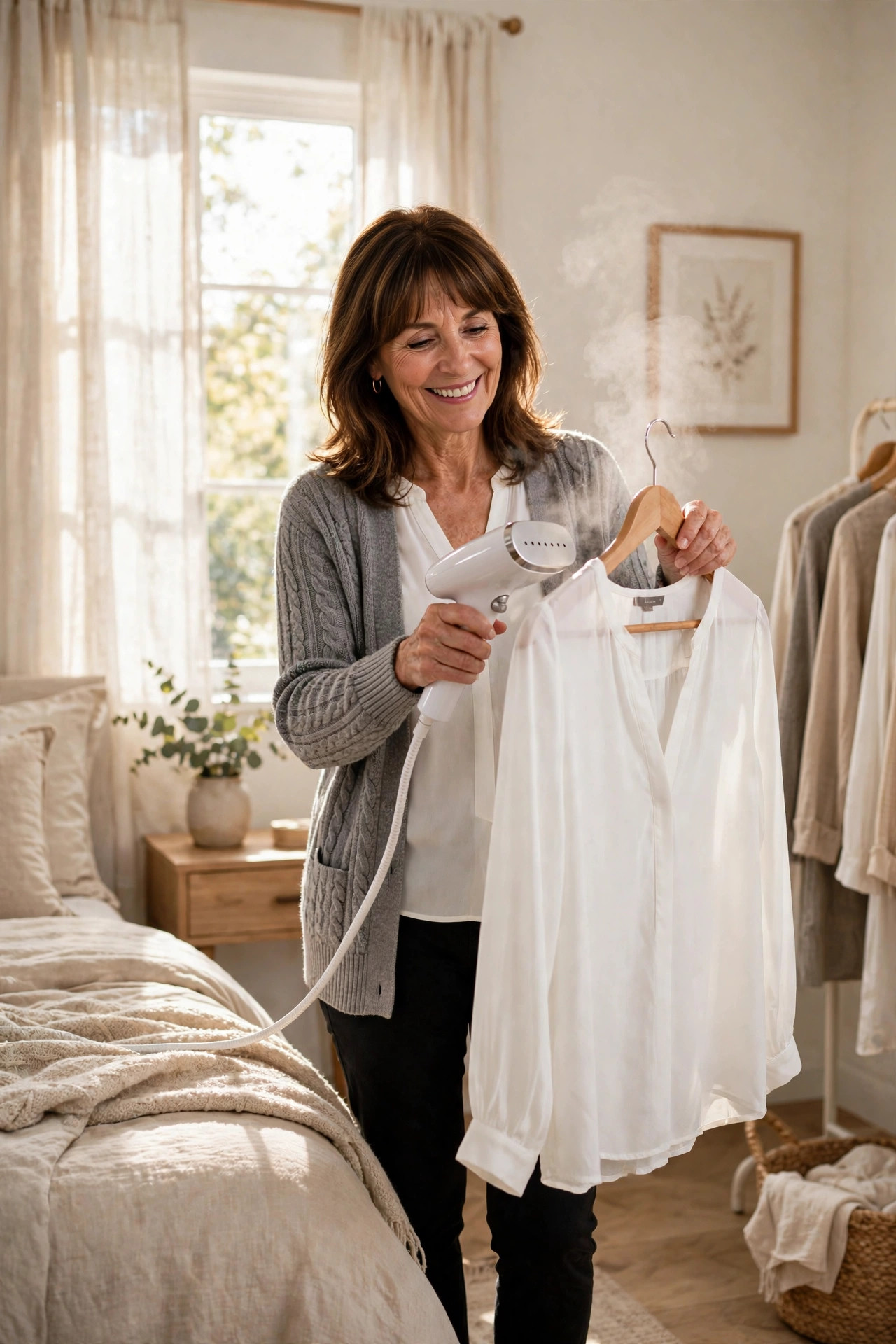
Here is an open secret: much of what reads as “expensive” in an outfit is simply excellent condition. Crisp, clean, wrinkle-free clothing looks premium. Wrinkled, pilled, lint-covered, or stained clothing looks tired, no matter what it cost. A small care routine protects every dollar you spend.
Make these habits non-negotiable:
- De-wrinkle everything before it leaves the house. A steamer is quick and gentle, and an iron works too. Creases make even good outfits look unfinished.
- Remove lint, hair, and pills regularly. A lint roller and an inexpensive fabric shaver are tiny investments that make dark fabrics, knits, and coats look new again.
- Wash with intention. Follow care labels, wash in cold water when possible, and turn dark or delicate items inside out. Hang or fold knits instead of stretching them on hangers.
- Fix small damage immediately. Sew on a loose button, close a small seam split, and treat stains before they set. Small problems become ruined garments when ignored.
- Keep shoes clean and polished. Shoes are one of the first things people notice. Wipe them down, polish leather, and replace worn laces. Clean shoes elevate the entire outfit.
- Store clothes properly. Fold heavy knits so they do not stretch, hang structured pieces on proper hangers, and give garments breathing room so they do not wrinkle in a crowded closet.
This routine is also a money saver in disguise. Clothes that are washed correctly and repaired promptly last years longer, which drives their cost-per-wear down. Care is the cheapest form of shopping.
Smart Shopping Habits That Keep Spending Low
Once your wardrobe is coordinated and you know how to judge quality, a few simple rules keep your spending in check while your style keeps improving.
The 48-hour rule. When you want something that is not on your list, wait 48 hours before buying it. If you still want it and can name three outfits it creates, buy it. If you forgot about it, you just saved money. Most impulse cravings fade within two days.
Shop off-season. Coats are cheapest when spring arrives, swimwear when fall begins. If you can plan one season ahead, you get better quality for less. This works especially well for classic pieces that do not change much year to year.
Keep a running list. Maintain a short list of what your wardrobe actually needs, on your phone or on paper. Shop from the list. This single habit prevents the most common budget leak: buying things that are nice but useless because they match nothing you own.
Set a simple clothing budget. You do not need a complicated spreadsheet. A monthly or seasonal limit, plus a quick check of what you spent, keeps spending conscious. Review your purchases every few months and note which pieces you actually wore. That feedback loop sharpens your instincts over time.
Consider clothing swaps. Swaps with friends, community swap events, or organized exchanges let you refresh your wardrobe for free. They are also a fun way to try styles you might not risk money on. One person’s unworn piece is another person’s new favorite.
Sell or donate what you no longer wear. Pieces that no longer fit your style, your body, or your life are just taking up space. Selling gently used pieces through resale marketplaces can fund new purchases, and donating clears your closet for what actually works.
Small Details That Make Inexpensive Outfits Look Premium
Beyond the big pillars, a handful of styling details consistently make budget outfits read as polished and intentional.
Go tonal or monochrome. Outfits in one color family, all navy, all cream, all black, look instantly pulled together. Tonal dressing hides the fact that pieces came from different places and different price points, and it photographs beautifully. This is one of the easiest tricks in the book.
Finish every outfit. An outfit with a belt, a scarf, simple jewelry, or a structured bag looks complete. An outfit without any finishing touches can look like you stopped halfway. You do not need expensive accessories. You need one or two intentional ones.
Mind your proportions. Pair fitted with relaxed, cropped with long, structured with soft. A tucked-in blouse with relaxed trousers, or a fitted top with a flowy skirt, creates balance that reads as styled rather than thrown on.
Keep hair, nails, and grooming tidy. You do not need salon appointments to look polished. Clean, neat hair, trimmed nails, and simple, well-kept grooming make every outfit look better. Grooming is part of the outfit.
Choose simple shoes in good condition. Classic, clean shoes in neutral colors go with almost everything and look refined. Complicated, worn-out, or overly trendy shoes can drag an otherwise great outfit down.
These details also travel well across occasions. If you want to see how the same principles apply to evening dressing, our fall dinner outfit ideas show how layering and accessories create polished looks, and our dinner outfit formulas for women break down mix-and-match evening combinations you can adapt to pieces you already own. For colder months, our winter dinner outfit guide covers layering that stays elegant, and for the holidays, our Christmas dinner outfits prove that festive dressing does not require a new wardrobe either.
The Budget Style Decoder: Smart System vs Impulse Shopping

This table shows how the budget style system handles common shopping moments compared to the impulse habits that drain a clothing budget.
| Shopping moment | Budget style move | Why it works |
|---|---|---|
| A trendy piece catches your eye | Wait 48 hours, then check it against the three-outfit test | Most trend cravings fade, and the survivors must earn their place in real outfits |
| A bargain that matches nothing you own | Skip it, no matter how low the price | An orphan piece has terrible cost-per-wear because you will rarely reach for it |
| A thrifted blazer that is almost perfect | Buy it and budget for a small tailoring fix | Great fabric plus proper fit beats a new but mediocre piece every time |
| Your shoes look worn and tired | Clean, polish, and repair before replacing | Well-kept shoes elevate every outfit, and care costs far less than new pairs |
| Sale season tempts you to browse aimlessly | Shop only from your running needs list | The list keeps you focused on gaps, so sales fill real needs instead of creating clutter |
| You feel like you have nothing to wear | Restyle what you own before buying anything | New combinations, accessories, and layers often solve the problem without spending |
Frequently Asked Questions
How do I make cheap clothes look expensive?
Focus on fit, condition, and finishing. Make sure every piece fits your body properly, keep clothes wrinkle-free and lint-free, and finish outfits with simple accessories like a belt or clean shoes. Tonal color combinations and tidy grooming also make inexpensive pieces read as premium. The eye registers polish, not price.
What is the best way to build a budget-friendly wardrobe?
Start with a core of interchangeable basics in coordinating neutral colors, then add pieces slowly using the three-outfit test. Shop secondhand with a quality checklist, use the 48-hour rule to stop impulse buys, and invest effort in fit and care rather than quantity. Review what you actually wear every few months and let that guide future purchases.
How can I look stylish on a low budget?
Buy fewer pieces that all work together, choose fit over labels, and keep everything in excellent condition. Thrift strategically for quality fabrics and good construction, tailor pieces that are almost right, and use accessories and tonal dressing to make simple outfits look intentional. Consistency in these small decisions matters more than any single purchase.
How can I elevate my style on a budget without buying lots of new clothes?
Restyle what you already own. Try new combinations from your closet, add one accessory to plain outfits, tuck or roll pieces differently, and layer with intention. A de-wrinkle, a lint roll, polished shoes, and neat grooming can transform outfits you already have. When you do shop, fill a specific wardrobe gap rather than buying something random.
Conclusion
Learning how to look stylish on a budget is really about learning to make better decisions with the clothes you already have and the ones you choose to buy. Cost-per-wear thinking keeps purchases honest. Smart thrift shopping finds quality for less. Good fit and simple tailoring make any price point look intentional. And a small care routine keeps inexpensive pieces looking premium for years.
Start with one pillar this week. Run the three-outfit test on your next purchase, de-wrinkle everything before it leaves the house, or take one almost-perfect piece to a tailor. Small, consistent moves build a wardrobe that looks far more expensive than it was, and that is a skill no trend cycle can take away.

Rameen Awan is the founder and editor of Outfit Algorithm, where she breaks down outfit formulas, dress codes, and styling systems for real life. Her guides focus on practical details other sites skip: fabric behavior, fit for different body types, and what actually works when you are getting dressed in a hurry.