

Party outfits for women come down to three decisions: the party type, the dress code, and the time of day. Get those right and the rest, silhouette, fabric, shoes, accessories, falls into place. A party outfit is simply occasion dressing with one extra goal: you want to look like you belong at this specific party, not at a generic “night out.” This guide decodes every major party dress code, lays out the fabric and shine logic that separates a great party look from an overdressed one, and gives you a decoder table you can check before every invitation.
For more ideas, browse Vogue’s party outfit inspiration.
For deep dives on specific party types, this hub links out to dedicated guides as they publish. The short version lives here; the full playbooks live in the spokes.
Key Takeaways
- The party type matters more than the word “party”: a cocktail party, a house party, and a gala are different outfits, even with no dress code stated.
- Match formality to the invitation first, then adjust for time of day and venue: daytime parties run lighter and more relaxed than evening ones.
- Shine is a dial, not a switch: one statement fabric (sequins, velvet, or satin) per outfit keeps the look intentional.
- Comfort is a strategy at parties: standing, dancing, and mingling for hours punish stiff fits and unworn shoes.
- One versatile party base reworn with different accessories beats a closet of single-wear dresses.
Party Outfit Decoder
Find your party type, then read the section that matches.
| Party Type | Formality | Outfit Formula | Shoe and Accessory Plan |
|---|---|---|---|
| Cocktail party | Semi-formal | Knee-length or midi cocktail dress, dressy jumpsuit, or polished separates in satin, silk, or crepe | Heels or dressy flats, small clutch, one statement accessory |
| House or apartment party | Dressy casual | Elevated separates: satin skirt with a nice top, dark jeans with a dressy blouse, a simple midi dress | Block heels, heeled boots, or polished flats; a bag you can set down safely |
| Birthday party (evening) | Varies, usually festive | One celebratory piece: a sequin top with tailored trousers, a colorful midi dress, a velvet blazer over a simple dress | Party heels or dressy boots, small crossbody or clutch |
| Holiday or festive party | Festive, semi-formal | Jewel tones or metallics in velvet, satin, or sequins; a little black dress with festive accessories | Metallic heels or heeled boots, one sparkle accessory |
| Rooftop or outdoor summer party | Dressy casual to cocktail | Light fabrics with polish: a linen-blend midi dress, a satin slip skirt with a top, a breezy jumpsuit | Wedges or block heels for uneven surfaces, sunglasses for daytime |
| Dinner party | Smart to semi-formal | Polished but seated-friendly: a wrap dress, a midi skirt with a blouse, tailored trousers with a silk top | Comfortable heels or elegant flats, compact bag |
| Black tie optional party or gala | Formal | Floor-length gown or an elevated formal cocktail dress in a luxurious fabric | Formal heels, evening clutch, refined jewelry |
| Daytime party (brunch, garden, shower) | Casual to dressy casual | Light colors and easy silhouettes: a floral midi dress, tailored separates, a polished sundress | Dressy flats, low wedges, or block heels; sun-aware accessories |
What Cocktail Attire Really Means for Parties
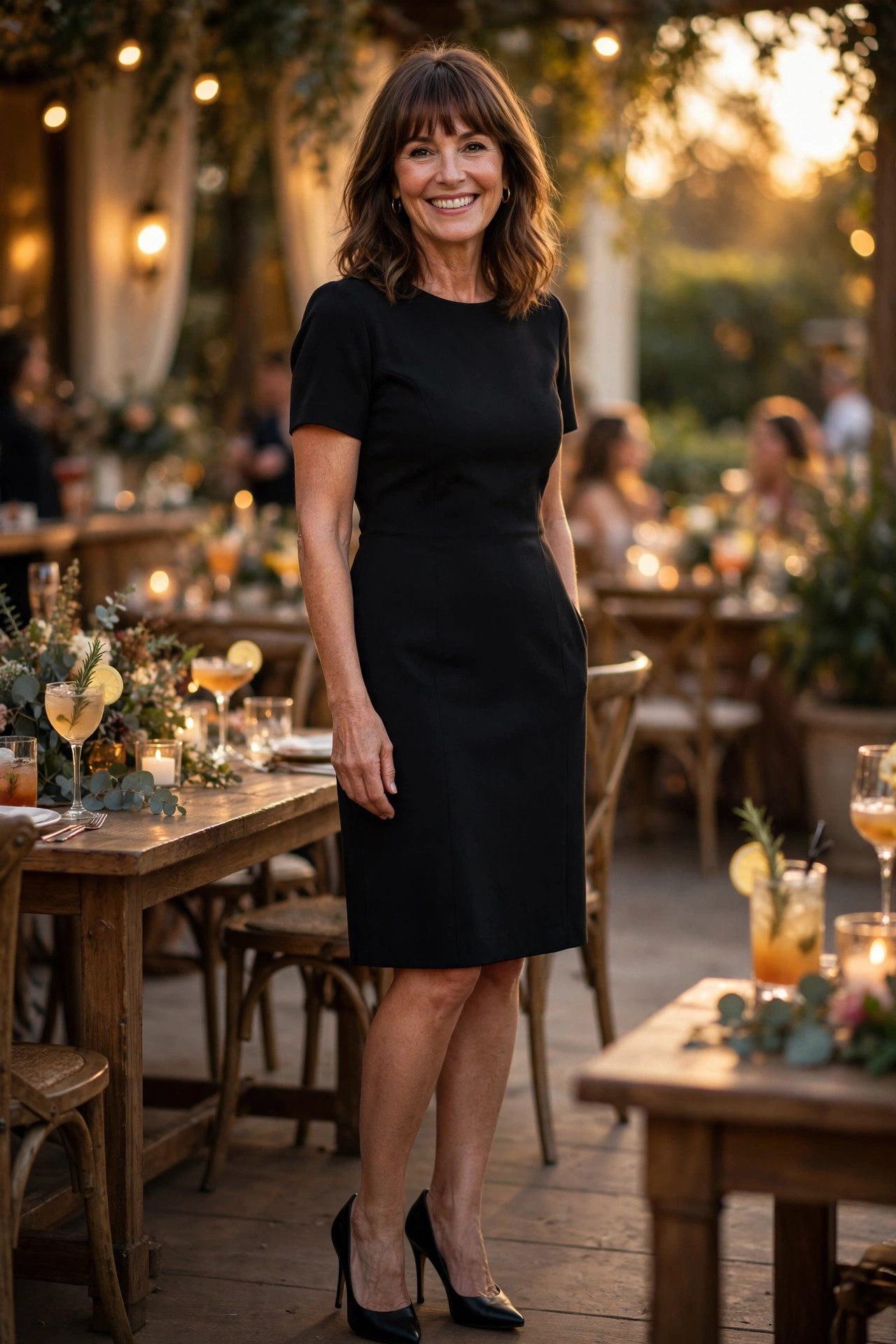
Cocktail attire is the most common party dress code, and it sits in the middle of the formality scale: more polished than everyday wear, less formal than black tie. For women, the classic answer is a knee-length or midi cocktail dress in an elegant fabric like satin, silk, crepe, or lace. A dressy jumpsuit or polished separates, a satin skirt with a structured top, a tailored trouser suit with a festive blouse, read as equally correct when the tailoring is sharp.
The practical rule is about fabric weight and finish, not just length. A simple shape in satin or velvet reads as cocktail; the same shape in cotton jersey reads as daytime. Color follows the clock: darker tones, jewel tones, and metallics suit evening cocktail parties, while lighter colors and softer prints suit daytime ones. One statement element is enough. If the dress has sequins, keep the shoes and jewelry quiet. If the dress is simple, one bold earring or a metallic clutch does the work.
Dressy Casual, Festive, and Black Tie Optional, Decoded
Dressy casual is the vaguest party dress code and the one guests overthink most. It means polished but relaxed: a midi dress in a pretty print, elevated separates, dark jeans only when the top half is clearly dressy. The line to hold is simple: nothing you would wear to run errands, nothing athletic. When in doubt, dress one small step up, since overdressing slightly at a dressy casual party reads as effort, while underdressing reads as indifference.
Festive is not a formality level, it is a mood instruction, and it usually appears on holiday party invitations. It means add celebration to your baseline: jewel tones, metallics, velvet, sequins, or one sparkling accessory. A little black dress with gold earrings and metallic heels is festive. A plain black work dress is not, even though the color matches. The invitation is asking for spirit, not a costume.
Black tie optional at a party means formal with flexibility: a floor-length gown or an elevated formal cocktail dress. This dress code shows up at galas, charity balls, and upscale New Year’s Eve events. The “optional” softens black tie, it does not cancel it. A cocktail dress can work if the fabric is luxurious and the styling is clearly evening, but anything daytime-casual will feel out of place.
Daytime vs Evening: The Clock Changes Everything
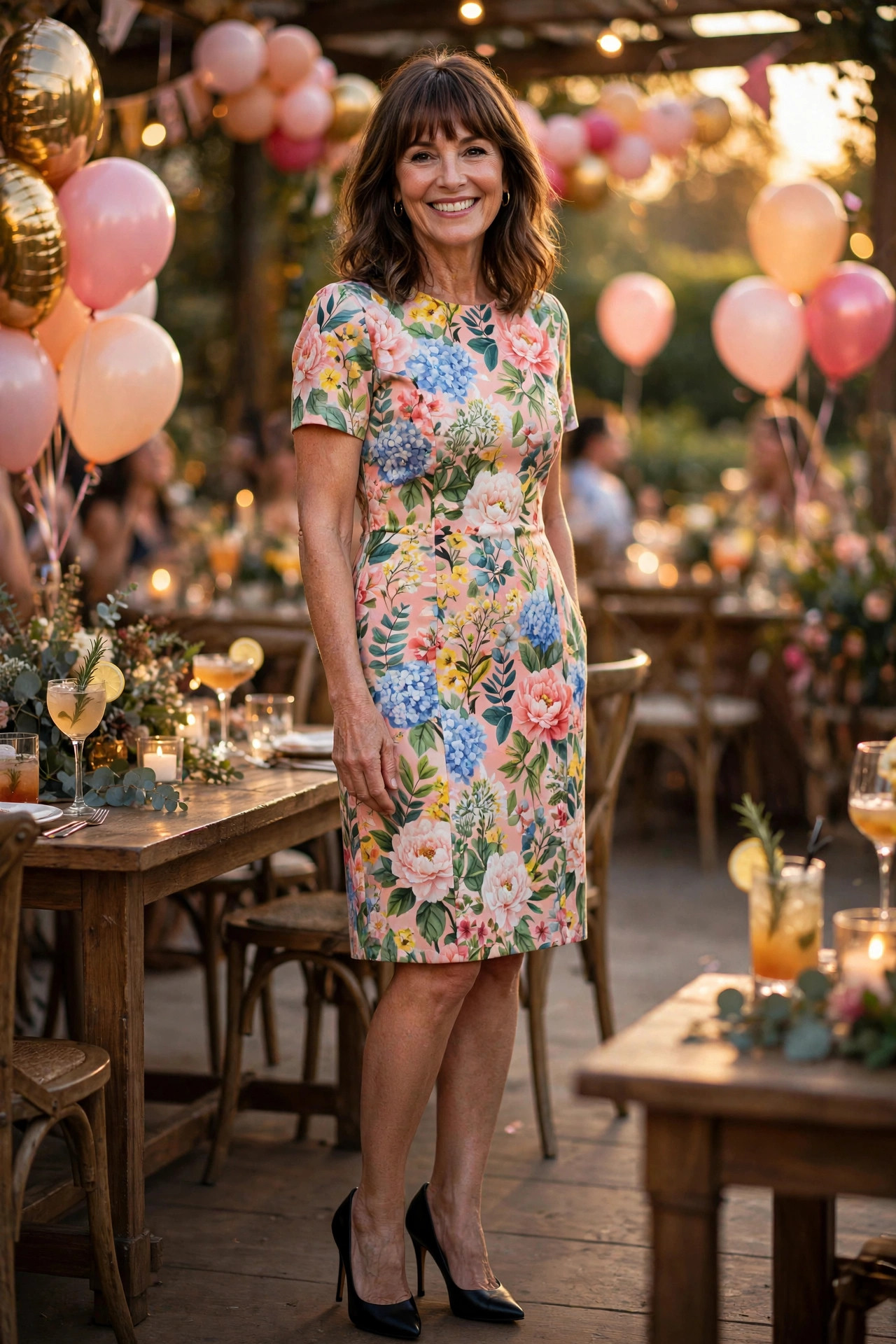
The same party type dresses differently at 2 p.m. and 8 p.m. Daytime parties call for lighter colors, softer fabrics, and more relaxed silhouettes: floral midi dresses, tailored separates in light tones, polished sundresses. Shine reads differently in daylight, so keep sequins and heavy metallics for after dark, and choose sun-aware accessories like sunglasses and a smaller bag you can carry comfortably.
Evening parties are where richer fabrics and deeper colors earn their place: velvet, satin, jewel tones, black, and metallics all suit low light. This is also when the “one statement fabric” rule matters most, because evening lighting amplifies shine. A satin dress with metallic heels and glitter earrings is three statements competing. Pick one and let the rest support it. For autumn evenings that call for extra polish, explore our chic fall party outfits for night.
Fabric and Shine Logic: Sequins, Velvet, and Satin
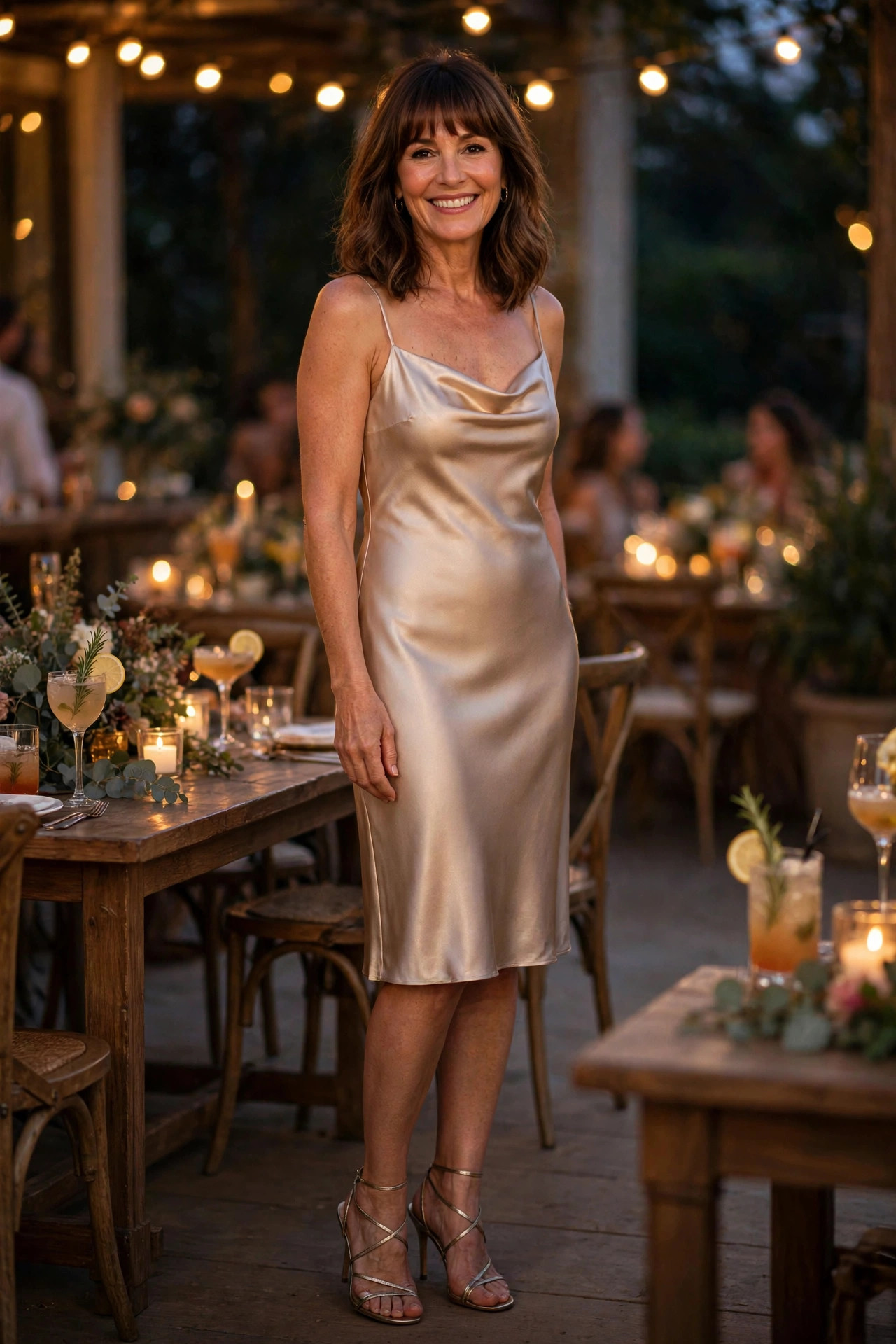
Party dressing runs on three statement fabrics, and each has a job. Sequins are pure celebration: best in small doses, a sequin top with tailored trousers, a sequin skirt with a simple knit, rather than head to toe. Velvet is rich and evening-coded: it reads as luxurious without any shine at all, which makes it the safest statement fabric for guests who dislike sparkle. Satin is the versatile middle: polished and light-reflective, working for both cocktail parties and dressier dinners.
The rule that keeps all three in check is proportion. One statement fabric per outfit, with everything else in supporting textures like crepe, silk, matte jersey, or suiting. Two statements can work when one is an accessory, a velvet dress with metallic heels, but three statements almost always tip into costume. Also consider the venue: sequins at a small apartment party can overwhelm the room, while the same sequins at a ballroom gala look exactly right. Match the shine to the size of the occasion.
The Dance-Floor Test: Comfort for Standing Parties
Parties are long, and most of that time is spent standing, walking, or dancing, not sitting. Before leaving, run the dance-floor test: can you stand in these shoes for three hours, sit down and stand back up without adjusting the dress, and move your arms freely? Waistbands, necklines, and hemlines all behave differently in motion than they do in the mirror.
Shoes deserve the most honest assessment. A party is the worst possible debut for new footwear, so break heels in before the night. Block heels, platforms, and dressy flats exist precisely for parties where you will be on your feet, and nobody reads them as underdressed when the rest of the outfit is polished. If the venue has stairs, cobblestones, or a rooftop deck, choose accordingly: stilettos punish uneven ground. Pack blister patches in your clutch; they weigh nothing and solve the most common party-night problem.
Jeans at Parties: When They Work
Jeans can work at a party, but only when the rest of the outfit is unambiguously dressy. The formula is dark-wash or black jeans with no distressing, plus a dressy top, a blazer, or both, plus heeled boots or dressy heels. The top half has to carry the message that this is intentional, not default. A silk blouse, a sequin top, or a structured blazer over jeans reads as a deliberate party outfit. A plain t-shirt with jeans reads as errands, no matter the shoes.
Know when jeans are off the table: cocktail dress codes, black tie optional events, and any invitation that names a formality level above dressy casual. House parties, casual birthday gatherings, and low-key holiday get-togethers are where jeans belong. When the invitation is silent on dress code, look at the venue and the host: a restaurant private room suggests dressier than jeans, while someone’s living room usually welcomes them.

Fit Notes for Every Body Type
Fit matters more at parties than at most events because the evening is physical: hugging, dancing, reaching for drinks, sitting on unfamiliar furniture. Whatever the silhouette, check it in motion before leaving, since fabrics pull and ride up differently when you move. A dress that is perfect standing still can become a fidgeting problem by the second hour.
For plus-size guests, the same party rules apply, and the most reliable silhouettes are the ones with structure where it counts: wrap dresses, fit-and-flare shapes, and empire waists define the waist without clinging, and they move well on a dance floor. Supportive undergarments are worth planning as part of the outfit, not as a fix. Detailed fit-first guidance for formal dressing at every size is in the plus size dinner outfits for ladies guide, and the move-and-sit comfort principles transfer directly to party dressing.
The Budget and Rewear Strategy
Party season often arrives in clusters, and buying a new outfit for each one is the fastest way to overspend. The rewear strategy is simple: invest in one or two versatile base pieces, a little black dress, a satin midi skirt, a good jumpsuit, or tailored black trousers, and change the top, shoes, jewelry, and bag for each party. Nobody tracks an outfit across different guest lists, and different accessories genuinely make it a different look.
This is the same logic behind why you always have nothing to wear: a short list of repeatable, versatile pieces beats a closet of single-occasion items. Renting is the other honest option for formality levels you rarely meet, especially black tie optional galas. A rented gown for one formal party costs less than a purchased one worn once, and it solves the storage problem too.
Shoes, Bags, and Finishing Touches
Shoes should be chosen for the party reality first and the outfit second. Standing parties punish stilettos; block heels, platforms, wedges, and dressy flats exist precisely for these evenings. Whatever the choice, the comfort test from the dance-floor section applies: if you cannot imagine three hours in them, change the plan, not your pain tolerance.
The bag should be small and secure: a clutch or a small crossbody that holds the essentials and survives a crowded room. At house parties, choose a bag you can set down without worry, since coats and bags often end up in a shared pile. Jewelry follows the one-statement rule: if the outfit shines, keep jewelry quiet; if the outfit is simple, one bold earring or necklace does the work. And check the weather the day of, not the week before: a wrap or a compact umbrella has saved many party nights.
Can I Wear This to a Wedding Too?
Sometimes, but check the wedding rules first. A cocktail dress that works for a party often works for a wedding, with one critical difference: weddings have the white rule. Avoid white, ivory, off-white, and champagne at weddings, anything that could read as bridal in photos, while at parties white is usually fine. Black also behaves differently: it is a safe party choice almost always, while at weddings it needs festive styling to avoid reading as somber.
The dress codes overlap more than they differ: cocktail, semi-formal, and black tie optional mean roughly the same thing at parties and weddings. The venue logic transfers too. For the full wedding-specific rules, including dress-code decoding and etiquette nu
For more party inspiration, Vogue’s party dressing tips cover styling tricks from the pros, and Who What Wear’s party outfit ideas round up fresh looks for every dress code.
ances, see the complete wedding guest guide. For dinner parties specifically, the dinner outfits guide owns the seated-evening details.
Related Party Outfit Guides
-
- Spring Party Outfits: fresh looks for the new season
- Summer Party Outfits: breezy styles for warm-weather nights
- Fall Party Outfits: cozy-chic ideas for autumn evenings
- Winter Party Outfits: festive layers for cold-weather parties
- Christmas Party Outfits: holiday-ready ensembles
- New Year Party Outfits: sparkling looks to ring in the new year
- Birthday Party Outfits: celebratory styles for your big day
- Cocktail Party Outfits: polished semi-formal classics
- Dinner Party Outfits: elegant seated-evening looks
- Office Party Outfits: work-appropriate festive dressing
- Rooftop Party Outfits: elevated styles for open-air nights
- Pool Party Outfits: stylish swim-friendly looks
FAQ
What is the difference between cocktail and party attire?
Cocktail attire is a defined semi-formal dress code: a knee-length or midi dress, dressy jumpsuit, or polished separates in elegant fabrics. Party attire is broader and more flexible, it simply means dressing for a celebration, and it can range from dressy casual to formal depending on the party type. When an invitation says “cocktail attire,” follow the cocktail rules; when it just says “party,” use the party type and time of day to set your formality level.
Can I wear jeans to a party?
Yes, for casual and dressy casual parties like house parties or low-key birthday gatherings. Wear dark-wash or black jeans with no distressing, paired with a dressy top or blazer and heeled boots or dressy heels, so the look reads as intentional. Skip jeans for cocktail dress codes, black tie optional events, and any party where the invitation names a formality level above dressy casual.
What shoes should I wear to a party?
Match the shoes to the party reality: heels, platforms, heeled boots, or dressy sandals all work depending on the venue and formality. Choose a pair you can stand in for hours, since parties mean mingling and dancing more than sitting. For uneven ground like rooftops, gardens, or cobblestones, block heels or wedges beat stilettos, and dressy flats are never underdressed when the outfit is polished.
What to wear to a daytime party?
Daytime parties call for lighter colors, softer fabrics, and relaxed silhouettes: a floral midi dress, tailored separates, or a polished sundress. Keep heavy shine for evening, since sequins and strong metallics read differently in daylight. Finish with sun-aware accessories and comfortable shoes, since daytime parties often involve more moving around.
Conclusion
Party dressing is a solved problem once the inputs are clear: identify the party type, read the dress code, check the clock, and let one statement fabric do the talking. Build from versatile base pieces, plan for comfort across a long evening on your feet, and let accessories rotate one outfit through many parties. The dedicated guides linked above take it from here as they publish, starting with cocktail parties.

Rameen Awan is the founder and editor of Outfit Algorithm, where she breaks down outfit formulas, dress codes, and styling systems for real life. Her guides focus on practical details other sites skip: fabric behavior, fit for different body types, and what actually works when you are getting dressed in a hurry.