
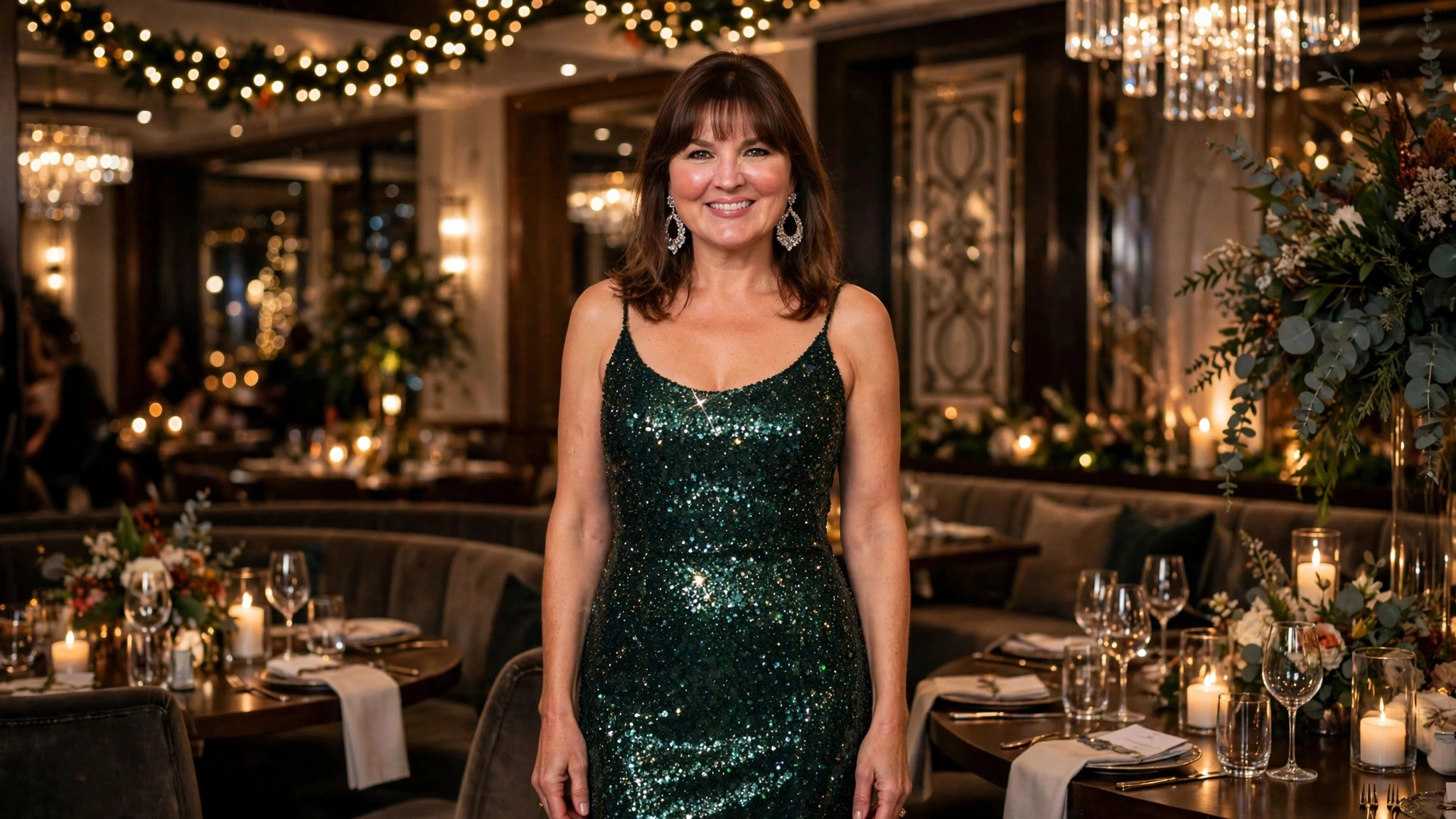
Dinner party outfits are about reading the room before you read the menu. A dinner party is a hosted event, not a restaurant reservation: someone cooked, set the table, and chose the vibe, and your outfit should match their effort, not outshine it. The right dinner party outfit balances polish with seated comfort, because you will spend hours at a table, and it respects the host-guest dynamic that makes dinner parties different from every other party type. This guide gives you a decoder table for every dinner party level, five outfit formulas that always work, and the logistics nobody mentions, like what to do with your coat and bag.
If you’re hosting too, check The Spruce’s dinner party hosting guide.
For general dinner dressing beyond hosted parties, see the dinner outfits guide, which covers restaurant dinners, date nights, and seasonal dinner looks in depth. This article goes deep on dinner parties only.
Key Takeaways
- A dinner party is a hosted social event, so the first rule is to match the host’s effort, never outdress them.
- Dress codes run from casual to formal: the invitation, the host, and the venue together tell you where you are.
- Seated comfort is a real outfit constraint: stretch fabrics, forgiving waistbands, and a seated test before you leave.
- Jeans are fine at casual dinner parties when they are dark, clean, and paired with a clearly dressy top.
- Coat, bag, and arrival logistics matter at home dinner parties, where there is no coat check.
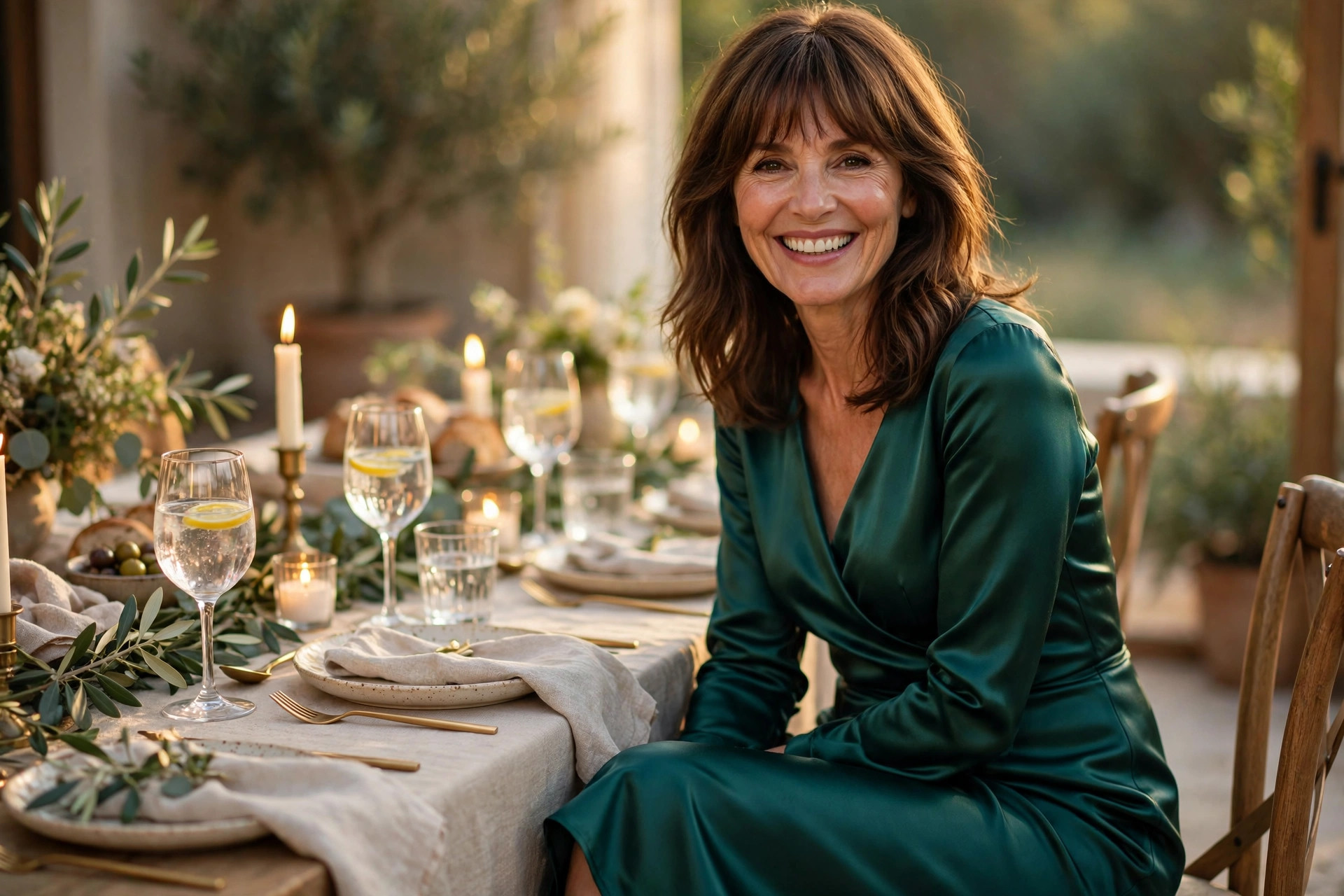
Dinner Party Outfit Decoder
Find your dinner party type, then read the section that matches.
| Dinner Party Type | Formality | Outfit Formula | Shoe and Accessory Plan |
|---|---|---|---|
| Casual dinner party at a friend’s home | Casual to smart casual | Dark jeans or tailored trousers with a polished blouse or knit top; a relaxed midi dress | Loafers, low block heels, or clean flats; a crossbody or small shoulder bag |
| Smart-casual dinner party | Smart casual | Tailored trousers with a silk or satin top, a knit midi dress, a skirt with a refined sweater | Block heels, heeled boots, or dressy flats; minimal jewelry |
| Dressy or formal dinner party | Semi-formal to formal | Cocktail dress, elegant jumpsuit, or evening separates in satin, crepe, or velvet | Heels or dressy flats, clutch, one statement accessory |
| Potluck or collaborative dinner | Casual | Comfortable but intentional: dark jeans with a nice top, a casual midi dress, easy separates | Flats or low boots you can stand in; a bag that closes, since you will be moving around |
| Holiday dinner party | Festive, semi-formal | Jewel tones, velvet, or satin; a little black dress with festive accessories | Metallic or dressy heels, one sparkle accessory |
| Cocktail-level dinner party | Semi-formal | Cocktail dress, dressy jumpsuit, or polished separates | Strappy heels or elegant pumps, clutch |
What “Dinner Party Attire” Actually Means
A dinner party outfit is occasion dressing designed for a hosted meal at someone’s home. That definition matters because it changes three things versus a restaurant dinner. First, the dress code is set by a person, not a venue, so the host’s style and the invitation wording carry more weight than any general rule. Second, you will be seated for a long time, which makes comfort a real constraint rather than a nice extra. Third, the logistics are informal: there is no coat check, no host stand, and often a kitchen where you might be asked to help.
The practical starting point is the invitation. “Come over for dinner” is casual. “Dinner party” with a time and no dress code usually means smart casual. A printed or formal invitation, a named dress code, or a special occasion like an anniversary means dressy or formal. When the invitation is silent, look at the host: a host who always dresses up is throwing a dressy party even when the text says nothing. When in doubt, dress one small step up, because overdressing slightly reads as respect for the host’s effort, while underdressing reads as indifference.
Dinner Party vs Restaurant Dinner: Why the Hosted Event Is Different
A restaurant dinner and a dinner party can share the same outfit, but the planning logic is different. At a restaurant, the venue sets the dress code and the evening is structured: you arrive, sit, eat, and leave. At a home dinner party, the evening is fluid: drinks in the living room, help carrying dishes, a tour of the garden, coffee that turns into a second bottle of wine. Your outfit has to survive movement, not just a chair.
The host-guest dynamic is the other difference. At a restaurant, nobody cares what you wear as long as the venue does not. At a dinner party, the host notices, because they built the evening. Dressing with care is a form of gratitude. That does not mean dressing formally at a casual party; it means looking intentional at whatever level the party is. The dinner outfits guide covers restaurant dinners, date nights, and seasonal looks in depth, so this article stays focused on the hosted event.
Reading the Dress Code: Smart Casual, Dressy Casual, and Formal
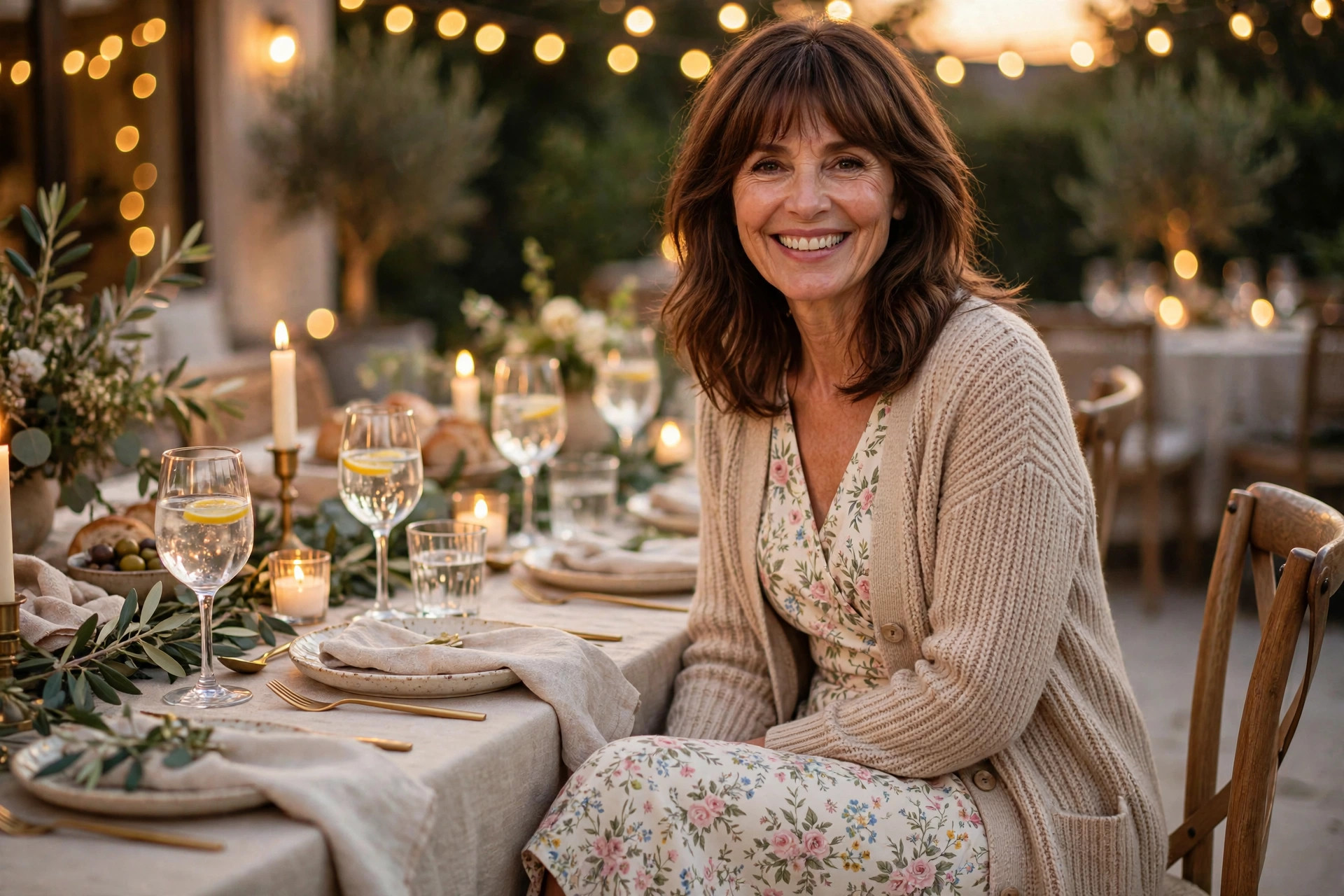
Dinner party dress codes use the same words as other invitations, but they land one notch more personal. Smart casual at a dinner party means polished but relaxed: tailored trousers or dark jeans with a refined top, a knit midi dress, a skirt with a nice sweater. The pieces are everyday shapes in elevated fabrics and finishes.
Dressy casual is one step up and the most common unspoken dress code for dinner parties: a midi dress in a pretty fabric, elegant separates, a blazer over a good top. Nothing athletic, nothing you would wear to run errands. Formal dinner party attire means cocktail-level dressing: a cocktail dress, an elegant jumpsuit, or evening separates in satin, crepe, or velvet. If the invitation says formal, black tie optional, or names an occasion like a milestone birthday or anniversary dinner, treat it as formal.
The gray area is the “casual dinner party” at someone’s home, where jeans are the question everyone asks. The answer depends on the party, not the jeans. Dark, clean, well-fitting jeans with a clearly dressy top, a satin blouse, a structured blazer, an elegant knit, are correct at a casual dinner party. Light-wash, ripped, or baggy jeans are not, because they read as daytime even with a nice top. When the host is anyone you want to impress, choose trousers or a dress instead of deciding whether your jeans pass.
The Host-Guest Outfit Rule
The single most useful dinner party rule is also the simplest: dress to the host’s effort, not above it. If the host is in a nice dress and heels, you can dress up. If the host answers the door in jeans and a sweater, a cocktail dress will make everyone uncomfortable, including you. This is the one party type where blending in is a compliment to the host.
That does not mean dressing down to the lowest possible level. It means matching the room. A good test is to imagine the group photo: you want to look like you belong in it, not like you came from a different event. One practical move is to check with the host or a co-guest beforehand, especially for the first dinner party with a new social circle. Asking “what are you wearing?” is not insecure; it is considerate, and hosts appreciate guests who care about getting it right.
There is also a kitchen corollary. At casual dinner parties, guests often help: carrying dishes, refilling water, clearing plates. If your outfit cannot survive ten minutes of light kitchen duty, it is too precious for the party. Sleeves you can push up, a hem that does not trail, and shoes you can stand in are not compromises; they are the correct uniform for a hosted evening.
Seated Comfort: Dressing for Hours at the Table
Dinner parties are seated events, and the outfit that looks perfect standing in your bedroom can betray you by the second course. The seated test is simple: sit down in the outfit before you leave and check three things. Does the waistband dig in when you sit? Does the neckline gap or the skirt ride up? Can you eat, lean, and reach without adjusting anything? If any answer is no, change.
Fabric choice does most of the work. Stretch crepe, ponte, jersey with structure, and satin-back crepe all sit comfortably for hours and resist wrinkling. Stiff waistbands, boning, and non-stretch fitted bodices punish you over a long meal. Wrap dresses and empire waists are dinner party classics for a reason: they skim rather than constrict, and they look intentional without effort. A-line and fit-and-flare silhouettes give the same seated ease.
Fit details matter as much as fabric. High-rise trousers with a flat front sit better than low-rise styles. Midi lengths stay put when you sit and stand repeatedly. Necklines that pass the lean test, no gaping when you reach for the bread basket, keep the evening relaxed. And shoes: you will stand during arrivals and sit for hours, so the comfortable heel or the elegant flat beats the ambitious stiletto every time. Nobody remembers your shoes at a dinner party, but everyone remembers if you are wincing.
Five Dinner Party Outfit Formulas That Always Work
1. The wrap midi dress. The most reliable dinner party formula ever made. A wrap dress in crepe, jersey, or a pretty print works from casual to dressy depending on the fabric and accessories. It passes the seated test by design, the waistband is a tie, not a constraint. Dress it up with heels and a clutch or down with flats.
2. Tailored trousers with a silk or satin top. The formula for guests who prefer pants. Wide-leg or straight-leg trousers in black, navy, or a rich neutral, paired with a satin blouse or an elegant knit, reads as polished at smart-casual and dressy parties alike. Tuck the top or choose a cropped length so the waistline stays clean when seated.
3. The knit midi dress with boots or heels. A ribbed or ponte knit midi dress is the comfort-first option that still looks intentional. It moves with you, sits well, and needs only good shoes and one piece of jewelry to read as dinner-party ready. Add a blazer for smart-casual parties.
4. A skirt with a refined sweater or blouse. A midi skirt, satin, pleated, or a rich knit, paired with a fitted sweater or an elegant blouse, is the most adaptable formula on this list. It works across seasons: swap the sweater weight and the shoe, and the same skirt covers fall, winter, and spring dinner parties.
5. The dressy jumpsuit. A well-tailored jumpsuit in crepe or a soft suiting fabric is fully dinner-party correct at dressy and formal levels. The tailoring carries it: clean lines, a defined waist, a hem that clears the shoe. It is also the easiest option for guests who want one piece and zero decisions, and it sits comfortably all evening.
For fit-first guidance across body types, the plus-size dinner outfits guide covers the same occasion logic with detailed fit notes.

Venue Playbooks: Home Dining Room, Patio, and Formal Settings
The home dining room. The classic dinner party venue. Dress to the host’s level, keep the outfit kitchen-capable, and remember the floors: many hosts ask guests to remove shoes, so wear shoes that slip off easily and socks or tights without holes. A small bag you can keep with you beats a large tote, since there is no coat check and bedrooms become coat piles.
The patio or outdoor dinner party. Outdoor dinner parties add weather to the equation. Check the forecast and dress for the temperature at 9 p.m., not 6 p.m.; evenings cool down even in summer. A layer you can add, a wrap, a blazer, a light jacket, is essential. Footwear matters on grass, decking, and patios: block heels, wedges, or elegant flats. And wind is real outdoors, so weighted hems and secure hairstyles keep the evening graceful.
The formal dining room. Formal dinner parties, milestone celebrations, and holiday dinners run at cocktail level or above. This is the venue for the satin dress, the velvet blazer, the elegant jumpsuit. The seated-comfort rules still apply, but the fabric bar is higher: silk, satin, crepe, velvet, and brocade. For cold-weather layering over evening outfits, the winter dinner outfits guide covers coats and wraps in detail, and the fall dinner outfits guide covers the transitional season.
Arrival, Coats, and Bags: The Logistics Nobody Mentions
Home dinner parties have no coat check, which makes arrival logistics a real outfit question. Plan for the coat pile: wear a coat you do not mind draping over a bed, and avoid anything that wrinkles if folded. A clutch or small crossbody you can keep with you is better than a large bag, since there is rarely a safe place to set one down. If you bring a host gift, a bottle of wine or dessert, carry it in a bag you can set down at the door so your hands are free for greetings.
Timing matters too. Arriving exactly on time at a home dinner party can catch the host mid-preparation; the gracious window is usually five to fifteen minutes after the stated time, unless the host says otherwise. Your outfit should look finished at arrival, because first impressions at a dinner party happen at the door, not at the table. And one small etiquette note that affects the outfit: strong fragrance. In a small dining room, heavy perfume competes with the food the host cooked. Keep fragrance light or skip it; the host will notice the consideration.
What Not to Wear to a Dinner Party
Anything that outdresses the host. The golden rule, stated as a warning. A gown at a casual dinner party does not impress; it isolates.
All white at someone else’s celebration dinner. If the dinner party celebrates an engagement, an anniversary, or a bride, treat white the way wedding guests do and choose another color.
Jeans that read as daytime. Light-wash, ripped, or overly casual denim drags a dinner party outfit down no matter how nice the top is. Dark, clean, well-fitting jeans are the only denim that belongs.
Shoes you cannot stand in. You will be on your feet for arrivals, drinks, and kitchen help before the long sit. The ambitious heel that hurts by hour two ruins the evening.
Anything fussy or fragile. Trailing hems, delicate fabrics that snag, tops that need constant adjusting. A dinner party is a working social evening, and the outfit should work as hard as you do.
Strong fragrance. Heavy perfume in a small dining room competes with the meal. Keep it light or skip it entirely.

Frequently Asked Questions
What should I wear to a casual dinner party?
Dress one step above your everyday clothes: dark jeans or tailored trousers with a polished blouse or knit top, or a relaxed midi dress with flats or low heels. The goal is to look intentional without looking formal, since the host set a relaxed tone. Avoid anything athletic, ripped denim, or daytime-casual pieces like shorts. When in doubt, ask the host what they are wearing; it is the fastest way to match the room.
What is the dress code for a dinner party?
It depends on the invitation and the host. Casual dinner parties mean smart, relaxed clothes. Unspecified “dinner party” invitations usually mean smart casual: tailored trousers, a midi dress, or elegant separates. A named dress code, a formal invitation, or a special occasion means dressy or formal: cocktail dresses, elegant jumpsuits, or evening separates. If the invitation is silent, match the host’s usual style and dress one small step up rather than down.
Can you wear jeans to a dinner party?
At a casual dinner party, yes, when the jeans are dark, clean, and well-fitting, paired with a clearly dressy top like a satin blouse, a structured blazer, or an elegant knit. Light-wash, ripped, or baggy jeans read as daytime and do not belong at any dinner party. At dressy or formal dinner parties, skip denim entirely and choose trousers, a skirt, or a dress. When the host is someone you want to impress, trousers or a dress are the safer choice.
What is formal attire for a woman for dinner?
Formal dinner attire means cocktail-level dressing or above: a cocktail dress, an elegant jumpsuit, or evening separates in luxurious fabrics like satin, silk, crepe, velvet, or brocade. Hemlines run knee-length to floor-length, shoes are heels or dressy flats, and accessories stay refined, one statement piece rather than several. Black tie on a dinner invitation raises the bar further toward gowns or formal evening dresses. The seated-comfort rules still apply at formal dinners, so choose fabrics with some ease and test the outfit sitting down before you leave.
Conclusion
Dinner party outfits come down to three decisions: match the host’s effort, dress for hours at the table, and plan for the logistics of someone’s home. Get those right and the specific pieces, a wrap dress, tailored trousers with a silk top, a knit midi, almost choose themselves. The dinner party is the most personal party type, and dressing with care is how guests say thank you before the first course arrives.
For the broader party landscape, party types, dress-code words, shine logic, and dance-floor comfort, see the complete party outfits guide. For cocktail-level dinner parties, the cocktail party outfits guide goes deeper on semi-formal dressing. And when the closet feels empty before any invitation, the nothing to wear guide helps you build from what you already own.

Rameen Awan is the founder and editor of Outfit Algorithm, where she breaks down outfit formulas, dress codes, and styling systems for real life. Her guides focus on practical details other sites skip: fabric behavior, fit for different body types, and what actually works when you are getting dressed in a hurry.