
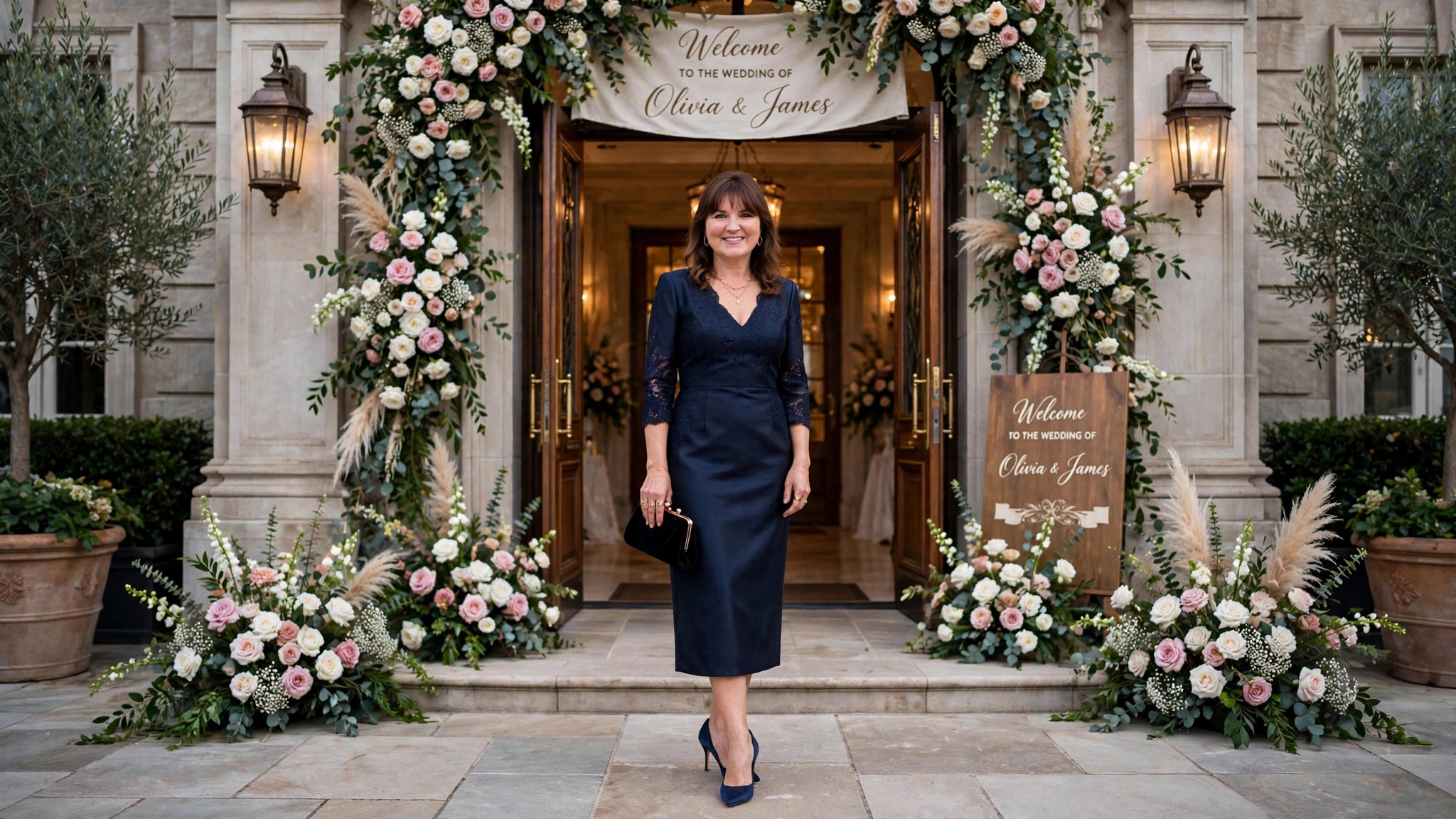
Wedding guest outfits for women come down to three decisions: the dress code, the venue, and the season. Get those right and the rest, color, silhouette, shoes, accessories, falls into place. A wedding guest outfit is simply occasion dressing with one extra rule: never outshine the couple. This guide decodes every major dress code, lays out the etiquette rules that actually matter, and points you to the right outfit direction for each season and venue.
For season-by-season deep dives into wedding guest outfits for women, this hub links out to dedicated guides. The short version lives here; the full seasonal playbooks live in the spokes.
Key Takeaways
- The dress code on the invitation is the single most important input, and it is usually listed on the invitation or the couple’s wedding website.
- The universal etiquette rule is simple: avoid white, ivory, and anything that could read as bridal, and keep black tasteful and occasion-appropriate.
- When choosing wedding guest outfits for women, match formality to the dress code first, then adjust for venue and season: a cocktail dress works for a ballroom, not for a beach.
- One versatile outfit reworn across weddings with different accessories beats a closet of single-wear dresses.
- Comfort is a strategy, not an afterthought: ceremonies, photos, dinner, and dancing can mean six or more hours on your feet.
Wedding Guest Outfits for Women: Dress Code Decoder
Use the invitation’s dress code to find your row, then read the matching section on wedding guest outfits for women below.
| Dress Code | What It Means | Outfit Direction | What to Avoid |
|---|---|---|---|
| White tie | The most formal, rare for weddings | Floor-length ball gown, formal evening gloves optional | Anything short, anything casual, bare shoulders without a wrap in conservative settings |
| Black tie | Formal evening wedding | Floor-length evening gown or a very dressy formal dress | Cocktail-length dresses, casual fabrics, anything daytime-casual |
| Black tie optional | Formal, with flexibility | Floor-length gown or an elevated midi cocktail dress | Anything above the knee, overly casual separates |
| Formal | Evening wedding, slightly less strict | Cocktail dress, dressy jumpsuit, elegant pantsuit | Daytime prints, casual shoes, denim of any kind |
| Cocktail | The most common wedding dress code | Knee-length or midi cocktail dress, dressy separates | Floor-length gowns, minis that read as clubwear, flip-flops |
| Semi-formal | Polished but relaxed | Midi or wrap dress, skirt and blouse, polished jumpsuit | Full gowns, very casual sundresses, sneakers |
| Dressy casual | Relaxed, often daytime or outdoor | Sundress, midi skirt with a nice top, tailored separates | Anything too formal, stiff suiting, stilettos on grass |
| Casual | The most relaxed, often backyard or daytime | Nice sundress, dressy separates, polished flats | Shorts, tank tops, athletic wear, ripped jeans |
What Black Tie Really Means for Wedding Guests
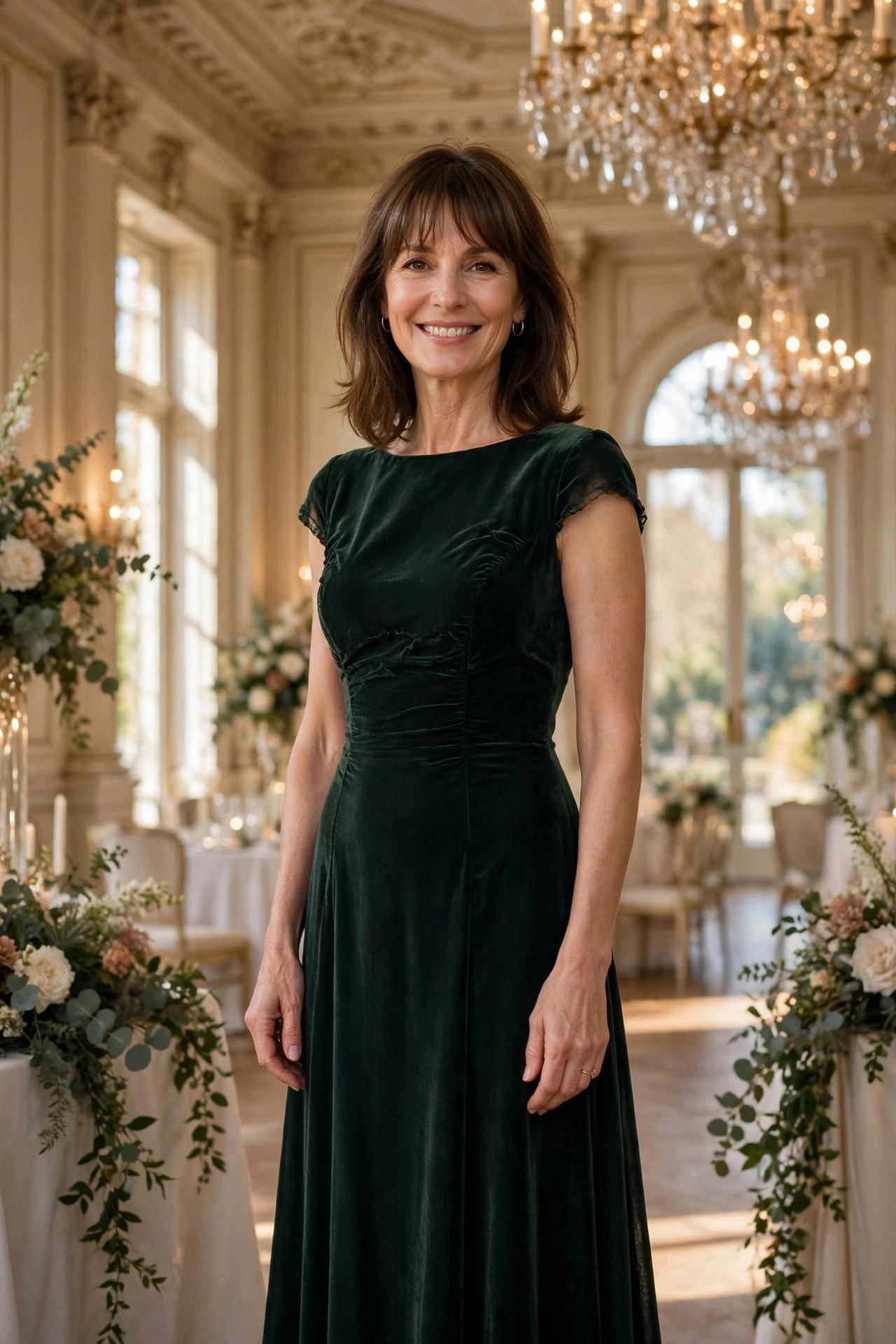
Black tie is the clearest dress code on the list, and the strictest. For wedding guest outfits for women, it means a floor-length evening gown or a very formal dress in a luxurious fabric: silk, satin, velvet, or crepe. The silhouette should read as evening, which usually means a longer hemline, a refined neckline, and minimal daytime details.
Color is where guests have real freedom at a black tie wedding. Jewel tones like emerald, sapphire, and burgundy are classic evening choices, and black itself is widely accepted for formal evening weddings when the fabric and silhouette are clearly festive. What matters most is that the outfit could not be mistaken for daytime wear. If the invitation says black tie optional instead, the same gown works, and an elevated midi cocktail dress becomes acceptable too.
Formal, Cocktail, and Semi-Formal, Explained
These three cover the majority of weddings, and the wedding guest outfits for women they require sit on a sliding scale rather than in separate boxes. Formal means evening polish: a cocktail dress in a rich fabric, a dressy jumpsuit, or an elegant pantsuit, with heels and refined accessories. Cocktail is the workhorse dress code, a knee-length or midi dress that is festive but not a gown. Semi-formal relaxes things one more notch: a wrap dress, a midi skirt with a blouse, or a polished jumpsuit.
The practical difference is mostly about fabric weight, hemline, and shine. As formality drops, lighter fabrics, shorter hemlines, and softer prints become appropriate. When the invitation lists one of these and the venue is outdoors, let the venue pull the outfit one step more practical: block heels instead of stilettos on grass, a wrap for a breezy evening. The dress code sets the ceiling; the venue sets the floor.
Casual and Dressy Casual Weddings
Casual wedding guest outfits for women do not mean casual like a weekend. It means the couple wants you comfortable, usually at a daytime, backyard, or very relaxed venue. A nice sundress, dressy separates, or tailored trousers with a polished blouse all work. The line to hold is simple: nothing you would wear to run errands, nothing athletic, nothing ripped or distressed.
Dressy casual sits between casual and semi-formal and is common for daytime and outdoor weddings. A midi dress in a pretty print, a skirt with a nice top, or polished separates with wedge sandals or dressy flats hits the mark. This is also the dress code where overdressing slightly is the safest move: a simple cocktail dress never looks wrong at a dressy casual wedding, while underdressing is hard to fix once you arrive.
The White Rule: What Not to Wear
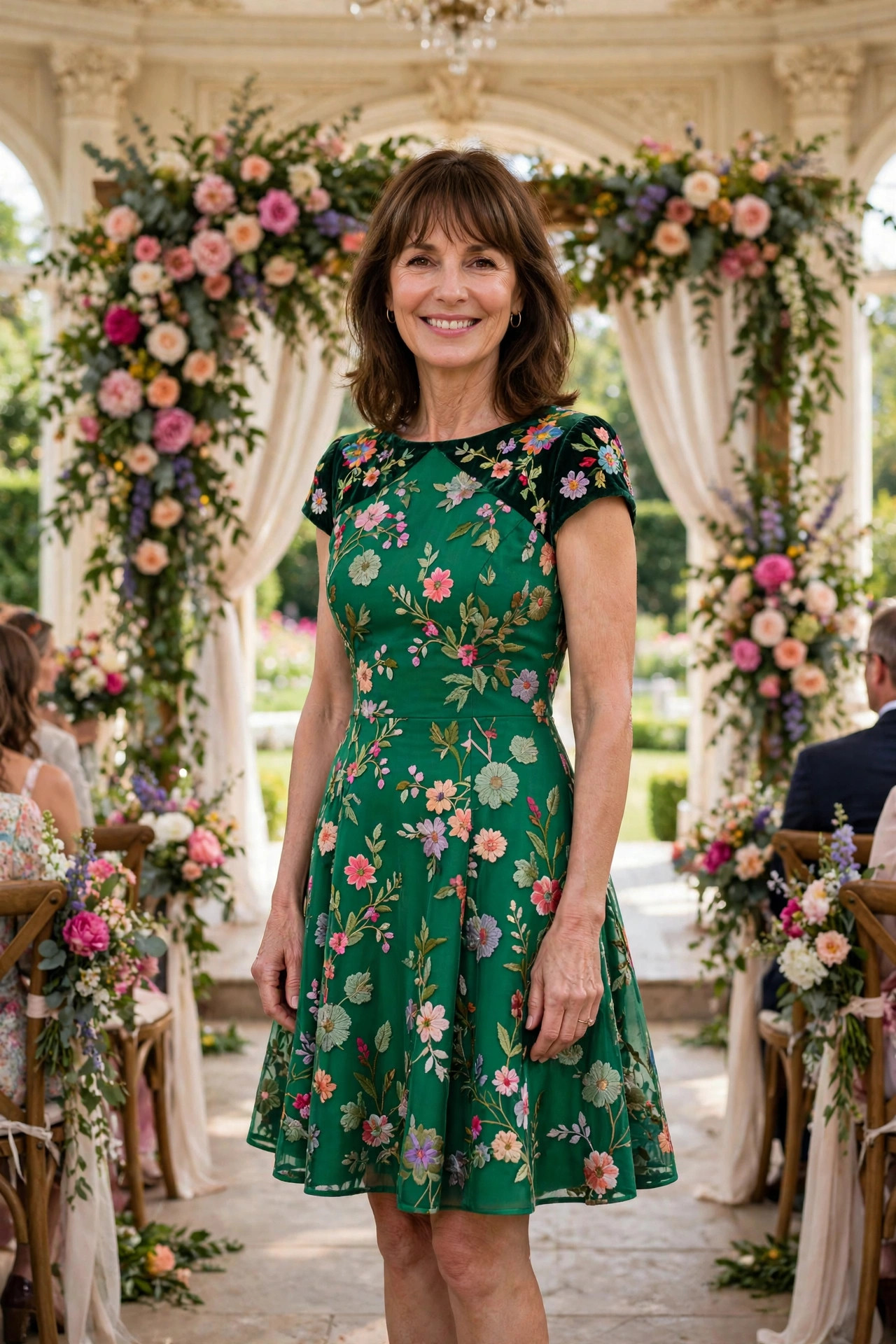
The single most universal rule for wedding guest outfits for women is to avoid white, ivory, off-white, and champagne, anything that could read as bridal in photos. This applies regardless of dress code, season, or venue, unless the couple has specifically asked guests to wear white. The rule exists because the day belongs to the couple, and nothing a guest wears should create confusion in the photos.
The nuance worth knowing: the rule covers more than solid white dresses. A white dress with a colorful print can still read as white from a distance, and an ivory or champagne solid can photograph as white under bright light. When in doubt, choose a different color entirely. There are endless options, and none of them risk the one mistake guests remember.
Can You Wear Black to a Wedding?
Yes, with judgment. Black is widely accepted in wedding guest outfits for women today, especially for evening, formal, and winter weddings, where it reads as chic rather than somber. The key is styling it festively: a black dress in satin, lace, or velvet with polished accessories looks celebratory, while a plain black work dress can read as office wear.
There are situations to tread carefully. For a daytime summer wedding, a beach wedding, or a very traditional daytime ceremony, lighter colors usually suit the mood better. And at an extremely traditional or conservative wedding with an older crowd, some guests may still associate black with mourning, so a softer color is the considerate choice. When the dress code is black tie or formal and the event is in the evening, black is one of the safest choices available.
Better Overdressed Than Underdressed?
As a general rule for wedding guest outfits for women, yes, with one caveat. Being slightly overdressed at a wedding is almost always safer than being underdressed, because formality reads as respect for the occasion. A cocktail dress at a dressy casual wedding looks like you made an effort; jeans at a semi-formal wedding look like you did not.
The caveat is the venue. Overdressing stops working when wedding guest outfits for women fight the setting: a floor-length gown at a beach wedding or stilettos at a garden wedding reads as a misread, not as polish. The sweet spot is one step above the stated dress code, adjusted for what the ground, weather, and setting will actually demand. When the invitation gives no dress code at all, a midi cocktail dress in a season-appropriate color is the safest default, and asking the couple or the wedding party is always acceptable.
Wedding Guest Outfits for Women by Season
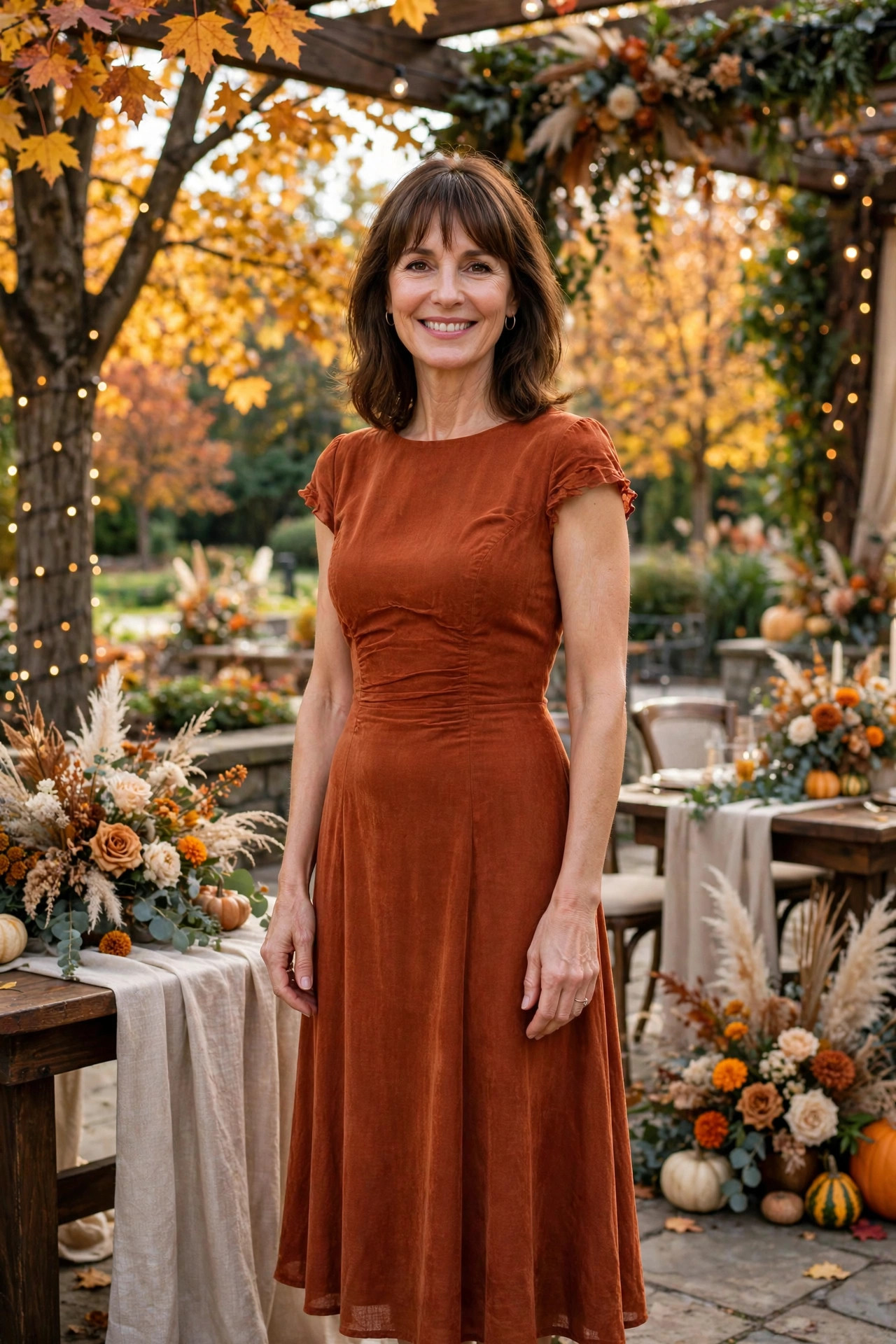
Season changes the fabrics, colors, and layers of wedding guest outfits for women, but the dress code logic stays the same. Each season has a dedicated guide with full outfit formulas.
Spring brings pastels, florals, and lighter layers, with a wrap or jacket for unpredictable weather. See our spring wedding guest outfits for fresh seasonal ideas.
Summer calls for breathable fabrics, brighter colors, and sun-aware planning: ceremonies in direct sun reward lighter colors and a plan for heat. See our summer wedding guest dresses guide for breathable, sun-smart ideas.
Fall favors jewel tones, richer textures like velvet and satin, and layers for cooling evenings. See our fall wedding guest dresses for autumn-ready ideas.
Winter means formal fabrics, deeper colors, and real outerwear planning, since the coat is part of the outfit for arrivals and photos. More on cold-weather layering logic is in the winter dinner outfits guide, and the principles transfer directly. See our winter wedding guest outfits guide for cold-weather ideas.
Wedding Guest Outfits by Venue
The venue changes the practical details of wedding guest outfits for women more than the dress code does. Each venue has a dedicated guide.
Beach weddings need flat or wedge shoes, wind-proof hemlines, and fabrics that breathe. See our beach wedding guest outfits for sand-friendly ideas.
Garden weddings mean grass underfoot, so block heels or wedges, and prints that suit an outdoor setting. See our garden wedding guest outfits for outdoor-ready ideas.
Church weddings call for modesty awareness: covered shoulders for the ceremony, a wrap or jacket that can come off at the reception. Our church wedding guest outfits guide has more modest ceremony-ready ideas.
Destination weddings combine travel practicality with celebration dressing: wrinkle-resistant fabrics and outfits that pack well. Our destination wedding guest outfits guide covers travel-friendly celebration looks.
Backyard weddings are the most relaxed setting, where dressy casual shines and comfort leads. See our backyard wedding guest dresses guide for relaxed, stylish ideas.
Fit Notes for Every Body Type
Fit matters more for wedding guest outfits for women than for most event dressing because the day is long: ceremony seating, standing for photos, dinner, and dancing. Whatever the silhouette, check it seated before leaving, since waistbands, necklines, and hemlines all behave differently sitting down. A dress that is perfect standing up can become a fidgeting problem by the second hour.
For plus-size guests, the same dress codes apply, and the most reliable silhouettes are the ones with structure where it counts: wrap dresses, fit-and-flare shapes, and empire waists all define the waist without clinging. Supportive undergarments are worth planning, not as a fix but as part of the outfit. Detailed fit-first guidance for formal dressing at every size is in the plus size dinner outfits for ladies guide, and the seated-comfort principles apply directly to a long wedding day.
The Budget and Rewear Strategy
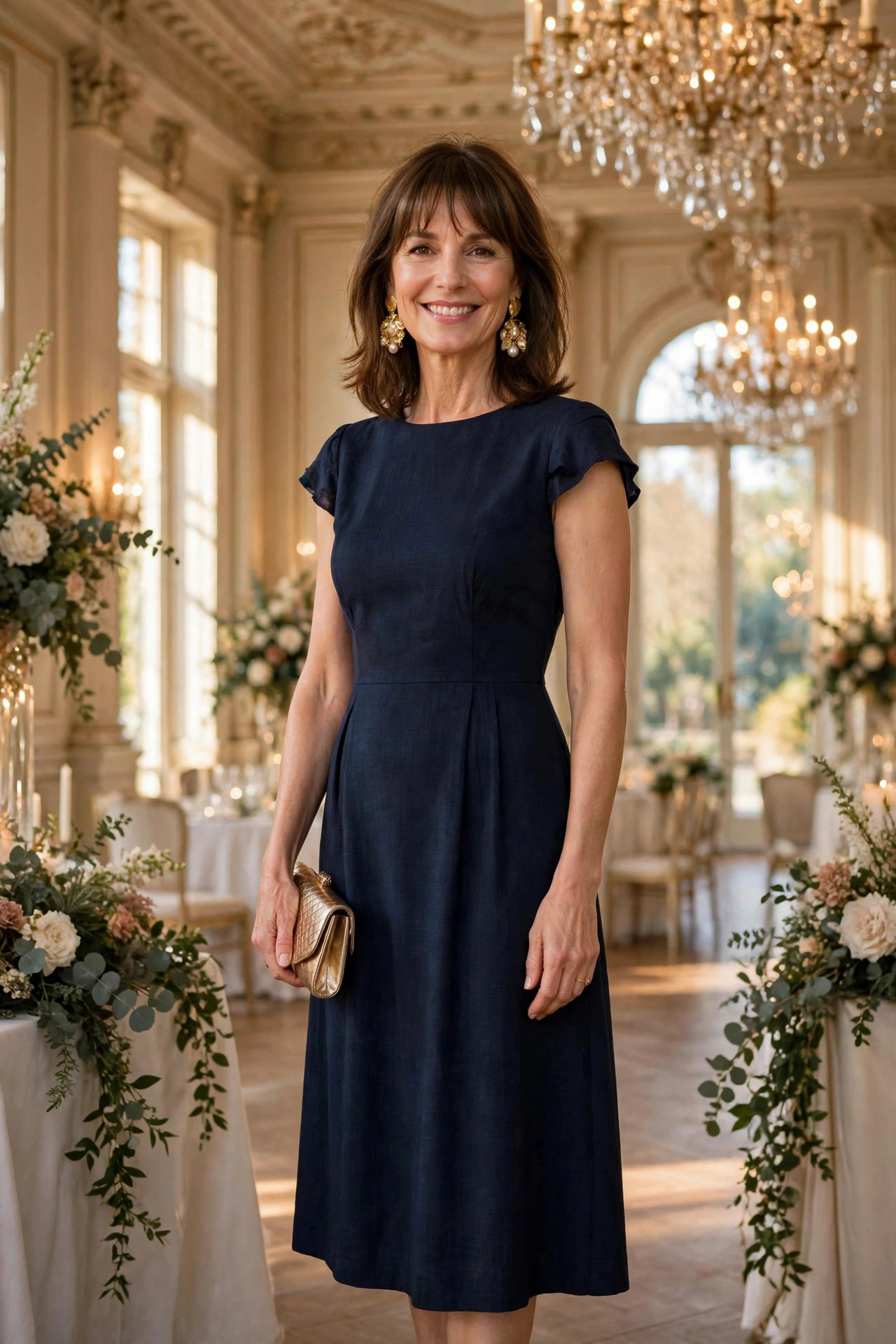
Weddings often come in clusters, and buying a new dress for each one is the fastest way to overspend. The rewear strategy is simple: invest in one or two versatile base pieces, a solid cocktail dress in a flattering color, a good jumpsuit, or a tailored suit, and change the accessories, shoes, bag, jewelry, and wrap for each wedding. Nobody tracks a dress across different guest lists, and different accessories genuinely make it a different outfit. Building a small rotation of wedding guest outfits for women from versatile base pieces is the smartest way to dress for a busy wedding season.
Renting is the other honest option for dress codes you rarely meet, especially black tie. A rented gown for one formal wedding costs less than a purchased one worn once, and it solves the storage problem too. This is the same logic behind why you always have nothing to wear: a short list of repeatable, versatile pieces beats a closet of single-occasion items.
For more guidance, The Knot’s wedding guest attire guide covers etiquette and dress codes in depth, while Vogue’s wedding dress code decoder is a handy visual refresher to check before you shop.
Shoes, Bags, and Finishing Touches
When planning wedding guest outfits for women, shoes should be chosen for the ground first and the outfit second. Grass, sand, cobblestones, and long walks between ceremony and reception all punish stilettos; block heels, wedges, and dressy flats exist precisely for these situations. Whatever the choice, break shoes in before the day. A wedding is the worst possible debut for new footwear.
The bag that finishes wedding guest outfits for women should be small: a clutch or a small crossbody that holds the essentials without cluttering photos. Jewelry and wraps do the heavy lifting for rewear, a statement earring or a silk wrap can shift the same dress from one wedding’s palette to another’s. And check the weather the morning of, not the
week before: a wrap, an umbrella, or a change of shoes in the car has saved many wedding days.
FAQ
Related Wedding Guest Outfit Guides
- spring wedding guest outfit ideas
- summer wedding guest outfit ideas
- fall wedding guest outfit ideas
- winter wedding guest outfit ideas
- beach wedding guest outfit ideas
- garden wedding guest outfit ideas
- fall wedding guest dress ideas
- wedding dress codes, decoded >
What should I wear to a wedding as a guest?
Start with the dress code on the invitation, then adjust for the venue and season. For most weddings, wedding guest outfits for women in the knee-length to midi cocktail range are a safe choice. Avoid white, ivory, and anything bridal-looking, match the formality of the event, and choose shoes that suit the ground you will be on.
Can I wear black to a wedding?
Yes, black is widely accepted for wedding guests, especially for evening, formal, and winter weddings. Style it festively with polished accessories and occasion-appropriate fabrics like satin, lace, or velvet. For daytime summer weddings, beach weddings, or very traditional ceremonies, lighter colors are usually the better choice.
How do I choose an outfit for the wedding dress code?
Find the dress code on the invitation or the couple’s wedding website, then match the formality: floor-length gowns for black tie, cocktail dresses for cocktail and formal, polished midi dresses or jumpsuits for semi-formal, and dressy separates for casual. When no dress code is listed, a midi cocktail dress is the safest default, and asking the couple is always fine.
Can I wear a jumpsuit to a wedding?
Yes, a jumpsuit is a stylish alternative to a dress among wedding guest outfits for women when it matches the formality of the wedding. Choose an elegant fabric like satin, crepe, or silk, and a polished silhouette, wide-leg or tailored, rather than anything casual. For black tie, keep it floor-length and formal; for cocktail and semi-formal, a midi jumpsuit works well.
Conclusion
Finding wedding guest outfits for women is a solved problem once the inputs are clear: read the dress code, respect the venue, dress for the season, and never wear white. Build from versatile pieces, plan for comfort across a long day, and let accessories do the work of making one outfit serve many weddings. The seasonal and venue guides linked above take it from here, pick the one that matches your invitation.

Rameen Awan is the founder and editor of Outfit Algorithm, where she breaks down outfit formulas, dress codes, and styling systems for real life. Her guides focus on practical details other sites skip: fabric behavior, fit for different body types, and what actually works when you are getting dressed in a hurry.