
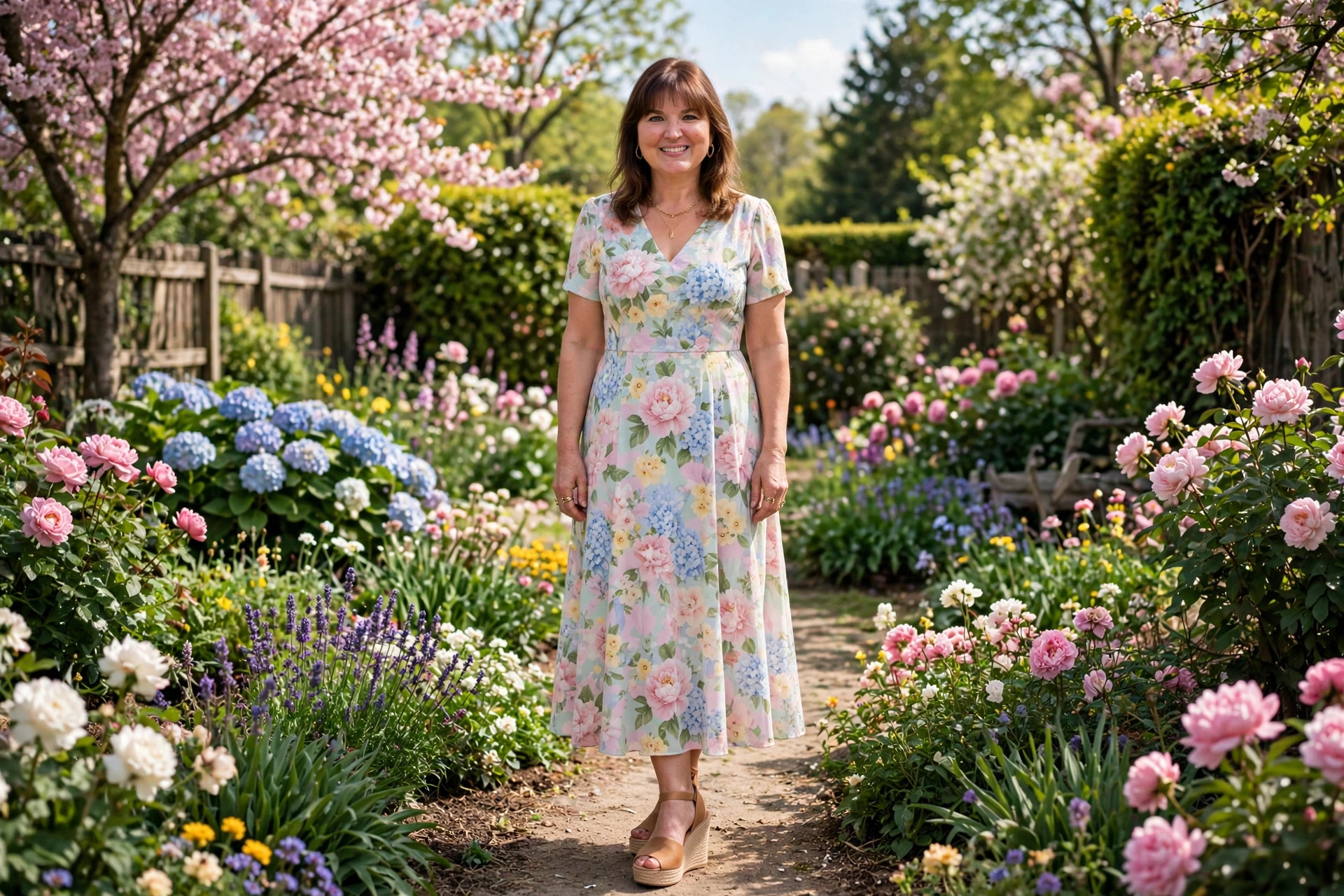
Garden wedding guest outfits are occasion dressing planned around one surface: grass. A garden wedding outfit that looks perfect indoors can fail on a lawn, where stilettos sink, delicate hemlines snag, and dark heavy fabrics read as the wrong season entirely. The formula is simple: read the dress code first, then plan for the three garden variables, the ground under your feet, the terrain between ceremony and reception, and the outdoor comfort realities of sun, pollen, and temperature shifts. Get those right and a garden wedding is one of the most forgiving dress codes to nail.
This guide covers garden wedding guest outfits by setting and formality, from elegant botanical garden ceremonies to relaxed estate lawns, with the grass-specific shoe plan, hemline logic for outdoor terrain, garden color and print guidance, fabrics that handle the outdoors, and the comfort plan for a long day outside. For the dress-code decoding behind every wedding outfit, the wedding guest outfits for women hub breaks down every code from black tie to casual, and for the wind and ground logic that applies to all outdoor ceremonies, see beach wedding guest outfits.
Key Takeaways
- Read the dress code first, then adjust for the garden: the code sets the formality, the grass sets the shoe and hemline plan.
- Shoes are the single most garden-specific decision: block heels, wedges, or dressy flats on grass; stilettos sink and are never practical.
- Tea-length and midi hemlines are the sweet spot for garden settings: they move well, photograph beautifully, and avoid grass-level snags.
- Garden colors should harmonize with the setting without disappearing into it: botanical prints, pastels, and rich garden tones all work.
- Plan for outdoor comfort: sun protection, pollen and insect awareness, and one light layer for the temperature shift after sunset.
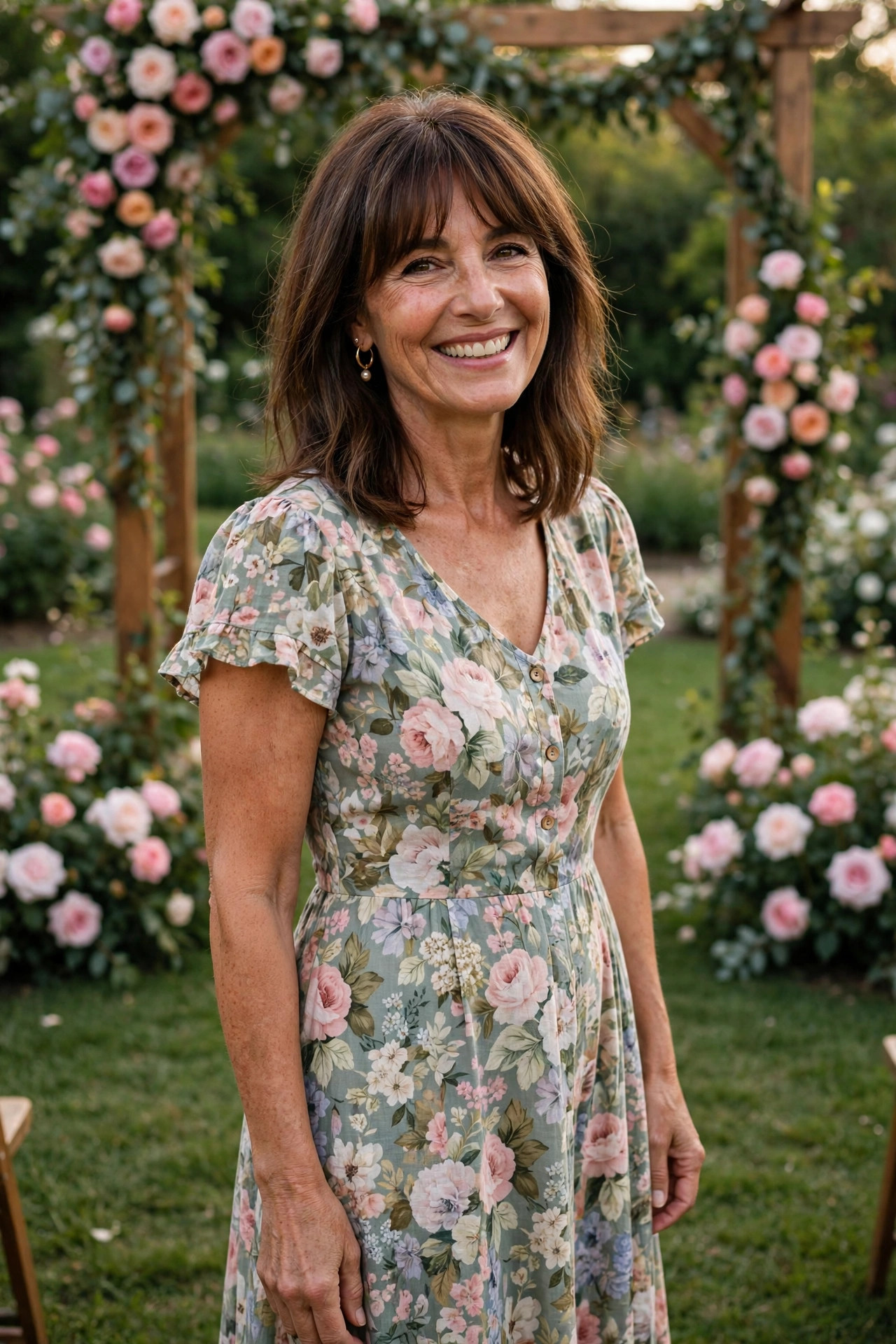
Garden Wedding Guest Outfit Decoder
Use the setting and terrain to find your row, then read the matching section.
| Setting and Terrain | Dress Direction | Shoe Plan | Garden Plan |
|---|---|---|---|
| Botanical garden, manicured lawns | Elegant midi or tea-length dress, refined prints | Block heels or wedges; lawns are usually firm | Polished accessories, one light layer for evening |
| Private estate garden, formal | Cocktail or semi-formal midi, richer fabrics | Block heels; check if paths are gravel | Evening-leaning styling, wrap for after dark |
| Vineyard or meadow, uneven ground | Flowy midi or maxi, forgiving fabrics | Wedges or dressy flats; uneven terrain rules out heels | Sun protection, comfortable walking plan |
| Conservatory or greenhouse | Dress per the code; humidity is the variable | Heels work on solid floors; check the ceremony surface | Breathable fabrics, minimal layers, humidity-aware hair |
| Community or park garden, relaxed | Dressy casual midi or polished separates | Dressy flats or low wedges | Comfort-first accessories, practical bag |
| Evening reception on the lawn | Same dress, deepened with accessories | Swap to a fresh pair if the first got grassy | Wrap or pashmina for the temperature drop |
What Makes a Garden Wedding Different
A garden wedding is a wedding plus three outdoor variables that do not exist at an indoor venue: grass underfoot, real terrain between the ceremony and reception, and a full day of exposure to sun, pollen, and insects. The best garden wedding guest outfits are simply occasion dressing planned around those three. Grass changes shoes completely, terrain changes hemlines and walking plans, and the outdoor day changes fabric choices and comfort planning.
The other difference is the formality range. “Garden wedding” covers everything from a formal ceremony in a manicured botanical garden to a relaxed afternoon on an estate lawn. The invitation, the time of day, and the specific venue pull the dress code up or down. A 6 p.m. ceremony at a private estate reads very differently from a 2 p.m. ceremony at a community garden. When the invitation names a garden-specific phrase like “garden party attire” or “garden formal,” it usually means polished and outdoor-friendly rather than ballroom formal, and the sections below decode exactly what that means.
The Garden Formality Spectrum
Garden wedding formality runs wider than it looks, so place your wedding on the spectrum before choosing anything.
Botanical garden, formal is the most elegant end: manicured grounds, often an evening or late-afternoon ceremony, guests in cocktail to semi-formal dress. The outfit is a refined midi or tea-length dress in a polished fabric, with block heels and occasion accessories. This is the garden setting closest to a traditional wedding, and the dress code applies almost normally.
Private estate garden sits just below: still formal, but with the relaxed confidence of a private venue. Semi-formal dress is the norm, with richer colors and fabrics welcome, especially for evening events. The ground may include gravel paths or lawn, so confirm the terrain when choosing shoes.
Vineyard and meadow weddings are the relaxed middle: beautiful, often sprawling, and genuinely uneven underfoot. The outfit leans flowy and forgiving, a midi or maxi in a breathable fabric, with wedges or dressy flats. Formality here is real but the setting is the star, and the outfit should look like it belongs in it.
Community and park gardens are the most relaxed: a daytime ceremony, dressy casual to semi-formal dress, and comfort as a genuine priority. A pretty midi dress or polished separates with dressy flats fits perfectly.
Backyard-adjacent garden weddings are covered separately: the most relaxed setting of all, where dressy casual leads and comfort comes first. The full breakdown is coming in the backyard wedding guest dresses guide.
When unsure where your wedding sits, check the couple’s wedding website for venue photos and attire notes, or ask someone in the wedding party. Erring slightly formal is safe at every point on this spectrum.
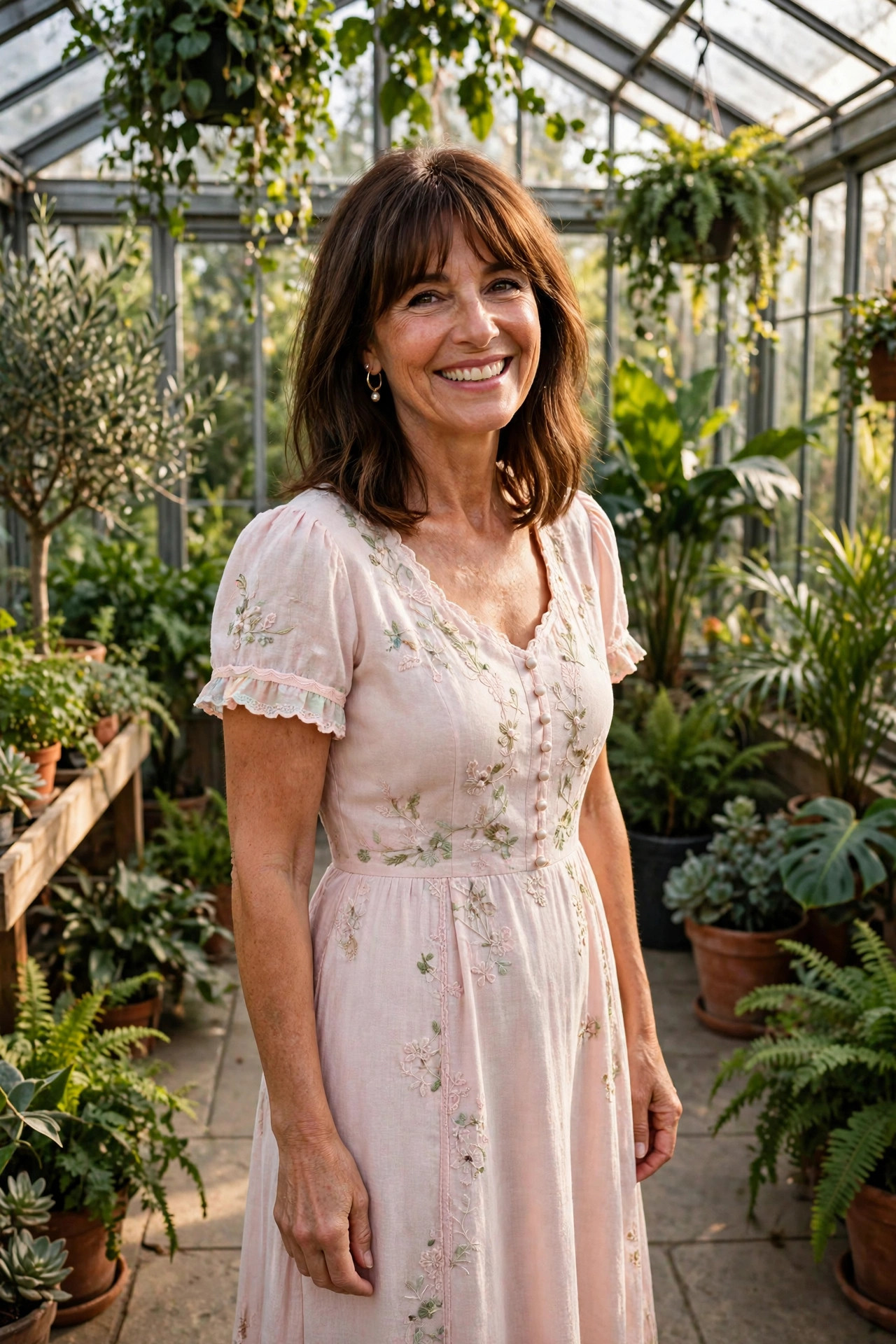
Dresses That Work on Grass
The right garden wedding dress balances occasion polish with outdoor physics. The silhouette needs to look intentional and survive the setting.
Length: tea-length and midi are the sweet spots for garden weddings. They are long enough to read as occasion dressing, short enough to stay clear of grass, and they move beautifully in open air. Maxis work when the fabric is manageable and the terrain is firm, but a very long hemline on soft or damp grass picks up moisture and debris. Minis are risky: uneven ground, garden seating, and light breezes all work against a short hemline outdoors.
Hemline behavior: this is the detail most guests miss. A very light, unlined skirt catches every breeze, and garden ceremonies are often breezy. A half-lining, a slightly heavier fabric, or a skirt with some structure keeps the hemline behaving. Wrap dresses are a garden natural: adjustable, flattering, and the tie detail reads as occasion dressing.
Silhouette: A-line, fit-and-flare, and flowing shapes move with the air instead of fighting it. Tea-length dresses have a slightly vintage quality that suits garden ceremonies especially well. Jumpsuits work when the fabric and styling are polished: a wide-leg chiffon jumpsuit in a soft color reads as intentional, though outdoor bathrooms make them a logistical choice worth thinking through.
What to skip: trains and floor-dragging hemlines that will collect grass, very delicate fabrics that snag on garden seating or hedges, and anything so structured it looks stiff against a natural backdrop. The garden rewards ease, and the best-dressed guests look like the setting was part of the plan.
Shoes: The Grass Plan
Shoes are the single most garden-specific decision in garden wedding guest outfits, and the rule is absolute: plan for the actual ground. Stilettos and thin heels sink into grass, full stop. The physics are simple: a thin heel concentrates body weight onto a tiny point, and soft ground gives way under it. The shoes that work on grass all share one trait, a wide base that distributes weight.
Block heels are the garden wedding workhorse: stable on grass, dressy enough for semi-formal and cocktail codes, and available in every finish from nude to metallic. A mid-height block heel is the safest single choice for a garden wedding.
Wedges are the most practical heeled option: the solid base sits flat and does not sink. A wedge espadrille in a neutral tone, a strappy wedge sandal, or a cork-soled wedge all work beautifully for spring and summer garden weddings.
Dressy flats are completely appropriate and honestly underrated for garden weddings. A leather or metallic flat sandal, a pointed-toe ballet flat, or a strappy flat sandal looks intentional, not underdressed, and eliminates the terrain question entirely.
Heel stoppers: if your heart is set on a thinner heel, clip-on heel protectors widen the base and can work on firm lawns. They are a backup plan, not a guarantee: test them on grass before the day, since they have mixed results on soft or damp ground.
The second pair: if the reception moves indoors or onto a solid patio, a second pair of dressier shoes in the bag is a smart move. Wear the grass shoes for the ceremony, change for the reception. Also consider the walk: garden venues often involve real distances between parking, ceremony, and reception, so comfort across the whole day matters more than at an indoor venue.
Break them in: whatever you choose, wear the shoes before the day. Grass plus new shoes plus hours of standing and walking is a combination that punishes the unprepared. For the full outdoor-shoe reasoning that applies across venues, the beach wedding guest outfits guide covers ground-first shoe logic in depth.
Colors and Prints for a Garden Setting
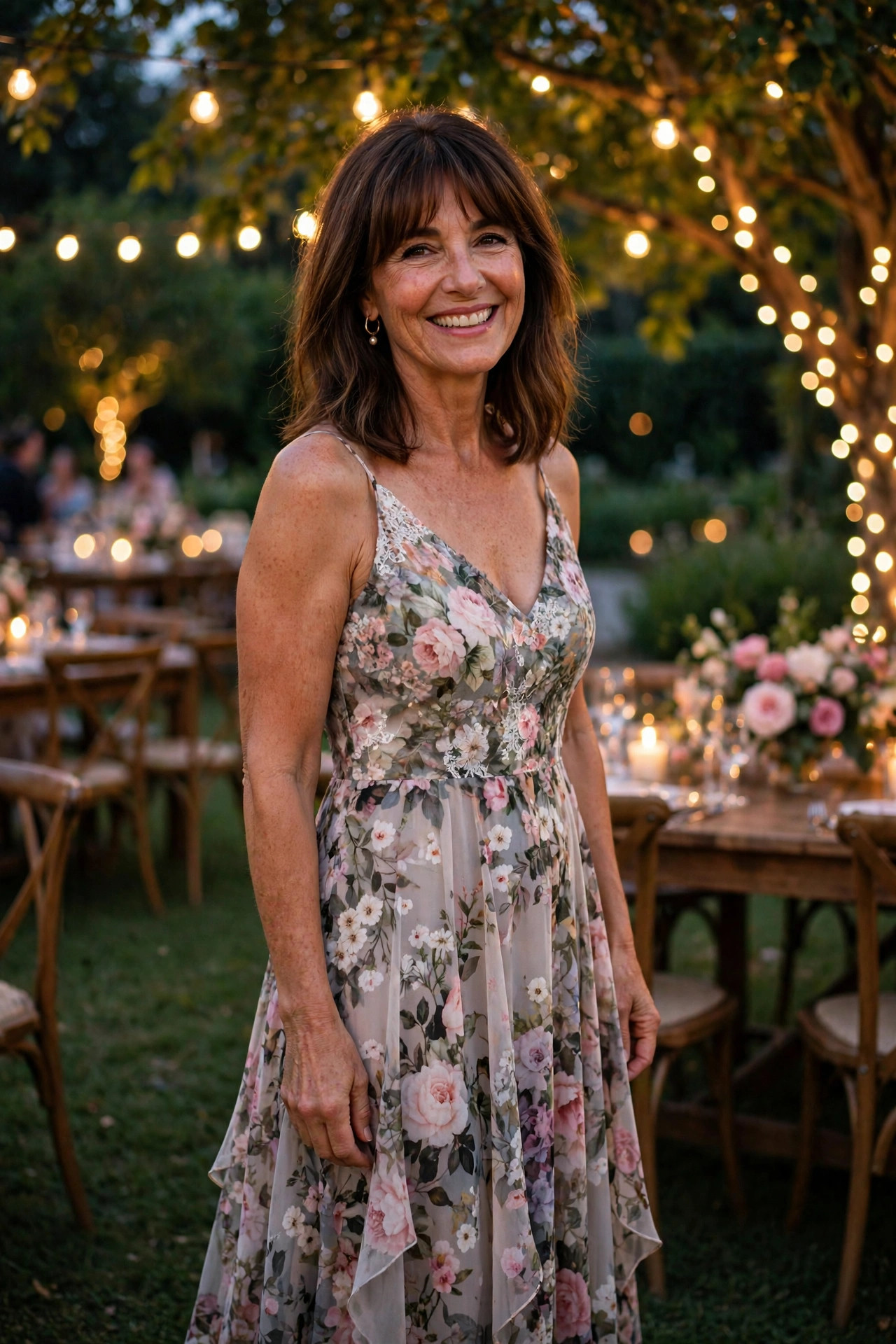
Garden weddings give permission to wear color and print in a way that reads as perfectly intentional. The best garden colors are the ones that belong in a garden: blush, sage green, lavender, pale yellow, powder blue, soft coral, and warm earth tones all photograph beautifully against greenery and flowers.
Prints: floral prints are not just acceptable at garden weddings, they are encouraged. The nuance is scale: delicate, small-scale botanical prints harmonize with the setting, while very large, bold patterns can compete visually with it. Stripes, soft geometrics, and eyelet textures all work well too, and solid colors are always appropriate.
The blending trap: the one color mistake specific to gardens is disappearing into the background. A sage green dress in a garden full of sage foliage can wash out in photos. The fix is contrast: if the setting is green, lean toward blush, coral, lavender, or a floral with strong color contrast rather than matching the leaves.
Dark colors: deep tones like burgundy, forest green, and navy are not forbidden at garden weddings, but they read heaviest in bright daylight. For daytime garden ceremonies, lighter and mid-tone colors usually suit the mood better. For evening garden receptions, deeper tones come into their own.
The white rule: avoid all-white, ivory, and champagne, as at every wedding. One garden-specific nuance: a floral print on an ivory background generally reads as a print rather than as bridal, but a white-based print can still photograph pale in strong sun, so keep the color contrast strong. When in doubt, choose a color that cannot be mistaken.
Fabrics That Handle Outdoor Realities
Garden air means sun, possible humidity, and hours outdoors, and fabrics respond to all three. The fabrics that work share traits: breathable, wrinkle-forgiving, and able to handle a long day without wilting.
Chiffon is the garden classic: lightweight, moves beautifully in open air, and photographs softly against a natural backdrop. It layers well and suits the romantic mood of most garden weddings.
Cotton and cotton blends are breathable and versatile, from structured sundresses to flowy maxis. Cotton eyelet is a garden natural, pretty and breathable at once.
Linen and linen blends have a natural texture that feels right outdoors. Pure linen wrinkles, which reads as relaxed rather than sloppy in a garden setting, and a linen blend with some structure holds its shape better for semi-formal codes.
Silk blends and light crepe work for more formal garden weddings, with a polished finish that still breathes.
Fabrics to avoid: heavy satin and stiff brocade trap heat and look oddly formal against a natural backdrop, and anything lined in a non-breathable fabric will feel worse as the day goes on. Also check sheer or light-colored fabrics in natural sunlight before committing: fabrics that look opaque indoors can become transparent in bright afternoon sun. For the full heat-proof fabric ranking, the summer wedding guest dresses guide covers sweat and breathability in depth.
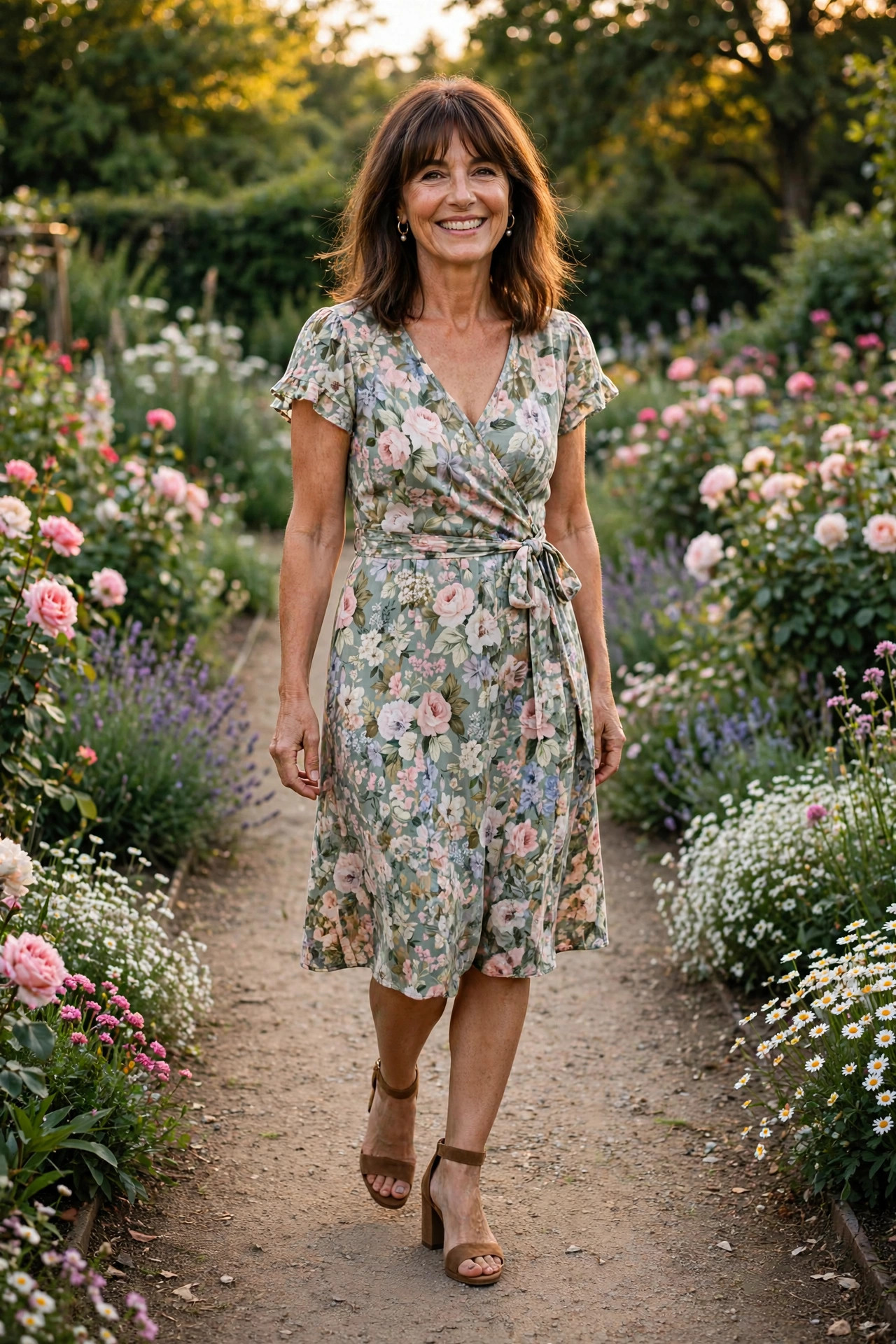
Pollen, Bugs, and Sun: The Comfort Plan
This is the section no ranking competitor covers properly, and it is the difference between surviving a garden wedding and enjoying one.
Sun: garden ceremonies often mean direct sun with no shade. Sunscreen applied before dressing and allowed to absorb is non-negotiable, and sunglasses are appropriate for daytime outdoor ceremonies at casual to semi-formal weddings. A hat is lovely for sun protection but check the ceremony sightlines, a wide brim can block the view for guests behind you.
Pollen and allergies: if you have seasonal allergies, plan for them like part of the outfit: Many allergy sufferers take antihistamines in advance of outdoor events (check with your doctor or pharmacist first), and tissues in the clutch never hurt. Sitting in a blooming garden for an hour is a real exposure, and watery eyes in photos are avoidable.
Insects: gardens have them, especially near dusk and near water features or catering. Skip heavy floral perfumes, which attract insects; a light, fresh scent or none at all is the garden-smart choice. If the venue is near standing water or the reception runs into the evening, insect repellent applied to legs and arms before dressing is worth considering, applied before the outfit goes on so nothing stains.
Temperature shifts: a garden day that starts warm can turn cool once the sun drops, and evening receptions on a lawn get chilly fast. A light layer, a linen wrap, a pashmina-style shawl, or a cropped jacket in a color that complements the dress, is part of the outfit, not an afterthought.
Conservatory, Estate, and Open Garden: Setting Distinctions
Not all gardens are the same ground, and the distinctions change the outfit.
Conservatories and greenhouses are the humidity case: glass roofs, warm moist air, and usually solid floors. The variable here is not the ground but the climate, so breathable fabrics and humidity-aware hair planning matter most, and heels work if the ceremony is on a solid surface. Layers should be minimal since it stays warm.
Formal estate gardens are the polish case: manicured lawns, gravel paths, and often an evening timeline. The dress code runs highest here, and the terrain question is about paths: gravel eats thin heels and scuffs delicate soles, so block heels or wedges are still the smart call even on a formal estate. For evening timelines, the cocktail party outfits guide covers after-dark dress codes.
Open gardens, vineyards, and meadows are the terrain case: genuinely uneven ground, longer walks, and the most exposure to sun and wind. This is where dressy flats or sturdy wedges earn their place, where a flowy midi beats a precious maxi, and where the comfort plan above matters most.
Community and park gardens are the relaxed case: dressy casual to semi-formal, comfort-forward, and the most forgiving of practical choices. A pretty midi with dressy flats is exactly right.
The best garden wedding guest outfits match the specific garden, not the generic idea of one, and the day gets much easier.
Fit and Budget Notes
A garden wedding day involves walking on uneven ground, sitting on unfamiliar outdoor seating, sun, and hours outside, so check every outfit in motion before leaving. Walk on grass if you can, sit on a low chair, and stand in sunlight. Waistbands, necklines, and hemlines all behave differently outside a fitting room, and outdoor seating exposes fit issues faster than any indoor venue.
For plus-size guests, the same garden logic applies, and the most reliable silhouettes are the ones with structure where it counts: wrap dresses, fit-and-flare shapes, and empire waists define the waist without clinging, and breathable fabrics matter even more in sun and humidity. Detailed fit-first guidance for formal dressing at every size is in the plus size dinner outfits for ladies guide, and the seated-comfort principles apply directly to a long wedding day.
Budget-wise, garden wedding guest outfits are strong rewear candidates. A floral chiffon midi, a sage wrap dress, or a pastel linen midi all work for dinners, parties, and vacations beyond the wedding. The strategy from why you always have nothing to wear applies directly: one versatile base in a garden-friendly color, reworn across weddings with different accessories and shoes, beats a closet of single-wear dresses.
FAQ
What should I wear to a garden wedding?
Match the dress code first, then plan for grass and outdoors. The most reliable garden wedding guest outfits pair a tea-length or midi dress in a breathable fabric like chiffon, cotton, or linen, in a floral print or garden-friendly color, with block heels, wedges, or dressy flats. Avoid stilettos, which sink into grass, skip all-white or anything bridal-looking, and bring one light layer for the evening temperature drop.
What shoes should I wear to a garden wedding?
Choose shoes with a wide base for grass: block heels, wedges, or dressy flats. A mid-height block heel is the safest single choice, wedges are the most practical heeled option, and dressy flats eliminate the terrain question entirely. Avoid stilettos and thin heels, which sink into lawns. If the reception moves to a solid surface, a second, dressier pair in the bag is a smart move.
Can I wear black to a garden wedding?
It depends on the time of day. For evening garden weddings, especially formal ones, black styled festively is acceptable. For daytime garden ceremonies, lighter colors suit the mood better, and black can read as heavy against a bright natural setting. If you do wear black to a daytime garden wedding, soften it with colorful accessories or choose a floral print with a dark background rather than a solid black dress.
What does garden formal mean on an invitation?
Garden formal usually means polished and occasion-appropriate, adjusted for an outdoor setting, rather than ballroom formal. For women, that typically means a cocktail or semi-formal midi dress in a garden-friendly fabric and color, with grass-appropriate shoes. It is a step above garden party attire and a step below black tie. When in doubt, a refined midi dress with block heels is the safest interpretation, and checking the wedding website for venue photos helps calibrate.
Conclusion
Garden wedding guest outfits come down to four decisions in order: the dress code, the ground, the setting, and the comfort plan. Read the invitation for formality, choose shoes with a wide base for grass, pick a tea-length or midi hemline that moves well outdoors, favor colors and prints that harmonize with the garden without disappearing into it, and pack the comfort plan, sun protection, allergy awareness, and one light layer. Add the backyard wedding guest dresses guide when it arrives for the most relaxed end of the spectrum, and the garden becomes the easiest wedding setting to dress for.

Rameen Awan is the founder and editor of Outfit Algorithm, where she breaks down outfit formulas, dress codes, and styling systems for real life. Her guides focus on practical details other sites skip: fabric behavior, fit for different body types, and what actually works when you are getting dressed in a hurry.