
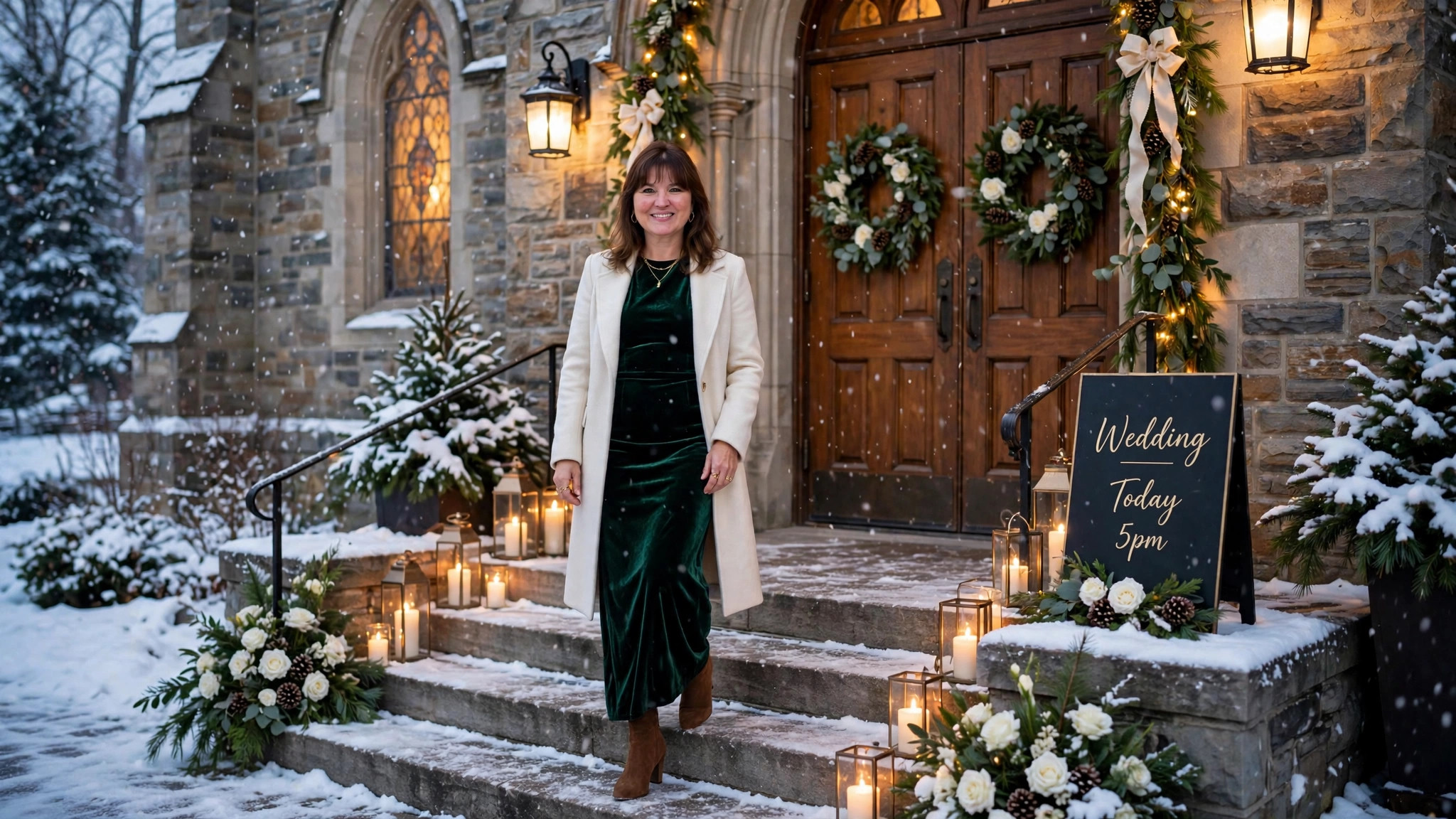
Winter wedding guest outfits solve a specific puzzle: wedding formality plus real cold. A winter wedding guest outfit is occasion dressing built for December through February, heavier fabric, deeper color, a coat that belongs to the outfit, and shoes that handle ice outside and heated ballrooms inside. The formula is simple: match the dress code first, then winterize with fabric, color, layers, and footwear that respect the temperature. The Knot’s cocktail attire guide breaks down exactly what each dress code requires, from hemlines to fabrics.
For the dress-code decoding behind every wedding outfit, the wedding guest outfits for women hub breaks down every code from black tie to casual. Weddings in November sit on the boundary between seasons; for those, the fall wedding guest dresses guide covers late-fall rules that carry into early December.
Key Takeaways
- Read the dress code first, then winterize: the dress code sets the length and formality, the season sets the fabric, color, and outerwear.
- Winter fabrics are velvet, heavy satin, crepe, brocade, jacquard, and sequins as an accent. Leave linen, eyelet, and thin chiffon for summer.
- The coat is part of the outfit in winter, plan it for arrival, outdoor photos, and the reception, not as an afterthought.
- Jewel tones and deep neutrals photograph best in winter light. Red and green are fine as long as they do not read as a Christmas costume.
- Closed-toe shoes are the default, with tights or hosiery as a practical warmth tool, not just a polish.
Winter Wedding Guest Outfit Decoder

Use the month and weather to find your row, then read the matching section.
| Month and Weather | Fabric | Layer and Coat | Footwear |
|---|---|---|---|
| December, cold, mostly indoor | Velvet, heavy satin, brocade, in a jewel tone or black | Dress coat for arrival, faux fur stole or wrap indoors | Closed-toe heels or dressy pumps |
| December, outdoor ceremony or photos | Heavy crepe or velvet maxi with long sleeves | Full dress coat that stays on for photos | Closed-toe block heels with tights |
| January, coldest, indoor | Velvet, jacquard, or heavy crepe in deep neutrals | Wool dress coat, shawl or stole for the reception | Closed-toe pumps with tights |
| February, late winter, temperature swings | Mid-weight crepe, lighter velvet, or satin, jewel tones or dusty winter shades | Wrap coat or structured wool coat, plus a shawl | Closed-toe heels or dressy ankle boots |
| New Year’s Eve-adjacent | Satin or sequin-accent gown or cocktail dress, metallics welcome | Faux fur or an elegant wrap | Closed-toe heels |
| Any month, church ceremony | Midi with sleeves, rich solid or subtle print | Coat for arrival, wrap that stays on through the service | Closed-toe, matched to formality |
What Makes a Winter Wedding Different
Three variables change between fall and winter: temperature whiplash, daylight, and the holiday season. The biggest practical challenge is indoor-outdoor whiplash: freezing outside, overheated ballroom inside. The outfit has to survive both, which means layers that come off cleanly and fabrics that do not wrinkle under a coat.
Daylight is short. December ceremonies often start in fading light, and most photos happen indoors or at dusk. That is why deep, saturated colors work so well in winter: jewel tones and dark neutrals glow in low light and candlelight, while pale pastels can wash out.
The holiday season adds a color dimension no other season has. Red and green are everywhere in December, and both are perfectly fine for a winter wedding, with one judgment call that gets its own section below.
Winter Fabrics That Work
Velvet is the headline winter wedding fabric: warm, rich, and unmistakably formal. A velvet midi or maxi in emerald, burgundy, navy, or black is the safest high-impact winter choice. Heavy satin and silk drape beautifully and read as formal, though they offer little warmth on their own, so the coat and layer plan matters more with them. Crepe, especially in heavier weights, is the workhorse: structured, wrinkle-resistant, and warm enough for the season. Brocade and jacquard add texture and formality for evening weddings. Sequins work as an accent, a sequin bodice or skirt, rather than head-to-toe sparkle, unless the wedding sits near New Year’s Eve.
What to skip: anything summery. Linen, eyelet, thin cotton, and floaty chiffon read as the wrong season no matter the color. When the fabric has weight, the outfit reads as intentional.
Knit dresses deserve a mention. A structured knit midi in a rich color works for casual and semi-formal winter weddings, but keep it polished: fine-gauge knit with clean lines, not a sweater that reads as weekend wear.
The Winter Color Palette
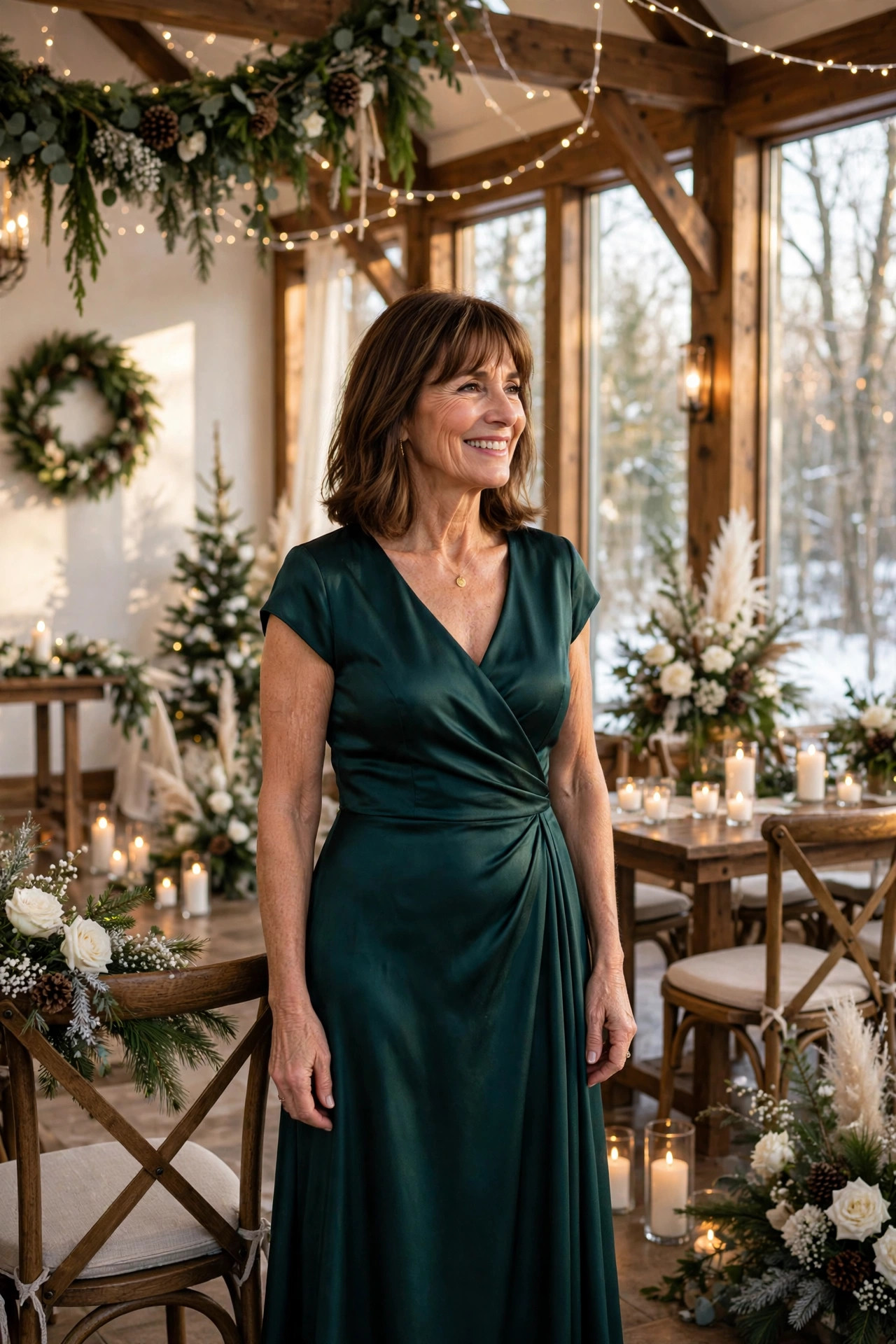
Winter gives wedding guests a dramatic palette. The core shades: jewel tones like emerald, ruby, sapphire, and amethyst; deep neutrals like black, navy, charcoal, and espresso; and metallics like gold, bronze, pewter, and silver.
Then the holiday question: red and green. Both are fair game for winter weddings, with one rule, they should not read as a Christmas costume. A ruby red velvet midi with black accessories is a winter wedding outfit. A red dress with green accessories and gold everything is a holiday party costume. Keep red and green separate, choose one, style it with neutrals, and skip novelty holiday motifs. The same restraint applies to metallics: a gold accent is festive, while head-to-toe gold lame is a New Year’s Eve look, which is fine if the wedding is actually near New Year’s Eve, and too much otherwise.
Black is at its best in winter. For evening and formal weddings, black in satin, velvet, or lace with polished accessories is one of the safest choices available. Winter is the season where black looks most at home.
Skip white, ivory, champagne, and anything bridal-adjacent; the rule from the wedding guest outfits for women hub applies in every season. Skip neons and bright summer pastels too, they fight winter light.
The Coat Plan: Winter’s Most Visible Layer
In winter, the coat is photographed. Arrival photos, outdoor portraits, the walk from the car, the coat is in the frame, so it has to belong to the outfit. Plan it with the same care as the dress.
The coat types that work over formal dresses:
- Wool dress coat: the default. Knee-length or longer, tailored, in black, camel, charcoal, or navy. Works over midi and maxi dresses alike.
- Faux fur coat or stole: the evening option, made for velvet gowns and formal receptions.
- Wrap coat: the elegant option for cocktail and semi-formal, ties at the waist and layers cleanly over dresses.
Fit matters. The coat must close comfortably over the dress without crushing it. Try the full combination on before the day, including sitting, since a coat that fights the dress will be in every arrival photo. Have a reception plan too: most venues have a coat check, use it, and switch to the indoor layer, a stole, wrap, or shawl, once inside.
One more practical note: the coat you arrive in does not have to be the warmest coat you own. It has to be the most polished one that still keeps you warm for the outdoor portions. Ten minutes of photos in a beautiful wool coat beats thirty minutes shivering in a puffer that ruins the look.
Layers Without Bulk
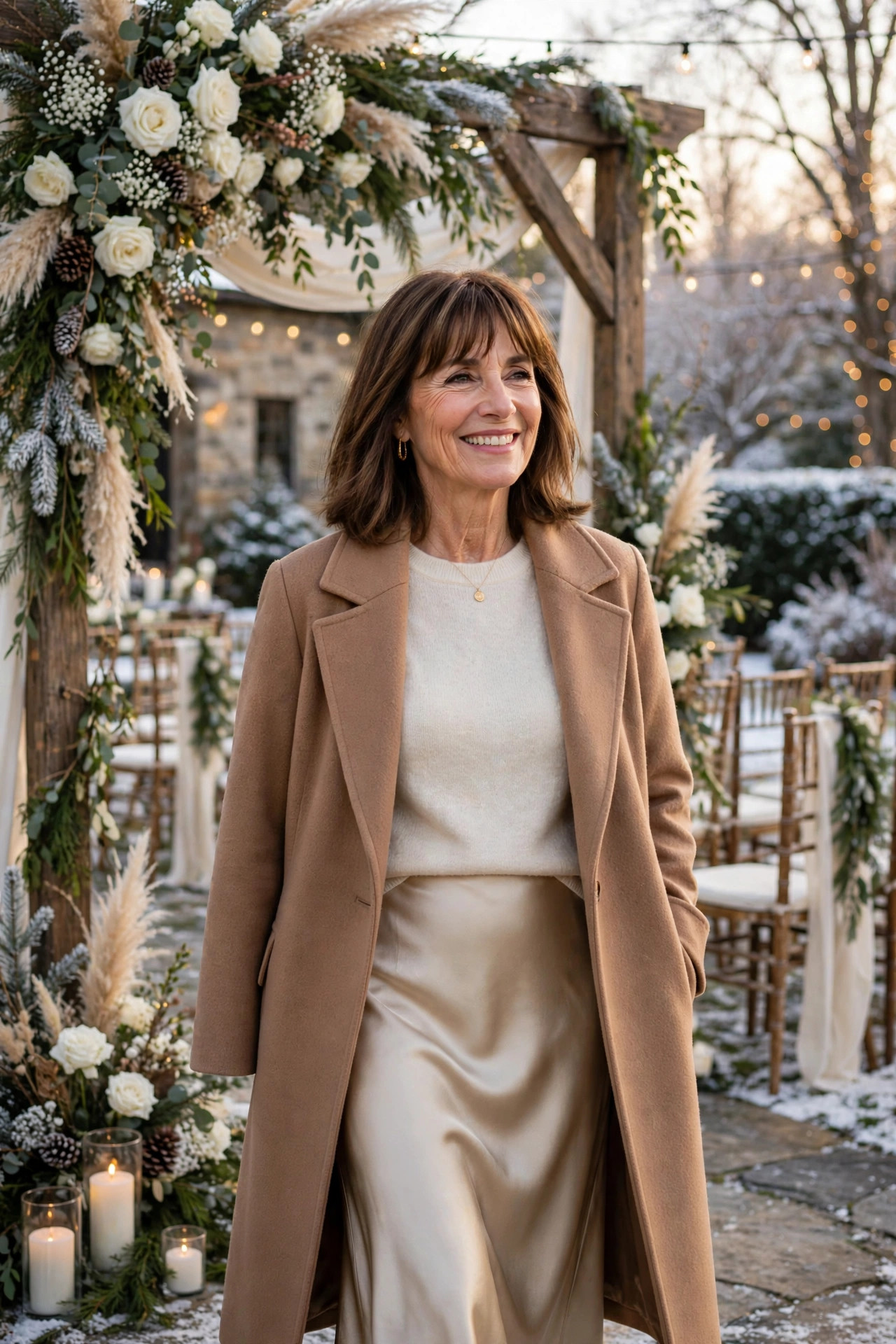
Under the coat, winter wedding layers need to add warmth without adding bulk that distorts the silhouette.
- Thermal base layers: a thin thermal top under a long-sleeve dress is invisible and genuinely warm. This is the highest warmth-to-bulk ratio available.
- Tights and hosiery: the winter wedding staple. Opaque black tights with a midi dress and closed-toe shoes are polished and warm; sheer hosiery suits more formal dress codes. Match the formality: opaque reads as slightly less formal, sheer as more formal.
- Wraps, shawls, and stoles: the indoor layer. A pashmina or silk wrap drapes over any neckline and comes off for dancing; a faux fur stole is the formal-evening choice. Cold-weather layering logic from the winter dinner outfits guide transfers directly.
- What to skip: bulky cardigans over formal dresses, scarves that fight the neckline, and anything that has to be wrestled on and off in photos.
Winter Wedding Footwear
Closed-toe is the winter default. Strappy sandals and open toes fight the season, even indoors, because the whole outfit, coat, tights, fabric, is telling a winter story.
- Closed-toe pumps or heels: the safe choice for formal, cocktail, and semi-formal. Block heels handle venue floors, stairs, and any outdoor portion better than stilettos.
- Dressy ankle boots: acceptable for casual, rustic, and many semi-formal winter weddings, especially with a midi dress and tights. Not for black tie or formal ballrooms.
- Tights plus shoes: the combination that makes winter footwear work. Opaque tights with closed-toe heels read as intentional and polished.
Break shoes in before the day. A winter wedding means hours of standing, photos, dinner, and dancing, often on hard indoor floors, and new shoes are the fastest route to a miserable evening.
New Year’s Eve-Adjacent Weddings
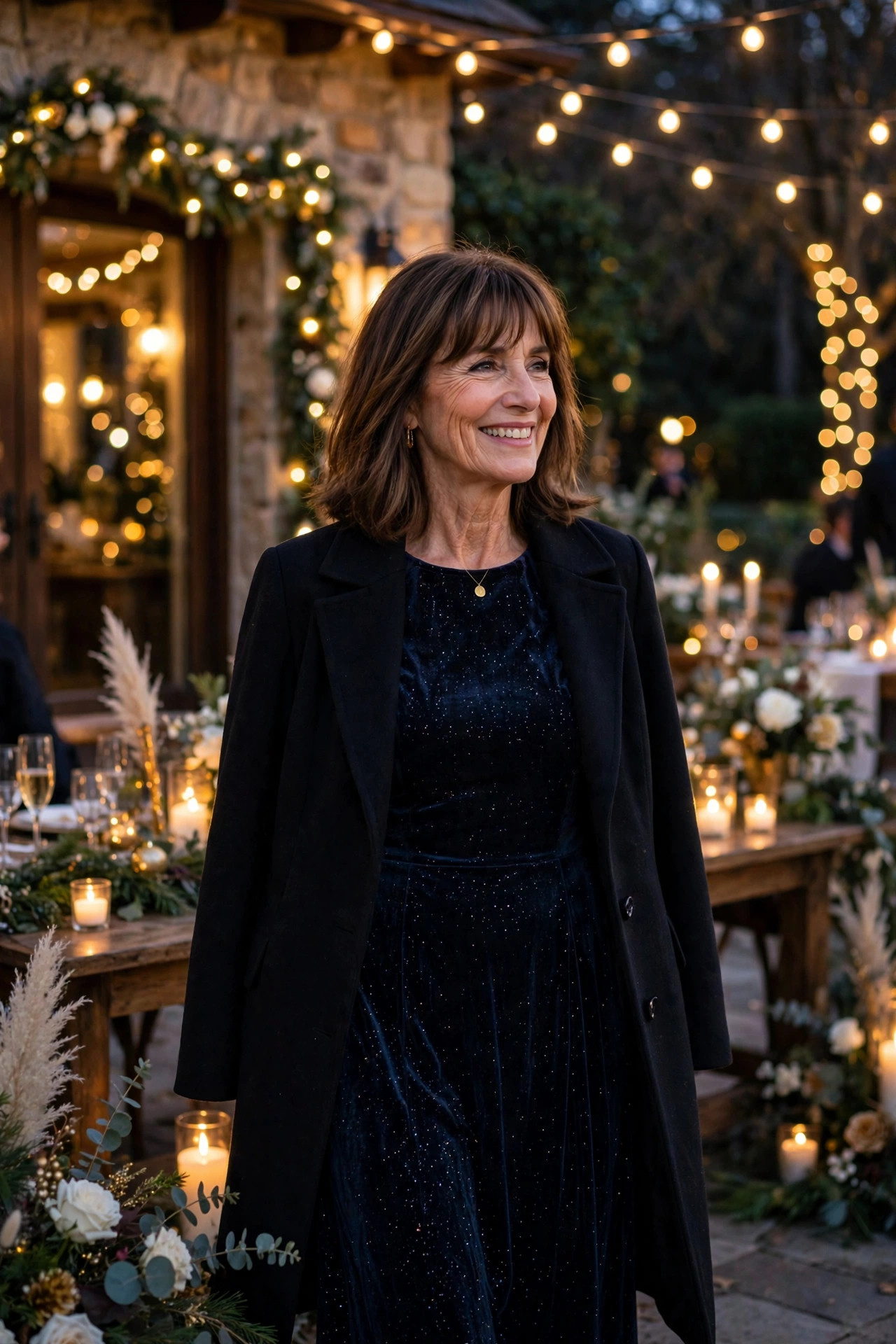
Weddings within a few days of New Year’s Eve get their own rules, because the season’s sparkle ceiling lifts. Metallics, sequins, and beading that would be too much in mid-December are fair game here: a sequin midi, a gold-accent gown, or a beaded bodice all read as festive rather than excessive.
The guardrails still hold. The dress code still decides the length and formality, white is still off-limits, and the sparkle should still read as wedding guest, not nightclub. One statement sparkle element per outfit, a sequin dress with simple accessories, or a satin dress with a metallic clutch, keeps it celebratory without tipping over.
Fit and Budget Notes
A wedding day is long in any season, and winter adds coat logistics to the timeline: arrival, coat check, outdoor photos, indoor reception. Check every winter wedding guest outfit seated before leaving, since waistbands, necklines, and hemlines behave differently sitting down, and thermal layers add a thin but real change to the fit. For plus-size guests, the reliable silhouettes carry over: wrap dresses, fit-and-flare shapes, and empire waists define the waist without clinging, and supportive undergarments are worth planning as part of the outfit. Detailed fit-first guidance is in the plus size dinner outfits for ladies guide.
Budget-wise, winter wedding guest outfits are strong rewear candidates. A black velvet midi, an emerald satin dress, or a navy crepe gown all work for holiday parties and formal dinners beyond the wedding. The strategy from the hub applies: one versatile base in a rich winter color, reworn across weddings with different accessories, coats, and layers. For dress codes you rarely meet, especially black tie, renting a gown for one formal winter wedding costs less than buying one worn once.
FAQ
What should I wear to a winter wedding as a guest?
Choose winter-weight fabrics, velvet, heavy satin, crepe, or brocade, in jewel tones or deep neutrals, and plan the coat as part of the outfit. Match the dress code first, then winterize: long sleeves, closed-toe shoes, tights where practical, and a layer that works from arrival through the reception.
Is it OK to wear black to a winter wedding?
Yes. Black is one of the best winter wedding guest colors, especially for evening and formal events. Style it festively with polished accessories and rich fabrics like velvet, satin, or lace so it reads as celebratory. Winter is the season where black looks most at home.
What shoes should I wear to a winter wedding?
Closed-toe heels or pumps are the default for formal, cocktail, and semi-formal weddings, with block heels as the practical choice for venue floors and outdoor portions. Dressy ankle boots work for casual, rustic, and many semi-formal weddings with a midi dress and tights. Skip open-toe and strappy sandals, they fight the season.
How do I stay warm at a winter wedding?
Build warmth into the outfit plan: winter-weight fabric, long sleeves, a thin thermal base layer, opaque tights, and a dress coat for arrival and outdoor photos. Switch to an indoor layer like a wrap or stole at the reception. Heated venues run warm, so layers that come off cleanly matter as much as the coat itself.
Conclusion
Winter wedding guest outfits come down to three decisions in order: the dress code, the winter fabric and color, and the coat plan. Read the invitation for formality, dress it in velvet, satin, or crepe in jewel tones or deep neutrals, and plan the coat like it is part of the outfit, because in winter, it is. Get those right and a cold-weather wedding is one of the most rewarding dress codes to nail.

Rameen Awan is the founder and editor of Outfit Algorithm, where she breaks down outfit formulas, dress codes, and styling systems for real life. Her guides focus on practical details other sites skip: fabric behavior, fit for different body types, and what actually works when you are getting dressed in a hurry.