

Non-traditional Christmas colors are simply festive shades outside the classic red-green-gold trio, icy blue, blush pink, lavender, champagne, white monochrome, all-black, deep jewel tones, and metallics like silver and rose gold. They work because festivity comes from fabric richness, shine, and intentional styling, not from a specific hue. This guide styles each non-traditional Christmas color head-to-toe: why it works, how to wear it, which occasions suit it, and how to mix it with traditional accents.
For unconventional holiday palettes, check The Spruce’s color guide.
For occasion-by-occasion Christmas outfit planning, the Christmas outfits for women hub covers parties, office events, church, and family gatherings in detail, this guide is the color story behind those outfits.
Key Takeaways
- Festive reads through fabric and finish, not just color: velvet, satin, sequins, and metallics make almost any shade feel like December.
- One statement color per outfit with quiet neutrals around it reads as intentional; two or more loud colors read as a costume.
- Cool non-traditional colors (icy blue, silver, lavender) flatter cool undertones; warm ones (champagne, blush, bronze) flatter warm undertones, but contrast matters more than rules.
- A single traditional accent, a red lip, gold earrings, green velvet shoes, anchors a non-traditional palette to the season.
- Monochrome dressing (all white, all black, all champagne) is the easiest way to make an unexpected color look deliberate.
Non-Traditional Christmas Color Decoder
Use this to pick a palette, then read the section for the color you choose.
| Color | Mood | How to Wear It | Best Occasions |
|---|---|---|---|
| Icy blue / winter pastels | Fresh, frosty, modern | Satin dress or blouse; silver accessories | Cocktail parties, New Year’s Eve |
| Blush pink / rose | Soft, romantic, pretty | One pink piece with cream or grey; avoid head-to-toe pink | Brunch, family gatherings, daytime events |
| Lavender / lilac | Dreamy, unexpected, cool | Knit or satin in lavender with silver or navy | Parties, winter weddings, evening events |
| Champagne / warm metallics | Glowing, luxe, warm | Metallic skirt or top with black or cream | Evening parties, dinners, NYE |
| Silver / cool metallics | Sleek, icy, striking | One metallic piece with black or navy | Cocktail parties, formal events |
| White monochrome | Crisp, elegant, bridal-adjacent | Layered whites and creams with rich textures | Church, dinners, NYE parties |
| All black | Dramatic, chic, powerful | Velvet, sequins, or lace, texture does the festive work | Evening parties, formal dinners |
| Deep jewel tones | Rich, sophisticated, evening-ready | Sapphire, plum, or teal in velvet or satin | Dinners, cocktail parties, office events |
Icy Blue and Winter Pastels
Icy blue is the most naturally “winter” of the non-traditional Christmas colors, it reads as frost, snow light, and cold evenings without borrowing anything from the traditional palette. It works because December light is cool; pale blue harmonizes with it instead of fighting it.
The most reliable formula is an icy blue satin dress or blouse with silver accessories. Satin gives the color its festive weight, matte icy blue can read as springtime, but satin, sequins, or a subtle shimmer push it firmly into holiday territory. For daytime, an ice-blue knit with white trousers and silver earrings keeps the frosty feeling without evening shine.
Pairing notes: icy blue sits beautifully next to white, silver, navy, and grey. Avoid pairing it with warm gold, which can make the blue look washed out; silver and pearl-toned jewelry flatter it far more. One icy blue statement piece is enough, head-to-toe pastel blue risks looking bridal rather than festive.

Blush Pink and Rose
Pink at Christmas surprises people, but blush pink has a real seasonal logic: it echoes winter sunsets, candlelight, and the rosy tones of cold cheeks. The key is choosing the right pink, soft blush and dusty rose read as elegant, while hot pink reads as a statement that needs careful handling.
Wear blush as a single piece: a blush satin skirt with a cream sweater, a dusty rose blouse with dark trousers, or a pink coat over an all-neutral outfit. Blush pairs naturally with cream, grey, champagne, and soft gold. Keep the rest of the outfit quiet so the pink feels like a choice rather than an accident.
Hot pink or fuchsia can work for an evening party when balanced with black, a fuchsia top with black tailored trousers and minimal jewelry reads as confident, not costumey. What does not work is pink competing with red: the two clash, so if the event will be full of traditional red, keep pink far from it or skip it that night.
Lavender and Lilac
Lavender is the wildcard of non-traditional Christmas colors, genuinely unexpected, cool-toned, and quietly luxurious. It works for the same reason icy blue does: winter light flatters cool tones, and lavender’s softness contrasts beautifully with December’s dark evenings.
Style lavender in rich fabrics so it reads as evening: a lavender satin slip dress, a lilac velvet top with dark trousers, or a lavender knit with a silver skirt. Matte lavender in cotton can look casual, so fabric choice matters more here than with most colors on this list. Silver accessories are lavender’s best friend; the two cool tones amplify each other.
Lavender pairs well with navy, silver, charcoal, and deep plum. It is a strong choice for anyone who wants to stand out at a party without wearing anything loud, lavender is memorable precisely because nobody else is wearing it.
Champagne and Warm Metallics
Champagne is the warm metallic that does everything gold does, more softly. It glows under party lighting, flatters warm skin tones, and pairs with nearly every neutral in a winter wardrobe. Bronze and copper sit in the same family, slightly deeper, slightly more dramatic.
The easiest champagne outfit is a metallic pleated skirt or top with black: black grounds the shine and keeps it evening-appropriate. A champagne satin dress works head-to-toe for formal events, but for most parties, one metallic piece is the right amount, metallic trousers with a cream knit, or a champagne blouse with dark jeans for a dressier casual event.
Warm metallics pair with black, cream, chocolate brown, and burgundy. They also mix beautifully with traditional gold accessories, which makes champagne the easiest bridge between a non-traditional outfit and a traditional holiday setting, the outfit feels modern, the accessories nod to the season.
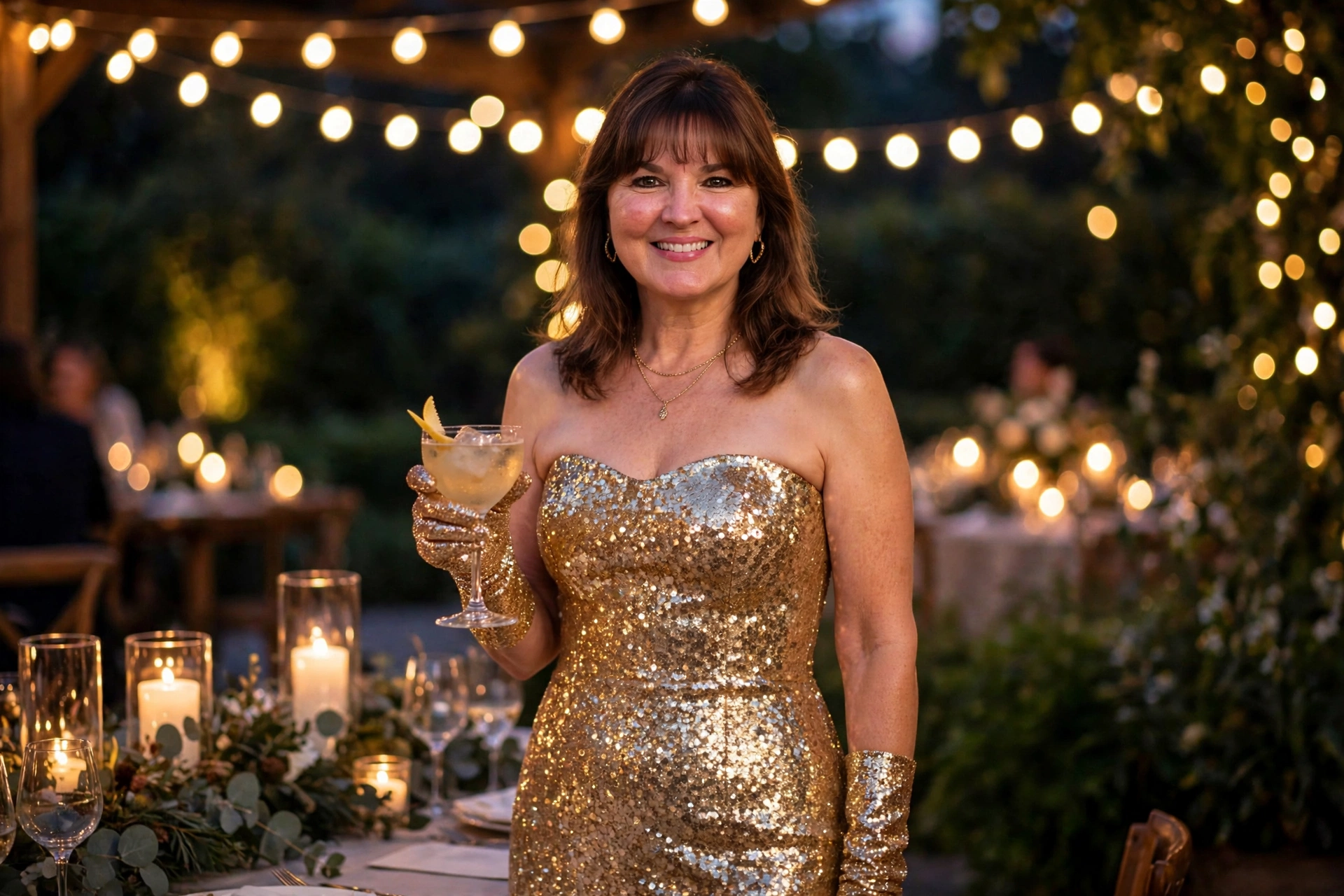
Silver and Cool Metallics
Silver is the metallic of winter itself, ice, moonlight, tinsel. A silver dress or top at a Christmas party reads as festive instantly, with no traditional color anywhere in sight. Rose gold sits nearby: softer than silver, warmer than champagne, and flattering on a wide range of skin tones.
Like all metallics, silver works best as a single statement: a silver sequin top with black trousers, a silver pleated skirt with a navy knit, or silver accessories (clutch, heels, earrings) lifting an all-black or all-navy outfit. Head-to-toe silver is a lot of shine for most rooms; let one piece carry it.
Silver pairs with black, navy, white, icy blue, and charcoal. It is the natural accessory metal for every cool-toned color on this list, if you are wearing icy blue or lavender, silver jewelry completes the story without adding another color to manage.
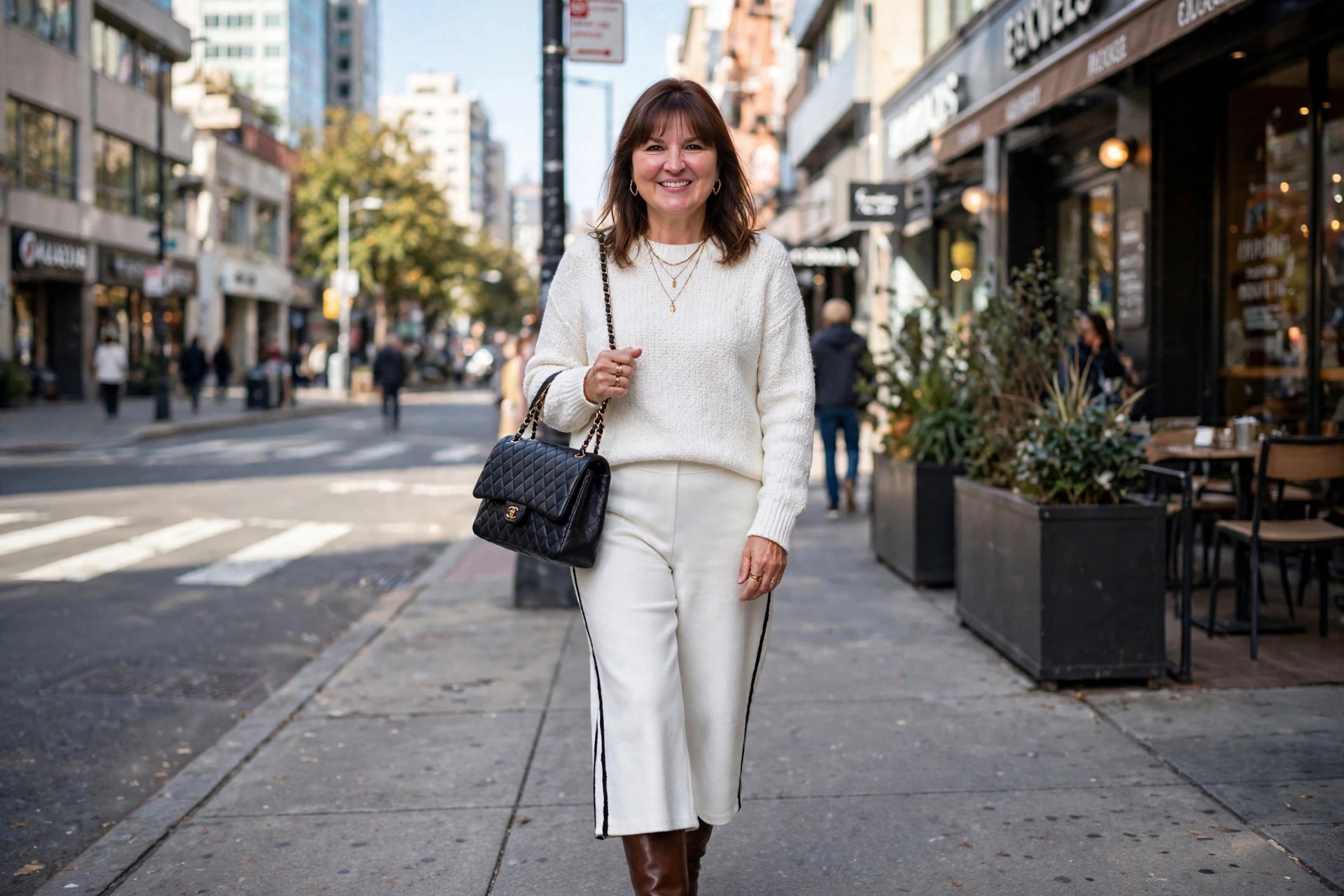
White Monochrome: The Winter White Christmas
An all-white or cream outfit is one of the chicest non-traditional Christmas choices there is. White reads as celebration, weddings, new beginnings, fresh snow, and in December it stands out precisely because everyone else is in dark festive colors. It works for church services, dinners, and New Year’s Eve parties alike.
The technique is layering tones and textures: winter white trousers with a cream knit and an ivory coat, or a white satin dress with cream accessories. A single flat shade of white can look stark; mixing white, cream, and ivory adds depth, and texture, lace, cable knit, faux fur, embroidery, keeps the outfit from looking plain.
Two practical notes: choose fabrics with enough weight that nothing is see-through under event lighting, and be strategic about seating near red wine. Otherwise, white monochrome is nearly foolproof, it photographs beautifully and needs almost no accessories.
Black Christmas: All Black, Done Festively
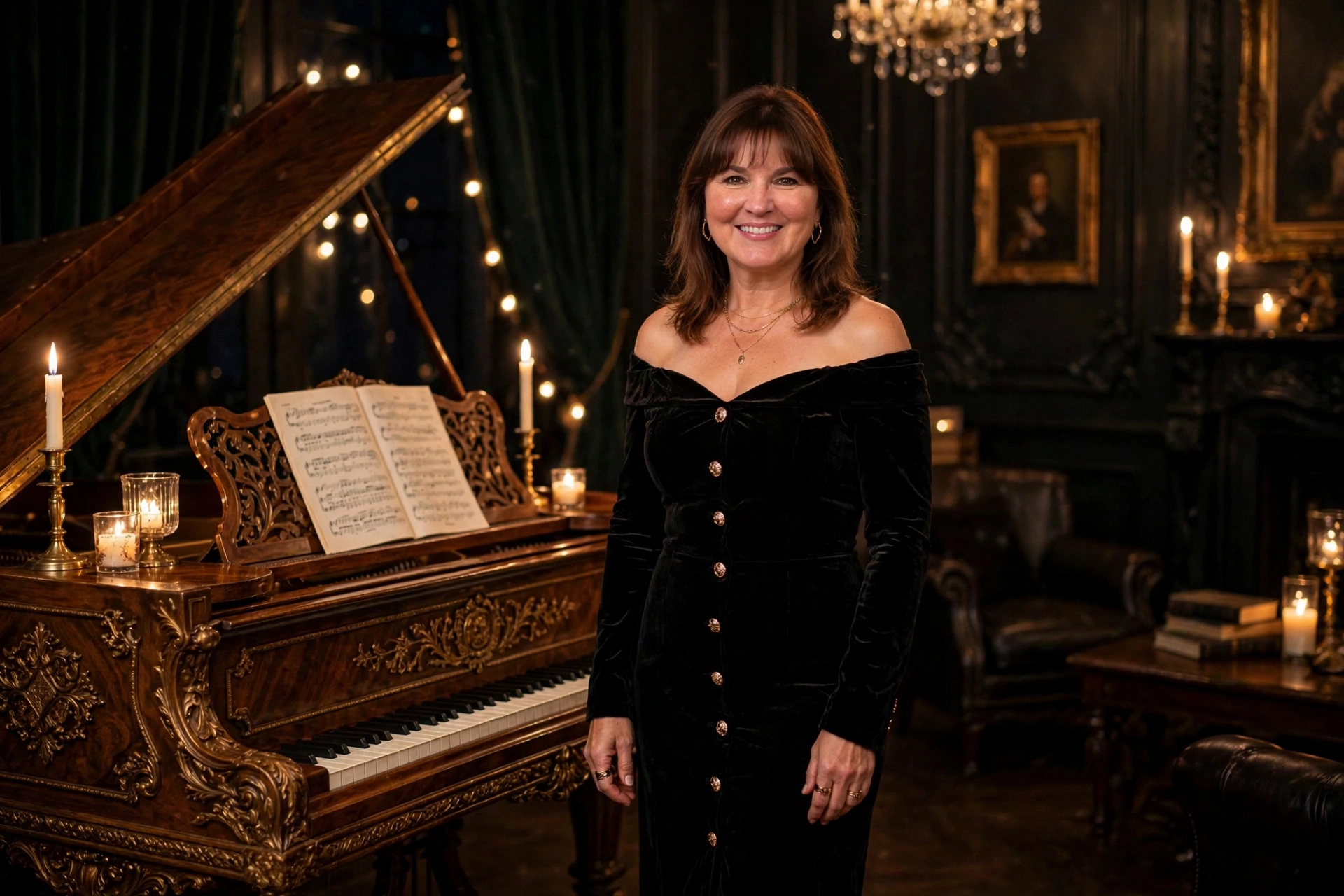
Black is the most debated non-traditional Christmas color, and the answer is simple: yes, black works at Christmas, when the fabric does the festive work. A black cotton dress reads as everyday; a black velvet dress, a black sequin top, or black lace reads as an event.
The formula is texture plus one shine element: black velvet trousers with a black satin blouse, an all-black outfit with silver or crystal earrings, or a black lace dress with metallic heels. The shine element is what signals “celebration”, without it, all-black can disappear into the background of a dimly lit party.
Black is also the hardest-working base for traditional accents. Gold earrings, a red lip, emerald shoes, or a tartan scarf each turn an all-black outfit into a Christmas outfit in seconds, which makes black the most versatile non-traditional choice for anyone attending many different December events. Guidance on building rewearable outfits around a few strong pieces is in why you always have nothing to wear.
Deep Jewel Tones Beyond Red and Green
Sapphire, plum, amethyst, teal, and deep navy are festive without being Christmas-cliché. They share red and green’s richness and depth, which is why they read as “holiday”, but nobody associates them with decorations, so the outfit feels sophisticated rather than themed.
Velvet is the ideal fabric for jewel tones: a sapphire velvet dress, plum velvet trousers, or a teal satin blouse each carry enough visual weight to anchor an entire outfit. Pair jewel tones with black, navy, cream, or metallics; avoid pairing two jewel tones together unless one is clearly dominant.
Jewel tones are the safest non-traditional choice for formal and office events, they are conservative enough for a work party and rich enough for an evening party. For dinner-specific styling in these shades, the Christmas dinner outfits guide covers dress codes and all-evening comfort in detail.
Mixing Non-Traditional Colors With Traditional Accents
You do not have to choose between a non-traditional palette and the Christmas spirit, the most interesting holiday outfits do both. The rule is proportion: let the non-traditional color dominate, and let the traditional accent appear once.
Ideas that work: an icy blue dress with gold earrings; an all-black outfit with a red lip; a champagne skirt with emerald shoes; a white monochrome outfit with a tartan scarf; a blush dress with a green velvet clutch. In each case, the accent is small, deliberate, and unmistakably seasonal, it tells the room the non-traditional choice was intentional.
What does not work is splitting the outfit evenly, half traditional, half alternative reads as indecision. Commit to the non-traditional base, then add the accent like punctuation.
Choosing Non-Traditional Colors for Your Skin Tone
Color advice works best as guidance, not rules, but undertones are a useful starting point. Cool undertones (veins look blue, silver jewelry flatters) tend to glow in icy blue, silver, lavender, and jewel tones like sapphire and plum. Warm undertones (veins look green, gold jewelry flatters) tend to glow in champagne, blush, bronze, and warm metallics.
Two things matter more than undertone matching: contrast and fabric. High-contrast pairings (a pale color near the face with dark hair, or a deep color against fair skin) create definition that flatters almost everyone. And rich fabric, velvet, satin, metallics, reflects light onto the face, which is inherently flattering regardless of the exact shade.
If you are unsure, test the color in daylight and in warm indoor light before the event. Colors shift dramatically between the two, and December events are lit warmly, a shade that looks perfect in a store mirror can read differently under party lighting. More on choosing colors that work across a wardrobe is in the dinner outfits for women guide.
Budget and Fit Notes for Color-First Dressing
Building a non-traditional Christmas palette does not require a new wardrobe. The most budget-friendly approach is the accent strategy: keep your existing neutral base (black trousers, a cream sweater, a navy dress) and add the color through one piece, a blush blouse, a champagne scarf, silver earrings. One strong color piece reworn across December costs less than a full festive outfit and gets more wear.
Fit matters more when the color is the statement. A bold or unusual color draws the eye, so the garment’s fit gets noticed too, check shoulders, waistlines, and hemlines in a mirror before committing. Matte fabrics in unusual colors are less forgiving than shine fabrics, which drape and reflect light; if the fit is not perfect, choose the color in velvet, satin, or a metallic finish.
For comfort-first fit guidance through long holiday events, seated waistlines, shoe survival, layering, the plus size dinner outfits for ladies fit principles and the winter dinner outfits layering logic transfer directly to any color palette.
FAQ
Can you wear black to a Christmas party?
Yes. Black is a classic, versatile choice for Christmas parties, the key is making it feel festive through fabric and detail. Choose velvet, satin, sequins, or lace rather than plain cotton, and add one shine element such as silver earrings, a metallic clutch, or crystal heels. A red lip or gold accessories also anchor an all-black outfit to the season instantly.
Can you wear pink for Christmas?
Yes, there are no rules against it. Blush pink and dusty rose are the most elegant Christmas pinks, wear them as a single piece with cream, grey, or champagne so the look stays sophisticated. Hot pink works for evening parties when balanced with black. The one combination to avoid is pink competing directly with traditional red, which can clash.
Can you wear white to Christmas?
Yes, white monochrome is one of the chicest non-traditional Christmas choices. Layer white, cream, and ivory with rich textures like lace, cable knit, or satin so the outfit has depth. Choose fabrics with enough weight to avoid see-through issues under event lighting, and it works for church services, dinners, and New Year’s Eve parties alike.
What colors are best to wear to a Christmas party?
Beyond traditional red, green, and gold, the best Christmas party colors are deep jewel tones (sapphire, plum, burgundy), metallics (silver, champagne, rose gold), white monochrome, all-black with festive texture, and icy pastels like blue and lavender. Choose the color that suits the event’s formality and your skin tone, keep it to one statement color per outfit, and let rich fabric do the festive work.
Conclusion
Non-traditional Christmas colors work because festivity was never really about red and green, it is about richness, shine, and intention. Icy blue, blush pink, lavender, champagne, white, black, and deep jewel tones each bring their own mood to December, and each becomes unmistakably festive in the right fabric with the right styling. Pick the palette that feels like you, commit to it, and let one traditional accent tie it to the season.

Rameen Awan is the founder and editor of Outfit Algorithm, where she breaks down outfit formulas, dress codes, and styling systems for real life. Her guides focus on practical details other sites skip: fabric behavior, fit for different body types, and what actually works when you are getting dressed in a hurry.