
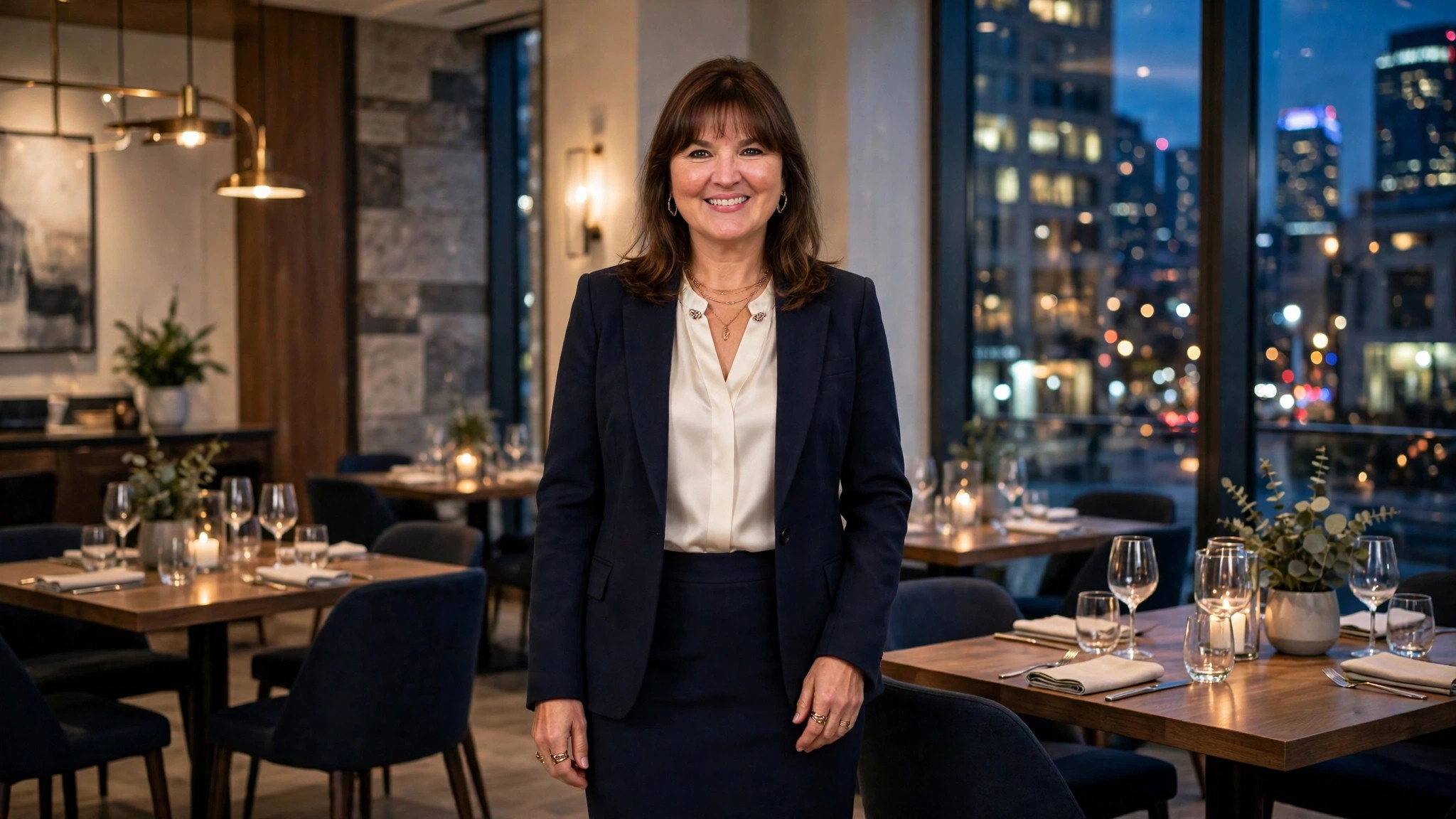
A business dinner outfit sits one professional notch above your daytime work look: polished enough to command authority at the table, comfortable enough to sit, eat, and network for two hours. Business dinner outfits for women usually mean tailored dresses, sharp blazers with trousers or skirts, and refined closed-toe shoes in navy, black, charcoal, or rich neutrals. If you remember nothing else, remember this: dress for the most senior person at the table, keep accessories quiet, and choose fabrics that survive a seated evening without wrinkling.
For professional dining etiquette, read Indeed’s business dinner etiquette guide.

Key Takeaways
- The one-notch rule: Business dinner dressing means going one step more polished than your everyday office outfit, not switching into cocktail attire.
- Match the industry, not just the invitation: Finance and law dinners call for structured suiting; creative and tech dinners allow softer tailoring and richer color.
- Sit-test everything: You will spend most of the evening seated, so waistbands, skirt length, and necklines must work from a chair.
- Quiet accessories win: One refined piece of jewelry and a small structured bag read as confident; loud accessories distract.
- Wrinkle-resistant fabrics are non-negotiable: Crepe, ponte, wool blends, and quality knits keep you looking pressed from appetizer to dessert.
What Is Business Dinner Dressing?
Business dinner dressing is the practice of dressing one professional notch above your daytime work outfit for evening meals with clients, colleagues, or industry contacts. It borrows structure from office wear and polish from evening wear, but it is neither. The goal is authority dressing: clothing that signals competence and respect for the occasion while staying comfortable through a long seated meal. This is what separates it from general evening style. If the guest list is friends and family rather than colleagues, our general dinner outfit guide covers that side of the closet.
How Formal Should Your Business Dinner Outfit Be?
This is the question that causes the most anxiety, and the honest answer is that it depends on two things: your industry and the venue. A client dinner at a steakhouse with a law firm partner is a different event from a team dinner at a neighborhood bistro with a startup crew. Use the formality tiers below as a decoder. When in doubt, dress one tier up. You can always remove a blazer and drape it over your chair if you feel overdressed; you cannot add polish you did not bring.
| Formality tier | Best for | Outfit formula | Shoes | Skip |
|---|---|---|---|---|
| Boardroom formal | Finance, law, first meeting with a new client | Tailored suit or sheath dress with a structured blazer | Closed-toe pumps | Denim of any kind, open necklines |
| Polished business casual | Consulting, corporate team dinners, conference dinners | Silk or quality blouse with tailored trousers and a blazer | Loafers or low block heels | Cocktail dresses, loud prints |
| Smart creative | Marketing, media, design, fashion-adjacent industries | Relaxed suit or midi dress in a richer color, softer tailoring | Elegant flats or ankle boots | Stiff corporate suiting that feels like a costume |
| Tech and startup | Product teams, casual offices, founder dinners | Dark tailored trousers with a fine-knit top and an unstructured blazer | Polished flats or minimal leather shoes | Hoodies, sneakers, anything gym-adjacent |
| Travel and conference | Out-of-town dinners, networking events after a conference day | Crease-resistant midi dress with a wrap or light blazer | Comfortable low heels you can walk in | Anything you have not test-sat in for two hours |
| Celebratory work dinner | Year-end team dinners, promotion celebrations, award nights | Festive-but-professional dress in a jewel tone with refined jewelry | Dressy flats or heels | Full cocktail attire with bare shoulders or high slits |

12 Business Dinner Outfit Formulas That Always Work
Each formula below is a complete outfit, not a single item. Pick the one that matches your tier, then adjust the color and accessories to your taste.
1. The navy sheath with a structured blazer. A knee-length sheath dress in navy with a matching or black blazer is the closest thing to a universal business dinner uniform. Navy reads as authoritative without the severity of head-to-toe black, and the sheath silhouette stays neat when you sit.
2. Black trousers, silk blouse, and blazer. Tailored black trousers with a silk or satin-finish blouse and a sharp blazer work for nearly every tier except the most creative. Tuck the blouse fully and check the neckline in a mirror from a seated angle.
3. Charcoal pencil skirt with a fine-knit sweater. A charcoal pencil skirt paired with a fine-gauge crewneck or mock-neck sweater looks modern and approachable. Add a blazer for conservative rooms or skip it for relaxed ones. The knit softens the look while the skirt keeps it professional.
4. The dark tailored jumpsuit with a blazer. A well-fitted jumpsuit in black, navy, or deep green, worn under an open blazer, is dinner-appropriate and comfortable for long seating. Choose a tailored cut with a defined waist, not a slouchy weekend style, and keep the neckline modest.
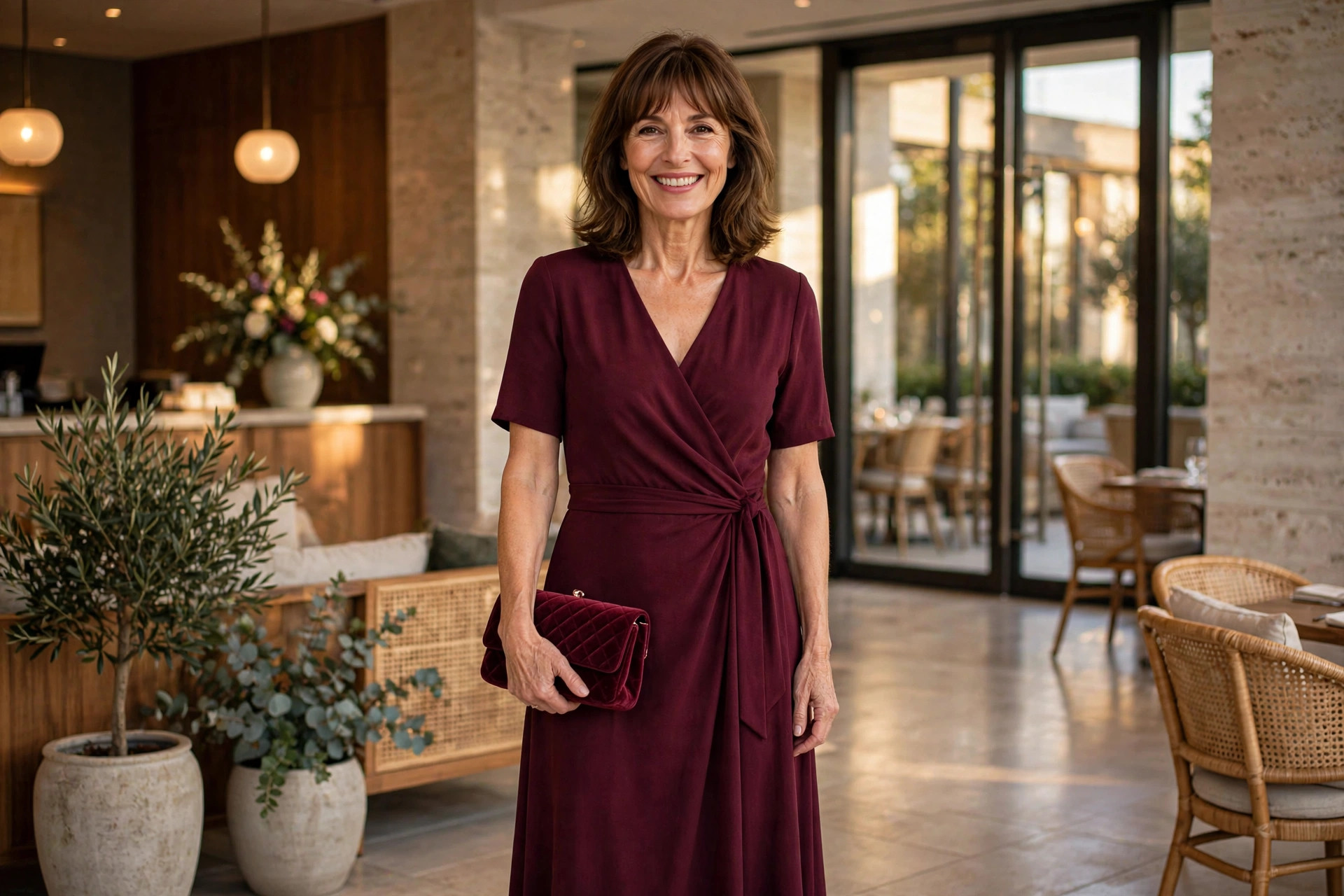
5. A wrap midi dress in a deep jewel tone. Wrap dresses in burgundy, forest green, or deep teal flatter many body types because the waist is adjustable. The V-neckline is professional when it sits at or above the collarbone. This is a strong choice for celebratory work dinners.
6. Cream blouse with wide-leg trousers. Wide-leg trousers in black, navy, or camel with an ivory or cream blouse create a long, elegant line. A blazer over the shoulders adds structure for formal rooms. This pairing works especially well for taller frames and for anyone who finds pencil skirts uncomfortable to sit in.
7. The black column dress with quiet jewelry. A simple black column or shift dress, knee-length or midi, with one refined necklace or stud earrings, is minimal authority dressing. The simplicity is the point: nothing to adjust, nothing to distract.
8. A subtle-pattern suit in the skirt version. A suit in a faint pinstripe or micro-check, worn with the skirt rather than the trouser, reads as confident and feminine without sacrificing formality. Keep the blouse underneath solid so the pattern stays the focal point.
9. Burgundy midi with a neutral blazer. A burgundy or oxblood midi dress under a black or camel blazer brings warmth and personality while staying firmly professional. This is a good middle ground when you want to look memorable but not flashy.
10. An ivory shell with a dark A-line skirt. An ivory sleeveless shell with a blazer over it, paired with a dark A-line skirt that hits at or below the knee, is a classic for a reason. The A-line gives seated comfort that a pencil skirt does not, and the blazer handles the sleeveless concern.
11. A textured jacket with dark trousers. A tweed-style or subtly textured jacket over a simple dark top and tailored trousers adds visual interest without pattern overload. Texture photographs well and reads as expensive even in budget-friendly fabrics.
12. The relaxed suit in a warm neutral. For creative industries, a softly tailored suit in camel, taupe, or warm gray with a simple shell underneath hits the smart-creative tier perfectly. It says you understand the room without defaulting to corporate black.
How to Go From Desk to Dinner Without a Full Change
Most business dinners follow a workday, so the smartest strategy is building a day outfit that converts. Start with a dinner-ready base, such as tailored trousers and a quality blouse, then make three small swaps before you leave.
First, trade your work tote for a small structured bag or clutch. A large bag at a dinner table is cumbersome and visually noisy. Second, change your shoes if you can: even switching from daytime flats to a slightly dressier pair shifts the whole outfit into the evening. Third, add one considered accessory, such as refined earrings or a simple bracelet, and remove your blazer or swap it for a dressier layer.
This desk-to-dinner logic is different from planning a full office day wardrobe. Our guide to office daywear focuses on daytime polish; here the goal is evening authority with minimal effort. Keep a small kit at your desk or in your car: a clutch, a pair of dressier shoes, and one piece of jewelry. That kit covers most conversions in under five minutes.
Fabrics, Fit, and Colors That Work at the Table
Fabric matters more at dinner than at the office because you will be seated, photographed, and observed up close for hours. Crepe, ponte, wool blends, and quality jersey resist wrinkles and drape cleanly when you sit. Silk and satin blouses look beautiful but show wrinkles and water spots, so layer a blazer over them or choose a matte finish.
Fit for sitting, not standing. This is the fit insight most guides skip. Skirts that look knee-length standing can ride up significantly when seated, so choose midi lengths or test the skirt in a chair before the event. Waistbands should not dig in after a meal; a slightly higher rise or an elastic-backed waistband is a practical choice, not a compromise. Sleeves should stay put when you reach across the table, and necklines should pass the lean-forward test.
Color with intention. Navy, black, charcoal, burgundy, forest green, ivory, and taupe are the core business dinner palette because they read as competent across industries. Muted patterns such as pinstripes, micro-checks, and subtle textures add interest without noise. Very bright or neon shades tend to dominate a table visually and are better saved for social evenings.
For readers who want deeper guidance on dressing for their specific shape, our fit-first style guide covers proportions, waist definition, and fabric choices in detail, and the same principles apply to professional settings.
Seasonal Adjustments Without Losing Polish
Cold weather is not an excuse for a bulky coat at the table, but it does change the formula. In winter, swap the light blazer for a structured wool blazer or a tailored long coat you remove at the door, and choose closed-toe shoes or elegant boots. Our winter dinner outfit ideas go deeper on layering that stays sleek indoors.
In fall, richer textures like wool crepe and deeper tones like rust and olive work beautifully for business dinners. See our fall dinner looks for seasonal color pairings that stay professional. In warmer months, sleeveless shells under blazers and breathable crepe keep you cool without sacrificing coverage.
What Not to Wear to a Business Dinner
A short list of common mistakes saves more anxiety than any outfit formula:
- Jeans, even dark ones, unless you have confirmed that the specific company culture treats them as standard. Most business dinners expect trousers, skirts, or dresses.
- Cocktail dresses with bare shoulders, high slits, or low necklines. The event is professional first; save party dressing for actual parties.
- Sheer fabrics without proper layering. If you need a camisole to make it appropriate, wear the camisole or choose another top.
- Sneakers, flip-flops, or very casual sandals. Footwear sets the formality floor for the whole outfit.
- Loud prints or head-to-toe bright color. One person in neon at a business table becomes the story instead of the conversation.
- Heavy fragrance or jangling jewelry. Scent and sound travel across a small table; keep both subtle.
If your closet feels like it has nothing that fits these rules, the problem is usually organization rather than inventory. Our guide on why you feel like you have nothing to wear walks through a closet audit that often surfaces dinner-ready pieces you already own.

FAQs About Business Dinner Outfits
What should a woman wear to a business dinner?
A tailored dress, a blouse with dress trousers or a knee-length skirt, or a pantsuit in navy, black, charcoal, or another neutral is the standard answer. Choose closed-toe shoes, keep jewelry understated, and match your formality level to the industry and venue. When the dress code is unclear, dressing one notch above your normal office outfit is the safest choice.
Can I wear jeans to a business dinner?
In most cases, no. Jeans are generally not considered appropriate for business dinners, even in offices where denim is normal daywear. The exception is a confirmed casual company culture where leadership wears denim to the same event. If you have any doubt, choose tailored trousers instead.
What should I wear to a formal business dinner?
For a formal business dinner, wear a tailored suit or a sophisticated dress in a neutral color, well-fitted and conservative in cut. Closed-toe pumps or elegant flats complete the look. Avoid bright colors, revealing cuts, and statement accessories; at the formal tier, restraint is what signals seniority.
What accessories are appropriate for a business dinner?
Simple jewelry, a structured handbag or small clutch, and optionally a scarf or wrap are the right accessories for a business dinner. Choose pieces that complement the outfit without drawing attention away from you. Small earrings, a classic watch, and one refined necklace or bracelet are enough; skip anything oversized, noisy, or flashy.
Conclusion
Business dinner outfits reward preparation, not expense. One notch above office wear, matched to the industry, built from wrinkle-resistant fabrics, and sit-tested before the evening: that formula handles client dinners, team celebrations, and conference networking alike. Build two or three reliable combinations from the formulas above, keep a desk-to-dinner kit ready, and the invitation will stop causing anxiety.

Rameen Awan is the founder and editor of Outfit Algorithm, where she breaks down outfit formulas, dress codes, and styling systems for real life. Her guides focus on practical details other sites skip: fabric behavior, fit for different body types, and what actually works when you are getting dressed in a hurry.