
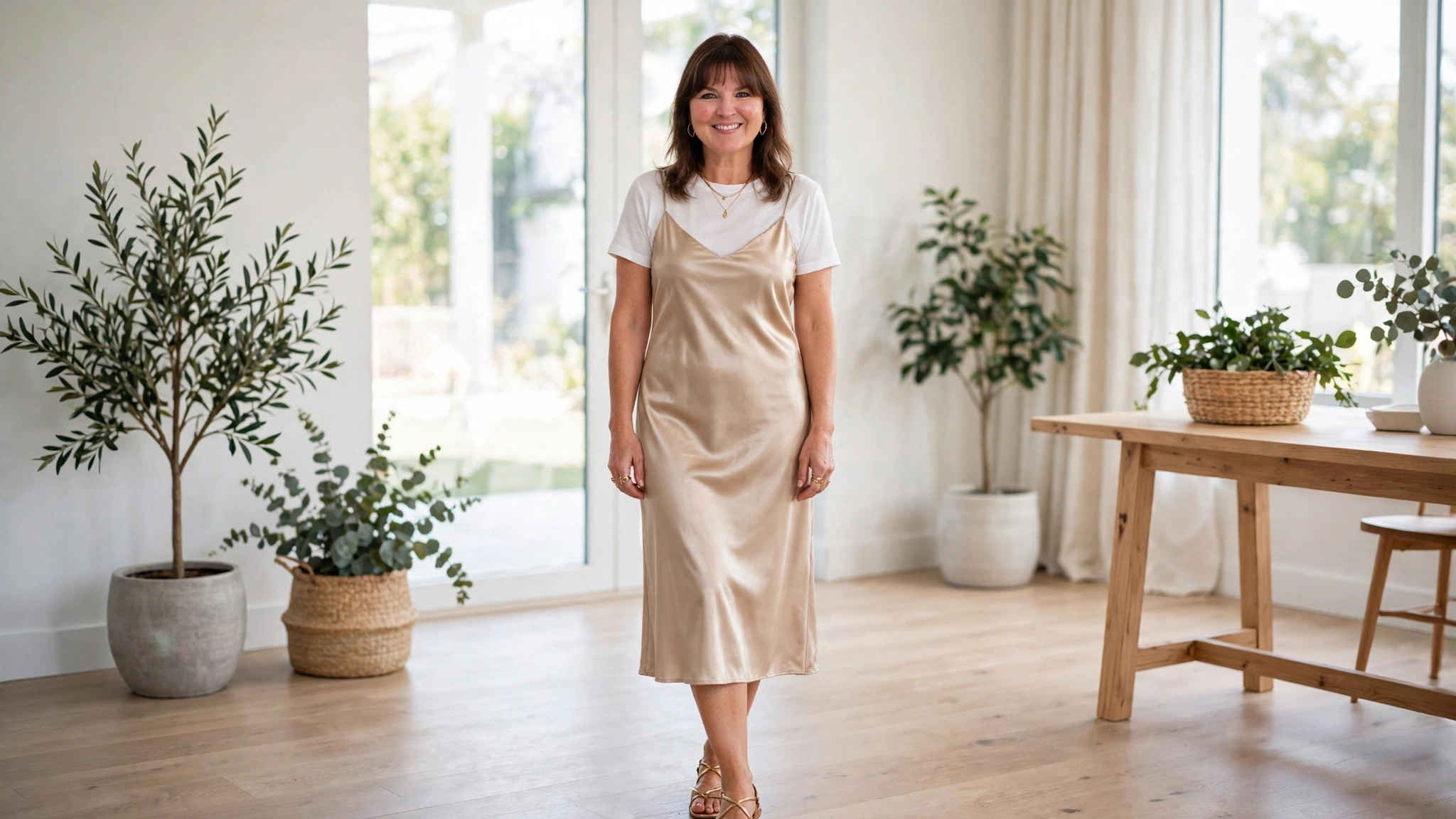
A slip dress is one of the simplest garments to own and one of the easiest to get wrong. Learning how to style a slip dress comes down to three decisions, not twenty outfits: what you put under it, what you put over it, and what goes on your feet. Get those three right and the same dress works for a workday, a dinner date, and a winter weekend without ever reading as lingerie.
For slip dress styling, check Vogue’s slip dress guide.
A slip dress is a bias-cut, thin-strapped dress with minimal internal structure, originally derived from the undergarment it is named after. The bias cut is what makes it drape and skim rather than cling, and it is also what makes layering choices matter more here than with a structured dress. This guide gives you a repeatable system: under-layering for modesty and warmth, over-layering for structure and season, shoe formulas that set the tone, and a checklist for avoiding the lingerie-as-outerwear pitfall.
Key Takeaways
- A slip dress becomes an outfit through three decisions: under-layer, over-layer, and shoes.
- A fitted tee or turtleneck underneath instantly makes a slip dress daytime-appropriate, while a blazer or cardigan over the top adds structure and seasonal coverage.
- Shoes control the register: sneakers and flats keep it casual, loafers and boots make it polished, heels make it evening.
- The lingerie pitfall is fixed with three checks: fabric opacity, visible lingerie lines, and fabric weight.
- One slip dress can cover office, casual, dinner, and winter looks if you change the layers instead of the dress.
What Is a Slip Dress, Exactly?
A slip dress is a slim, bias-cut dress with narrow straps and little to no internal structure, cut on the diagonal grain of the fabric so it falls and moves with the body. Most are midi length, though minis and maxis exist, and common fabrics are satin, silk, and silk-like synthetics. Necklines vary: cowl, V, scoop, and square are the usual four.
The bias cut is the whole personality of the garment. It drapes rather than shapes, which is why a slip dress skims the body instead of squeezing it, and why it shows every wrinkle, seam, and lingerie line beneath it. That sensitivity is the reason styling a slip dress is really a layering discipline. A structured dress forgives your base layer; a slip dress broadcasts it.
This matters for choosing your dress, too. Heavier satins read as outerwear more easily than featherweight charmeuse. Darker colors and prints hide lingerie lines and wrinkles better than pale solids. And a slightly looser cut is easier to layer over a tee or turtleneck than a second-skin fit. None of this means one body type suits slip dresses better than another; it means the fabric and cut do the work, and picking the right fabric is step zero of styling.

The Styling System: Three Decisions, Not Twenty Outfits
Stop thinking of slip-dress styling as memorizing outfits. Think of it as three decisions you make each time you wear the dress, in this order.
Decision 1: the under-layer. What goes beneath the dress, or directly under it on your body. This controls modesty, warmth, and whether the look reads as day or night.
Decision 2: the over-layer. What goes on top of the dress. This controls structure, coverage, and seasonal suitability. It is the single biggest lever for moving a slip dress from evening to work-appropriate.
Decision 3: the shoes. Shoes set the register of the whole look more than any other single item with this garment. The same dress with sneakers reads as weekend; with pointed flats reads as office; with heeled sandals reads as dinner.
Run through the three decisions and you have an outfit. Change one decision and you have a different outfit. The rest of this guide fills in each decision with the combinations that actually work.
What to Wear Under a Slip Dress
The under-layer is the decision most people skip, and it is the one that fixes two problems at once: the lingerie look and cold weather. Here are the under-layers that work, from most casual to most polished.
A fitted plain tee. This is the fastest way to make a slip dress read as daywear. The tee should be slim through the torso so it does not bunch under the bias cut; a crew or boat neckline keeps the neckline of the dress clean. White or black tees are the workhorses, and a striped tee adds a casual pattern that plays well against a solid dress.
A fitted turtleneck. The cold-weather version of the tee trick, and the most polished under-layer. A thin knit turtleneck in black, cream, or gray turns a slip dress into a winter outfit in one move, and it is the under-layer that makes the dress office-adjacent when paired with a blazer. Keep the knit fine rather than chunky so the dress still drapes.
A crisp button-up shirt. Worn underneath with the collar and cuffs showing, a slim button-up gives a preppy, intentional look that works for creative workplaces and daytime events. The shirt must be slim-fitting; billowy fabric ruins the line of the dress. This is also a good answer when the question is what to wear under a slip dress for modesty, since the shirt adds coverage at the neckline and arms.
A smooth bodysuit or fitted camisole. For evenings when you want the slip dress worn alone as the visible layer, the under-layer becomes invisible: seamless underwear and a strapless or adhesive bra that keep the straps and neckline clean. Many slip dresses have thin straps or low backs, so standard bra straps are the most common giveaway. Seamless, nude-toned pieces disappear under most satins; test yours in daylight before the event.
A thermal base layer. For genuine winter wear, a thin thermal top under the dress plus tights below does the warming work without bulk. The thermal should be close-fitting and matte so it does not fight the sheen of the satin. This is how the same dress survives a cold snap without a costume change.
If your closet feels like it has a dress with potential and nothing to put with it, that is usually an under-layer problem, and the logic in why your closet feels like it has nothing to wear applies here too: one dress becomes five outfits once the layering pieces exist.

What to Wear Over a Slip Dress
If the under-layer controls the reading, the over-layer controls the structure. A slip dress has almost no structure of its own, so the jacket or knit you put over it becomes the architecture of the outfit. Work through these from lightest to heaviest.
A tailored blazer. The single most useful over-layer for a slip dress. A blazer adds shoulders, a lapel line, and instant polish, which is exactly what the soft bias cut lacks. Leave it open for a relaxed line or button it for a sharper one. Black, navy, beige, and gray blazers are the easy starting points. This combination is the backbone of wearing a slip dress to work, and it pairs naturally with work outfits built around blazers when you need the full office formula.
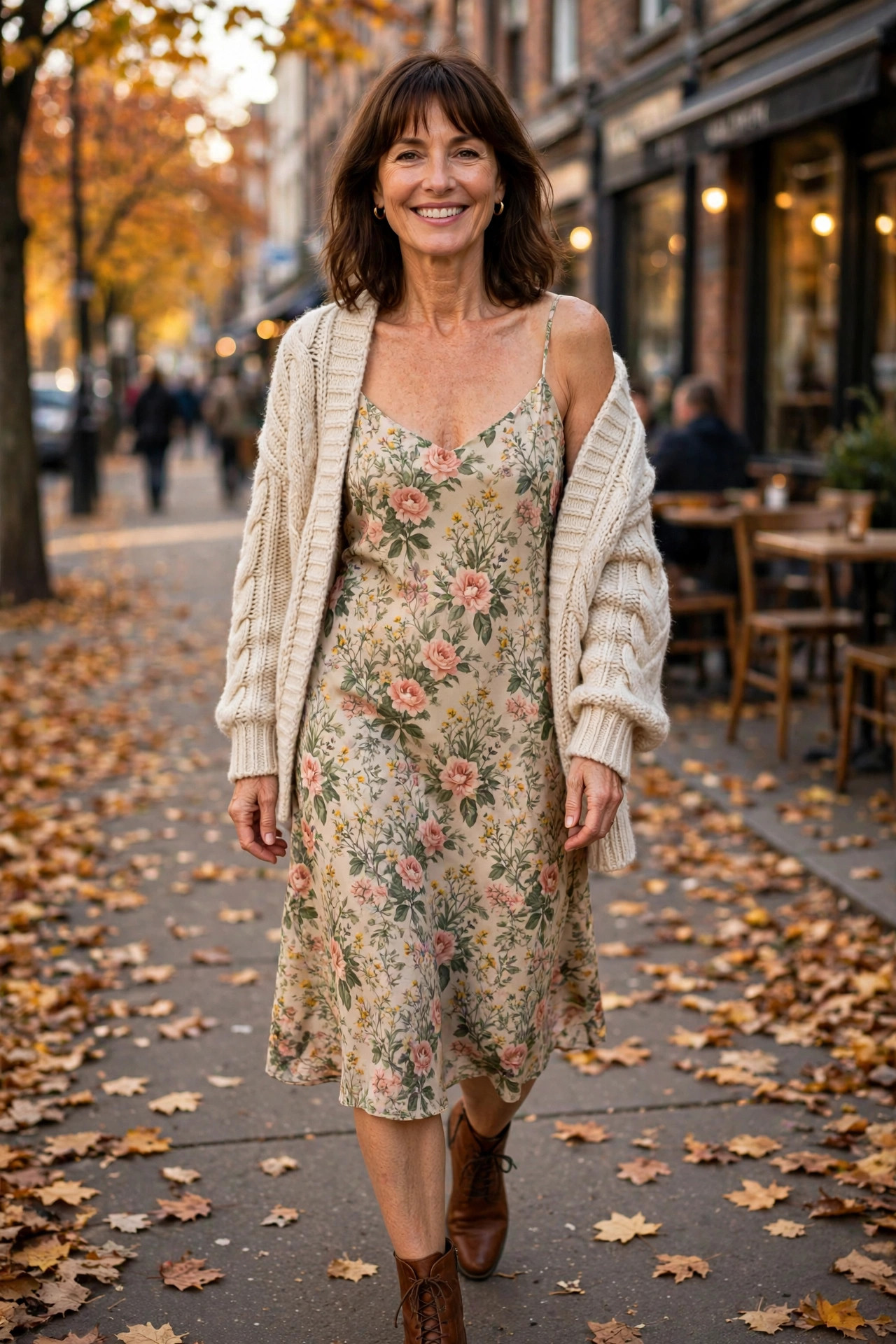
A cardigan. The soft-structure option. A cardigan keeps the outfit feminine and approachable while adding warmth and coverage, and it is more forgiving than a blazer when the dress underneath is a clingy fabric. Cropped cardigans keep the waist defined; long, open cardigans create a vertical line that lengthens the silhouette. For more cold-weather knit pairings, the fall layering ideas roundup has combinations that transfer directly to slip dresses.
A denim jacket. The casual classic. Denim’s matte, sturdy texture is the perfect counterweight to satin sheen, and a slightly oversized or cropped denim jacket over a midi slip dress is one of the most reliable daytime formulas there is. This is the over-layer that most firmly pushes the dress into weekend territory.
A leather or faux-leather jacket. The edge option. A moto or cropped leather jacket toughens the softness of the slip dress and creates the texture contrast that makes the outfit look styled rather than accidental. It works best with darker dresses and boots, and it is a strong choice for evening events that are not formal.
A long coat. For winter, a wool coat, structured trench, or long puffer over the full layering stack (thermal under, dress, turtleneck) is what makes the system genuinely cold-proof. The coat should be long enough to cover most of the dress so the proportions stay intentional. The cold-weather outfit formulas collection covers coat pairings that work over slip dresses too.
An oversized shirt worn open. For a relaxed, off-duty look, an oversized button-up or flannel worn open over the dress like a light jacket, sleeves rolled, reads as effortless. Knotting it at the waist is an option when the dress is loose and you want definition, though with a bias cut it is usually better to leave the dress’s drape alone.
What Shoes Go With a Slip Dress
Shoes are the fastest register-shifter in this system. Keep the dress and layers constant, change the shoes, and watch the outfit change meaning.
Sneakers. Clean, minimal sneakers with a slip dress say the outfit is deliberate, not lazy. This only works when the sneakers are sleek rather than gym-worn; white or tonal pairs keep it crisp. Sneakers plus a tee under the dress is the definitive casual formula.
Ballet flats and pointed flats. The polished-casual middle ground. Flats keep the femininity of the dress while grounding it for daytime, errands, and smart-casual settings. Pointed toes add a sharper line that works well with a blazer over the dress.
Loafers and mules. Loafers bring a menswear note that balances the softness of the slip dress beautifully, and they are one of the best work-appropriate choices. Mules, flat or low-heeled, do similar work with a slightly dressier feel.
Ankle and knee-high boots. Boots add weight and structure, which is exactly what a floaty dress needs in transitional and cold weather. Ankle boots with a midi slip dress are a classic fall pairing; knee-high boots under the dress handle winter. A heel on the boot dresses the combination up; a flat boot keeps it daytime.
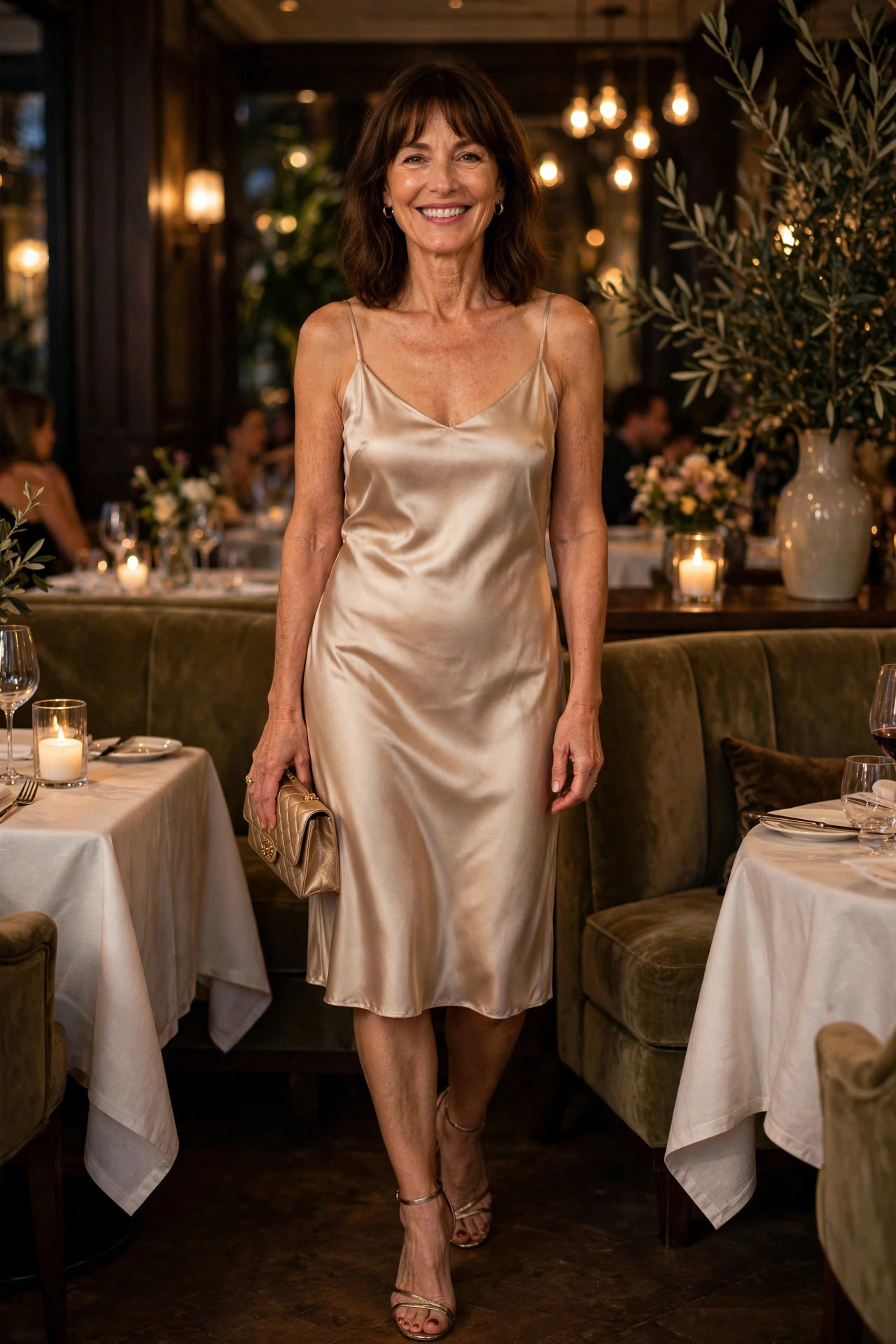
Heeled sandals and pumps. The evening answer. Strappy heeled sandals are the traditional partner for a slip dress worn alone at night, and pointed pumps do the same work with more coverage. Keep the heel in proportion to the occasion: a block heel for a dinner that involves walking, a stiletto only when the evening genuinely calls for it.
The rule of thumb: the more delicate the dress looks on its own, the more grounding the shoe should be for daytime, and the more delicate the shoe can be for evening. When an outfit feels off, the shoes are the first thing to change before you touch the layers.
The Occasion Decoder: Slip Dress Formulas at a Glance
Use this table as the quick reference. Pick your occasion, read across for the under-layer, over-layer, and shoe, and you have the full system in one line.
| Occasion | Under-layer | Over-layer | Shoes | Why it works |
|---|---|---|---|---|
| Office workday | Fitted turtleneck or fine knit | Tailored blazer, worn open | Loafers or low block heels | Structure from the blazer and shoe balances the soft bias cut |
| Casual daytime | Slim plain tee | Denim jacket or overshirt | Clean minimal sneakers | Matte layers and sporty shoes shift the dress firmly into daywear |
| Dinner date | Seamless nude undergarments | None, or a cropped jacket | Strappy heels or pointed flats | Minimal layers let the drape and sheen carry the evening look |
| Wedding guest | High-neck blouse or bodysuit | Wrap, shawl, or soft jacket for the ceremony | Block heels or dressy sandals | Added coverage keeps it appropriate while the dress stays elegant |
| Winter cold snap | Thermal base layer plus tights | Long wool coat over the full stack | Knee-high boots | Insulation without bulk; the coat keeps proportions intentional |
| Evening event | Smooth shapewear, strapless bra | Leather jacket or statement coat | Heeled sandals or pumps | Texture contrast reads as styled and formal rather than delicate |
For the dinner-date row and beyond, the dinner outfit ideas hub has full looks built around evening dresses that pair well with these formulas.
How to Avoid the Lingerie-as-Outerwear Pitfall
This is the fear that stops most people from wearing a slip dress, and it is fixable with a checklist rather than guesswork. A slip dress reads as lingerie when three things go wrong at once: the fabric is too sheer or flimsy, lingerie lines show through, and nothing in the outfit provides contrast. Fix the three and the problem disappears.
Check the opacity in daylight. Before you commit to an outfit, look at the dress in natural light, not just bedroom lighting. Hold it up to a window: if you can clearly see through it, it needs an opaque under-layer (a slip underneath, a bodysuit, or a tee) or it stays a night-only dress. Darker colors and prints are more forgiving than pale solids here.
Eliminate visible lingerie lines. The bias cut shows every seam. Seamless underwear, a strapless or adhesive bra for thin-strapped styles, and smooth shapewear for clingy fabrics are the standard fixes. This is not about a particular body; it is about the physics of a thin, draped fabric.
Add one contrasting element. Lingerie is monochrome and delicate, so one contrasting piece breaks the association instantly: a structured blazer, matte denim, chunky boots, or sneakers. This is why the over-layer and shoe decisions matter as much as the dress itself. A slip dress with a blazer and loafers cannot read as lingerie because the outfit has too much structure; a slip dress alone with delicate heels is where the risk lives.
Mind the details. Lace trim, cowl necklines that gape, and spaghetti straps all push toward lingerie, so balance them with the sturdiest layer in your system. A heavier satin in a dark tone with a blazer is a safer evening choice than a pale, lace-trimmed charmeuse worn alone. None of this means avoiding pretty details; it means styling them deliberately.
Fit, Fabric, and Color Notes
A few practical notes that make the whole system work better, whatever your size or budget.
Sizing. A slip dress should skim, not squeeze. If the bias cut is pulling or the side seams are twisting, size up; the drape only works when the fabric can fall. Between sizes, the larger size almost always styles better because every layer in this system sits more cleanly over a skimming fit.
Fabric weight matters more than fiber name. A substantial satin, whether silk or synthetic, drapes cleanly and hides more than a whisper-thin one. When shopping on a budget, feel for weight and opacity rather than chasing a fiber label; a good synthetic satin outperforms a flimsy silk for outerwear purposes.
Prints versus solids. Prints (florals, polka dots, abstract patterns) hide wrinkles, seams, and minor fit issues better than solids, and they read as daywear more easily. Solids, especially black and jewel tones, are the most versatile for evening and the easiest to accessorize. One of each covers nearly every occasion in the decoder table.
Length and height. Midi is the most versatile length across heights. Petite frames often find that a mini or above-the-knee slip layers more easily without overwhelming proportions, while taller frames can carry a maxi. Hem length interacts with the shoe choice, so check the full line in a mirror, not just the dress.
Body-type flexibility. The same system works across figures because the adjustments are in fabric and layering, not in the dress’s existence. Heavier satins in darker tones skim rather than cling on curvier figures; a defined waist can be created with a cropped over-layer rather than a belt that fights the bias cut. The fit-first styling guide for curvy figures covers these adjustments in more depth.
Styling a Slip Dress by Season
Spring and summer. This is the slip dress’s home territory: wear it with minimal layers, a tee or nothing underneath, sandals or sneakers, and a light jacket for evenings. Prints shine here, and the dress does most of the visual work on its own.
Fall. Add the under-layer (turtleneck or long-sleeve tee), swap sandals for ankle boots, and bring in the cardigan, denim jacket, or leather jacket as the over-layer. Fall is when the three-decision system earns its keep, because the same summer dress becomes a fall outfit purely through layers.
Winter. Run the full stack: thermal base, turtleneck, dress, long coat, tights, knee-high boots. The satin sheen against heavy wool and leather is one of the best texture contrasts in cold-weather dressing, and the dress stays comfortable because the thermals do the warming. For the coldest evenings out, the winter formulas linked earlier cover coat-and-dress proportions in detail.
Frequently Asked Questions
What do you wear under a slip dress?
For daytime, a slim fitted tee, turtleneck, or button-up shirt worn underneath adds modesty and warmth while keeping the dress’s line clean. For evening, when the dress is the visible layer, wear seamless nude underwear with a strapless or adhesive bra so no straps or seams show through the bias cut. In winter, add a thin thermal base layer plus tights under the full outfit.
How do you wear a slip dress without it looking like lingerie?
Add structure and contrast: a blazer, denim jacket, or cardigan over the top, plus grounding shoes like sneakers, loafers, or boots. Choose an opaque, heavier satin over a sheer or flimsy one, fix any visible lingerie lines with seamless undergarments, and keep one contrasting matte or structured piece in every outfit. A slip dress with a blazer and loafers reads as an outfit, not underwear.
Can you wear a slip dress to work?
Yes, with the right layers. The work formula is a fitted turtleneck or fine knit underneath, a tailored blazer over the top, and loafers, pointed flats, or low block heels on your feet. Keep the dress at a modest length, skip sheer fabrics and lace trim for the office, and button the blazer in more formal workplaces. Creative and business-casual offices accept this readily; very formal dress codes may still prefer a structured dress.
How can I style a satin slip dress in freezing weather?
Layer for insulation without bulk: a thin thermal base layer and tights as the foundation, a fitted turtleneck under the dress, knee-high or tall boots, and a long wool coat over everything. Satin pairs best with heavier textures in winter, so let the coat and boots do the visual heavy lifting. Avoid delicate heels and bare legs; the contrast of sheen against wool and leather looks intentional and keeps you warm.
Conclusion
A slip dress stops being intimidating the moment you treat it as a system instead of a single garment. Decide the under-layer for modesty and warmth, the over-layer for structure and season, and the shoes for tone, and the same dress covers workdays, weekends, dinners, and winter. Run the lingerie checklist once per outfit, keep one contrasting piece in every combination, and the bias cut does the rest. The dress is simple; the system is what makes it versatile.

Rameen Awan is the founder and editor of Outfit Algorithm, where she breaks down outfit formulas, dress codes, and styling systems for real life. Her guides focus on practical details other sites skip: fabric behavior, fit for different body types, and what actually works when you are getting dressed in a hurry.