

The simplest answer to how to style an oversized shirt is this: give it shape on purpose. An oversized shirt looks sloppy only when the extra fabric has no job. Once you choose a shaping method, a full tuck, a French tuck, a knot, or a belt, the same roomy shirt turns into a crisp, intentional outfit. This guide walks you through six shaping methods, proportion rules for every bottom, and how to take one shirt from the office to the weekend.
For oversized shirt ideas, browse Who What Wear’s oversized shirt looks.
An oversized shirt is a button-down or tee cut deliberately larger than your usual size, with a dropped shoulder seam and extra ease through the body. It differs from a simply ill-fitting shirt because the looseness is balanced: wider body, but often with thoughtful details like a curved hem or structured collar. Because the silhouette starts roomy, every good styling decision answers one question: where does the extra fabric go?
If you love a shirt but it feels shapeless every time you wear it, the problem is rarely the shirt. If your closet is full yet nothing looks right, our guide on why you feel like you have nothing to wear explains how a few versatile pieces, oversized shirts included, can unlock dozens of outfits.
Key Takeaways
- Shape is a decision, not an accident. Pick one shaping method per outfit: full tuck, French tuck, side tuck, knot, belt, or open layer.
- High-rise bottoms are the oversized shirt’s best friend. They give the shirt somewhere to tuck and set a visible waistline.
- Balance the volume. A roomy top pairs best with slim bottoms, and an oversized shirt also works over wide-leg pants if the waist is defined.
- Belt on purpose. A belt defines the waist when the shirt is worn loose; skip it when the shirt is already tucked and structured.
- One shirt, many rooms. The same oversized shirt works at the office tucked into tailored trousers and on the weekend knotted over jeans.
- Fabric matters as much as the tuck. Crisp cotton holds a tuck; fluid fabrics like silk blends drape better for knots and half tucks.
What Counts as an Oversized Shirt?
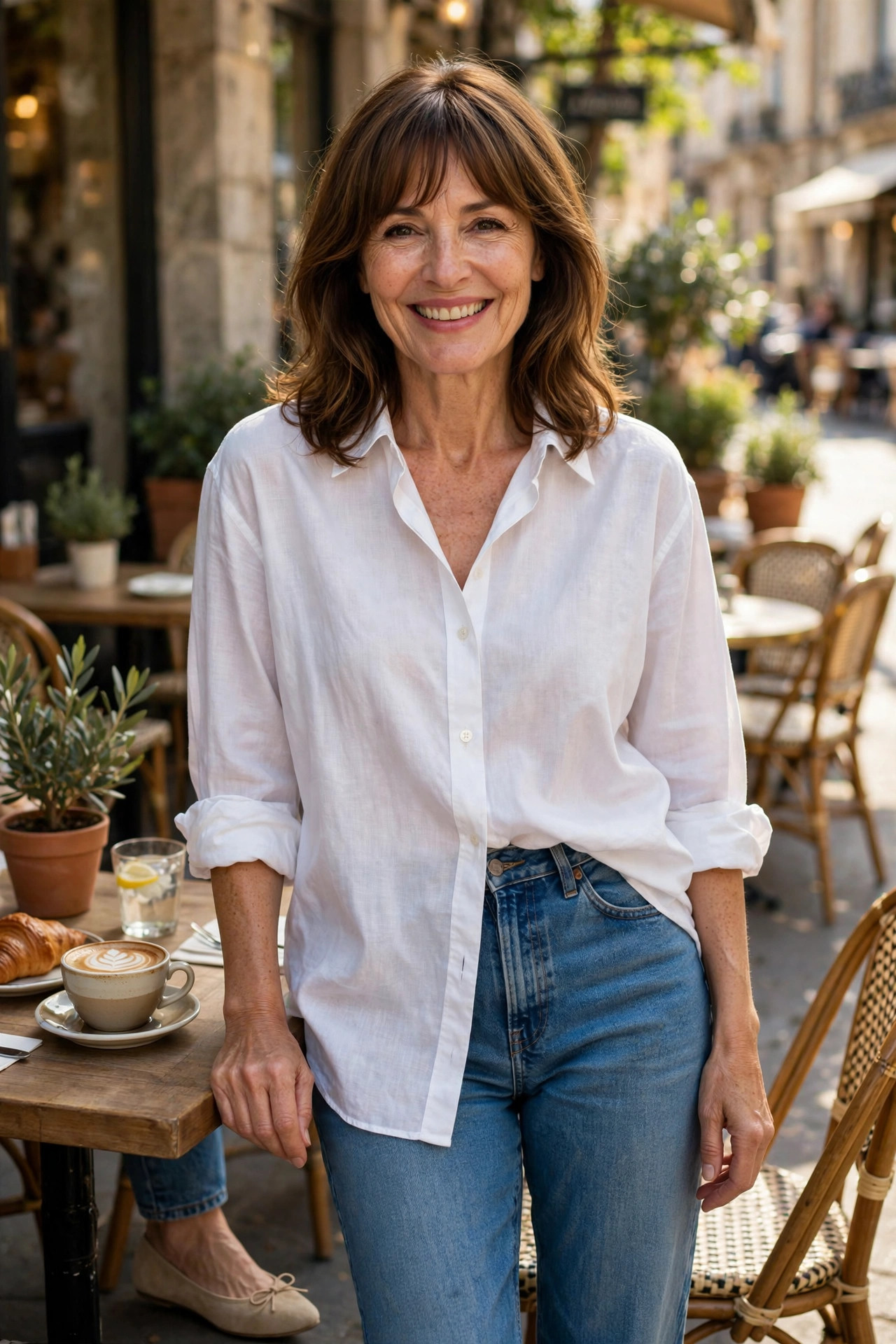
Before styling, it helps to know what “oversized” actually means in garment terms. An oversized shirt is one where the shoulder seams sit past your natural shoulder line, the body has several extra inches of ease around the torso, and the hem usually covers the hips. Both button-downs and t-shirts come in oversized cuts, and the styling system in this guide applies to both, with small adjustments noted where button plackets and collars change the equation.
There is also a difference between intentionally oversized and simply two sizes too big. A shirt designed to be oversized keeps its proportions: the sleeves may be long but the cuffs still close neatly, the collar still frames the neck, and the hem has a shape, often curved or split at the sides. A shirt that is merely too large in every direction can still work, but it needs more aggressive shaping, usually a full tuck or a belt, to look deliberate.
Oversized shirts suit every body type because the styling happens at the waistline and the hem, not at the bust or hips. Petite frames benefit from showing the waist with a tuck so the fabric does not shorten the torso visually. Curvier frames get comfortable ease through the body while the waistline stays defined. Taller frames can wear the shirt long and loose with slim bottoms for an elegant column effect. The methods below work across budgets too, since tucking, knotting, and belting cost nothing and work on thrifted shirts just as well as new ones.
The 6 Shaping Methods Every Oversized Shirt Needs
Every polished oversized-shirt outfit uses exactly one of six shaping methods. Choosing one before you get dressed removes the guesswork. Start with the occasion, pick the method, then choose bottoms to match.
| Method | How to do it | Best bottoms | Best for |
|---|---|---|---|
| Full tuck | Tuck the entire hem into high-rise bottoms, then pull out a little fullness for ease | Tailored trousers, pencil skirts, straight-leg jeans | Office, dinners, polished daytime |
| French tuck | Tuck only the front center of the shirt, leave sides and back loose | High-rise jeans, trousers, midi skirts | Everyday casual, smart casual |
| Side tuck | Tuck one side of the front hem, let the other side drape at an angle | Jeans, shorts, relaxed trousers | Weekends, creative workplaces |
| Front knot | Gather the front tails and tie them into a knot at the waist | High-rise jeans, denim shorts, maxi skirts | Warm weather, casual evenings |
| Belted | Wear the shirt loose over bottoms and cinch a belt at the waist | Slip skirts, wide-leg pants, jeans | Dresses-as-shirts looks, dinner out |
| Open layer | Wear the shirt unbuttoned over a camisole or tee | Leggings, slim jeans, slip dresses | Layered casual, travel, cool evenings |
1. The Full Tuck
The full tuck is the most polished of the six methods and the fastest way to make an oversized shirt office-ready. Tuck the entire hem into high-rise trousers or a skirt, then gently pull the shirt out about an inch all around the waistband. That small blouse of fabric keeps the look relaxed instead of stiff, and it stops the shirt from pulling when you sit.
Full tucks work best with crisp fabrics. A structured cotton or poplin holds the tuck and stays put through the day. Very fluid fabrics can slip out of the waistband, so if your shirt is silky, tuck it deeper and add a slim belt to lock it in. For button-downs, button the shirt fully before tucking so the placket lies flat, and check in a mirror that no bulk is bunching at the sides. Pair a full-tucked oversized shirt with tailored trousers and loafers for work, or with dark straight-leg jeans and heels for dinner. It is the same technique that anchors many of our summer office outfits that channel Wonder Woman energy, where a strong top half meets a streamlined bottom.
2. The French Tuck
The French tuck, also called the half tuck, means tucking only the front center of the shirt into your bottoms while the sides and back stay loose. It is the most versatile method here and the one to learn first. It defines the waist from the front, shows off your belt if you wear one, and keeps the relaxed oversized feel everywhere else.
To do it well, stand in front of a mirror, gather a section of the hem about as wide as your hand at the center front, and push it into the waistband. Then tug the shirt slightly upward so a soft drape forms above the tuck. The goal is effortless, not perfect. The French tuck needs a mid-rise or high-rise bottom to work, because the shirt needs a waistband to grip. It pairs beautifully with straight-leg or wide-leg jeans, pleated trousers, and midi skirts. Keep the sleeves as they come or roll them once to the forearm for a more casual finish.
3. The Side Tuck
The side tuck is the French tuck’s more relaxed cousin. Instead of the center, tuck a section of the hem at one side, near the hip, and let the rest of the shirt drape diagonally. The asymmetric line draws the eye and adds movement, which makes it ideal for casual days when a full or French tuck would feel too neat.
This method shines with softer fabrics that fall into a natural diagonal fold. It works over jeans, casual shorts, and relaxed linen trousers. Because the tuck sits off-center, it also plays well with crossbody bags, which rest on the opposite hip and keep the silhouette balanced. One caution: skip the side tuck with very long, tunic-length shirts, since the draped side can overwhelm shorter torsos. In that case, the French tuck or a knot gives better proportion.
4. The Front Knot
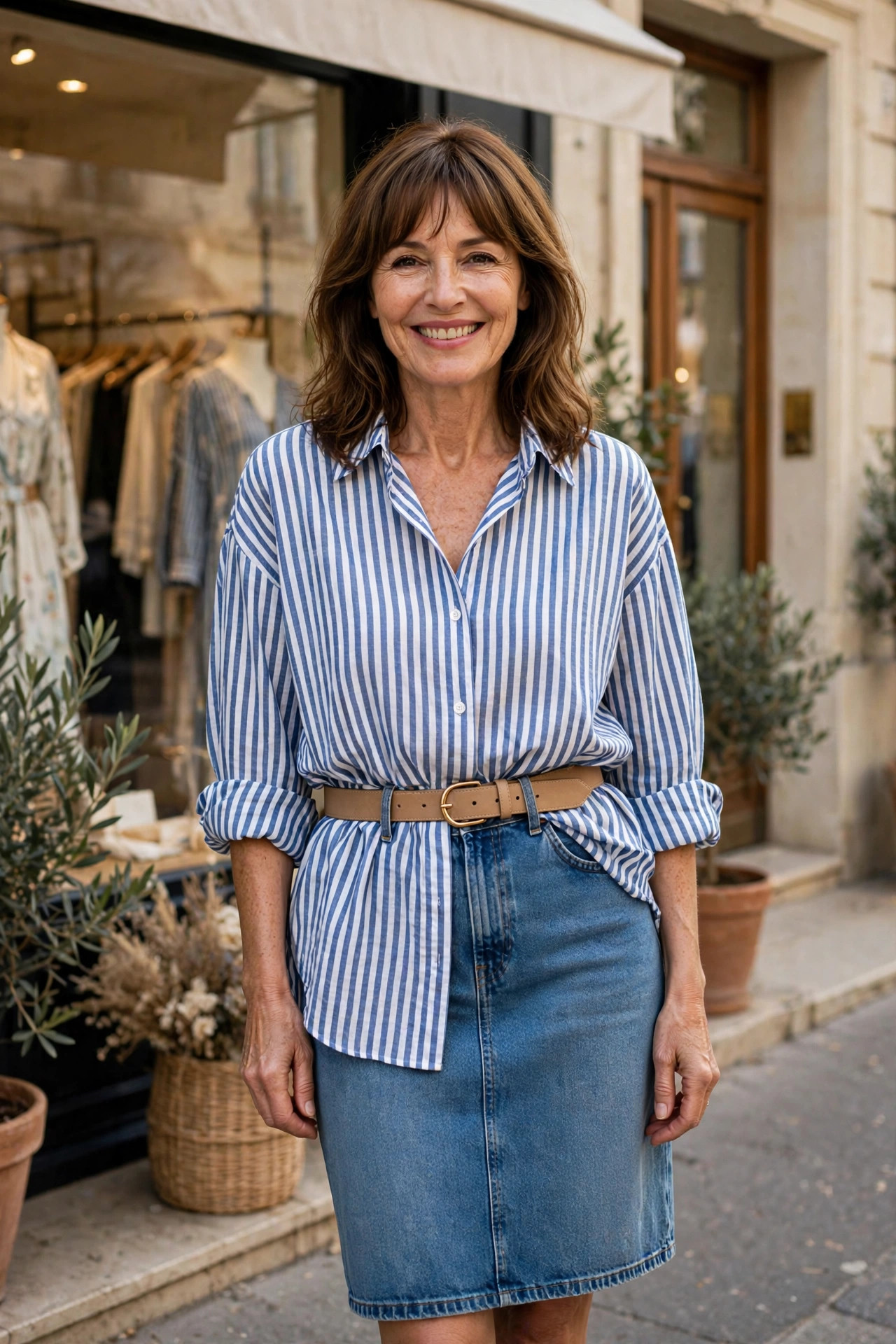
Tying the front tails of an oversized shirt into a knot is the quickest way to create a waistline, and it suits warm weather best. Gather the two front corners of the hem, twist them once, and tie a simple knot just above the waistband of your bottoms. The knot shortens the shirt into a cropped effect while keeping the collar and sleeves oversized, which creates a pleasing contrast.
Knotting works best on shirts with enough hem length to gather, so mid-length and long shirts knot more easily than short ones. High-rise jeans, denim shorts, and maxi skirts are the natural partners, because the knot sits right where the waistband begins. For an evening version, knot a striped or white oversized shirt over a slip skirt and add heeled sandals; the crisp shirt against a fluid skirt is a combination that also appears in our fall dinner outfits. Avoid knotting very thick fabrics like heavy flannel, which make a bulky knot that sits awkwardly.
5. The Belted Waist
Wearing the shirt loose and cinching a belt over it at the waist is the method that turns an oversized shirt into a near-dress. Leave the shirt untucked over jeans, trousers, or a skirt, then fasten a belt at your natural waist over the shirt. The belt creates the shape, and the shirt blouses softly above and below it.
The belt choice changes the mood entirely. A slim leather belt reads classic and works for dinner or smart casual settings. A wider belt or a fabric sash reads softer and more romantic. This method is especially useful for long oversized shirts that cover the hips, because tucking that much fabric would create bulk. It also works beautifully over slip skirts for evening, a pairing worth trying if you enjoy dressier looks like our plus-size dinner outfit ideas, since the technique flatters every figure by defining the waist while skimming the rest.
6. The Open Layer
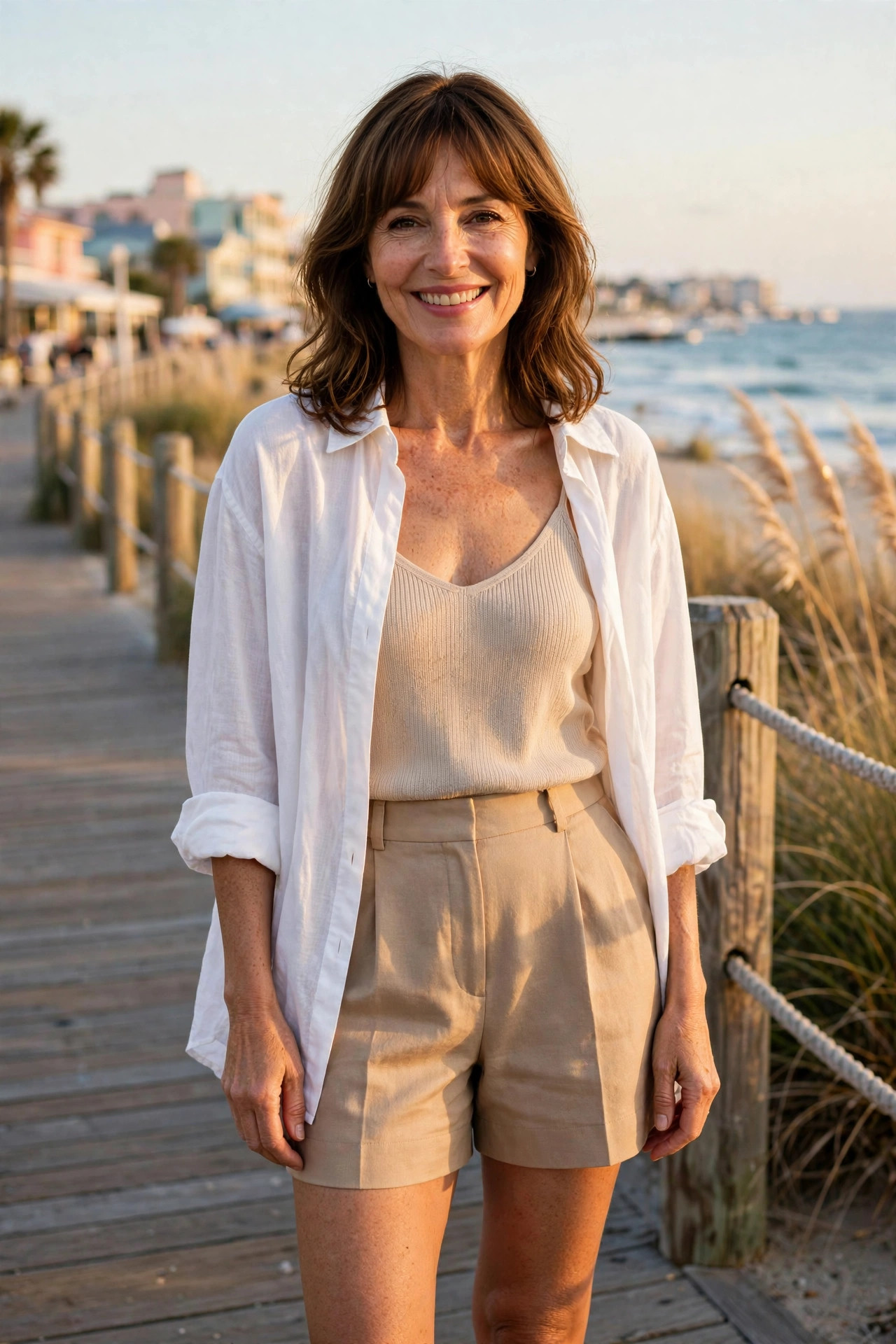
Wearing an oversized shirt open over another top turns it into a light jacket. Unbutton it fully and wear it over a camisole, fitted tee, or bodysuit, with the sleeves rolled or pushed up. This is the lowest-effort method and the best one for transitional weather, travel days, and casual layering.
The key to the open layer is contrast underneath. A slim, darker base layer under a light oversized shirt creates depth and keeps the outfit from looking like one big shape. Over leggings and sneakers it reads sporty; over a slip dress it becomes an evening cover-up for air-conditioned restaurants. In colder months, layer the open shirt over a thin turtleneck and under a coat for extra warmth without bulk, an approach that fits naturally with winter dinner outfits built on smart layering.
How to Balance Proportions With Your Bottoms
Once you have chosen a shaping method, the bottom half decides whether the outfit looks balanced. The guiding rule is simple: define the waist, then let one half of the outfit carry the volume. Because the shirt is already roomy on top, most outfits look best when the bottom half is slimmer, but wide bottoms work too if the waist stays visible.
With slim bottoms: Skinny jeans, straight-leg jeans, leggings, and pencil skirts are the easiest partners. The slim leg contrasts the roomy shirt and the tuck or belt in the middle creates an hourglass line. This is the combination to reach for when you want the outfit to feel safe and flattering.
With wide bottoms: Wide-leg trousers, palazzo pants, and full midi skirts can work with an oversized shirt, but the waist must be clearly defined with a full tuck or a belt. Without a marked waist, two roomy halves merge into one shapeless column. Tuck the shirt fully into high-rise wide-leg trousers for a modern, elongated look, or belt it over a full skirt.
With shorts and minis: High-rise shorts and mini skirts pair well with oversized shirts through the French tuck, side tuck, or knot. The long shirt hem against bare legs creates a leg-lengthening effect, especially with the front knot, which raises the hemline. Keep the shirt’s back long for coverage if that matters to you.
With skirts of every length: Tuck the shirt into pencil and A-line skirts for polish, French-tuck it into denim or pleated midi skirts for casual days, and belt it over slip skirts for evening. The shirt’s collar peeking above a skirt neckline adds a preppy note that works across ages.
Belted vs Unbelted: When to Add the Belt
Belts and oversized shirts have a special relationship, because the belt does the shaping work the shirt’s cut does not. But a belt is not always the answer. Use this decision framework.
Add a belt when: the shirt is worn loose and untucked, and you want a visible waist. The belted method above depends on it. Also add a belt when a full tuck keeps slipping out of fluid fabric; a slim belt at the waistband locks the tuck in place. Belts also help when the shirt is very long, since tucking that much fabric creates uncomfortable bulk.
Skip the belt when: the shirt is already fully tucked into structured trousers, where the clean waistband looks sharper without one. Skip it with the open-layer method too, since a belt over an open shirt fights the relaxed layering effect. And skip it when the outfit already has a strong focal point, like a statement necklace or a bold skirt, because two focal points at the midsection compete.
Which belt to choose: match the belt’s weight to the shirt’s fabric. Crisp cotton shirts handle structured leather belts well. Fluid, silky shirts pair better with slim belts or soft fabric sashes that do not cut into the drape. As a fit note, if belts tend to gap at your waist, look for styles with a little stretch or wear the belt slightly looser over the shirt than you would over bare trousers.

From Office to Weekend With the Same Shirt
One of the strongest arguments for owning an oversized shirt is its range. A single white or light-blue oversized button-down can cover a workday, a dinner, and a weekend with only the shaping method and companions changing.
For the office: choose the full tuck into high-rise tailored trousers in navy, charcoal, or black. Add closed-toe flats or loafers, minimal jewelry, and a structured bag. The oversized cut keeps the look modern rather than corporate-stiff, while the full tuck keeps it professional. If your workplace is business casual, the French tuck into dark straight-leg jeans with loafers also passes in many offices.
For dinner: switch to the belted method over a slip skirt or tailored trousers, or keep the French tuck and swap flats for heels. A white oversized shirt with a slim belt and dark trousers reads elegant without trying hard. Add one polished accessory, a sleek watch or simple earrings, and you are set for an evening out.
For the weekend: the side tuck or front knot with jeans and sneakers is the classic casual formula. In warm weather, knot the shirt over denim shorts. For a relaxed errand day, wear it as an open layer over a tee and leggings. The same shirt that looked boardroom-ready on Friday looks completely different knotted over jeans on Saturday, which is the real payoff of learning the system instead of wearing the shirt one way.
Fabric, Color, and Fit Details That Matter
The shaping methods do the heavy lifting, but a few fabric and fit details separate a good oversized-shirt outfit from a great one.
Fabric first: Crisp cotton and poplin hold tucks and keep their structure all day, making them the best choice for office and polished looks. Linen breathes beautifully for summer but wrinkles, so embrace the wrinkles as part of the look or choose a linen blend. Fluid fabrics like silk blends and rayon drape elegantly for knots, side tucks, and belted styles but can slip out of waistbands, so they pair best with belts or deeper tucks. Heavier fabrics like flannel and denim shirts look great as open layers and full tucks but resist knotting.
Color strategy: A white oversized shirt is the most versatile starting point because it pairs with every bottom and suits every season. Light blue reads classic and slightly softer. Striped oversized shirts add visual interest and are especially good for the French tuck, since the stripe pattern makes the tuck placement look intentional. Dark colors like black or navy make the oversized silhouette look sleeker and are strong choices for evening.
Fit checkpoints: check the shoulder seam, which should sit just past your natural shoulder, not halfway down your arm. Sleeves can be long, but the cuffs should still fasten or roll neatly. If the shirt pulls across the bust when buttoned, size up or leave the top buttons open over a camisole. And remember that an oversized shirt can come from anywhere: the men’s section often offers better oversized proportions at lower prices, and thrifted shirts work with every method in this guide.
FAQs
How do I wear an oversized shirt without looking frumpy?
Choose one shaping method and commit to it. A full tuck, French tuck, knot, or belt instantly signals intention, which is the opposite of frumpy. Pair the shirt with bottoms that show your shape somewhere, high-rise jeans, a defined waistband, or bare legs with shorts, and keep the rest of the outfit simple so the shirt is the statement.
Can I wear an oversized shirt to work?
Yes, with the full tuck. Tuck a crisp oversized button-down fully into high-rise tailored trousers or a pencil skirt, add closed-toe shoes, and keep accessories minimal. Stick to solid colors or subtle stripes, and make sure the shirt is pressed. The oversized cut reads modern, while the neat tuck keeps the look professional.
How to wear an oversized shirt with jeans?
The French tuck is the easiest pairing: tuck the front center of the shirt into high-rise jeans and leave the rest loose. For a dressier feel, do a full tuck with dark straight-leg jeans and heels. For casual days, try the side tuck or a front knot with relaxed jeans and sneakers. Rolling the sleeves once keeps the proportions balanced.
How to wear an oversized shirt as a dress?
It works when the shirt is long enough to cover you comfortably, usually mid-thigh or longer. Belt it at the waist to create shape, or wear it loose over bike shorts or leggings for coverage. Add heeled sandals or boots to make it read as an outfit rather than a borrowed shirt. If the shirt is sheer or lightweight, layer a slip underneath.
Conclusion
Styling an oversized shirt comes down to one habit: decide where the extra fabric goes before you leave the house. Learn the six shaping methods, match them to high-rise bottoms, and use a belt only when the shirt is worn loose. With that system, a single oversized shirt moves from office to dinner to weekend without ever looking shapeless. Start with the French tuck, since it suits nearly every body type and occasion, then experiment with knots and belts as the methods become second nature.

Rameen Awan is the founder and editor of Outfit Algorithm, where she breaks down outfit formulas, dress codes, and styling systems for real life. Her guides focus on practical details other sites skip: fabric behavior, fit for different body types, and what actually works when you are getting dressed in a hurry.