
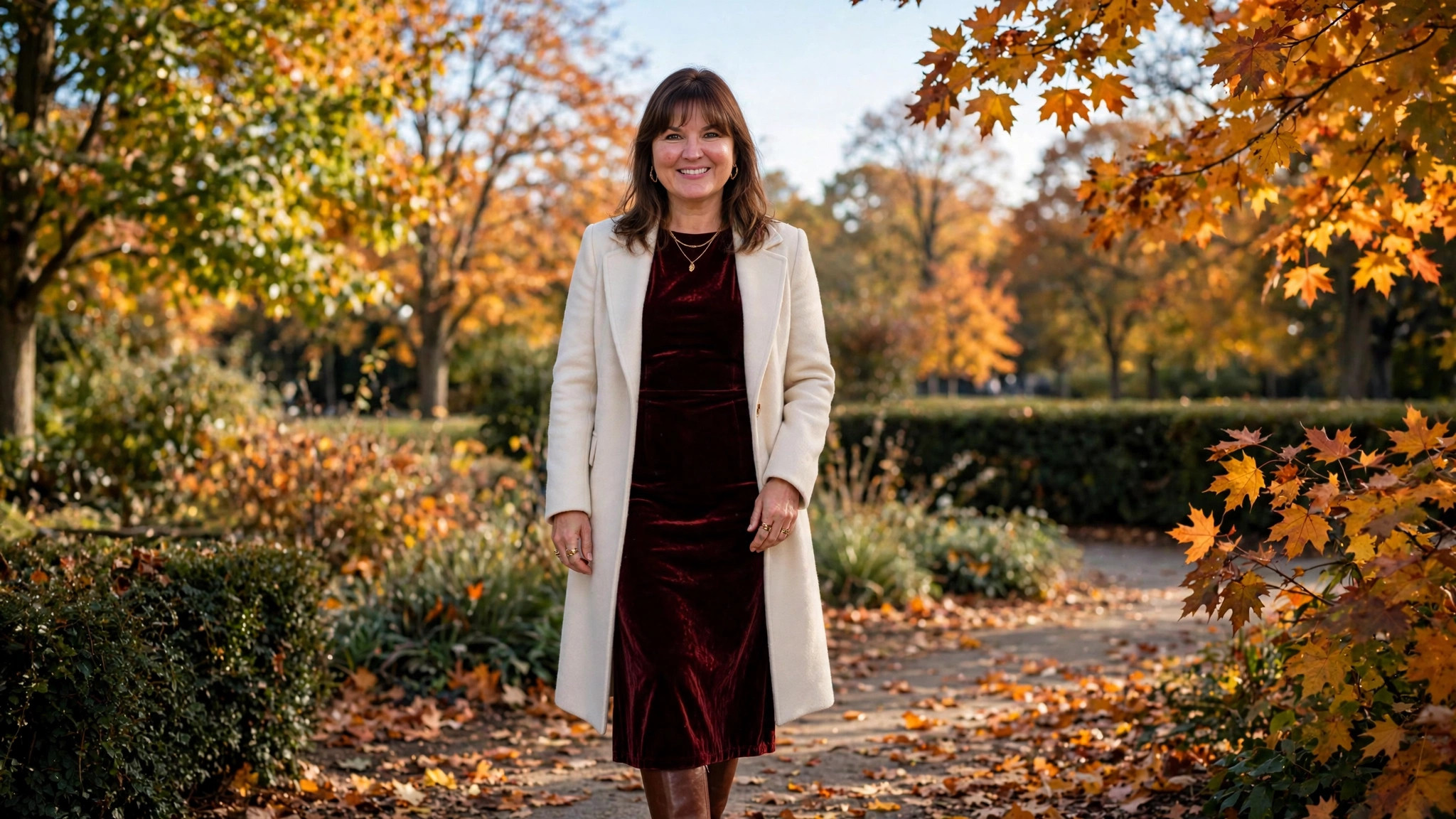
A November wedding guest dress sits in a season of its own. It is colder than October, not yet December, and the weather can swing from crisp sunshine to a biting wind in a single afternoon. The right choice is a dress with more coverage, a heavier fabric, rich late-fall color, and a layering plan you decided on before the day, not at the last minute. This guide walks through colors, fabrics, silhouettes, layers, and shoes so you can stay warm through outdoor photos and still look polished at the reception.
Key Takeaways
- November is a transitional month, so plan for temperature swings: warm afternoons and chilly evenings are both normal.
- Long sleeves or a built-in layer, plus a heavier fabric like velvet, crepe, or satin, keep you comfortable without looking bulky.
- Jewel tones and deep neutrals (emerald, burgundy, navy, plum, chocolate) suit November light and evening receptions.
- Choose your coat or wrap when you choose the dress, so the whole look photographs as one outfit.
- Closed-toe shoes are the safe default; block heels handle grass and gravel better than stilettos.
- Black is acceptable for most November weddings when the fabric and details feel celebratory rather than somber.
- Your dress can double as a festive-season outfit, which makes it easier to justify the purchase.
What Is a November Wedding Guest Dress?
A November wedding guest dress is an outfit planned for late-fall conditions: cooler air, shorter days, and venues that mix indoor warmth with outdoor moments. It differs from an early-fall dress in coverage and fabric weight, and it differs from a winter dress in tone, because November still carries autumn warmth rather than full holiday formality. In practice, that means long sleeves or a coordinated wrap, midi to maxi length, and fabrics with enough substance to hold their shape in a breeze.
How Is a November Wedding Different From October or December Weddings?
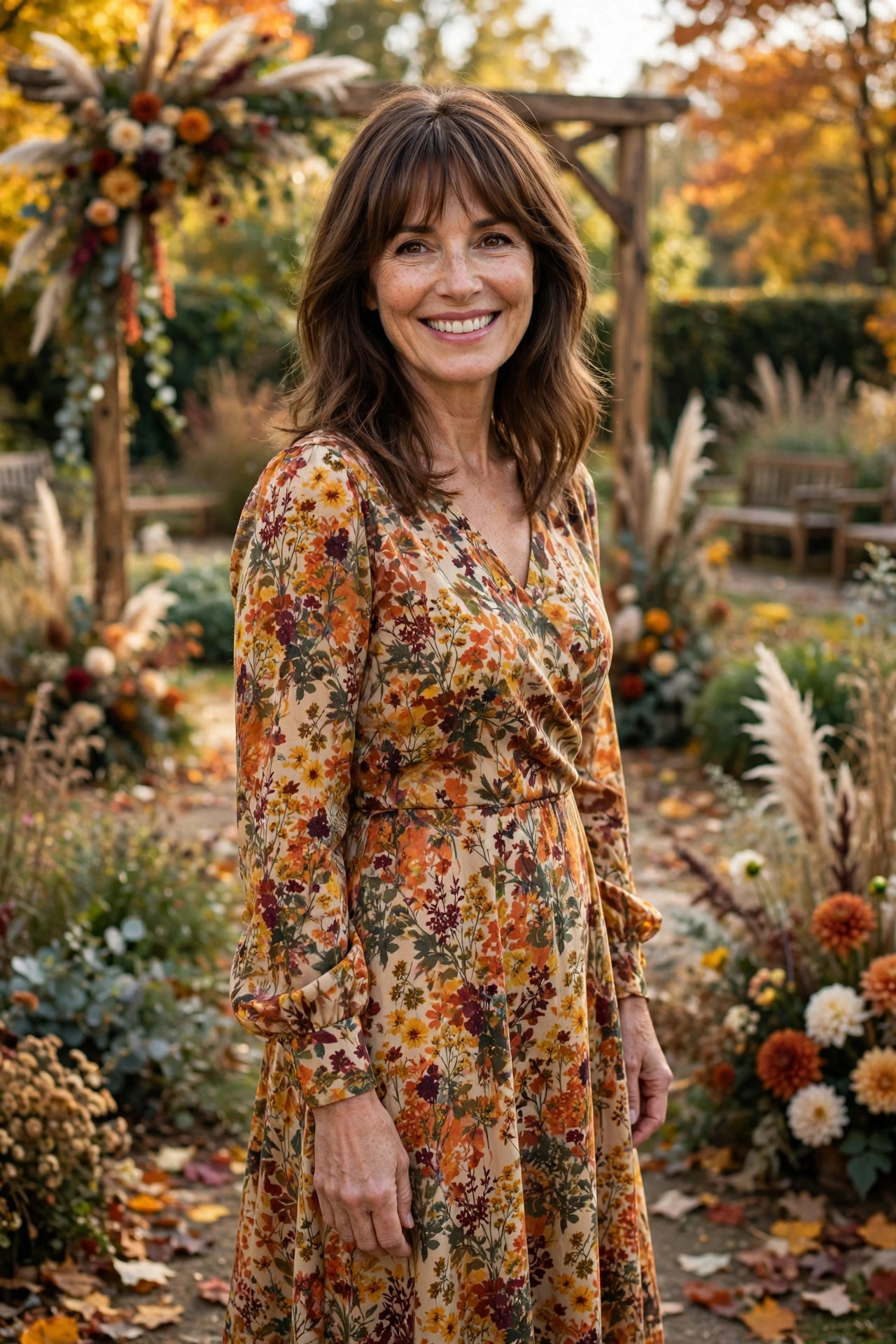
November is the in-between month, and that is exactly why it deserves its own plan. October weddings still borrow from early fall: lighter layers, brighter autumn colors, and mild evenings. December weddings are firmly winter events with heavier coats, darker palettes, and fully indoor timelines. November sits between the two, which creates three specific challenges.
First, temperature swings. A November afternoon can feel pleasant, especially in the South or on the West Coast, while the same evening can drop into the 40s or lower. A dress that feels perfect at a 3 p.m. ceremony can feel thin by a 9 p.m. send-off. Second, light. The sun sets early, so more of the celebration happens under artificial light. Deep colors and fabrics with a little texture, like velvet or satin, photograph beautifully in candlelit receptions where pale, thin fabrics can wash out. Third, the outdoor-photo question. Many couples still want portraits outside in November, and standing still in the wind for twenty minutes is the coldest part of the day. If you are still deciding between warm layers, the fall dinner outfits for women guide covers transitional dressing with the same mindset.
What Colors Work Best for a November Wedding Guest Dress?
November light favors depth. Jewel tones are the most reliable choice: emerald green, burgundy, sapphire navy, plum, and deep teal all look rich in person and in photos. They suit the season without looking like a costume, and they work across cocktail, semi-formal, and formal dress codes. The Knot’s guide to semi-formal wedding attire explains how these dress codes translate to real outfits.
Deep neutrals are the quieter option and often the most versatile. Chocolate brown, charcoal, and dark olive feel autumnal and understated, and they pair well with metallic accessories. Black deserves its own note because guests ask about it constantly. Black is widely accepted for November weddings, particularly evening and indoor events. The trick is in the details: a black velvet or satin dress with interesting texture reads festive, while a plain black sheath can read somber. If the couple has asked guests to avoid black, honor that request without debate. Either way, white, ivory, and champagne stay reserved for the couple.
Metallic accents earn their place in November. A copper, bronze, or muted gold clutch or shoe adds warmth to a deep-toned dress and bridges the gap toward the holiday season. Keep metallics to one or two accessories rather than the whole outfit. If jewel tones are your palette for the wedding, the same shades carry into winter dinner outfits when temperatures drop further.
Which Fabrics Keep You Warm Without Looking Bulky?
Fabric choice does more for warmth than most guests expect, and it changes how a dress photographs. Velvet is the standout November fabric. It has natural insulation, a rich surface that catches low light, and it moves well in both midi and maxi lengths. Crepe is the workhorse: structured, wrinkle-resistant, and warm enough for an indoor evening without feeling heavy. Satin brings formality and a soft sheen that looks expensive under reception lighting, though it shows wrinkles, so a steamer the day before is worth the effort.
Wool blends and heavier knits suit daytime and casual dress codes. A fine-knit midi dress with a defined waist can look polished rather than casual when the cut is clean. Lace works as an overlay or detail rather than the main fabric in November; a lace bodice over a lined skirt gives texture without the chill of unlined lace.
What to be cautious about: thin chiffon and unlined georgette. They are not forbidden, but they need a plan, a lining, a slip, or a wrap, because an unlined chiffon dress in a November breeze is a long, cold evening. If your closet feels stuck between seasons and full of almost-right pieces, the nothing to wear guide has a useful way to shop what you already own before buying anything new.
What Dress Silhouettes Work Best in November?
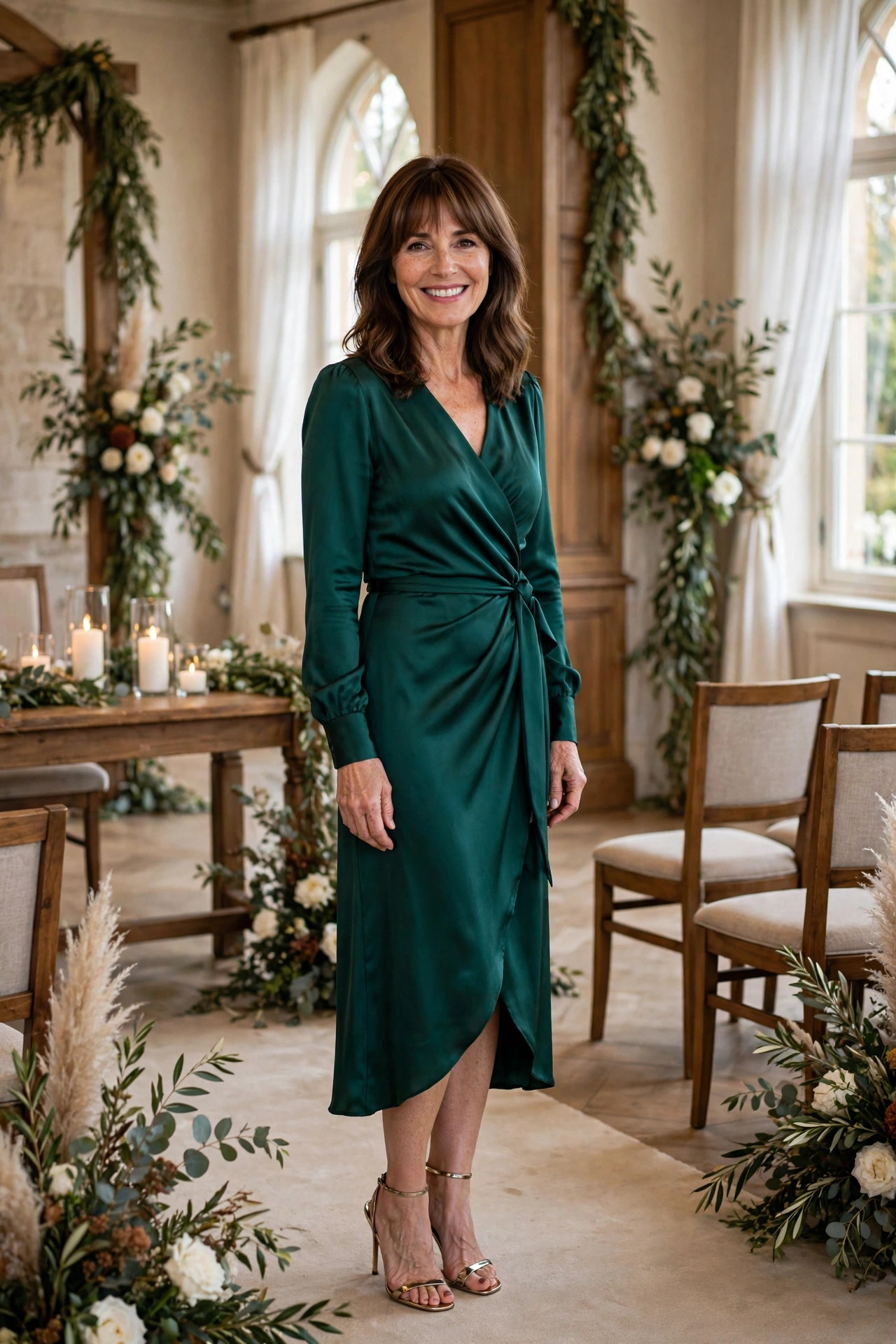
Coverage is the theme, and it comes in several flattering forms. A long-sleeve maxi dress is the most straightforward November choice: full coverage, elegant movement, and it handles wind better than a short hem. For cocktail and semi-formal codes, a long-sleeve midi keeps the same warmth with a slightly lighter feel. Wrap dresses and faux-wrap styles deserve special mention because the adjustable waist flatters a wide range of figures and the V-neckline leaves room for a necklace or a scarf. For more on universally flattering cuts, see the plus-size dinner outfits for ladies guide, which covers wrap and empire silhouettes in detail.
A fit-and-flare silhouette gives structure through the bodice with a skirt that moves, which suits both ceremonies and dancing. High necklines, mock necks, and boat necks add warmth around the shoulders and look intentional rather than bundled up. A one-shoulder or sleeveless dress can still work if you commit to the layer: pair it with a structured blazer, a cape, or a wide pashmina from the start, not as an afterthought.
Jumpsuits are a legitimate option for cocktail and semi-formal November weddings. A wide-leg jumpsuit in crepe or velvet, in a jewel tone, reads formal and solves the cold-legs problem entirely. Whatever the silhouette, check the lining. A fully lined dress holds warmth and structure far better than an unlined one, and it is the single easiest thing to verify before you buy.
How Do You Layer for a November Wedding?
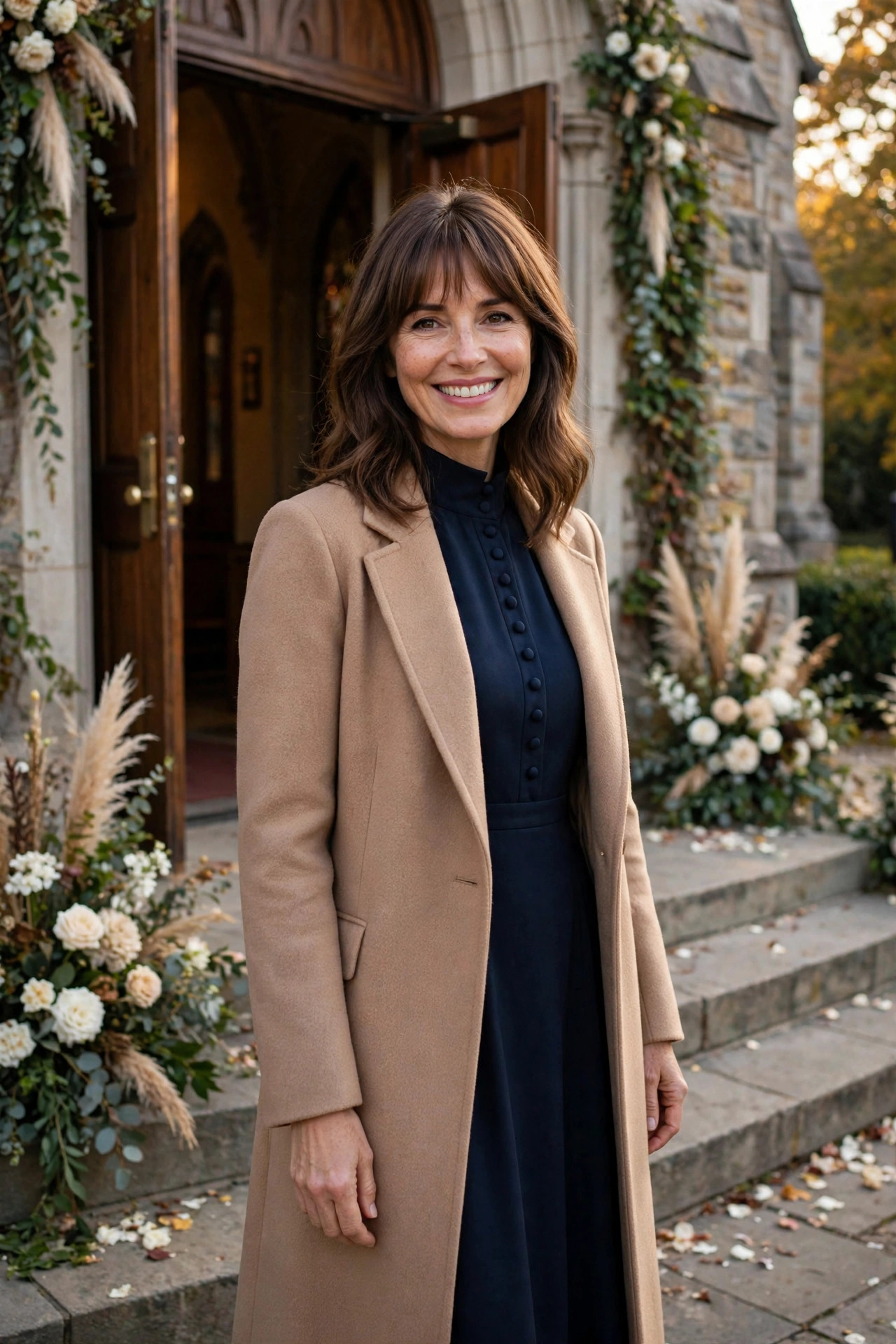
Layering is where November weddings are won or lost, and the rule is simple: choose your outer layer when you choose the dress. A coat that clashes with your dress will show up in arrival photos and in every shot taken outside. A tailored wool coat in camel, charcoal, or black works over almost any deep-toned dress. For formal and evening weddings, a faux-fur stole or a wide velvet shawl looks deliberate and photographs beautifully.
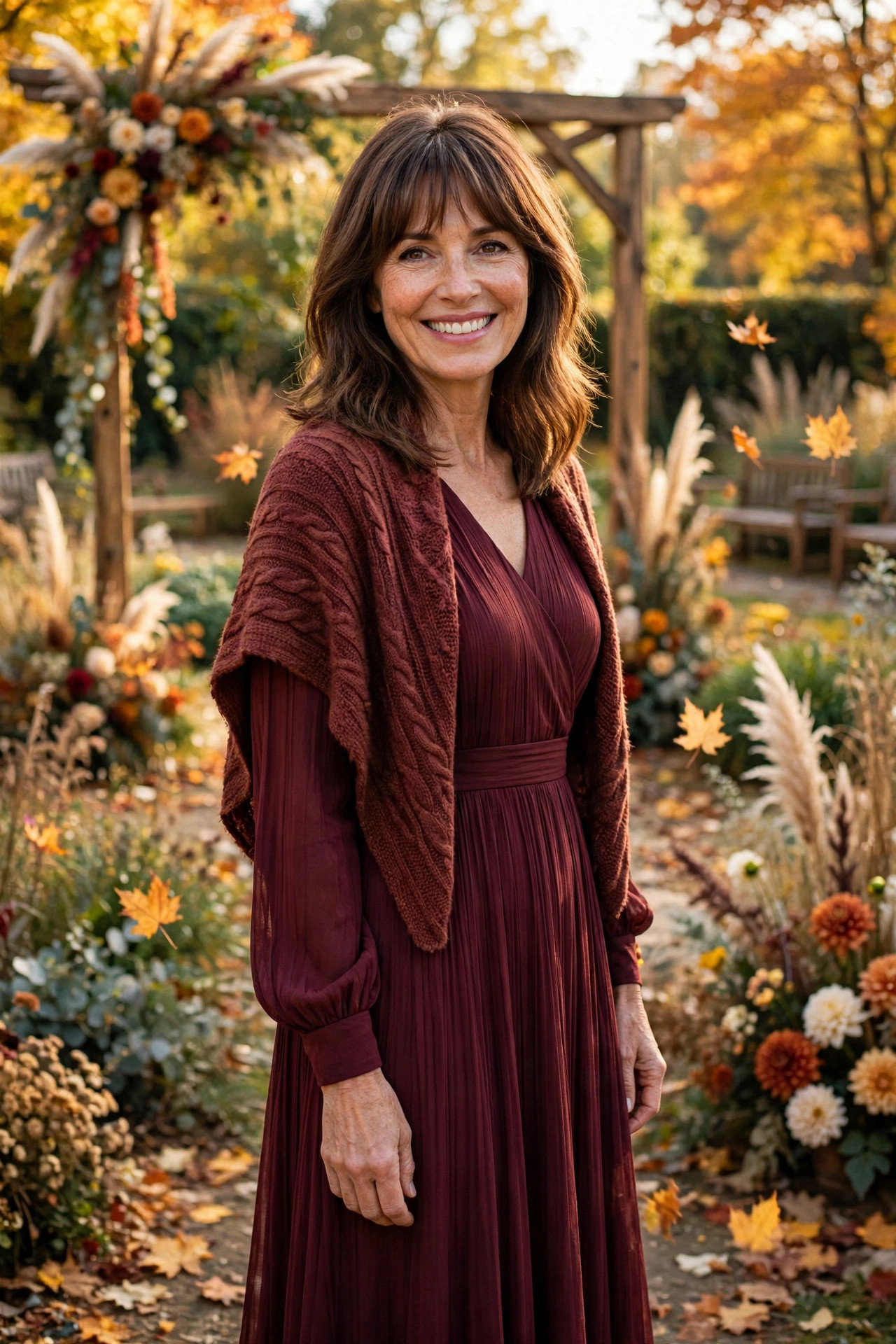
The two-layer plan covers the whole day. The coat handles the commute and the walk between venues. The shawl or wrap handles outdoor photos, because you can drape it for portraits and slip it off for the reception. This also solves the indoor problem: heated venues get warm, and a removable layer means you are comfortable at dinner instead of overheating in a coat you cannot take off gracefully.
Fit matters in layers. A wrap should be wide enough to cover your shoulders fully, not a narrow scarf that slides off. If you wear a blazer, make sure the sleeves of your dress fit comfortably underneath. And plan where the coat goes: check whether the venue has a coat check, and keep a small clutch-sized bag for essentials so you are not juggling a coat, a wrap, and a large bag during cocktail hour.
What Shoes Should You Wear to a November Wedding?
Closed-toe shoes are the default for November, and they solve two problems at once: warmth and weather. Classic pumps in a deep tone or metallic work for indoor and evening weddings. Block heels are the practical hero of the season: they handle grass, gravel, and uneven historic-venue floors far better than stilettos, and they are kinder to your feet over a long day.
Dressy ankle boots suit casual, barn, and rustic dress codes, especially in suede or polished leather paired with a midi or a slit maxi. For black tie and formal ballroom weddings, stay with heels or dressy flats. Whatever you choose, break them in before the day and consider the walk from parking to venue. Cold, tired feet by the ceremony are a miserable start, so comfort is not a compromise, it is part of looking good.
What Should You Avoid Wearing to a November Wedding?
A few common missteps are easy to prevent. Do not wear white, ivory, cream, or anything that could read bridal in photos. Do not rely on a single thin layer for an outdoor ceremony; November wind finds every gap. Do not wear delicate stilettos to a venue with grass or gravel unless you have seen the ground yourself. Do not overdress the code: a floor-length sequin gown at a casual daytime wedding draws the wrong kind of attention, just as underdressing a formal invitation does.
Also, do not treat the dress code as optional because of the weather. Warmth and formality are not opposites. A long-sleeve velvet midi is warmer than a strappy summer dress and more formal at the same time. If the invitation is silent on dress code, match the venue and time of day: daytime and outdoors lean casual to semi-formal, evening and indoors lean cocktail to formal. When in doubt, a quick message to someone in the wedding party beats guessing.
Dress Code Meets November Weather: A Quick Decoder
Use this table to translate the invitation’s dress code into a November-ready outfit. The left column is what the invitation says, the right columns are how to adapt it for the month.
| Dress Code / Setting | November Dress Direction | Fabric and Layer |
|---|---|---|
| Black tie / formal evening | Floor-length gown or formal maxi in a jewel tone | Velvet or satin; faux-fur stole or tailored coat |
| Cocktail / semi-formal | Long-sleeve midi or wrap dress, knee to tea length | Crepe or satin; wide shawl or structured blazer |
| Casual / daytime | Knit midi or shirt-style dress with tights | Heavier knit or wool blend; wool coat and ankle boots |
| Outdoor ceremony | Maxi with sleeves; plan for wind | Velvet or lined crepe; wrap plus coat, block heels |
| Barn or rustic venue | Midi or maxi in earth or jewel tones | Satin or knit; shawl and block-heel boots, never stilettos |
| Evening reception, indoors | Polished midi or gown; removable layer for warmth | Satin or crepe; pashmina you can slip off at dinner |
A Simple Plan for the Wedding Day
A little planning beats a last-minute scramble. The night before, check the hourly forecast, not just the day’s high, and look at the wind. Steam or press the dress, and lay out the full outfit including the coat, wrap, shoes, and bag so you can see it as one look. Pack the wrap even if the forecast looks mild; November evenings surprise people.
On the day, wear the coat for travel and photos between venues, switch to the shawl for outdoor portraits, and go without the layer for the reception if the room is warm. Keep a small kit in your bag: a safety pin, a couple of bandages for new shoes, and tissues. None of this is glamorous, and all of it is what makes the day feel easy.
One more reason to choose well: a November wedding guest dress earns its place in your closet afterward. The same deep tones and heavier fabrics suit festive dinners through the season, so a dress you love now can reappear at the table in December. The Christmas dinner outfits guide shows how those jewel tones and velvets carry straight into the holidays.
Frequently Asked Questions
What should I wear to a wedding in November?
Plan for warmth first, then formality. A long-sleeve midi or maxi dress in a heavier fabric like velvet, crepe, or satin, in a jewel tone or deep neutral, covers most November weddings. Add a coordinated coat or wrap from the start, choose closed-toe shoes, and check the forecast the night before so outdoor photos do not catch you off guard.
Can I wear black to a November wedding?
Yes, for most November weddings. Black is widely accepted, especially for evening and indoor celebrations, and the month’s lighting suits it. Choose a fabric with texture or sheen, like velvet or satin, so the look reads festive rather than somber, and skip black only if the couple has asked guests to avoid it.
Are boots appropriate for a November wedding?
It depends on the dress code and venue. Dressy ankle boots in leather or suede suit casual, barn, rustic, and many semi-formal November weddings, especially with a midi or slit maxi. For black tie and formal ballroom weddings, choose heels or dressy flats instead. Block heels are the safest middle ground when you are unsure about the ground.
Are long-sleeve dresses good for November weddings?
Yes, they are one of the most practical choices for the month. Long sleeves add real warmth for outdoor ceremonies and evening events without needing an extra layer at the table. Sheer or lightweight sleeves suit milder days, while substantial sleeves in velvet or crepe handle colder November weather. They also give welcome arm coverage for guests who prefer it.
Conclusion
A November wedding guest dress is really a weather plan disguised as an outfit. Start with coverage and fabric weight, choose a deep color that suits low November light, and build your coat and wrap into the look from the beginning. Do that, and you get the best of the month: an outfit warm enough for outdoor photos, polished enough for the reception, and versatile enough to wear again when the festive season arrives.

Rameen Awan is the founder and editor of Outfit Algorithm, where she breaks down outfit formulas, dress codes, and styling systems for real life. Her guides focus on practical details other sites skip: fabric behavior, fit for different body types, and what actually works when you are getting dressed in a hurry.