
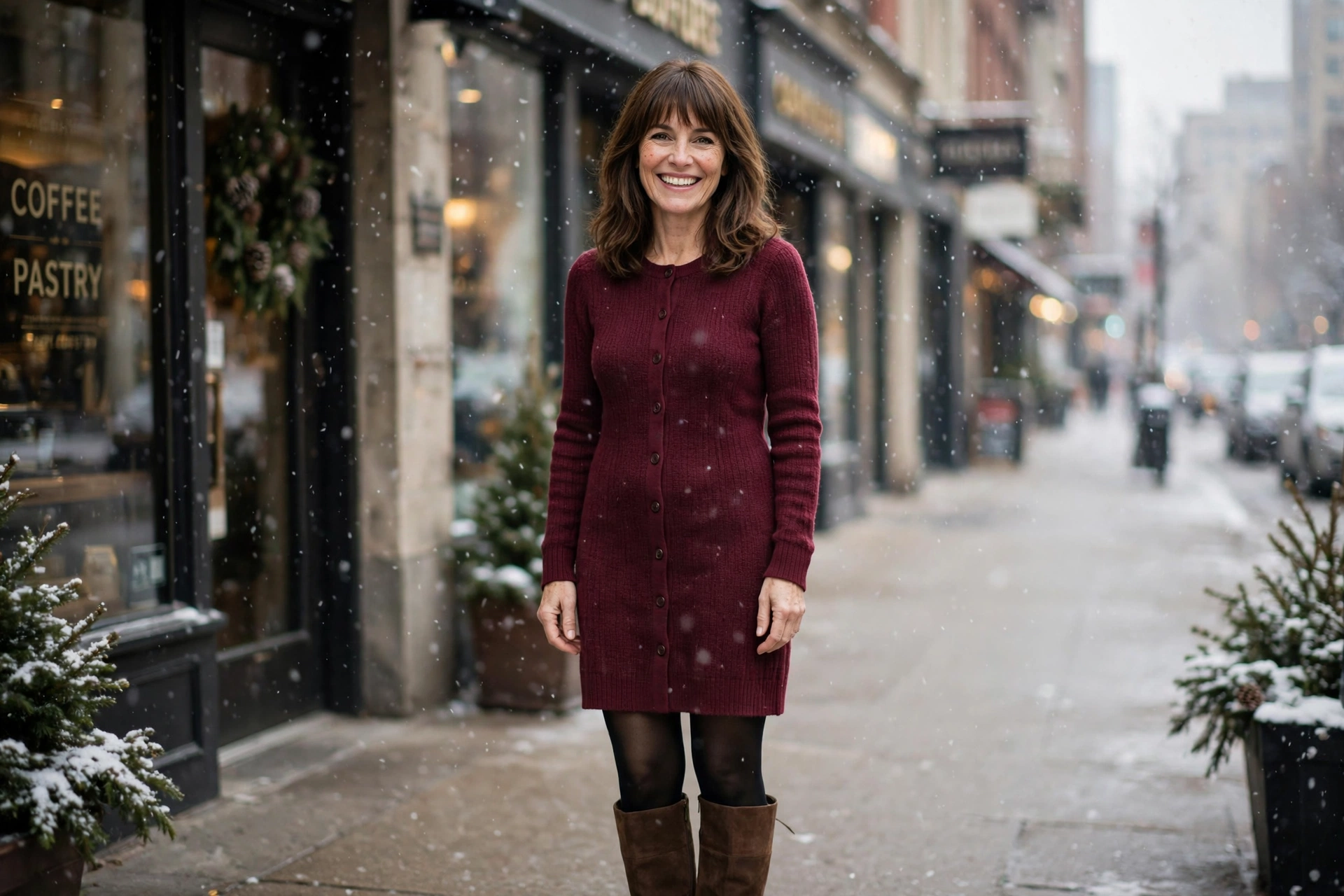
This winter tights fit guide answers the questions nobody else puts in one place: what denier you actually need for your temperature, how to buy the right size the first time, and how to stop tights from ripping, rolling, and snagging. No product pushing, just the fit framework.
Key Takeaways
- Denier measures yarn thickness. Higher denier means more opaque and warmer, but the right choice depends on temperature and occasion.
- Between sizes, always size up. Tights stretched past their limit rip faster and roll down more.
- Fleece-lined tights are genuinely warm, but they change how outfits look. Know when to choose them over regular opaque tights.
- Freezing tights does not prevent runs. Proper washing, sizing, and rotation do.
- Plus-size fit comes down to five checkpoints: size chart, waistband, gusset, fabric blend, and height.
What Does Denier Mean?
Denier (D) is a unit measuring the thickness of the yarn tights are knitted from. Lower denier means sheerer and thinner; higher denier means more opaque and thicker. A 20-denier tight is barely-there sheer. A 120-denier tight is fully opaque and substantial.
Denier is not a warmth rating, but thickness correlates with warmth. The fabric blend matters too: a 80-denier tight with a high elastane content stretches and recovers better than a cheap 80-denier tight with low stretch, which means it lasts longer and fits better.
Denier to Temperature Decoder
This is the table nobody else publishes. Match your denier to the actual weather, not just the occasion.
These temperature bands are approximate comfort guidance, not measured lab data. No hosiery manufacturer publishes denier-to-temperature ratings. Warmth also varies by material, wind, activity level, and your own cold tolerance, so treat the table as a starting point.
| Denier | Look | Approx. temperature | Best For |
|---|---|---|---|
| 40D | Sheer with coverage | 50-60 F (10-15 C) | Early fall, mild winter days, office |
| 60D | Semi-opaque | 40-50 F (4-10 C) | Fall-to-winter transition, evening events |
| 80D | Opaque | 30-40 F (-1 to 4 C) | The winter default for most occasions |
| 100D | Fully opaque, thick | 20-30 F (-6 to -1 C) | Cold snaps, outdoor-heavy days |
| 120D | Maximum opacity | Below 20 F (-6 C) | Deep freeze, or anyone who runs cold |
| Fleece-lined (varies) | Opaque, plush inside | Below 20 F (-6 C) | Maximum warmth, casual to smart-casual |
When in doubt between two deniers, choose the higher one. Slightly-too-warm tights are comfortable; slightly-too-thin tights in real cold are miserable.
80 vs 100 Denier: Which Should You Buy?
This is the most common decision point. Here is the honest breakdown:
- 80 denier is the versatile winter workhorse. Opaque enough for the office, not so thick it looks heavy with evening dresses. If you buy one denier for winter, make it 80.
- 100 denier is noticeably thicker and warmer. Better for deep cold, but can look heavy with delicate fabrics like chiffon or fine knit dresses. The texture contrast is visible.
- The real difference is about 25% more yarn by weight, which translates to meaningful warmth but also a visibly denser look. For evening events in moderate cold, 80D looks more elegant. For daytime in real winter, 100D keeps you comfortable.
Do Fleece-Lined Tights Really Keep You Warm?
Yes. Fleece-lined tights have a soft brushed interior that traps warm air against your skin. They are significantly warmer than the same denier in unlined tights, roughly comparable to jumping up a couple of denier steps, though there is no standard conversion.
The trade-offs:
- Bulk: Fleece lining adds slight thickness. They work with boots and closed-toe shoes but can feel tight in very snug footwear.
- Look: Most fleece-lined tights have a matte, slightly textured exterior. They look great with casual and smart-casual outfits but less sleek than regular opaque tights with formal evening wear.
- Sheer-look fleece tights exist: they have a sheer-look exterior with fleece inside, giving the appearance of sheer black tights with real warmth. These are the answer to “tights that look sheer but are warm.”
The 5-Point Fit Check (Buy Right the First Time)
Most tights problems come from wrong sizing, not bad tights. Run through these five checkpoints before buying.
1. Read the Size Chart by Height AND Weight
Tights size charts use height and weight together, not dress size. Find your height row and weight column; where they meet is your size. If you fall between sizes, size up. Tights stretched beyond their intended range lose elasticity faster, rip sooner, and roll down constantly.
2. Check the Waistband
A wide, ribbed waistband (at least 1 inch) stays up. Narrow elastic waistbands dig in and roll. For all-day wear, look for a comfort waistband or high-waisted cut. If tights roll down on you, the waistband is almost always the culprit, not your body.
3. Look for a Gusset
A gusset is the reinforced diamond-shaped panel at the crotch. It gives extra room where you need it, prevents the tights from pulling down as you move, and extends the life of the garment. Cheap tights skip the gusset; good ones include it. This single feature separates tights that last from tights that do not.
4. Check the Fabric Blend
Look for at least 10-15% elastane (also labeled spandex or Lycra). Higher elastane means better stretch, better recovery, and better fit. Pure nylon tights with low elastane go baggy at the knees and ankles by midday. Cotton-blend tights are comfortable but less durable than nylon-elastane blends.
5. Consider Your Height
If you are tall (over 5’8″), look for tall-specific sizing. Regular tights on a tall frame ride low, which causes constant pulling up and premature ripping at the stress points. If you are petite, avoid excess fabric bunching at the ankles by choosing petite sizes or sizing to the smaller end of your range.
How to Keep Tights From Rolling Down
Roll-down has three causes and three fixes:
- Wrong size: Too-small tights roll because the tension pulls them down. Size up.
- Weak waistband: Switch to tights with a wide, ribbed waistband or high-waisted cut.
- The tights sandwich hack: Wear a pair of high-waisted underwear OVER your tights (not under). The underwear anchors the waistband and prevents roll-down. It sounds strange; it works.
How to Make Tights Last Longer
Tights are delicate by nature, but these habits noticeably extend their lifespan:
- Wash in a mesh laundry bag on gentle cycle, or hand wash. Never throw tights loose in the machine.
- Air dry only. Dryer heat destroys elastane, which is what gives tights their stretch and recovery.
- Rotate pairs. Wearing the same tights daily wears them out fast. Three pairs in rotation last far longer than three pairs worn sequentially.
- Moisturize your legs before putting tights on. Dry skin and rough heels snag delicate knit. This is the simplest anti-snag trick.
- Trim your toenails and file rough edges. Toenails are one of the most common causes of toe holes.
- Put tights on carefully: gather the leg, slide your foot in, then unroll up the leg. Never pull from the top.
- Clear nail polish on a small run stops it from spreading. Dab it on the moment you see a ladder starting.
For the manufacturer’s own instructions, see this hosiery washing guide.
Does Freezing Tights Prevent Runs? (The Myth, Debunked)
You may have heard that putting new tights in the freezer overnight makes them run-resistant. Good Housekeeping’s 2015 lab test found no durability difference from freezing, though some stylists still recommend it. The evidence is mixed.
The myth likely started because cold can temporarily tighten fibers, but the effect vanishes as soon as the tights warm up on your body. What actually prevents runs is proper sizing, gentle washing, rotation, and moisturized legs, all covered above. Skip the freezer; use a mesh wash bag instead.
Plus-Size Tights Fit Notes
Plus-size tights shopping has specific considerations beyond the standard size chart:
- Measure, do not guess. Measure your hips, thighs, and inseam. Brand size charts vary wildly; your measurements do not.
- High elastane content is essential. Look for 15-20% elastane for the stretch and recovery that keeps tights up and comfortable.
- Wide waistbands are non-negotiable. A narrow waistband on a curvy body will roll and dig. Wide, ribbed, high-waisted is the formula.
- Check thigh fit separately. Some brands size generously in the waist but tight in the thigh. If you have full thighs, prioritize thigh measurements over waist when choosing.
- Fleece-lined plus-size tights exist and are worth seeking out for real winter. The fit principles are the same; just verify the size range goes high enough.
What Color Tights With Dresses in Winter
- Black opaque: The default. Works with every dress color, every occasion. When in doubt, black 80D.
- Sheer black: For evening events where you want leg coverage without the heaviness of opaque. Pair with heeled shoes.
- Navy or charcoal: Softer than black with navy, gray, or brown dresses. A subtle upgrade from default black.
- Burgundy or forest green: Festive and interesting with black or neutral dresses. Keep the rest of the outfit simple.
- Match your shoes: Black tights with black shoes create an unbroken leg line that looks longer and leaner. This is the simplest styling rule in the guide.
For more on pairing shoes with dresses, see our guide on how to choose shoes with dresses. For winter party looks that use tights, see our winter dinner outfits guide.
Frequently Asked Questions
What denier is best for winter?
80 denier is the best all-around winter choice: opaque, warm enough for most winter days, and versatile across occasions. For deep cold below freezing, step up to 100-120 denier or fleece-lined tights. Use the temperature decoder table above to match denier to your actual weather.
Are there tights that look sheer but are warm?
Yes. Sheer-look fleece-lined tights have a sheer black exterior with a warm fleece interior, giving the appearance of sheer tights with real insulation. They are the best option for evening events in cold weather when you want the sheer look without freezing.
Do fleece-lined tights really keep you warm?
Yes, significantly warmer than unlined tights of the same denier. The brushed fleece interior traps warm air against your skin. They are roughly comparable to jumping up a couple of denier steps, though there is no standard conversion. The trade-off is slight bulk and a more casual look than sleek opaque tights.
How can I keep tights from snagging or rolling down?
For snagging: moisturize legs before wearing, trim toenails, wash in a mesh bag, and handle gently. For rolling down: size up if between sizes, choose wide ribbed waistbands, and try the tights sandwich hack (high-waisted underwear worn over the tights to anchor the waistband).
What does 120 denier mean?
120 denier means 120 grams of yarn per 9,000 meters, making very thick, fully opaque tights. At 120D, tights are completely non-see-through and quite warm, suitable for the coldest winter days. They have a dense, substantial look that works for casual and daytime outfits.
Are 120 denier tights warm enough for winter?
For most winter weather, yes. 120D tights handle temperatures well below freezing for typical daily activities. For extreme cold or extended outdoor time, fleece-lined tights are warmer. Note that 120D looks quite heavy, so reserve them for casual daytime rather than delicate evening dresses.
Does freezing tights prevent runs?
No. Despite the popular myth, freezing tights does not strengthen the fibers or prevent runs. Hosiery experts have debunked this. What actually works: proper sizing, washing in a mesh bag, air drying, rotating pairs, moisturizing legs before wear, and dabbing clear nail polish on runs the moment they start.
What is the warmest sheer tight available?
Sheer-look thermal tights (fleece-lined with a sheer exterior) are the warmest option that still looks sheer. Among true sheer tights without lining, 40-60 denier with a high elastane content offers the most warmth while maintaining transparency. True sheers will never match opaque tights for warmth.
Conclusion
The right winter tights come down to three decisions: denier matched to your temperature, size matched to your actual measurements, and care habits that make them last. Use the decoder table to pick your denier, run the 5-point fit check before buying, and treat the freezer myth as what it is. This winter tights fit guide gives you everything the product roundups skip, because fit is what determines whether tights work or drive you crazy.

Rameen Awan is the founder and editor of Outfit Algorithm, where she breaks down outfit formulas, dress codes, and styling systems for real life. Her guides focus on practical details other sites skip: fabric behavior, fit for different body types, and what actually works when you are getting dressed in a hurry.