
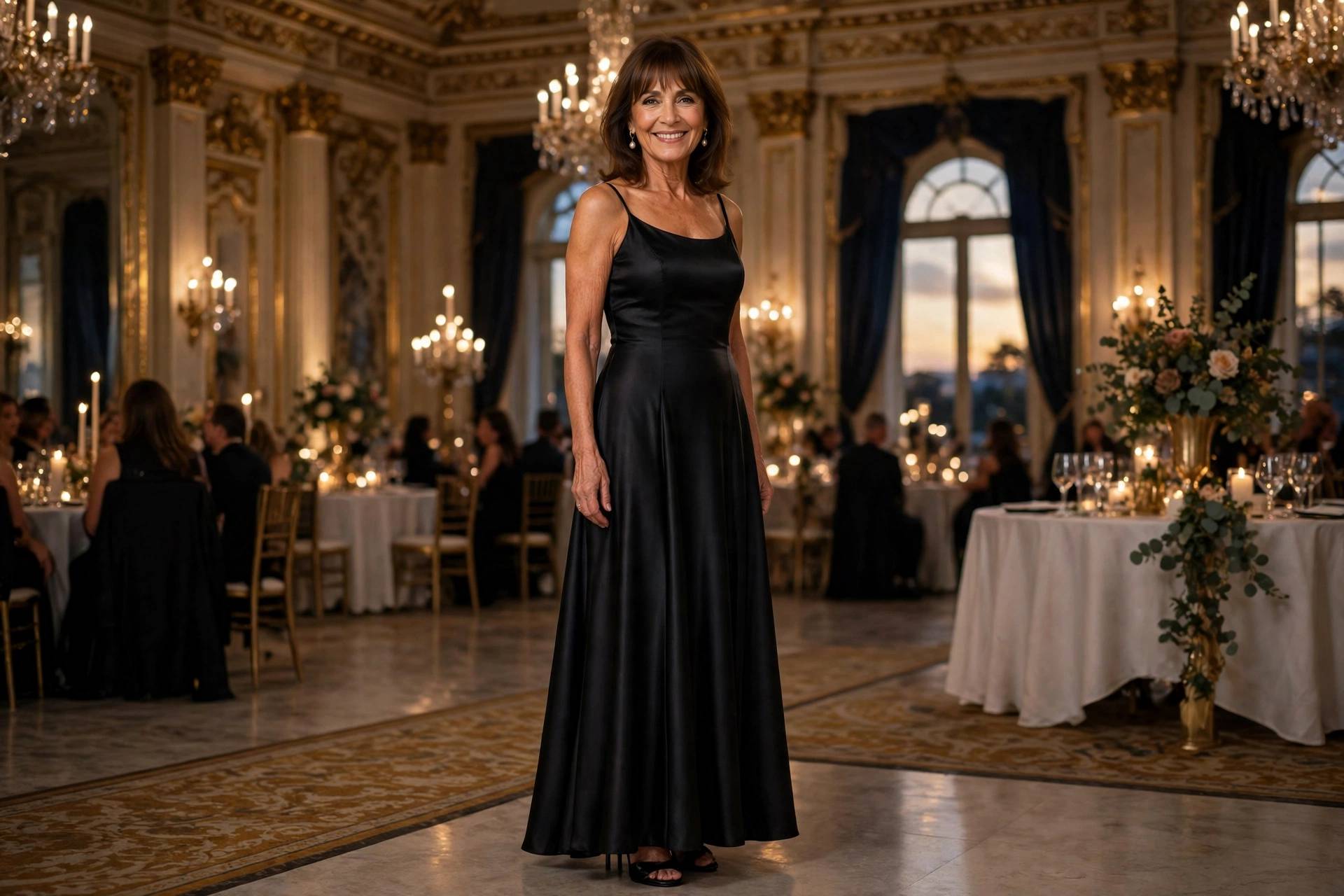
A black tie dress code on an invitation can stop a woman cold. It sounds strict, it sounds expensive, and it leaves one big question hanging: what exactly am I supposed to wear? Black tie is the second most formal Western dress code, one step below white tie and one step above formal. For women, it means a floor-length evening gown in a luxurious fabric, or a formal alternative at the same level, worn to an evening event. This guide explains the black tie dress code in plain words: what it means, what to wear, which colors and fabrics work, what shoes and jewelry finish the look, and what to leave in the closet.
The short version: wear a floor-length gown in silk, satin, velvet, or heavy crepe, in black, navy, or a deep jewel tone, with closed-toe heels, one statement piece of jewelry, and a small clutch. A formal jumpsuit or a tailored trouser suit in an evening fabric also works. Skip cocktail length, daytime prints, and casual shoes. If the event is a wedding, skip white, ivory, and cream too. That one formula covers nearly every black tie invitation a woman receives.
What Does Black Tie Mean?
Black tie is a formal evening dress code. It signals an event with a set program, a seated dinner or a formal reception, and an expectation that guests dress up properly. Most black tie events start at 6 pm or later and take place in ballrooms, hotels, historic houses, or formal venues. Weddings, charity galas, award ceremonies, and formal dinners are the usual settings.
The name confuses people because it sounds like a color rule. It is not. Black tie describes a level of formality, not a requirement to wear black. The phrase comes from the men’s side of the code, the black bow tie worn with a dinner jacket. For women, black is always a safe choice, but navy, emerald, burgundy, deep plum, champagne, and metallics all fit the code when the fabric and the cut are formal enough. The Emily Post Institute’s black tie dress code guide lists a floor-length evening gown, a dressy cocktail dress, or dressy separates as the women’s options, which confirms the code is about formality first and color second.
On the formality scale, black tie sits at 6 out of 7. White tie is the only code above it, and it is rare outside state occasions and a few very traditional weddings. Formal sits one step below black tie, cocktail and semi-formal sit further down. That position matters because it sets the hemline rule: at black tie, floor length is the default, while at formal and cocktail, shorter hemlines are acceptable. For the full scale and how every code compares, the confusing wedding dress codes decoded guide lays out all of them side by side.
What to Wear to a Black Tie Event: The Gown
The floor-length gown is the safest and most expected choice for women at a black tie event. It is the one option that is correct at every black tie occasion, from a wedding to a gala, in every season, and at every venue. If you own one good floor-length gown, or you can rent one, the rest of the outfit becomes simple.
Choose the silhouette by what fits your body and the room. A-line and empire waist gowns suit most figures and move well on a dance floor. Column and sheath gowns read sleek and modern but need careful fit through the hip. A-line ball gown shapes suit very formal weddings and galas but can feel heavy at a smaller dinner. Off the shoulder, one shoulder, and V-neck bodices are all fine at black tie, as long as the neckline stays elegant rather than revealing. Long sleeves, three-quarter sleeves, and sleeveless cuts all work, so pick the sleeve by the season and your comfort, not by a rule.
Fabric decides whether a gown reads as black tie or as a long dress. Silk, satin, velvet, heavy crepe, chiffon over a lined base, and lace over a lining all carry the code. Matte jersey, cotton, linen, and thin unlined chiffon do not, no matter how long the dress is. A simple gown in the right fabric always outranks an ornate gown in the wrong one. If you are choosing between two dresses, pick the one with the better fabric and the cleaner fit.
What to Wear Besides a Gown
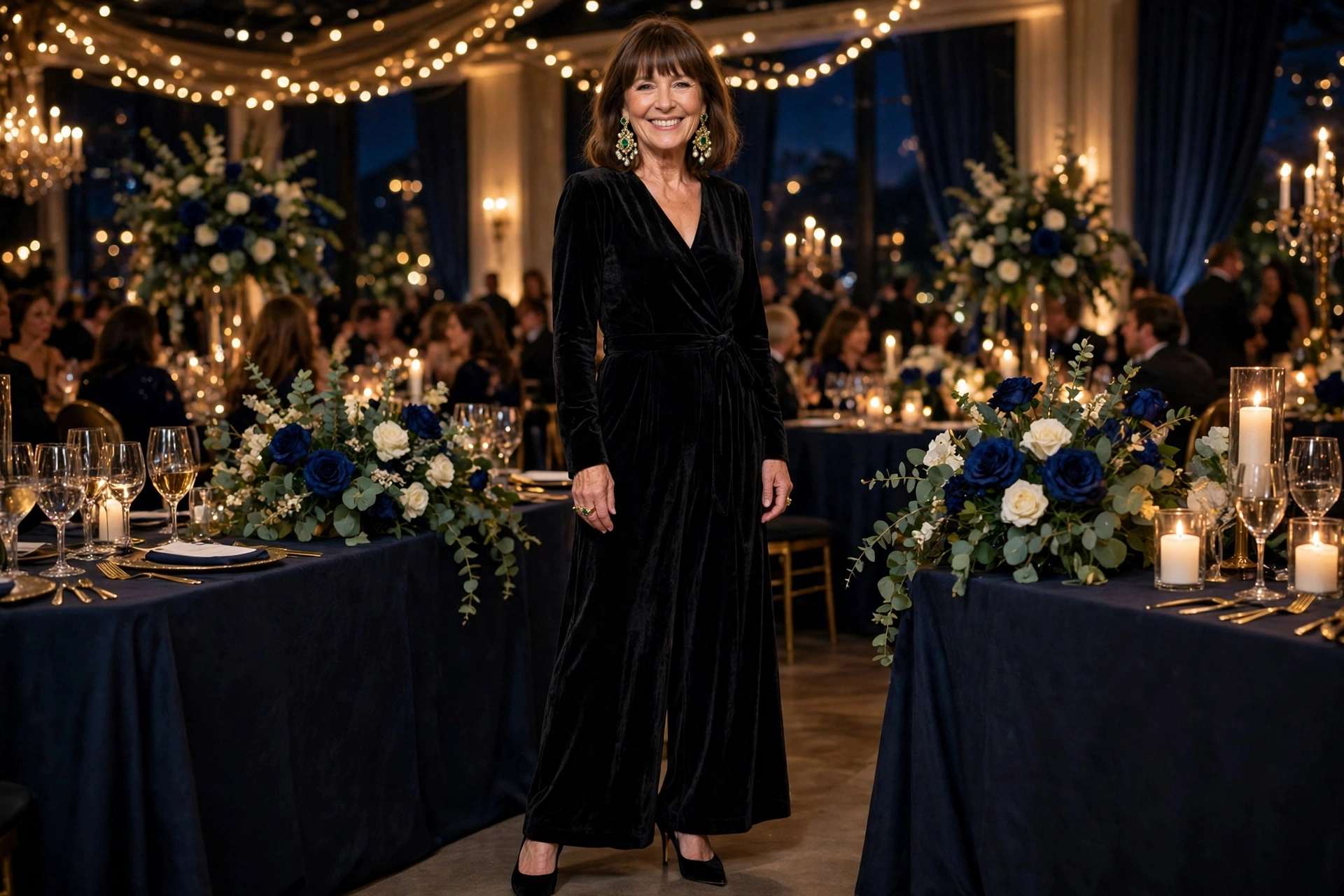
A gown is the default, not the only answer. Three alternatives reach the same formality level when they are cut and finished properly.
A formal jumpsuit works at black tie when it is floor length, cut from an evening fabric like silk, satin, or velvet, and styled with heels and finished jewelry. Wide-leg and palazzo cuts read most formal. The jumpsuit suits women who dislike dresses, who want to dance without managing a skirt, or who are attending a modern gala where the room is less traditional. It does not suit a very traditional wedding or a white tie adjacent event, where a gown is still the expectation.
A tailored trouser suit works when it is an evening suit, not an office suit. That means a satin or crepe blazer and wide-leg trousers in black or a deep tone, worn with a silk camisole or a lace top underneath, heels, and evening jewelry. The difference between an office suit and a black tie suit is the fabric shine, the trouser cut, and the styling. A matte wool suit with a button shirt reads as work, even in black.
Dressy separates work in the same way: a silk or satin top with a floor-length skirt, or a beaded top with wide-leg evening trousers. The pieces must look like one planned outfit, not two good items worn together. Match the fabric weight and the shine level across both pieces, and keep the color story to one or two tones.
Colors and Fabrics That Work for Black Tie
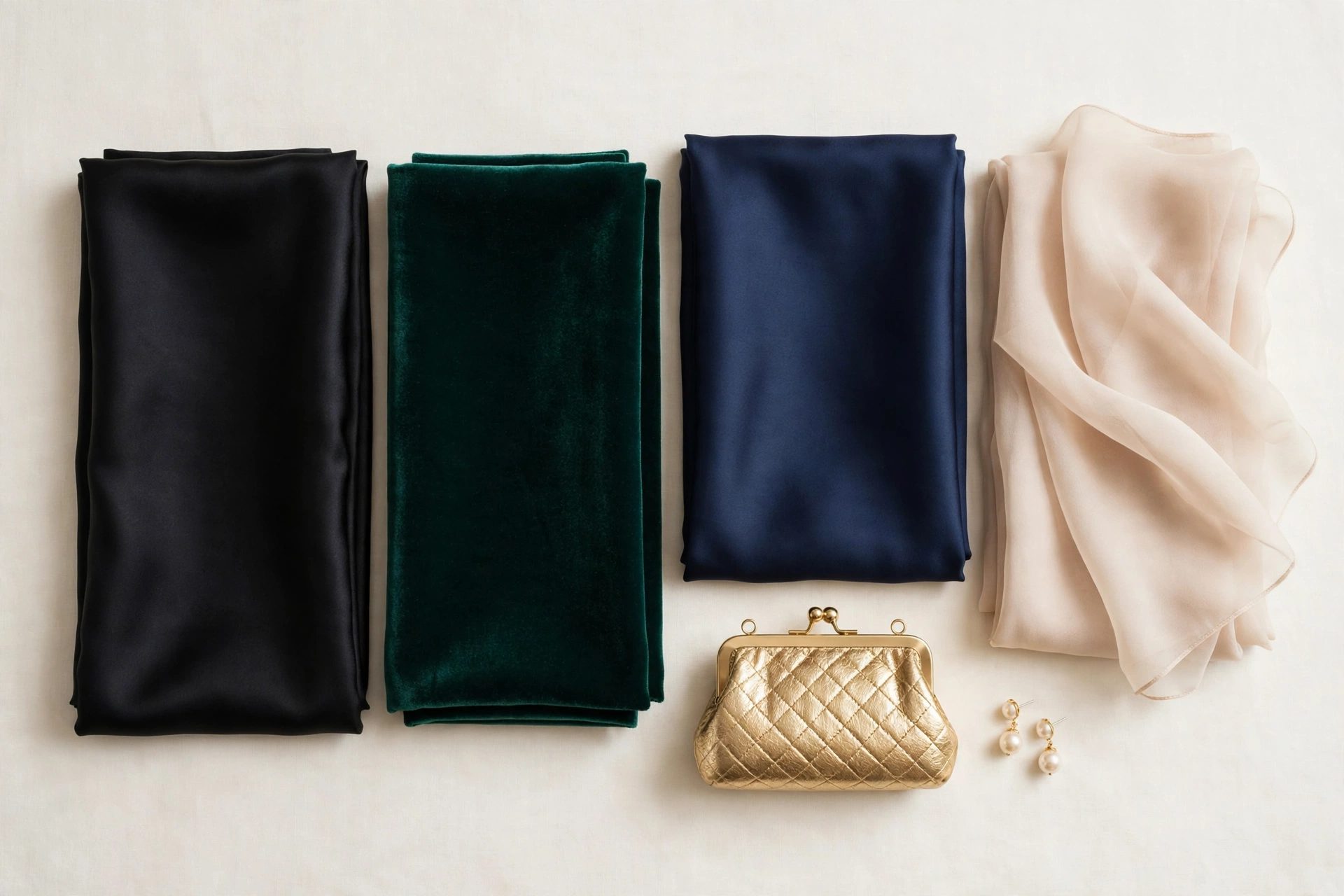
Color at black tie is freer than most women expect, and fabric is stricter than most women expect. The table below gives the practical version of both rules.
| Choice | Works well | Skip |
|---|---|---|
| Colors | Black, navy, emerald, burgundy, deep plum, champagne, gold, silver, deep teal | White, ivory, and cream at weddings; neon shades; loud daytime prints |
| Fabrics | Silk, satin, velvet, heavy crepe, chiffon over lining, lace over lining, brocade | Cotton, linen, matte jersey, thin unlined chiffon, denim, sequin overload on a casual cut |
| Shine | Sequins, metallics, and beading in a formal cut, especially in December and at galas | Glitter fabric on a simple sundress shape, or shine from head to toe with no matte piece to balance it |
| Season | Velvet and heavy satin in winter, silk and chiffon in summer, crepe year round | Heavy velvet at a summer outdoor event, thin chiffon at a winter evening wedding |
Two color notes deserve emphasis. First, sequins and metallics are fully acceptable at black tie, and they are at their best in December and at evening galas. The rule is balance: one sparkling piece, with the rest of the outfit quiet. Second, white is the one color with a hard rule, and it applies to weddings. At a black tie wedding, white, ivory, and cream belong to the bride. At a non-wedding gala, a white or ivory gown is fine.
Shoes, Bag, and Jewelry for Black Tie
The finishing pieces at black tie are simple, and that is the point. The gown carries the outfit, so the accessories should support it rather than compete with it.
Shoes should be closed-toe heels in most cases: classic pumps, strappy heeled sandals in a formal finish, or pointed-toe heels in black, nude, or metallic. Block heels are the practical choice for venues with lawns, gravel, or long evenings on your feet, and they are fully acceptable at black tie when the shoe itself is polished. Skip open-toe beach sandals, wedges in casual materials, and any shoe you would wear to the office. For more on matching shoes to dress lengths, the how to choose shoes with dresses guide covers heel height and strap choices by hemline.
The bag should be a small clutch or a small evening bag in metallic, black, or a tone that matches the dress. It needs to hold a phone, keys, lipstick, and nothing more. A large tote or a daytime shoulder bag breaks the formality of the whole outfit, even when the gown is right.
Jewelry follows one statement piece rule. Choose either statement earrings or a statement necklace, not both, and keep the rest of the jewelry quiet. Pearls, diamonds, and simple gold or silver pieces suit black tie in every season. Costume jewelry is fine when it looks intentional and well made. Skip chunky daytime jewelry, plastic pieces, and anything that jingles or catches on the fabric.
A wrap, stole, or shawl is worth planning, not an afterthought. A faux fur stole, a silk wrap, or a pashmina in a tone that matches the dress covers shoulders during arrival, outdoor photos, and air-conditioned rooms. A dress coat belongs over the outfit for travel in winter. The winter wedding guest outfits guide shows how to plan the coat as part of the outfit rather than as a cover-up.
What NOT to Wear to a Black Tie Event
- A cocktail dress at a traditional black tie wedding: knee length reads as cocktail, not black tie, and it will look short next to floor-length gowns in photos. The one exception is a very formal cocktail dress in an evening fabric at a modern, non-wedding black tie event.
- Daytime fabrics: cotton, linen, and matte jersey signal daytime, whatever the length. Fabric is the fastest way to miss the code.
- White, ivory, or cream at a wedding: these belong to the bride at any dress code, and black tie is no exception.
- Casual shoes: open-toe beach sandals, wedges in straw or cork, and office flats pull the whole outfit down a level.
- A large daytime bag: a tote or a big shoulder bag contradicts the formality of a gown.
- Too much sparkle with nothing matte to balance it: sequins from head to toe with glitter shoes and a glitter bag reads as costume, not celebration.
- Anything revealing or club-like: very high slits, deep plunging necklines, and bodycon cuts cut from party fabrics miss the tone of a formal evening.
Black Tie vs Formal vs Black Tie Optional
These three codes cause the most confusion because they sit next to each other on the formality scale. The differences are small, but they decide the hemline and the fabric.
| Code | Formality | Women: what to wear | Hemline rule |
|---|---|---|---|
| Black tie | 6 of 7 | Floor-length gown, or a formal jumpsuit or evening trouser suit | Floor length is the default |
| Formal | 5 of 7 | Floor-length gown, sleek jumpsuit, or elegant cocktail dress | Floor length in the evening, cocktail length before 5 pm |
| Black tie optional | 5 of 7 | Floor-length gown, formal midi, or elevated cocktail dress | Floor length is safest, formal midi and cocktail length are acceptable |
The practical way to read the three: black tie removes the choice, formal adds a time-of-day rule, and black tie optional returns the choice to the guest. If the invitation says black tie, wear the gown. If it says formal and the event starts before 5 pm, a cocktail dress in an evening fabric is fine. If it says black tie optional, a gown is still the safest answer, but a formal midi or an elevated cocktail dress will not look out of place. When in doubt between two options, the more formal one is the right call, because guests regret underdressing far more often than overdressing.
Black Tie in Winter and Summer
Black tie does not change with the season, but the fabric and the layers do. In winter, velvet, heavy satin, and brocade carry the code, with long sleeves, a dress coat for arrival, and closed-toe shoes with tights where practical. A faux fur stole or a wool wrap works indoors. In summer, silk, chiffon over a lining, and light crepe carry the code, with sleeveless or short-sleeve cuts, open-toe heeled sandals in a formal finish, and a light wrap for air conditioning. The venue matters too: an outdoor summer black tie event still calls for a gown, but the fabric should breathe and the shoes should handle grass or decking. Block heels or dressy flat sandals are the answer there, not stilettos.
Holiday black tie deserves one note. December galas and work Christmas parties at black tie level welcome sequins, metallics, and deep jewel tones more than any other month. The work Christmas party outfits guide covers the same season at the office party level, where the rules are looser. For a December black tie wedding, keep the sparkle to one piece and the silhouette formal.
Common Black Tie Mistakes to Avoid
- Reading “black tie” as “wear black”: black is safe, but it is not required. A navy or emerald gown in silk is more black tie than a black dress in cotton.
- Choosing length over fabric: a long dress in the wrong fabric misses the code, while a well-cut formal midi in silk at a modern event can pass. Fabric decides first.
- Skipping the shoe plan: the wrong shoes undo a right gown. Decide the shoes with the dress, not on the day, especially for outdoor venues.
- Two statement pieces at once: statement earrings plus a statement necklace plus a glitter bag is one piece too many. Pick one.
- Treating the coat as an afterthought: in winter, the coat is photographed first and worn for every outdoor minute. A casual coat over a gown breaks the look before the event starts.
- Copying the bride: at a wedding, white, ivory, cream, and anything with a train that rivals the bridal gown are off limits, even at black tie.
Frequently Asked Questions
Do I have to wear black to a black tie event?
No. Black tie describes a level of formality, not a color rule. Black is always safe, but navy, emerald, burgundy, deep plum, champagne, and metallics all fit when the fabric and the cut are formal. The one color rule that does apply is at weddings, where white, ivory, and cream belong to the bride.
What length of dress is appropriate for black tie?
Floor length is the standard for women at black tie events. It is the one length that is correct at every black tie occasion. A formal midi can work at a modern, non-wedding black tie event when the fabric is clearly evening, like silk or velvet, but a gown is the safer choice whenever you are unsure.
Can I wear a jumpsuit to a black tie event?
Yes, when the jumpsuit is formal enough. It should be floor length, cut from an evening fabric like silk, satin, or velvet, with a wide-leg or palazzo cut, and styled with heels and finished jewelry. A casual jumpsuit in cotton or jersey does not meet the code, and a very traditional wedding still calls for a gown.
Can I wear a short dress to a black tie event?
Not at a traditional black tie event. Short dresses belong to cocktail attire, which is two levels below black tie. The only setting where a shorter dress passes is a modern, non-wedding black tie event, and even then it must be a formal cocktail dress in an evening fabric, not a daytime dress.
Is black tie the same as formal attire?
No, though they are close. Black tie is one level above formal, and the difference is the hemline rule. Black tie asks for a floor-length gown as the default, while formal allows a cocktail-length dress, especially for events that start before 5 pm. Both call for evening fabrics and polished styling.
Can women wear sequins or metallics to a black tie event?
Yes. Sequins and metallics are fully acceptable at black tie, especially at evening galas and in December. The rule is balance: one sparkling piece, with the rest of the outfit in a matte or quiet finish, so the look reads as celebration rather than costume.
Conclusion: Key Takeaways
Black tie comes down to three decisions in order: the length, the fabric, and the finish. Wear a floor-length gown, or a formal alternative at the same level, in silk, satin, velvet, or heavy crepe. Choose black, navy, or a deep jewel tone, and keep white for the bride at weddings. Finish with closed-toe heels, one statement piece, and a small clutch. Get those three right and the invitation stops being intimidating. For a softer evening code, the cocktail party outfits guide covers the next step down the formality scale, where knee length and bolder color open up.

Rameen Awan is the founder and editor of Outfit Algorithm, where she breaks down outfit formulas, dress codes, and styling systems for real life. Her guides focus on practical details other sites skip: fabric behavior, fit for different body types, and what actually works when you are getting dressed in a hurry.