
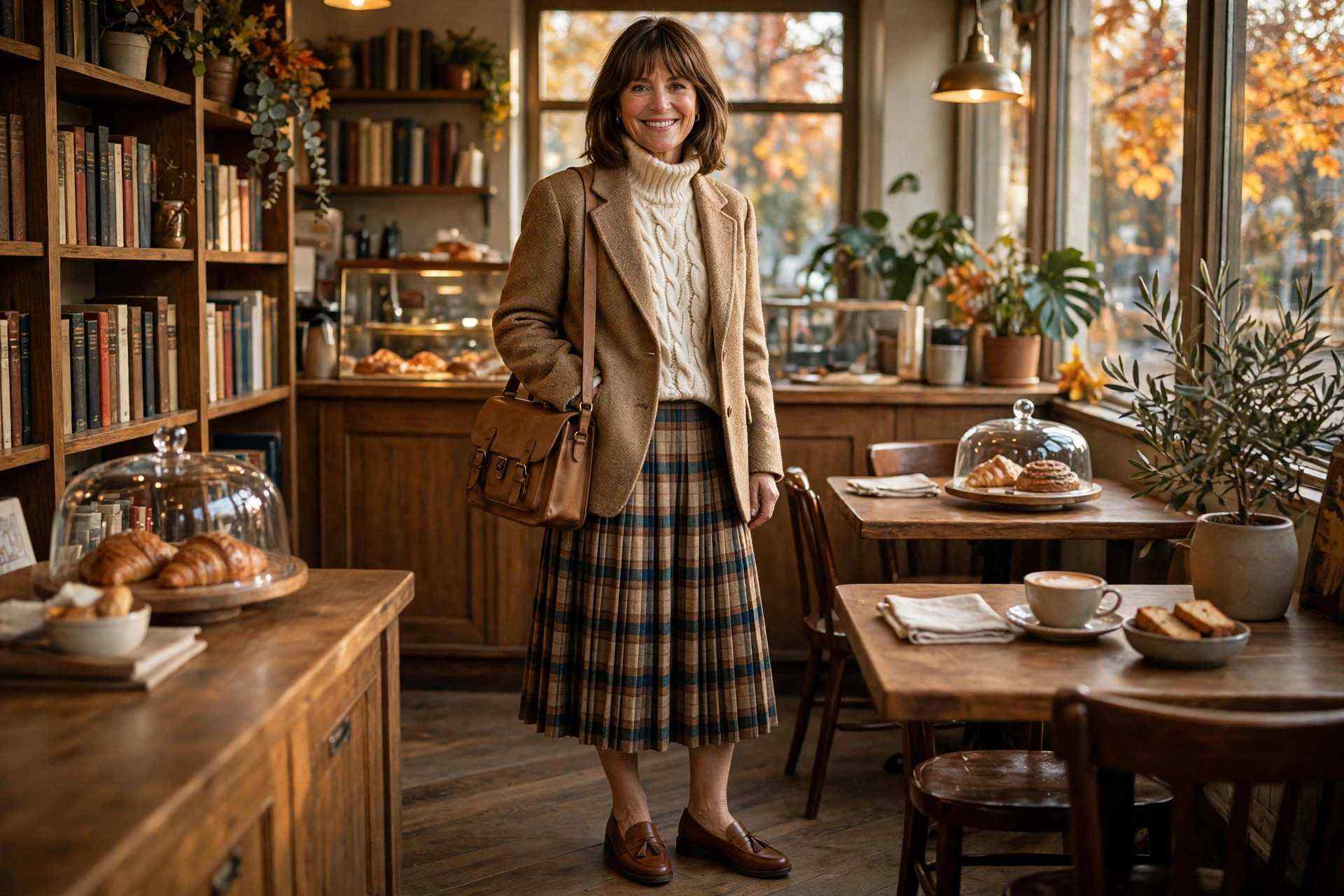
Poetcore outfits are the quietest big trend of fall 2026, and the easiest to get wrong. The look is romantic and literary, all soft knits, vintage blazers, and leather satchels, but one extra ruffle or one cape too many and it tips from thoughtful into costume. Poetcore is a vintage-inspired, bookish style built on texture, muted color, and relaxed layering. This guide decodes it into wearable rules: what poetcore actually is, how it differs from dark academia, the seven core pieces, the colors and fabrics that carry it, and three outfit formulas that work for everyday, office, and evening.
The short version: start with one poetcore piece, a tweed blazer, a cable-knit turtleneck, or a leather satchel, and build the rest of the outfit from plain, modern basics. Keep the palette muted, cream, charcoal, forest green, navy, and the 2026 additions of dark plum and rich chocolate. Let texture do the talking, and skip the props. That one rule keeps the look grounded in real life instead of a period drama.
What Is Poetcore?
Poetcore is a fashion aesthetic that dresses like a character from a novel, the kind of person who writes in cafes, browses used bookshops, and carries a paperback everywhere. The clothes are warm, textured, and quietly confident. Oversized turtlenecks, vintage blazers with a worn-in feel, cable-knit sweaters, button-down shirts, corduroy trousers, loafers, and flowing skirts or wide-leg pants form the base. What makes them poetcore is how they come together: layering is central, and the pieces look lived-in rather than new.
The trend has real numbers behind it. Pinterest named poetcore one of its defining trends for 2026, and searches for “the poet aesthetic” rose 175 percent, with “poet core” up 75 percent, cape outfits up 65 percent, satchel bag aesthetic up 85 percent, and tie accessories up 85 percent. The look also crossed from social feeds into fashion coverage: Vogue and other publications have described the same bookish, literary styling as literary chic, and the Spring and Fall 2026 runways carried the references, from bow shirts and masculine-cut blazers to book-shaped bag charms.
Poetcore rewards buying less and keeping pieces longer, which makes thrift stores and vintage shops its natural hunting ground. A blazer with a slightly frayed cuff or loafers with a bit of scuffing is not a flaw here. It is part of the story the outfit tells. That is also why the look suits a budget: most of the core pieces already exist in secondhand shops and in many closets.
The mood is the point. Poetcore is softer and more romantic than the aesthetics it grew out of, and it is meant to feel personal rather than performed. The outfit should look like the wearer chose each piece because she loves it, not because she is matching a uniform.
Poetcore vs Dark Academia vs Cottagecore
Poetcore is often confused with dark academia, and the two share a library, but they are not the same look. Dark academia is the older, heavier aesthetic: structured, collegiate, and gothic, built on tweed, candle-lit study sessions, and a scholarly uniform. Poetcore kept the literary sensibility and traded the rest for something softer, warmer, and more wearable. Cottagecore sits further away, rooted in rural life, gardening, and soft domestic calm, with puff sleeves and linen instead of blazers and satchels.
| Poetcore | Dark Academia | Cottagecore | |
|---|---|---|---|
| Feeling | Warm, romantic, personal | Scholarly, mysterious, structured | Peaceful, pastoral, domestic |
| Palette | Cream, ochre, rust, dusty rose, dark plum | Deep brown, charcoal, forest green, burgundy | Soft white, sage, dusty pink, cream |
| Key pieces | Oversized blazer, cable knit, satchel, pleated skirt | Tweed blazer, turtleneck, pleated skirt, loafers | Puff-sleeve dress, linen apron, straw hat |
| Texture | Velvet, corduroy, wool, lace accents | Tweed, wool, leather, plaid | Linen, cotton, eyelet, gingham |
| Wearability | One romantic piece plus modern basics | Full uniform, heavier and more formal | Weekend and home, rarely office |
The quickest way to tell them apart is warmth. If the outfit reaches for warm ambers and dusty pinks, it leans poetcore. If it reaches for cool darks and deep forest tones, it leans dark academia. The overlap zone sits in aged parchment tones and burgundy, which both aesthetics share, so a burgundy pleated skirt can belong to either one depending on what it is paired with.
That distinction matters for shopping. A dark academia wardrobe needs the full uniform to read correctly, which is why it can feel like a costume outside a campus. Poetcore works with a single piece, so a tweed blazer over jeans and loafers is already the look. That is the practical difference, and it is why poetcore travels better into offices, dinners, and everyday errands.
The 7 Core Poetcore Pieces
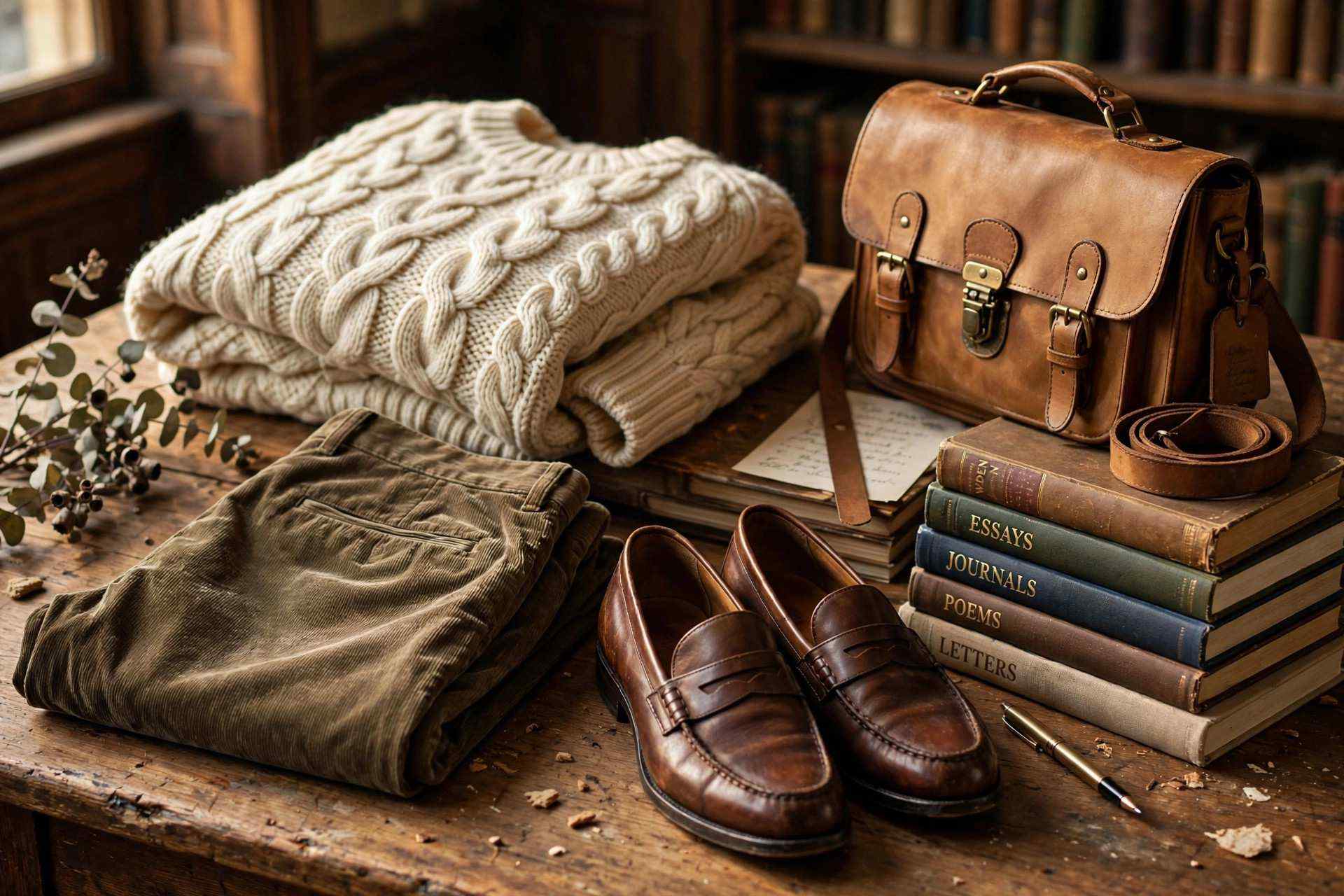
Poetcore needs fewer pieces than it looks like. Seven items cover nearly every outfit in the aesthetic, and most of them are classics that already exist in thrift shops and in many wardrobes.
- The oversized vintage blazer: the hero piece. Tweed, herringbone, or corduroy, with natural shoulders and a slightly worn finish. It should look borrowed, not boxy, so the shoulders sit close and the body skims rather than swallows.
- The cable-knit turtleneck: cream or oatmeal, chunky or fine-gauge. The collar should fold comfortably rather than squeeze, and the body should drape past the hip so it layers cleanly under a blazer.
- The romantic blouse: a billowy shirt with a ruffled collar, poet sleeves, a tie neck, or pintucks. Cream, ivory, or dusty rose. One romantic detail per outfit is enough.
- The pleated midi skirt: plaid, charcoal, or oxblood. Pleats create movement at the hem, which is the silhouette that reads most poetcore, and the midi length keeps it wearable with tights and boots.
- Corduroy or wide-leg trousers: brown, charcoal, or forest green. Corduroy adds the texture the look depends on, and a wide leg balances the oversized top half.
- Loafers or lace-up boots: brown leather loafers for everyday, brogue oxfords or Mary Janes for a sharper line, lace-up boots for cold weather. Wool socks in loafers are part of the look, not an accident.
- The leather satchel: a structured messenger bag in tan or chestnut, ideally with a patina that suggests it has carried many paperbacks. It is the one accessory that appears in nearly every poetcore outfit.
Start with the blazer or the satchel, whichever is easier to find, and build three outfits around it using pieces already in the closet. If one piece supports three outfits, the wardrobe is working. If it only works with other new purchases, it is not a core piece yet.
Colors and Fabrics That Make It Poetcore
Color and fabric do more work in poetcore than silhouette does. The palette is muted and autumnal, and the textures are the signal that separates a deliberate outfit from a pile of brown clothes.
| Choice | Works well | Skip |
|---|---|---|
| Colors | Cream, oatmeal, charcoal, forest green, navy, burgundy, dark plum noir, rich chocolate, dusty rose | Neon shades, bright primary colors, head-to-toe black, optic white |
| Fabrics | Wool, tweed, corduroy, velvet, cable knit, linen, silk blends, brushed cotton | Shiny synthetics, thin unlined chiffon, stiff polyester, sequins |
| Texture rule | At least two visible textures in every outfit, one soft and one structured | All-smooth fabrics, which read flat and corporate |
| Accent | One deep accent, dark plum, oxblood, or forest green, against neutrals | Three or more strong colors competing in one outfit |
The 2026-specific colors deserve a note. Searches for dark plum noir and rich chocolate surged more than 140 percent as the trend gained momentum, and dark plum has become the go-to alternative to all-black for people who want a moody wardrobe without the goth connotations. A dark plum velvet blazer or an oxblood pleated skirt delivers the same depth as black with more warmth, which is exactly the poetcore trade.
Texture is the test that decides whether an outfit reads as poetcore. A pleated skirt with a slouchy cardigan and sheer tights can look effortlessly poetic, or it can look unfinished, and the difference is usually texture. When at least two pieces have visible texture, a cable knit, a corduroy blazer, a tweed skirt, the whole look reads as deliberate. The how to layer clothes for fall guide covers the same layering logic, and its 3-layer formula maps directly onto poetcore: a thin base, a textured mid layer, and a structured outer layer.
3 Poetcore Outfit Formulas That Work Every Time

Formulas remove the guesswork. Each one below uses the one-piece rule: one romantic or literary piece, everything else plain and modern.
1. The Everyday Scholar. Oversized cream turtleneck under a camel tweed blazer, dark straight-leg jeans or charcoal wool trousers, brown leather loafers, and a tan satchel. The turtleneck collar peeks above the blazer lapels, the front stays unbuttoned, and the layers read as effortless. This works for a gallery visit, a long cafe afternoon, or a casual office. If the evening turns cold, the blazer layers under a longer wool coat without bunching.
2. The Office-Safe Poet. A cream pintuck blouse with full-length tailored trousers in chocolate brown, a defined belt, polished loafers, and a structured bag. The blouse is the one romantic detail, and the tailoring stays sharp. For a stricter office, swap the blouse for a silk shirt and add the blazer. The how to style wide leg pants guide covers the trouser fit that makes this formula work, including the rise and length checks that keep wide legs polished instead of sloppy.
3. The Evening Reading. Black ribbed turtleneck, oxblood pleated skirt, oversized charcoal blazer, sheer black tights, and patent loafers or lace-up ankle boots. A dark lip or a muted berry lip finishes it. Velvet is the natural fabric here: a velvet blazer or a velvet skirt deepens the whole outfit, and the velvet Christmas party outfit ideas guide shows how the same texture works for evening events without going over the top.
Each formula works because the proportions stay consistent: something soft against something structured, something dark against something cream. Keep the jewelry minimal, a signet ring, a thin gold chain, a single brooch, and let the clothes do the talking.
How to Wear Poetcore to Work
Poetcore can work in an office, but it needs editing. The rule is one romantic detail per outfit, with everything else tailored and quiet. A soft blouse with full-length trousers, a defined belt, and polished loafers is an easy office formula. A relaxed blazer over a silk blouse with a pleated skirt is another. Let the romantic piece lead and keep the tailoring sharp.
For a corporate setting, choose the muted blazer, silk blouse, and tailored trousers combination in camel, oatmeal, or dusty rose. Keep accessories minimal: a slim leather belt and classic loafers. A waistcoat under the blazer adds a literary edge without overpowering professionalism, and a cream blouse with a chocolate trouser suit reads as polished rather than costumey. Skip the cape, the beret, and the lace collar at work. They are the pieces that tip an office outfit into a theme.
For a creative or casual office, the range widens. A cable-knit sweater vest over a button-down, wide-leg corduroy trousers, and loafers is a full poetcore outfit that still looks like work clothes. The how to style a sweater vest guide covers the layering and fit that keep a vest polished, which is the difference between intentional and thrown together in this look.
Poetcore for Plus Size
Poetcore adapts well to plus size because its silhouettes are relaxed rather than restrictive. An oversized blazer skims rather than clings, a pleated midi skirt creates movement at the hem, and a wide-leg trouser balances the top half without squeezing. The pieces that work hardest are the ones with structure: a blazer with a defined shoulder, a wrap-style blouse that defines the waist, and trousers with a real waistband instead of an elastic one.
Start with a romantic blouse and straight-leg pants, add loafers and a pendant necklace, and the outfit is already poetcore. For work, pair a pintucked blouse with tailored trousers and a long cardigan, then swap the cardigan for a blazer in a more formal office. For dinner afterward, add earrings and a small shoulder bag. The same one-piece rule applies: one romantic detail, everything else clean and well fitted.
Fit notes matter more than size labels. A blazer that pulls across the bust needs a size up with the sleeves shortened, not a smaller size worn open. A pleated skirt should sit at the natural waist, not the hip, so the pleats fall instead of flaring. And a satchel worn crossbody should sit at the hip, not the waist, so it does not cut the outfit in half.
How to Wear Poetcore Without Looking Like a Costume
This is the question that decides whether poetcore works in real life, and the answer is restraint. Choose one recognizable poetcore piece, a cape, a tie-neck blouse, a tweed blazer, or an aged leather satchel, and keep the rest of the outfit clean and familiar so the romantic detail reads as a choice rather than a theme.
The most common mistake is stacking too many nostalgic elements at once. A turtleneck layers beautifully under a sleek coat, but the same turtleneck with a beret, a cape, and a lace collar feels theatrical. The same applies to props: carrying a poetry book or a fountain pen can reinforce the mood, but leaning hard into props risks tipping into costume territory. The clothing itself, texture, silhouette, and palette, does the work. Props are optional and easy to overdo.
A second guardrail is modern grounding. Pair the romantic piece with something unmistakably current: dark straight-leg jeans, clean leather loafers, a simple watch, or a minimal bag. The contrast is what keeps a ruffled blouse from feeling like a period costume. A cream poet blouse with black jeans and pointed boots is the classic example, and it works because the jeans and boots are plain and modern.
What to Avoid
- The full costume: cape, beret, lace collar, and satchel all at once. One romantic piece per outfit is the limit.
- All-dark everything: head-to-toe black reads goth, not poetcore. Break black with cream, camel, or dark plum.
- Shiny synthetics: cheap shiny fabrics kill the lived-in texture the look depends on. Wool, tweed, and corduroy earn their place; polyester shine does not.
- Too many ruffles: one ruffled collar or one pair of poet sleeves is a detail. Ruffles on the blouse, the skirt, and the cuffs is a theme.
- Props as the outfit: a book, a fountain pen, and round spectacles do not make an outfit poetcore. The clothes have to carry it alone.
- Ignoring fit: oversized means relaxed, not shapeless. A blazer that swallows the shoulders or trousers that pool at the ankle makes the whole look look borrowed in the wrong way.
Frequently Asked Questions
What is poetcore?
Poetcore is a fashion aesthetic inspired by romantic literature and the wardrobe of writers and thinkers: oversized blazers, cable-knit turtlenecks, romantic blouses, pleated skirts, corduroy trousers, loafers, and leather satchels in muted, autumnal colors. It is the softer, more romantic cousin of dark academia, with warmth and lived-in texture instead of collegiate structure. Pinterest named it one of its defining trends for 2026, with searches for “the poet aesthetic” up 175 percent.
Is poetcore the same as dark academia?
No, though they share a library. Dark academia is structured, collegiate, and gothic, built on tweed, candle-lit study sessions, and a scholarly uniform in deep browns, charcoal, and forest green. Poetcore is warmer and more personal, with cream, ochre, rust, and dusty rose, softer silhouettes, and romantic details like ruffles and lace. Poetcore also works with a single piece, while dark academia usually needs the full uniform to read correctly.
How do you wear poetcore without looking like a costume?
Choose one recognizable poetcore piece, such as a cape, a tie-neck blouse, a tweed blazer, or an aged leather satchel, and keep the rest of the outfit clean and familiar so the romantic detail reads as a choice rather than a theme. Pair it with modern basics like dark straight-leg jeans or clean loafers, and skip the props. A turtleneck under a sleek coat reads as poetcore; the same turtleneck with a beret and a cape reads as a period drama.
What colors work best for poetcore?
Charcoal, navy, cream, burgundy, brown, and moss form the base, with dusty rose and ochre for warmth. The 2026 additions are dark plum noir and rich chocolate, which surged more than 140 percent in searches and work as a warmer alternative to all-black. Interrupt the softer, aged shades with black, dark denim, or a clear deep red so the outfit still feels current rather than faded.
Can you wear poetcore to work?
Yes. A soft blouse with full-length trousers, a defined belt, and polished loafers is an easy office formula, and a relaxed blazer over a silk blouse with a pleated skirt works too. Let one romantic detail lead and keep the tailoring sharp. For a stricter office, use a muted blazer, silk blouse, and tailored trousers, and skip the cape, beret, and lace collar. For dinner afterward, add earrings and a small shoulder bag.
How can I create a poetcore outfit with pieces I already own?
Start with a button-front shirt or a soft blouse, add a cardigan and a favorite pair of trousers or a skirt, and tuck in the front of the top to define the waist. A printed scarf, a structured tote, and ankle boots can bring the look together without a whole new wardrobe. Check for a blazer, a cable-knit sweater, a satchel, or loafers already in the closet: if one piece supports three outfits with existing basics, that is enough to try the trend. Thrift shops are the other natural source, since the look rewards worn-in texture.
Conclusion: Key Takeaways
Poetcore comes down to three decisions: one romantic piece, a muted and textured palette, and modern grounding. Start with a tweed blazer, a cable-knit turtleneck, or a leather satchel, build the rest from plain basics, and keep at least two visible textures in every outfit. Dark plum and rich chocolate are the 2026 colors to try, and the formulas above cover everyday, office, and evening without a new wardrobe. The how to style a midi skirt guide covers the pleated midi that anchors the most romantic version of the look, and the layering guide above covers the rest. Get the one piece right and the trend stops being intimidating.

Rameen Awan is the founder and editor of Outfit Algorithm, where she breaks down outfit formulas, dress codes, and styling systems for real life. Her guides focus on practical details other sites skip: fabric behavior, fit for different body types, and what actually works when you are getting dressed in a hurry.