
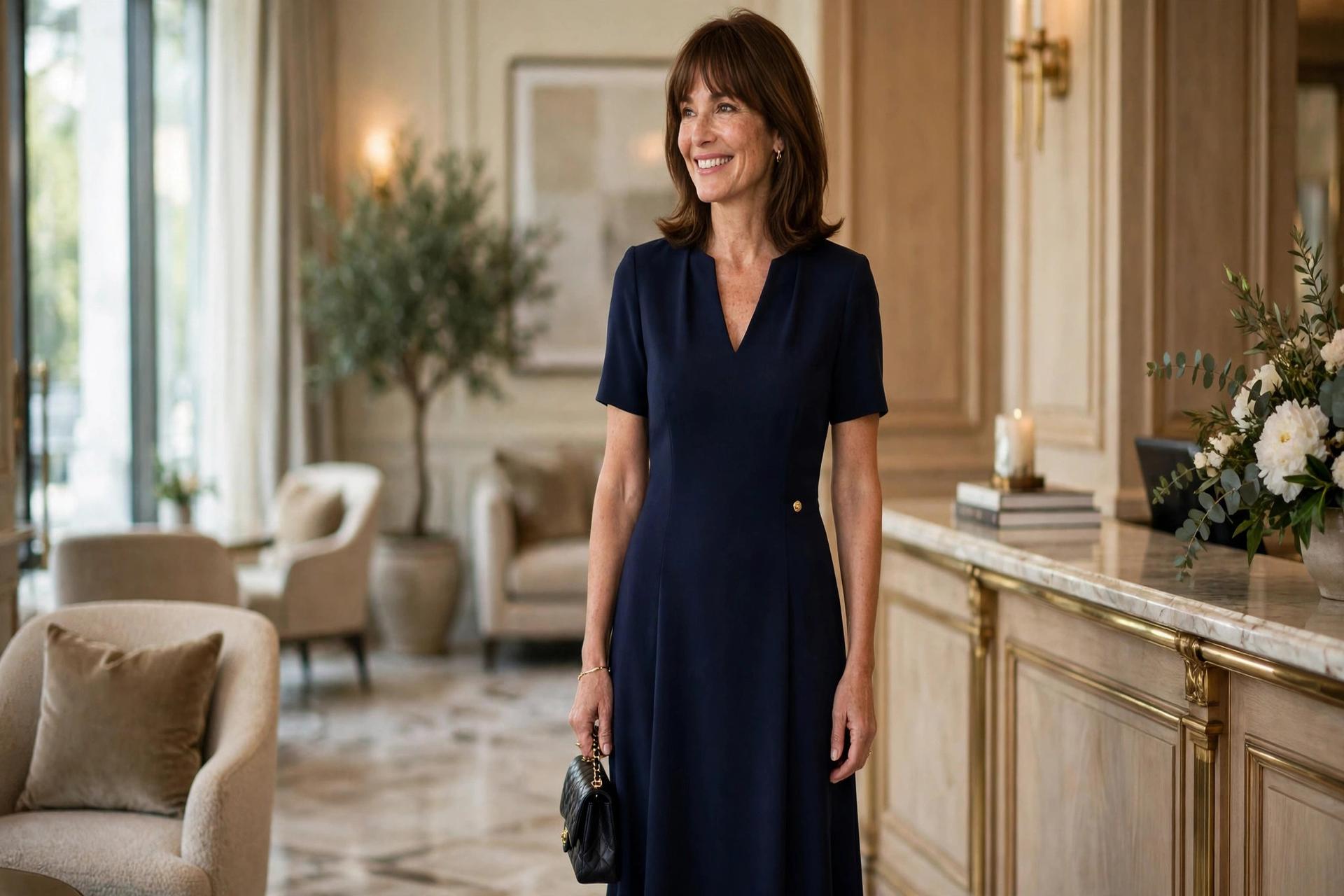
A semi-formal dress code on an invitation can leave a woman guessing. It sounds dressy, but it does not say how dressy, and it shows up on the most common invitations: daytime weddings, graduations, business dinners, and formal lunches. Semi-formal is the middle of the dress code scale, one step above smart casual and one step below cocktail. For women, it means a knee-length or midi dress in a polished fabric, or an equally tidy jumpsuit or tailored separates. This guide explains the code in plain words: what it means, what to wear, which colors and fabrics work, and what to leave in the closet.
The short version: wear a knee-length or midi dress in crepe, silk, chiffon, or matte satin, in navy, black, burgundy, or a soft muted tone, with block heels or dressy flats, one quiet piece of jewelry, and a small clutch. A tailored jumpsuit or a silk blouse with wide-leg trousers also works. Skip jeans, daytime fabrics, floor-length gowns, and casual shoes. If the event is a wedding, skip white, ivory, and cream too. That one formula covers nearly every semi-formal invitation a woman receives.
What Does Semi-Formal Dress Code Mean?
Semi-formal is a dress code for occasions that are polished but not grand. It signals an event with a real program and real guests, where jeans and sundresses would look careless, but a floor-length gown would look overdressed. Daytime weddings are the most common setting, followed by evening weddings that are not black tie, graduations, award ceremonies, business dinners, and charity receptions. The venue is usually a restaurant, a hotel, a garden, or an event space, not a ballroom.
The Emily Post Institute’s attire guide from casual to white tie places semi-formal between smart casual and cocktail, with women in a dressy dress, a tailored jumpsuit, or polished separates. That placement is the whole point: dressier than the office and dressier than a daytime party, but never as formal as a floor-length gown.
On the formality scale, semi-formal sits at 3 out of 7. Smart casual sits just below it at 2, cocktail just above it at 4, and black tie at 6. That position sets the two rules that matter most: the hemline stays at knee length or midi, and the fabric must read as polished, not daytime. For the full scale, the confusing wedding dress codes decoded guide lays out every code side by side.
Three misunderstandings cause most semi-formal mistakes. First, semi-formal does not mean cocktail. The two codes are close cousins, and one good knee-length dress can pass for both, but cocktail leans darker and shinier, while semi-formal leans quieter and softer. Second, semi-formal does not mean casual with a blazer. A blazer over jeans is smart casual, not semi-formal, and it will look underdressed in every photo. Third, semi-formal does not mean formal. A floor-length gown at a daytime semi-formal wedding overdresses the guest and pulls focus from the couple. When a wedding names a theme as well as a code, the themed wedding guest outfits guide shows how to honor the theme without crossing into costume.
Time of day shifts the code without changing it. Daytime calls for lighter colors, softer prints, and breathable fabrics. Evening calls for darker tones, richer fabrics, and a little more polish. The dress stays knee length or midi either way, and the shoes stay dressy either way.
What to Wear to a Semi-Formal Event: The Dress
The knee-length or midi dress is the safest and most expected choice for women at a semi-formal event. It is correct at nearly every semi-formal occasion, from a daytime wedding to a business dinner, in every season. If you own one good midi dress in a polished fabric, the rest of the outfit is simple.
Choose the silhouette by what fits your body and the room. A-line and wrap dresses suit most figures and move well through a crowded reception. Sheath dresses read neat and modern but need careful fit through the hip. Fit-and-flare shapes suit weddings and lunches where you will sit, stand, and walk in the same dress. Sleeveless, short-sleeve, cap-sleeve, and three-quarter sleeve cuts all work. A modest neckline, a V-neck, a square neck, or a boat neck all fit the code.
Length is the rule that decides the dress. Knee length to midi is the safe zone. A tea-length dress that stops mid-calf sits at the long edge of the range and works well for daytime weddings. A modest maxi can work too, but only when the fabric is clearly elevated, like silk or crepe, and the cut is structured rather than beachy. A floor-length gown is too formal, and a mini dress is too casual, so the middle lengths are where the code lives.
Do the sit test before you leave the house. Sit down, cross your legs, and stand up again. The hem should stay where you put it, the neckline should stay in place, and the fabric should not ride up or pull across the hips. A dress that passes the sit test is one you can wear for four hours without thinking about it.
What to Wear Besides a Dress
A dress is the default, not the only answer. Three alternatives reach the same level when they are cut and finished properly.
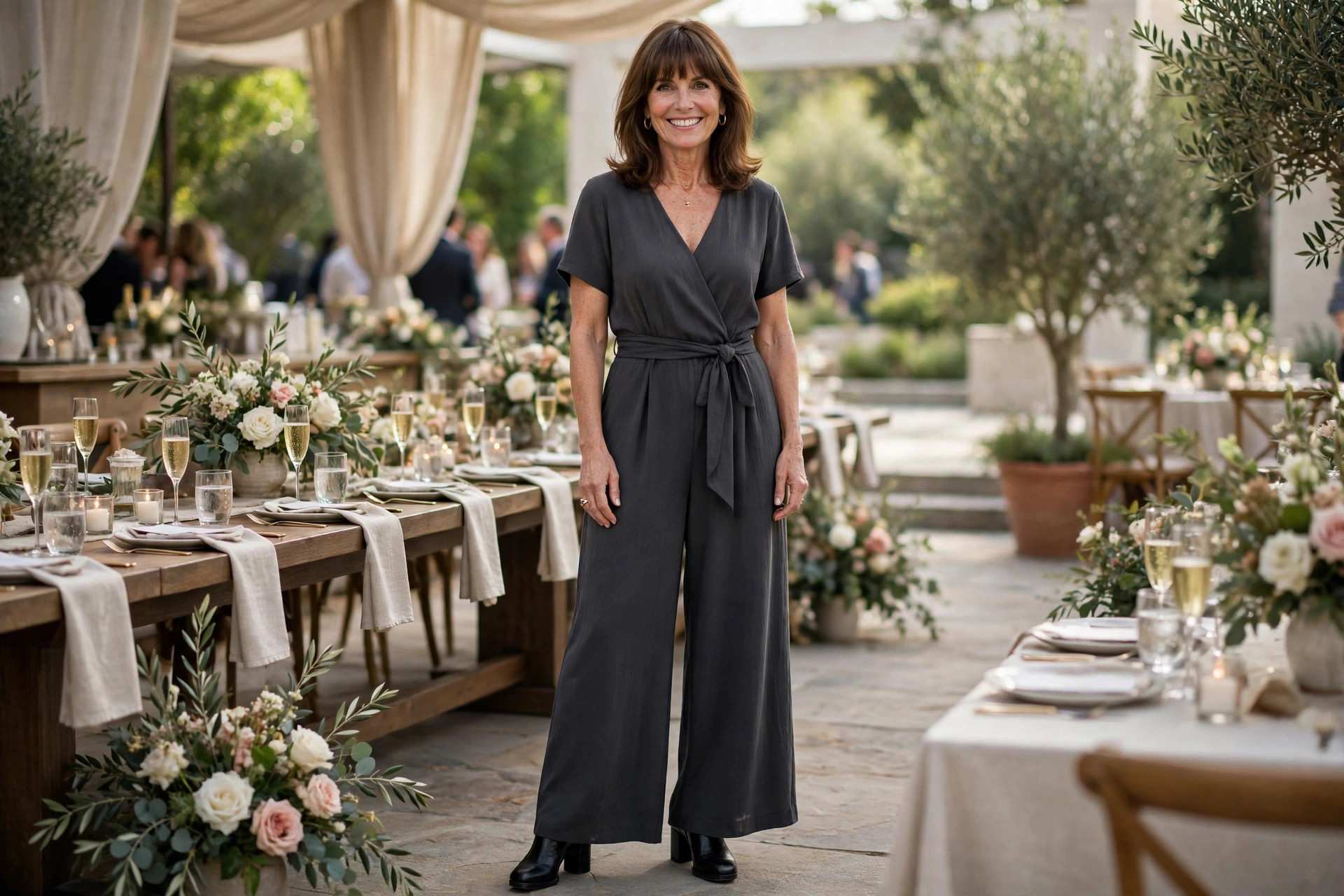
A tailored jumpsuit works at semi-formal events when it is cut from a polished fabric like crepe, silk, or satin, with a wide-leg or straight-leg cut, and styled with heels or dressy flats and quiet jewelry. It suits women who dislike dresses or who want to move freely through a long reception. It does not suit a very formal ceremony or a religious venue, where a dress is still safer.
Tailored trousers work when they are dress trousers, not office trousers and not chinos. That means wide-leg or straight-leg trousers in crepe, silk, or a fine wool blend, in navy, black, or charcoal, worn with a silk blouse or a lace top, and finished with heels or polished loafers. A matte wool suit with a button shirt reads as work, even in black, so the top and the shoes have to lift it out of the office.
Dressy separates work in the same way: a midi skirt with a silk blouse, a satin top with tailored trousers, or a fine-knit top with a pleated midi skirt. The pieces must look like one planned outfit, not two good items worn together. Match the fabric weight and the finish across both pieces, and keep the color story to one or two tones.
Colors and Fabrics That Work for Semi-Formal
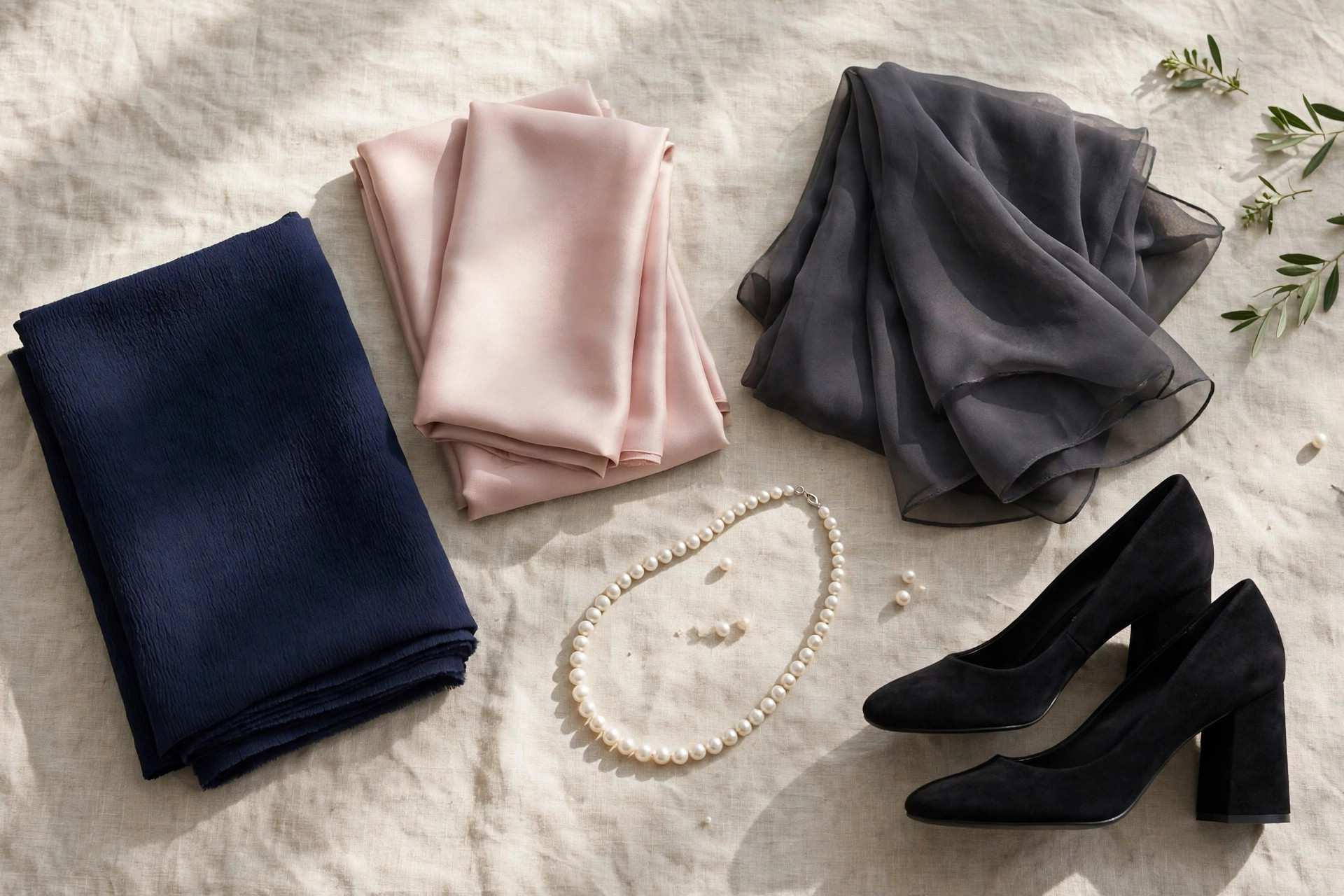
Color at semi-formal is softer than at cocktail and freer than at black tie. Prints are welcome here, as long as they stay refined. Fabric is still the test that decides whether an outfit passes.
| Choice | Works well | Skip |
|---|---|---|
| Colors | Navy, black, burgundy, emerald, deep plum, charcoal, muted pastels, soft florals, fall earth tones | White, ivory, and cream at weddings; neon shades; all black at a daytime wedding |
| Fabrics | Crepe, silk, chiffon over lining, matte satin, lace, fine wool blends, winter velvet | Cotton, linen daywear, matte jersey, denim, thin unlined chiffon, knitwear |
| Prints | Small florals, subtle geometric prints, soft watercolor prints | Large loud prints, logos, novelty prints, clashing patterns |
| Season | Velvet and heavy crepe in winter, silk and chiffon in summer, spring pastels, fall earth tones | Heavy velvet at a summer garden wedding, thin chiffon at a winter dinner |
Two color notes deserve emphasis. First, black is safe at semi-formal, but an all-black outfit at a daytime wedding can read as funereal. Add color through one accessory, a soft lip, or a pastel wrap, and the same black dress works at a wedding, a business dinner, and a graduation. Second, white has a hard rule at weddings: white, ivory, and cream belong to the bride.
Shoes, Bag, and Jewelry for Semi-Formal
The finishing pieces at semi-formal are simple. The dress carries the outfit, so the accessories should support it rather than compete with it.
Shoes should be block heels, kitten heels, classic pumps, strappy heeled sandals, or dressy flats. A heel of 2 to 3 inches is the practical height for an afternoon and evening of standing, walking, and dancing. Block heels are the practical choice for venues with lawns, gravel, or decking. Dressy flats and polished loafers work when the rest of the outfit is tidy. Skip sneakers, casual sandals, flip-flops, and chunky rubber soles. For more on matching shoes to dress lengths, the how to choose shoes with dresses guide covers heel height and strap choices by hemline.
The bag should be a small clutch, a compact crossbody, or a small structured handbag in a tone that matches the dress. It needs to hold a phone, keys, and lipstick, and nothing more. A large tote or a daytime shoulder bag breaks the polish of the whole outfit.
Jewelry follows one statement piece rule, or no statement piece at all. At semi-formal, understated jewelry often fits better than bold jewelry: pearl or gold studs, a delicate bracelet, or a simple pendant. If you wear one statement piece, keep the rest quiet. Costume jewelry is fine when it looks intentional and well made. Skip chunky daytime jewelry, plastic pieces, and anything that catches on the fabric.
A layer is worth planning, not an afterthought. A tailored blazer, a silk wrap, a light shawl, or a fine cardigan covers shoulders during arrival, outdoor photos, and air-conditioned rooms. Pick the layer with the dress, so the colors and the fabric weights agree.
What NOT to Wear to a Semi-Formal Event
- Jeans of any kind: dark wash, a tailored cut, and a blazer do not make denim semi-formal. If the event allows jeans, it is not a semi-formal event.
- A floor-length gown: it belongs to black tie and formal events. At a semi-formal event it overdresses you and pulls focus at a wedding.
- Daytime fabrics: cotton sundresses, linen shifts, and matte jersey signal daytime, whatever the cut.
- White, ivory, or cream at a wedding: these belong to the bride at any dress code, and semi-formal is no exception.
- Casual shoes: sneakers, flip-flops, casual sandals, and straw wedges pull the whole outfit down a level.
- T-shirts, athleisure, and sportswear: even an expensive logo tee or matching set is casual, not semi-formal.
- A nightclub look: very short, very tight, and very low-cut in a shiny party fabric reads as a night out, not an invitation.
Semi-Formal vs Cocktail vs Smart Casual
These three codes cause the most confusion because they sit next to each other on the formality scale. The differences are small, but they decide the hemline, the fabric, and the color.
| Code | Formality | Women: what to wear | When it appears |
|---|---|---|---|
| Smart casual | 2 of 7 | Tailored trousers or a neat skirt, a blouse, a blazer, polished flats | Dinners, gallery openings, smart lunches |
| Semi-formal | 3 of 7 | Knee-length or midi dress, dressy jumpsuit, or polished separates | Daytime weddings, graduations, business dinners, formal lunches |
| Cocktail | 4 of 7 | Knee-length or midi dress, tailored jumpsuit, or evening separates | Evening weddings, engagement parties, holiday parties, work receptions |
The practical way to read the three: smart casual is the office done well, semi-formal is the celebration done quietly, and cocktail is the evening version with more color and shine. The Knot draws the same line, calling semi-formal a slightly toned-down version of cocktail. In practice, one good knee-length dress in a polished fabric can pass for both: change the finish, not the dress. Quieter jewelry and a block heel push it toward semi-formal, while a bolder earring and a sleeker heel push it toward cocktail. For the full evening version of the code, the cocktail dress code guide covers the same rules one step up the scale. When in doubt, the more formal option is the right call, because guests regret underdressing far more often than overdressing.
Semi-Formal Through the Seasons
Semi-formal does not change with the season, but the fabric, the color, and the layers do. In winter, velvet, heavy crepe, and fine wool blends carry the code, with long sleeves or a blazer, opaque tights, closed-toe shoes, and a tailored coat for arrival. In summer, silk, chiffon over a lining, and light crepe carry the code, with sleeveless cuts, open-toe heeled sandals, and lighter colors. Spring calls for pastels and soft florals in breathable fabrics. Fall calls for earth tones, deeper jewel shades, and suede shoes. The winter wedding guest outfits guide shows how to plan the coat as part of the outfit rather than as a cover-up.
The venue matters as much as the month. An outdoor garden wedding still calls for a knee-length or midi dress, but the fabric should breathe and the shoes should handle grass or decking. Block heels or dressy flat sandals are the answer there, not stilettos. A church ceremony may call for covered shoulders, so pack a wrap or a blazer. A business dinner in a hotel ballroom calls for darker tones and a sleeker finish than a daytime garden lunch.
Common Semi-Formal Mistakes to Avoid
- Wearing a floor-length gown to a daytime wedding: a gown belongs to black tie. At semi-formal it overdresses you, and it will look formal next to knee-length dresses in photos.
- Treating semi-formal as casual: jeans with a blazer, a logo tee under a jacket, or sneakers with a dress all read as smart casual at best.
- All black with no color at a daytime event: black is safe, but head-to-toe black at a daytime wedding can read as funereal. One soft accessory fixes it.
- Two statement pieces at once: statement earrings plus a statement necklace plus a glitter bag is one piece too many. Pick one, or none.
- Copying cocktail sparkle: heavy sequins, metallics from head to toe, and a sultry slit belong to cocktail, not semi-formal. Keep the shine to one small accent.
- Forgetting the layer: an outdoor evening in spring or a cold ballroom needs a wrap, a blazer, or a coat.
Frequently Asked Questions
What is the semi-formal dress code?
Semi-formal sits between formal and smart casual. For women it means a knee-length or midi dress, a tailored jumpsuit, or polished separates in a refined fabric like crepe, silk, or chiffon. It is dressier than the office and dressier than a daytime party, but it never asks for a floor-length gown. Daytime weddings, graduations, business dinners, and formal lunches are the usual settings.
Is semi-formal the same as cocktail attire?
They are very similar, but they are not the same. Semi-formal is a slightly toned-down version of cocktail, often for daytime events, with quieter fabrics and softer colors. Cocktail leans more formal and more evening-appropriate, with darker colors and more shine. One good knee-length dress can pass for both, with the jewelry and the shoes doing the work of shifting it one way or the other.
Can I wear pants to a semi-formal event?
Yes. A tailored pant suit or a chic jumpsuit can be very appropriate for semi-formal occasions. The fabric and the fit decide whether trousers pass: wide-leg or straight-leg trousers in crepe, silk, or a fine wool blend with a dressy top work, while casual trousers, chinos, and denim do not.
Can I wear jeans to a semi-formal event?
No. Jeans are too casual for any semi-formal event, even dark, well-fitted jeans with a structured blazer. The trouser needs to be dress trousers in a clean, pressed fabric. Tailored trousers or a dress are always the safer choice for true semi-formal events like weddings or corporate functions.
Can I wear a maxi dress to a semi-formal event?
Yes, but choose a maxi dress made from an elevated fabric like silk or crepe, and avoid overly casual styles. The dress should feel refined rather than beachy or bohemian. A structured maxi with a defined waist and polished shoes reads as semi-formal, while a loose maxi in light cotton reads as daytime casual.
What shoes should I wear to a semi-formal event?
Block heels, kitten heels, classic pumps, strappy heeled sandals, and dressy flats all work. Pick the heel by the venue: block heels for grass or gravel, classic pumps for a ballroom floor, dressy flats when you will be on your feet for hours. Avoid sneakers, flip-flops, and overly casual footwear.
Conclusion: Key Takeaways
Semi-formal comes down to three decisions in order: the length, the fabric, and the finish. Wear a knee-length or midi dress, or a dressy alternative at the same level, in crepe, silk, chiffon, or matte satin. Choose navy, black, burgundy, or a soft muted tone, and keep white for the bride at weddings. Finish with block heels or dressy flats, one quiet piece of jewelry, and a small clutch. Get those three right and the invitation stops being intimidating.

Rameen Awan is the founder and editor of Outfit Algorithm, where she breaks down outfit formulas, dress codes, and styling systems for real life. Her guides focus on practical details other sites skip: fabric behavior, fit for different body types, and what actually works when you are getting dressed in a hurry.