
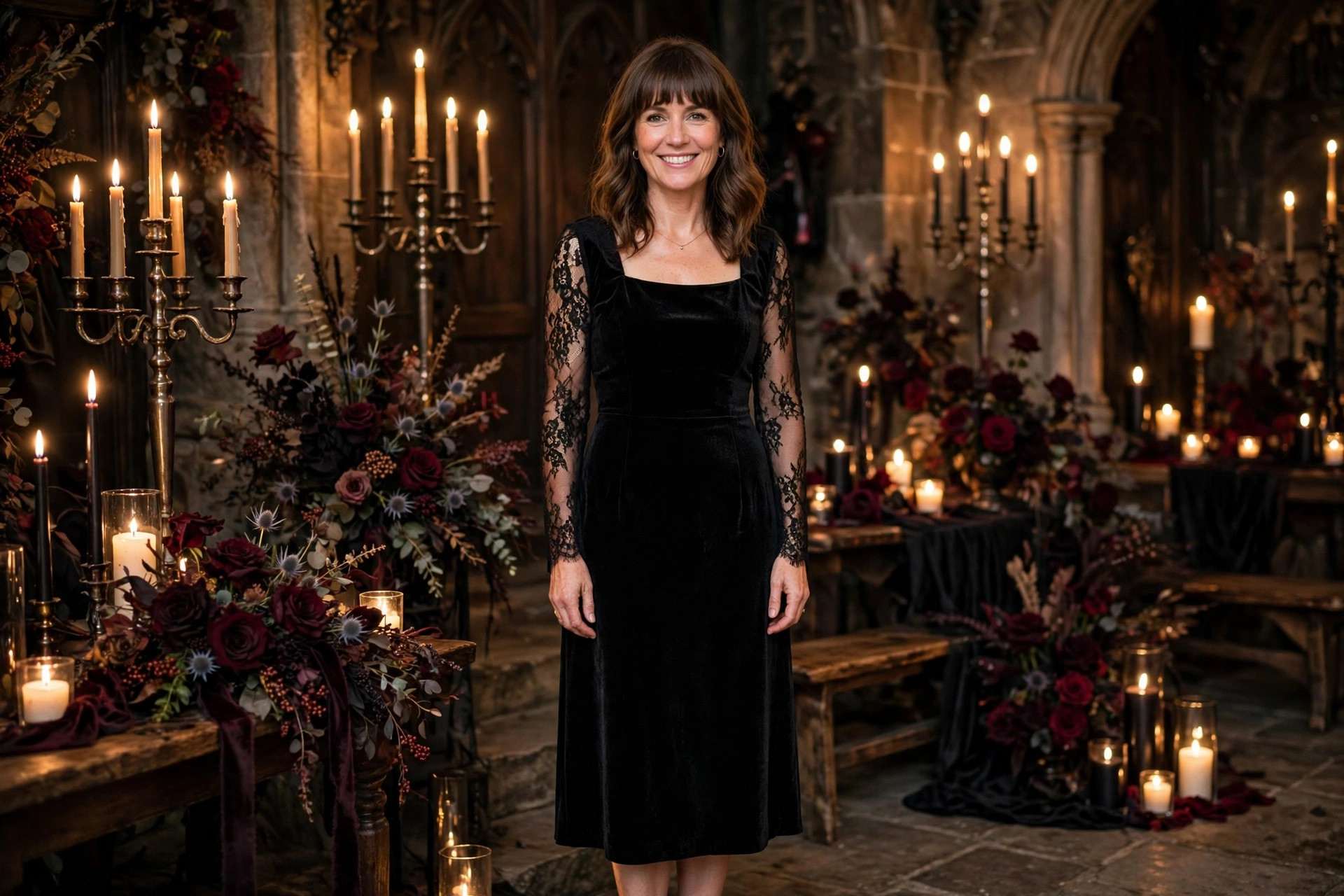
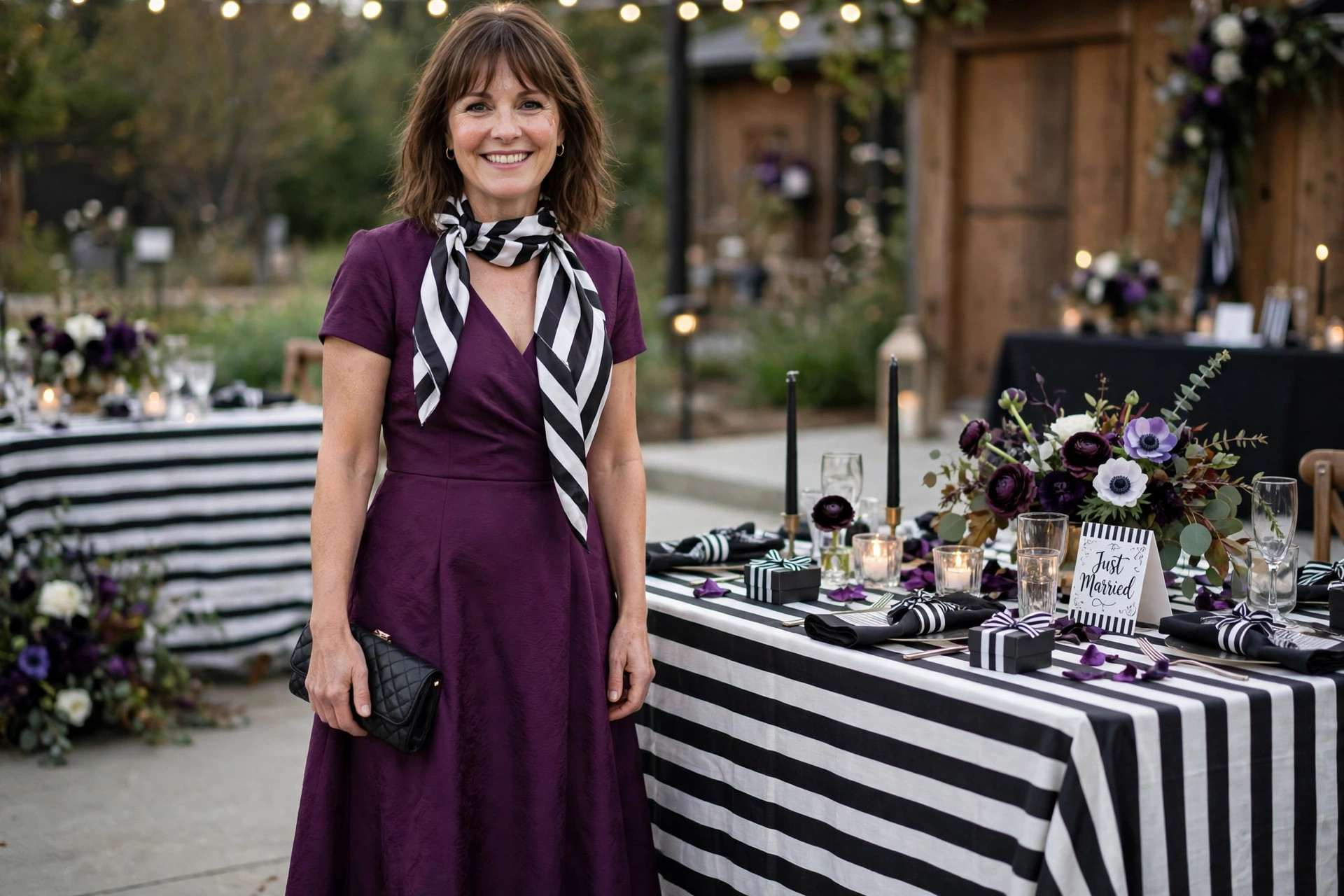
A themed invitation is not a costume order. Themed wedding guest outfits work on a simple formula: keep the formality of a normal wedding outfit, then let the theme show up in the color, the fabric, and one or two accessories. A black velvet midi at a gothic wedding, an emerald wrap dress at a dark fairytale wedding, or a plum dress with a striped scarf at a Beetlejuice style wedding all read as on-theme. None of them reads as a costume. This guide decodes the wording couples actually use, shows where the theme-versus-costume line sits, and gives a working formula for each dark theme.
The Short Answer: Formality First, Theme Second
Two separate instructions hide inside a themed invitation. The dress code word (cocktail, formal, black tie) sets how dressed up you need to be. The theme word (gothic, fairytale, Halloween) only sets the mood. Guests get into trouble when they follow the theme word and ignore the dress code word, because a perfect gothic costume at a formal wedding is still the wrong outfit.
So build the outfit in that order. Choose a base outfit that fits the dress code exactly, in a color and fabric that fit the theme. Then add theme signals on top, in accessories, hair, and makeup. If the invitation is vague about how far to take the theme, the wedding website usually carries the detail, and the guide to confusing wedding dress codes shows how to pull the real instruction out of creative wording.
How Do You Read a Themed Invitation?
Read the theme phrase as a request about mood, not as a request for a character. Couples pick these phrases from a fairly small set, and each one asks something specific of guests. This table translates the common ones.
| Invitation wording | What it actually asks of guests | Your move |
|---|---|---|
| “Gothic” or “dark elegance,” with formal or black tie | Dark, dramatic formalwear. No costume expected at all. | Black or jewel-tone formal dress, rich fabric, silver or antique-style jewelry. |
| “Dark fairytale” or “enchanted forest” | Romantic and moody, softer than gothic. Flowing shapes and deep colors. | Midi or maxi in emerald, plum, or midnight blue, with one nature-inspired detail such as a floral hair pin. |
| “Halloween wedding, costumes encouraged” | Costumes are welcome but optional. The word “encouraged” is doing the work here. | Either a polished costume or a formal outfit with two spooky touches. Both are correct. |
| A named theme, such as “Beetlejuice” or a film or era | A visible nod to that world, delivered inside a normal guest outfit. | One graphic signal only, such as black and white stripes on a scarf, a clutch, or a tie, over a standard formal base. |
| “Costumes required” or “come dressed as…” | The rare case where a costume really is the dress code. | Build the costume on a formal base so the outfit still works at the ceremony and in photos. |
One check is worth making before you plan anything. At gothic and Halloween weddings, the bride sometimes wears black herself. If she does, the invitation or wedding website usually says so, and guests then move to deep jewel tones instead of black. 2 minutes on the wedding website settles it.
Where Is the Line Between On-Theme and Costume?
A themed wedding guest outfit is a regular wedding outfit whose color, fabric, and one or two accessories point at the theme. A costume is an outfit built to be recognized as a specific character. That difference gives you a fast test: if a stranger could name the character you are dressed as, the outfit has crossed the line, unless the invitation explicitly asked for costumes.
Three smaller rules keep you on the right side of that line.
Garments carry the theme, props do not
Color, fabric, and silhouette are garments, and they always look intentional. Props, such as plastic accessories, novelty hats, fake weapons, or character wigs, are what tip an outfit into costume territory. A lace overlay says gothic. A toy accessory says Halloween party. If an item only makes sense as part of a character, leave it at home.
One statement piece is enough
Pick a single strong theme signal and let everything else stay classic. A dramatic lace sleeve, a striped scarf, a dark floral crown, or a vintage-style choker each does the job alone. Stacking three or four signals at once is what produces the costume effect, because the eye stops seeing an outfit and starts solving a puzzle.
Makeup can go darker, face paint cannot
A deeper lip color, a smokier eye, or dark glossy nails all sit comfortably inside a formal look. Face paint, drawn-on details, and special-effect makeup belong to costumes. The exception is a masquerade theme, where a mask is the stated point, or an invitation that asks for costumes outright.
Stylists quoted by The Knot in its Halloween wedding guest guide make the same point from the couple’s side: unless the invitation states costumes plainly, they are neither required nor expected, and a hauntingly elegant outfit is the safer read of the day.
Themed Wedding Guest Outfits by Theme
Each theme below uses the same base logic, a dress-code-correct outfit, then theme signals layered on. Adjust the length and formality to the dress code word on your invitation, and the formulas hold.
Gothic and dark elegance weddings
Black is the backbone here, and this is one of the few weddings where black is not just allowed but requested. The full etiquette picture is in the guide to wearing black to a wedding, and at a gothic wedding the answer is a straightforward yes, subject to the bride check above. Build the outfit on texture, because head-to-toe black in a flat fabric can read plain in photos. Velvet, lace, brocade, and satin each catch candlelight differently, and mixing two of them gives the outfit its depth.
- Formal or black tie: floor-length black velvet or satin gown, lace or sheer sleeve detail, silver jewelry, dark red or berry lip.
- Cocktail: black lace midi dress, pointed heels, a vintage-style choker or cameo earring, structured black clutch.
- Semi-formal: black or burgundy wrap dress, ankle boots in polished leather, one antique-style accessory.
Jewel tones work as the alternative palette: burgundy, deep emerald, midnight blue, and dark plum all sit inside the gothic mood. Avoid neon brights and pale pastels, which fight the theme rather than soften it.
Dark fairytale and enchanted forest weddings
Dark fairytale is gothic’s romantic sibling. The colors stay deep, but the shapes soften: flowing skirts, wrap bodices, flutter or sheer sleeves, and small nature details instead of hard edges. This is the theme where guests most often underdress the mood by arriving in a standard bright floral, so anchor the outfit in a dark base color first and add the fairytale signals second.
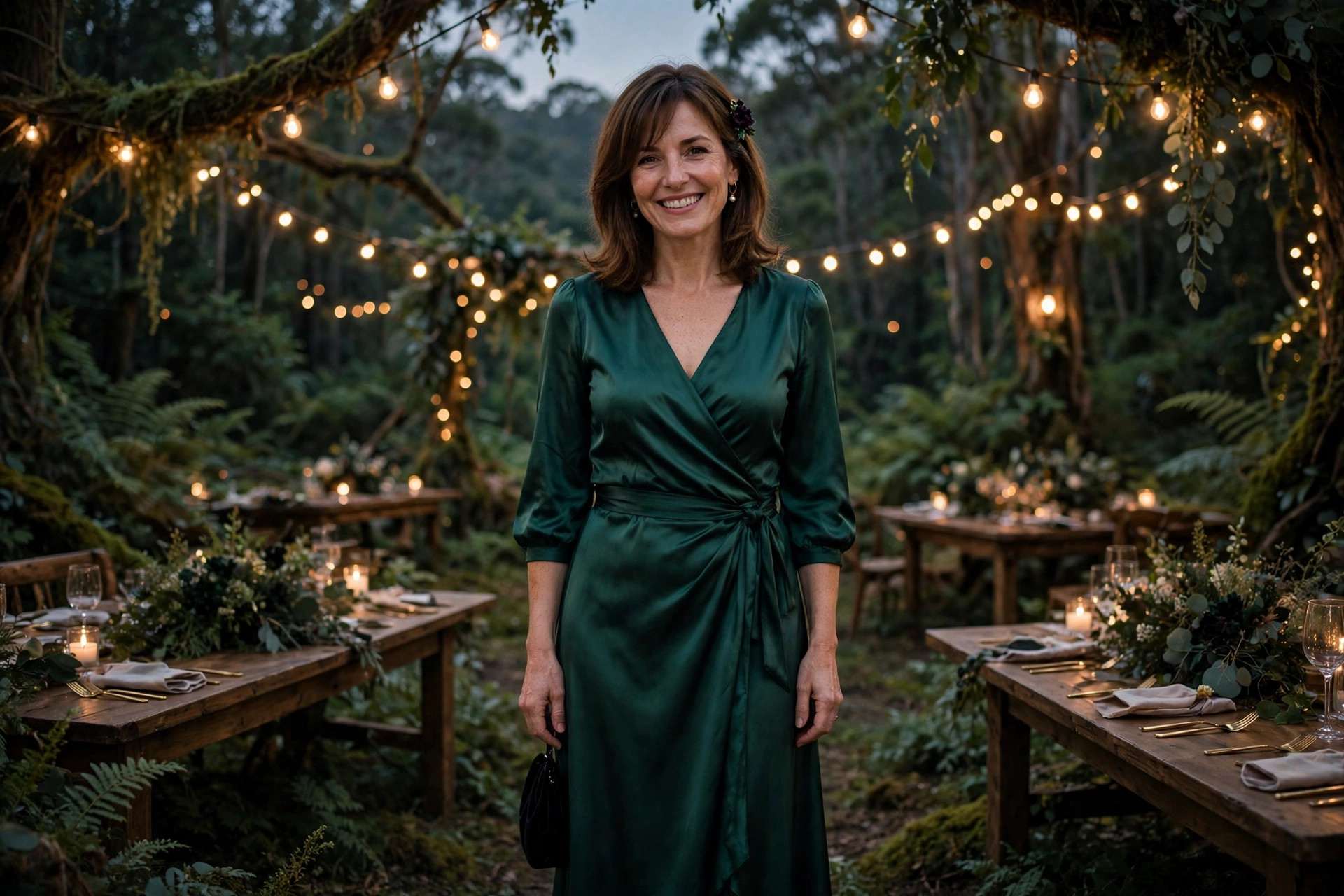
- Formal: emerald or plum maxi dress in satin or chiffon, gold or bronze jewelry, a dark floral hair pin or small jeweled clip.
- Cocktail: deep green or midnight blue midi with a flowing skirt, metallic heels, leaf or vine shaped earrings.
- Outdoor venue: the same formulas with block heels or dressy flats, since forest and garden ground eats stilettos.
A dress you already own in a jewel tone usually covers this theme with one added accessory. That rewear route is covered in more detail below.
Halloween-adjacent weddings
Many October weddings nod to the season without asking guests for anything Halloween-specific at all. Treat these as ordinary fall weddings with a darker palette: black, deep orange, burgundy, and purple are seasonal rather than spooky, and the standard fall wedding guest dresses formulas apply. Skip gore, fake blood, and horror references completely; they clash with a ceremony even when the couple loves Halloween. If the wedding website shows playful wording, add one tasteful signal, such as a celestial print, a spiderweb lace detail, or a black manicure, and stop there.
Beetlejuice and other named movie or era themes
A named theme asks for a reference the other guests will spot, and one reference is plenty. For a Beetlejuice style wedding, black and white stripes are the whole language of the theme, so a striped scarf, striped clutch, or black and white color-blocked outfit carries it without a single costume piece. Set the stripes over a polished base in black, white, or the film’s accent purple or green, and keep the silhouette fully formal.
Era themes work the same way. A 1920s theme is answered by a dropped-waist or beaded silhouette and a headband worn as jewelry, not by a full flapper costume with props. A masquerade theme is answered by cocktail formalwear plus a real mask. In each case the silhouette nods to the reference and the finish stays wedding-appropriate.
Can You Rewear a Dress You Already Own?
Yes, and a themed wedding is one of the easiest places to rewear, because the theme signals do the work of making the outfit look new. A plain dark dress in your closet becomes a gothic outfit with lace accessories and a darker lip, a fairytale outfit with a floral hair pin and metallic shoes, or a movie-theme outfit with one striped piece. Start from the darkest formal dress you own and shop your own accessories before you shop anywhere else.
This includes a bridesmaid dress. A dark bridesmaid dress restyled with different shoes, different jewelry, and a changed neckline reads as a guest dress, and the guide to wearing a bridesmaid dress as a wedding guest walks through the restyling checks. The one caution is color: if the dress matches the current bridal party’s palette closely, restyle it for a different wedding instead.
A Quick Checklist Before You Buy Anything
Run through this list with the invitation open. Most themed wedding outfits are already inside a normal wardrobe once these questions are answered.
- What is the dress code word? That sets your formality, and it outranks the theme.
- What is the exact theme phrase? Match it to the decoder table above.
- Does the wedding website add detail, a color request, or a note that the bride wears black?
- Does your base outfit pass the character test, meaning nobody could name a character from it?
- Have you limited yourself to 1 or 2 theme signals?
- Can you sit, eat, and dance in it for 6 hours, including any headpiece or mask?
- Do your shoes suit the venue surface, grass, gravel, or stone floors included?
Frequently Asked Questions
Do I have to wear a costume to a themed wedding?
No. Unless the invitation uses the words “costumes required,” a costume is an option, not an obligation. A formal outfit at the stated dress code, with the theme carried in color, fabric, and an accessory or two, satisfies almost every themed invitation. If the wording is genuinely unclear, asking the couple or checking the wedding website is normal and expected.
Are costumes required for a Halloween wedding?
No. Most Halloween weddings lean into the season with decor and mood rather than asking guests to dress up as characters. Costumes become appropriate only when the invitation encourages or requests them, and even then a formal outfit with spooky touches, such as dark lace or a gothic accessory, is an accepted alternative.
How do you dress for a Halloween wedding if you aren’t wearing a costume?
Choose a standard wedding outfit in a dark seasonal palette: ink black, emerald, deep purple, ruby, or midnight blue. Pick a heavier fabric such as velvet, lace, silk, or brocade, then add one statement accessory, for example a choker necklace, lace gloves, or dramatic earrings. A deeper lip color or smokier eye finishes the nod to the holiday.
What kind of costume should you wear to a Halloween wedding?
If the couple has asked for costumes, keep the costume built on evening wear so it still fits the setting: a formal dress with masquerade styling, a vintage era look, or a character reference made from real clothes. Avoid anything gory, revealing, or attention-stealing, and test the outfit beforehand to be sure you can sit, move, and dance in it all night.
Key Takeaways
- The dress code word sets your formality; the theme word only sets the mood. Build the outfit in that order.
- The theme belongs in color, fabric, and one or two accessories. If a stranger could name your character, it is a costume.
- Gothic weddings run on black and jewel tones with texture, velvet, lace, brocade. Dark fairytale softens the same palette with flowing shapes and one nature detail.
- Named themes, such as Beetlejuice, need exactly one recognizable signal, like black and white stripes, over a polished formal base.
- Costumes are required only when the invitation says so in plain words. “Encouraged” means optional.
- A dark dress you already own, including a restyled bridesmaid dress, covers most themed weddings once the accessories change.
For the wider set of guest outfit formulas beyond themed events, the complete wedding guest outfits guide covers every standard dress code in one place.

Rameen Awan is the founder and editor of Outfit Algorithm, where she breaks down outfit formulas, dress codes, and styling systems for real life. Her guides focus on practical details other sites skip: fabric behavior, fit for different body types, and what actually works when you are getting dressed in a hurry.