
Every week, someone holds a dress up in a bedroom mirror and asks the same question: how short is too short for this event? It came up twice in one day in online style forums recently, once about a Christmas party dress and once about a formal wedding, and the honest answer is that there is no single inch count that settles it. Length is a verdict the event delivers, not a number printed on a tag.
Two things decide whether a hemline works. The first is the dress code floor, meaning the shortest length that occasion normally allows. The second is the sit test, because a dress that looks fine standing up can ride two or three inches higher the moment you sit down. Pass both checks and the dress is fine, whatever the mirror anxiety says.
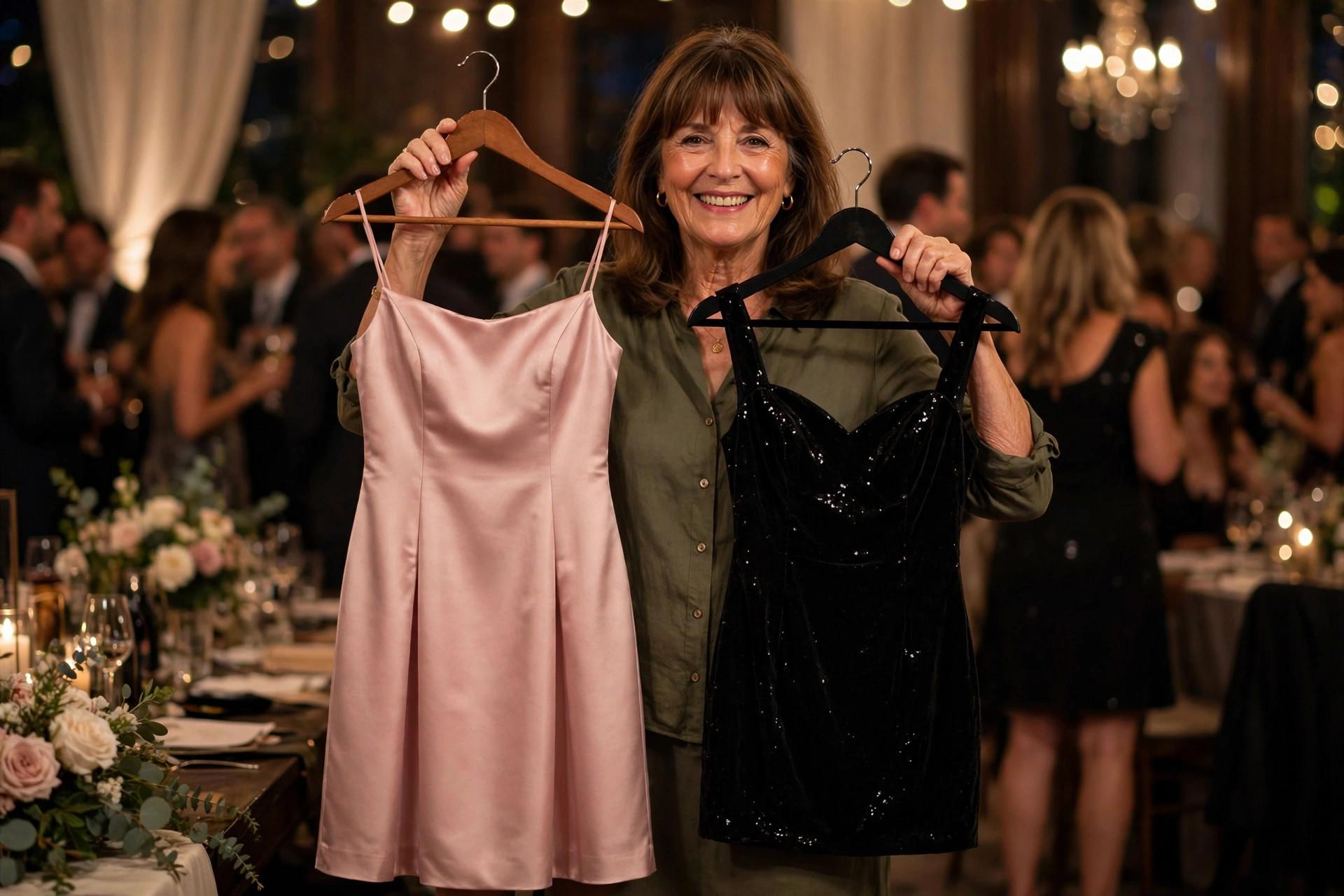
The Quick Answer: Two Tests Decide Every Hemline
A hemline is too short when it fails either of two tests: it sits above the length the dress code expects, or it leaves you tugging it down once you are seated. That definition matters because it moves the question away from your body and onto the event, where it belongs.
The dress code floor is easy to look up. Black tie means floor length. Cocktail means around the knee. A casual backyard party sets the floor much lower. The sit test is the part most people skip, and it is the part that actually causes the awkward moments: the ceremony where the dress rides up on a hard pew, the dinner where a low sofa turns a mini into a negotiation.
Run both tests before any event and the guesswork disappears. The rest of this guide breaks down each one, occasion by occasion.
What the Length Names Actually Mean
Shopping sites use length words loosely, so it helps to pin them to positions on the leg. Stylists tend to measure shortness in inches above the knee, which gives you a shared language for the decoder table below.
- Micro mini: 7 or more inches above the knee. Club territory, almost never event appropriate.
- Mini: roughly 4–6 inches above the knee, ending at mid thigh. On an average height frame that is about 33–35 inches from shoulder to hem.
- Above the knee: 1–3 inches above the knee. This is the classic cocktail zone.
- Knee length: the hem touches the top of the knee or covers it, about 39–41 inches from shoulder to hem.
- Midi: below the knee to mid calf, roughly 45–48 inches from shoulder to hem. The universal safe answer.
- Tea length: between mid calf and the ankle, a vintage leaning formal option.
- Maxi and floor length: ankle to floor, the formal standard.
One warning about those numbers: height changes everything. Four inches above the knee on a petite frame can look like a different category entirely on a tall frame, because the proportion of leg on show differs. Use the inches as a starting point, then trust the sit test over the tape measure.
The Hemline Decoder: Safe Lengths by Occasion
Find your event in the table, read across to the safe range, then check the notes column for the trap that catches people at that specific occasion.
| Occasion or dress code | Safe hemline range | Notes |
|---|---|---|
| White tie wedding or gala | Floor length only | No short option passes here. This is the one code with zero flexibility. |
| Black tie wedding | Floor length, ankle at the very shortest | A short dress reads as a mistake, not a statement. Save it for another night. |
| Black-tie optional or formal wedding | Knee length to floor length | A hem at or just above the knee works in a rich fabric like velvet, satin, or lace. |
| Cocktail wedding or cocktail party | At the knee to 3 inches above it | The natural home of the short dress. Structure and fabric do the formal work. |
| Semi-formal wedding | Knee length to 2 inches above it | A midi is always safe. A shorter hem needs a polished fabric and shoes. |
| Dressy casual or casual wedding | Up to 3–4 inches above the knee | Keep the fabric neat. A polished mini beats a sloppy midi here. |
| Religious ceremony (church, synagogue, temple) | At the knee or below | Carry a wrap for shoulders too. Houses of worship set the strictest real world floor. |
| Office party | At the knee to 1 inch above it | Your manager and your photos will both be there Monday. Keep work length rules. |
| Family dinner or meeting the parents | Knee length to 2 inches above it | You will sit for hours, often on low sofas. The sit test decides this one. |
| Christmas party at a friend’s home | Cocktail range, knee to 3 inches above | Host rules apply: a family home is stricter than a rented venue or bar. |
| Cocktail bar or girls’ night out | Mini is fine, 4–6 inches above the knee | The most relaxed setting on this list. The sit test is the only real gate. |
If the invitation wording itself is the confusing part, the guide to confusing wedding dress codes, decoded translates phrases like “dressy casual” and “festive attire” into plain language before you pick a length.
The Sit Test: How to Check Any Dress in Two Minutes
The sit test is a five step fitting check you run at home, in the shoes you plan to wear, before the tags come off. It exists because hems move. A fitted skirt creeps up as you walk, a flowy one rides up when you sit, and a seated hemline sits roughly 2–3 inches higher than the standing one.

- Sit in a dining chair. A standard dining seat is about 18 inches high. Look down and check the front, then feel the back. The hem should still give you the coverage you want without pulling it down.
- Cross your legs. If crossing requires a careful hand placement strategy, the dress is too short for a seated event.
- Raise both arms overhead. Reaching lifts the whole dress. If the hem jumps more than an inch or two, note the new length, because that is your real length when you hug, dance, or catch anything thrown at a wedding.
- Walk up a few stairs. Anyone behind you on a staircase sees the dress at its shortest angle.
- Bend as if greeting someone seated, or picking up your bag. A dress that only behaves while you stand perfectly still is not finished.
Judge the dress on the shortest length it reaches during those five steps, not on where it hangs in the mirror. If the worst moment still lands inside the safe range from the decoder table, wear it and stop worrying.
Why the Same Dress Passes at a Cocktail Bar and Fails at a Family Dinner
Context, not fabric, is what changes the verdict. Take one above the knee dress and walk it through three rooms.
At a cocktail bar, you mostly stand, the crowd is your own age group, the lighting is low, and short hemlines are the local uniform. The dress passes easily, and your main checks are practical: bar stools sit around 30 inches high, a full 12 inches above a dining chair, so run the sit test on the highest seat you own. Our cocktail party outfit guide shows how the same lengths get styled for venues like this.
At a family dinner, you sit for two or three hours, often on a low sofa that drops your knees up and your hem higher. Older relatives are present, photos get taken across the table, and you may end up on the floor with kids or a dog. The same dress that felt fine standing at a bar can feel like a project here. Knee length, or tights under a shorter hem, ends the management problem. The family dinner outfit ideas on this site lean longer for exactly this reason.
At a formal wedding, the dress code itself sets a floor, and the day adds traps: a ceremony on hard chairs or pews, a receiving line of hugs, stairs in the venue photos, and a dance floor. A hem that breaks the code floor reads as not having read the invitation. When the stakes are that layered, a midi removes every variable at once, which is why the complete wedding guest outfit guide treats midi and knee lengths as the default answer for formal codes.
What Should You Pair With a Shorter Hemline?
A short hem is one statement. The outfits that work keep it the only one. These balance rules are how a shorter dress reads polished instead of unfinished, at almost any event.
- Cover somewhere else. Pair a short hem with a higher neckline, sleeves, or a covered back. Legs plus a deep neckline plus an open back is three statements, and the total reads shorter than the dress is.
- Choose fabric with weight or structure. Crepe, lace, velvet, jacquard, and lined satin hold their line and stay where you put them. Thin jersey clings, creeps upward, and makes the same length look shorter.
- Lower the heel a notch. Very high heels tilt the body and visually shorten a skirt. A block heel, kitten heel, or elegant flat makes a short hem look deliberate.
- Add a longer layer on top. A tailored blazer, a longline coat, or a wrap worn for the ceremony adds length to the silhouette even though the dress itself does not change.
- Use tights as a coverage tool. Opaque tights in winter turn a borderline mini into a covered, season right outfit. Sheer black tights soften a hem for evening events.
- Line it or add slip shorts. A lined dress behaves better seated, and fitted slip shorts underneath remove the worry entirely at dancing heavy events.
The same logic applies at holiday events, where sparkle tempts people to go shorter and tighter at once. The guide to a Christmas party outfit without looking overdressed covers the balance side of that equation in full.

How Does the Season Change the Answer?
Season shifts the safe range by about one step in each direction. In summer, bare legs are everywhere and lighter fabrics read normal at shorter lengths, so the cocktail range stretches comfortably. Beach and garden venues forgive more leg because the whole setting is relaxed, though wind on a lightweight skirt is its own sit test problem.
Winter pulls the other way for events, but hands you the fix at the same time. Opaque tights, knee high boots, and a long coat all add visual coverage, so a dress that felt too short in July can be completely covered in December. Heavy fabrics like velvet also hold a hem down better than summer chiffon. Cold weather weddings still follow the dress code floor, though: tights make a mini warmer, they do not make it black tie.
Borderline Dress? Five Fixes Before You Give Up on It
- Let the hem down. Many dresses carry an inch or more of hem allowance. A tailor can often drop it enough to move the dress a full category.
- Add a trim. A lace edge or a band of matching fabric at the hem adds real length and looks like a design choice.
- Wear the tights. Opaque tights are the fastest one item fix for a borderline hem at a winter or evening event.
- Swap the shoes. Dropping from a stiletto to a block heel changes how short the dress reads more than most people expect.
- Change the event plan, not the dress. If the dress only fails the formal wedding test, keep it for the cocktail bar nights where it passes, and wear the midi to the wedding.
External stylists land in the same place. The Knot’s guide to wearing a short dress to a wedding advises aiming for a hem that reaches at least your fingertips and balancing leg with a covered top, which matches the decoder ranges above.
Frequently Asked Questions
Can I wear a mini dress to a wedding?
Yes, at the right wedding. Cocktail, semi-formal, dressy casual, and casual invitations all leave room for a well made mini, especially at daytime, garden, beach, or destination weddings. Choose an elevated fabric, keep the neckline modest, and run the sit test before you commit. Formal and black tie invitations are the exception: those codes expect length.
How short is too short for a mini dress?
As a general rule, a hem that lands more than 4–5 inches above the knee is too short for semi-formal or family settings. The real test is seated coverage: if you cannot sit, cross your legs, and raise your arms without the dress needing adjustment, it is too short for that event, whatever the measurement says.
Can I wear a mini dress to a formal wedding?
Generally, no. Mini dresses suit casual, beach, and daytime weddings, while formal and black tie weddings call for knee length at the very shortest, and usually midi or floor length. If the invitation says black-tie optional, a structured cocktail dress ending right at the knee is the shortest safe choice.
How long should a wedding guest dress be?
Knee length to midi is the most versatile range for a wedding guest: it works at nearly every venue, season, and formality level. Go floor length for black tie, and only go shorter than the knee when the invitation signals cocktail, dressy casual, or casual. When nothing on the invitation helps, the midi is the answer that never needs defending.
Can I wear a short dress to a cocktail party?
Yes. Short dresses are the standard at cocktail parties, with knee length or a little above it being the most accepted range. Mid thigh can work when the design is polished and the crowd is casual. A micro mini is the one length that reads wrong here, because it swaps the semi-formal polish of the event for a club look.
Key Takeaways
- “Too short” is decided by two tests, not one number: the dress code floor for the event, and the sit test in your actual event shoes.
- Seated length is the real length. A hem rises about 2–3 inches when you sit, so judge the dress at its shortest moment.
- The decoder ranges: floor length for black tie and white tie, knee to 3 inches above for cocktail, knee or below for religious ceremonies and office parties, mini only for relaxed venues like cocktail bars and casual parties.
- Balance a short hem with coverage elsewhere, structured fabric, a lower heel, or opaque tights, and it reads polished at almost any event on the list.
- When in doubt, the midi never needs defending. It passes every dress code on this page except white tie.
So the next time the mirror question shows up, skip the tape measure debate. Check the invitation for the floor, run the five sit test steps, and let those two answers decide. That is the whole decoder, and it works for Christmas parties, family dinners, and formal weddings alike.

Rameen Awan is the founder and editor of Outfit Algorithm, where she breaks down outfit formulas, dress codes, and styling systems for real life. Her guides focus on practical details other sites skip: fabric behavior, fit for different body types, and what actually works when you are getting dressed in a hurry.